Destination briefing
Why travelers stop here
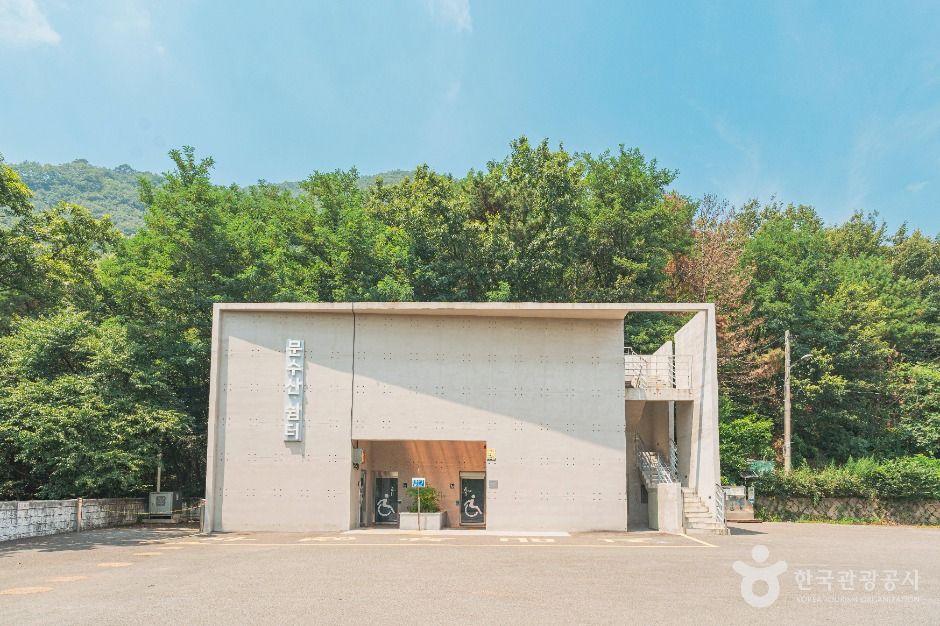
Munsusan Mountain, called Yeongchuksan during the Silla and Goryeo periods, is said to have given its name to Munsusa Temple. It is famous for the Mundaem Dol (Wishing Stone), where rubbing the stone while making a wish is believed to make it come true. As a branch temple of Tongdosa, the 15th diocese of the Jogye Order of Korean Buddhism, it is traditionally said to have been founded in 646 (the 15th year of Queen Seondeok of Silla) by Master Jajang upon his return from studying in China. The mountain was also called Yeongchwisan or Cheongnyangsan, and the town name Cheongnyang-eup originates from Cheongnyangsan.
There are records related to National Preceptor Yeonhoe during the reign of King Wonseong of Silla (785–798). According to the Samguk Yusa (Memorabilia of the Three Kingdoms), Monk Yeonhoe lived in seclusion on Yeongchuksan, always reciting the Lotus Sutra in his practice. When King Wonseong sought to appoint him as national preceptor, Yeonhoe fled to the western ridge upon hearing the news. There, he encountered Manjushri Bodhisattva and the Goddess of Eloquence, changed his mind, returned to his hermitage, and eventually accepted the king's call to become national preceptor. No records of Munsusa Temple from the Goryeo period have been found, but its appearance in the Beomu Go (Survey of Buddhist Temples) indicates that the temple's dharma lamp continued unbroken into the late Joseon period.
OTA-ready stop
Built into inbound routes and day-tour planning.
Local context
울산광역시 울주군 청량읍 문수산길 514
Travel fit
Attraction · Ulsan
![[Early bird] Elysian Gangchon Ski Tour from Seoul (5 pick-up points)](/_next/image?url=https%3A%2F%2Fadmin.holidaykr.com%2Fapi%2Fadmin%2Fsystem%2Fbasic-settings%2Ffavicon%3Fpath%3D%252Fuploads%252Fproducts%252Fthumbs%252F750_1785201339504_file1.jpg&w=3840&q=75)