Destination briefing
Why travelers stop here
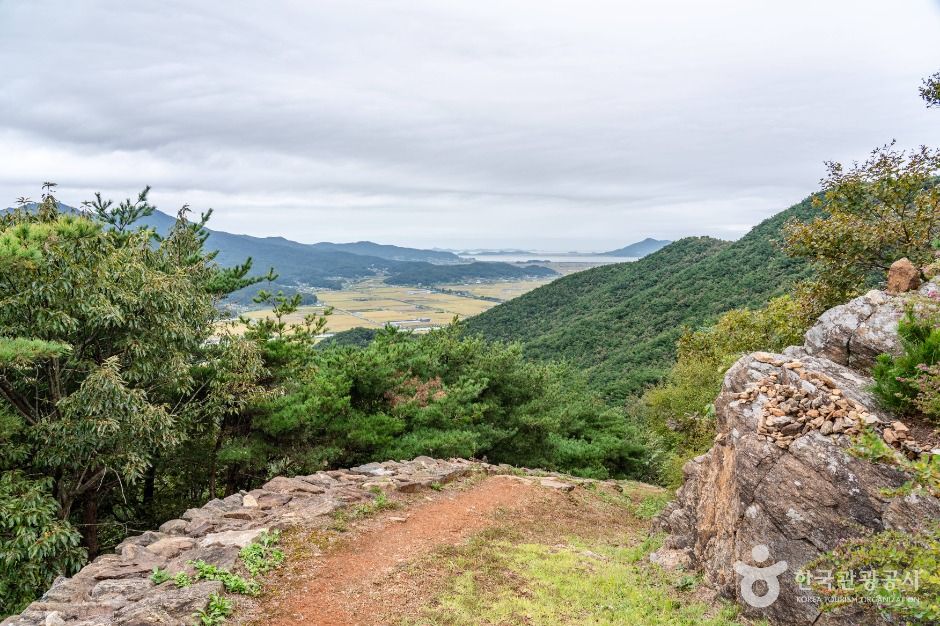
Samnangseong Fortress, located in Onsu-ri, Gilsang-myeon, Ganghwa-gun, Incheon, was a defensive fortress protecting Gaegyeong and Hanyang since the Goryeo period. Its circumference is approximately 2.3 km, and the fortress walls were built along the mountain terrain from the summit to the southern gate at an elevation of 75m above sea level, resulting in a significant elevation difference between the north and south. According to legend, the three sons of Dangun each took charge of building one of the three peaks of Jeongjoksan Mountain, which consists of three peaks. People who saw this named the mountain fortress using the character 'rang' (郞), meaning 'young man,' calling it Samnangseong (Three Young Men Fortress). It is also called Jeongjoksanseong Fortress because it is located on Jeongjoksan Mountain (elevation 222m) in southern Ganghwa Island. Along with the Chamseongdan Altar on Manisan Mountain, it is a historical site related to Dangun. The exact construction period is unclear, but it is estimated based on the use of rough natural schist, a construction technique from the Three Kingdoms period. In 1739 (the 15th year of King Yeongjo's reign), the fortress was repaired, and a gate pavilion was built at the southern gate, named Jonghaeru. In 1764 (the 40th year of King Yeongjo's reign), the fortress was repaired again. In 1866 (the 3rd year of King Gojong's reign), during the Byeonginyangyo (French campaign against Korea), it was the site where General Yang Heon-su's forces defeated the French army. Inside Samnangseong Fortress is Jeondeungsa Temple, the oldest temple in Korea and the largest temple in Ganghwa.
OTA-ready stop
Built into inbound routes and day-tour planning.
Local context
인천광역시 강화군 길상면 온수리
Travel fit
Attraction · Incheon




![[Early bird] Elysian Gangchon Ski Tour from Seoul (5 pick-up points)](/_next/image?url=https%3A%2F%2Fadmin.holidaykr.com%2Fapi%2Fadmin%2Fsystem%2Fbasic-settings%2Ffavicon%3Fpath%3D%252Fuploads%252Fproducts%252Fthumbs%252F750_1785201339504_file1.jpg&w=3840&q=75)