Destination briefing
Why travelers stop here
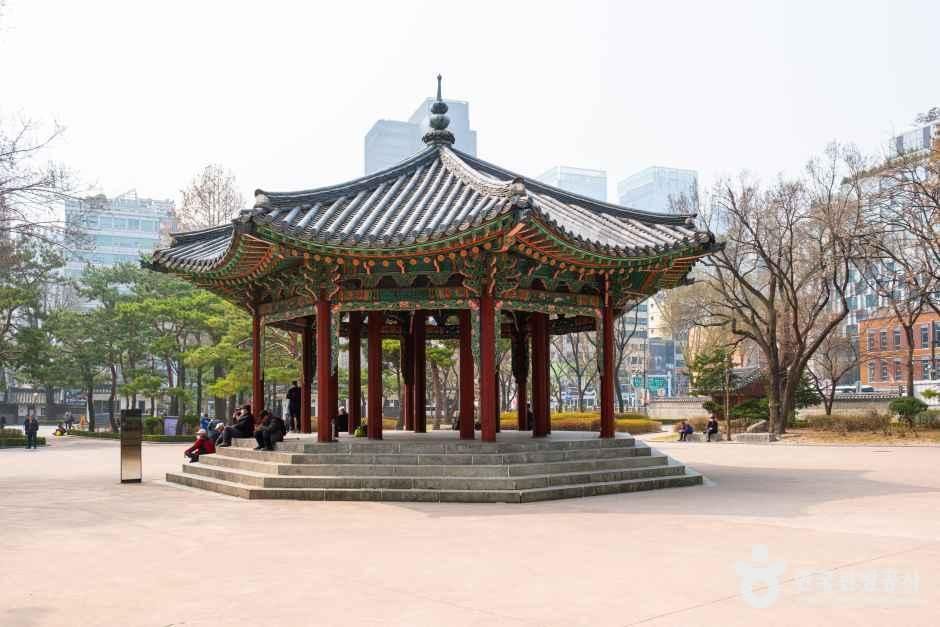
Tapgol Park Octagonal Pavilion is a pavilion located in Tapgol Park, Jongno 2-ga, and was designated as a Tangible Cultural Property of Seoul Metropolitan City on September 19, 1989. It was built together with the creation of Tapgol Park in 1897 (the 34th year of King Gojong's reign) following the suggestion of British advisor Brown to the provincial government. Tapgol Park is the first modern park in Seoul, and the octagonal pavilion is presumed to have been built in 1902 as a performance venue for a military band during a grand event commemorating the 40th anniversary of King Gojong's enthronement. At that time, the imperial orchestra used it as a music performance venue, initially performing orchestral music only on Sundays. As many citizens gathered to listen to the music, it was opened to the general public on weekdays from July 1913. The building has an octagonal floor plan, with inner columns (goju) and outer columns (pyeongju) forming inner and outer rows. The roof is an octagonal roof with double eaves. The stylobate is built in five tiers of long stone blocks surrounding each side. The interior floor is paved with thin stone slabs, and the dancheong (traditional decorative coloring) is painted in moru style. The building's excellent exterior proportions served as a model for the later Namsan Octagonal Pavilion. During the March 1st Movement in 1919, students and citizens gathered in front of this pavilion to read the Declaration of Independence, shout 'Manse' for the Republic of Korea, and hold a protest march.
OTA-ready stop
Built into inbound routes and day-tour planning.
Local context
서울특별시 종로구 종로 99 (종로2가)
Travel fit
Attraction · Seoul

![[Early bird] Elysian Gangchon Ski Tour from Seoul (5 pick-up points)](/_next/image?url=https%3A%2F%2Fadmin.holidaykr.com%2Fapi%2Fadmin%2Fsystem%2Fbasic-settings%2Ffavicon%3Fpath%3D%252Fuploads%252Fproducts%252Fthumbs%252F750_1785201339504_file1.jpg&w=3840&q=75)