Destination briefing
Why travelers stop here
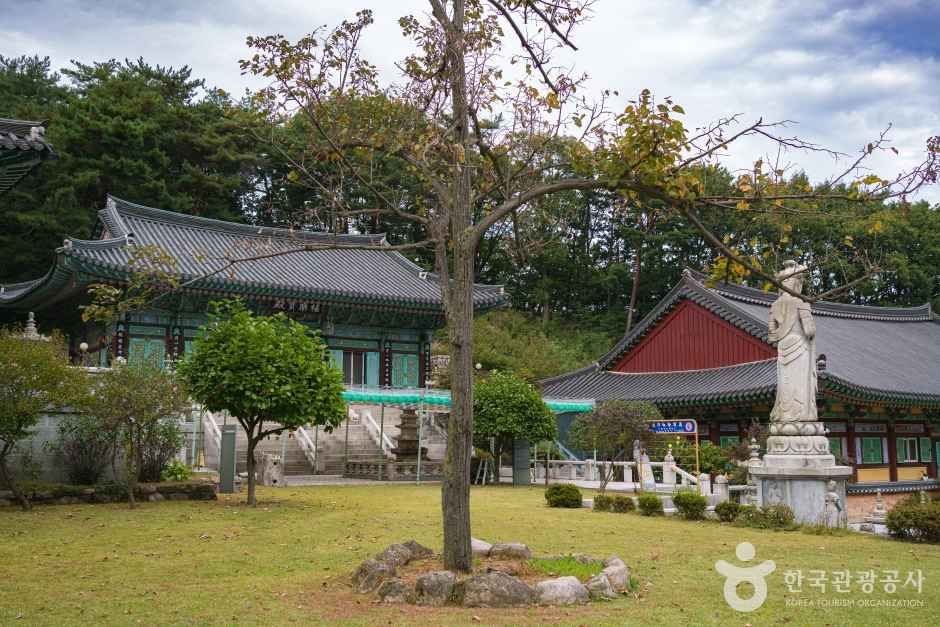
Mangwolsa Temple is located on Dobongsan Mountain, which features beautiful and outstanding rocky peaks such as Jawonbong, Manjangbong, Seoninbong, and Jubong. The path to Mangwolsa Temple includes a course that goes from the ticket office past Daewonsa, Wonhyosa, and Gwangbeopsa temples in order, and another course that follows the Wondobong Valley. From Mangwolsa Temple, whichever of the two hiking trails you take, you will reach the Podae Ridge. Mangwolsa Temple was founded in the 8th year of Queen Seondeok of Silla (639 AD) by Monk Haeho under the queen's order to pray for the prosperity of the royal family. It was named Mangwolsa, meaning 'temple looking toward the moon,' as it faced Wolseong (Moon Castle) of Seorabeol (the capital of Silla) in prayer. Many great monks of the past have passed through here, including Hyegeo and Yeongso of the Goryeo period, and Cheonbong, Yeongwol, and Doam of the Joseon period, as well as modern sages such as Mangong, Hanam, and Seongwol.<br /><br />To the southwest of the main hall of Mangwolsa Temple, up a hill, stands the Stupa of National Preceptor Hyegeo (Gyeonggi-do Tangible Cultural Heritage). Even today, many meditating monks practice Seon (Zen) here. The stupa, a stone tower enshrining the sarira or remains of a renowned monk, is typically built near a temple. This stupa, enshrining the sarira of National Preceptor Hyegeo, is an octagonal round pavilion style. Its total height is 3.4m, and the circumference of the body is 3.1m. Looking at the overall shape, the base section holds a spherical body, topped with a roof stone and a finial. The base consists of a foundation stone and a pedestal stone; the foundation stone is made of a single octagonal three-tiered stone, 80cm high, with a support placed on top. The body of the stupa is spherical, with grooves carved above the support and below the roof stone to ensure stability. The roof stone, including the inverted bowl and jewel, is made of a single stone, with the drip surface resembling the roof of a wooden building and eight corner ornaments. The finial is integrated with the roof stone, featuring lotus patterns carved on the inverted bowl surface. The subject of the stupa, National Preceptor Hyegeo, had the secular surname No and the courtesy name Hongso, serving as a national preceptor during the Goryeo period. However, his life is not well known to the world.
OTA-ready stop
Built into inbound routes and day-tour planning.
Local context
경기도 의정부시 망월로28번길 211-500 (호원동)
Travel fit
Attraction · Gyeonggi-do


![[Early bird] Elysian Gangchon Ski Tour from Seoul (5 pick-up points)](/_next/image?url=https%3A%2F%2Fadmin.holidaykr.com%2Fapi%2Fadmin%2Fsystem%2Fbasic-settings%2Ffavicon%3Fpath%3D%252Fuploads%252Fproducts%252Fthumbs%252F750_1785201339504_file1.jpg&w=3840&q=75)