Destination briefing
Why travelers stop here
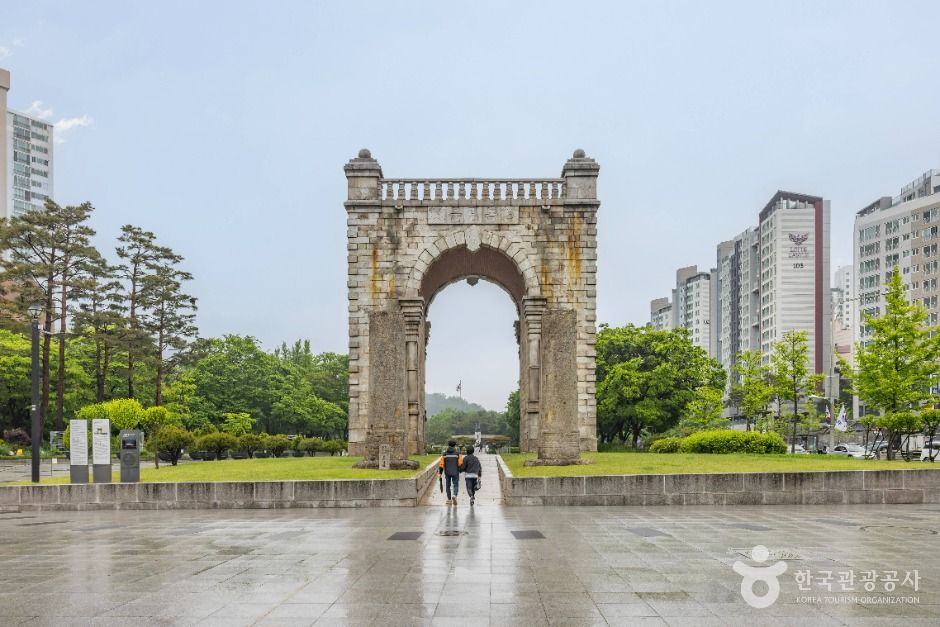
Located in Seodaemun Independence Park, Dongnipgwan is a restored building that originally served as the office of the former Independence Club (Dongnip Hyeophoe), which was demolished during the Japanese colonial period. The building was originally Mohwagwan, a guesthouse used to entertain Chinese envoys, and was later used by the Independence Club after the First Sino-Japanese War. In 1894, it was renovated at the initiative of Seo Jae-pil and led by the Independence Club, and renamed Dongnipgwan. It was subsequently used as a venue for patriotic debates to promote ideas of sovereignty, civil rights, and self-strengthening, and together with Dongnimmun (Independence Gate), it symbolized the spirit of independence, but was demolished by the Japanese. Dongnipgwan is a single-story Korean-style wooden building with a front of 6 kan, a side of 4 kan, and a 7-ryang paljak (hip-and-gable) roof structure. Its original location was approximately 350 meters to the southeast. According to the Seodaemun Independence Park development plan and based on expert historical consultation, the ground floor was restored as a Korean-style wooden building as originally built, and is used to enshrine the memorial tablets of patriotic martyrs and as an exhibition hall, while the basement is used for events and artifact storage. It was built by Seoul Metropolitan Government in 1996. Address: 251 Tongil-ro, Seodaemun-gu, Seoul (Hyeonjeo-dong)
OTA-ready stop
Built into inbound routes and day-tour planning.
Local context
서울특별시 서대문구 통일로 251 (현저동)
Travel fit
Attraction · Seoul


![[Early bird] Elysian Gangchon Ski Tour from Seoul (5 pick-up points)](/_next/image?url=https%3A%2F%2Fadmin.holidaykr.com%2Fapi%2Fadmin%2Fsystem%2Fbasic-settings%2Ffavicon%3Fpath%3D%252Fuploads%252Fproducts%252Fthumbs%252F750_1785201339504_file1.jpg&w=3840&q=75)