Destination briefing
Why travelers stop here
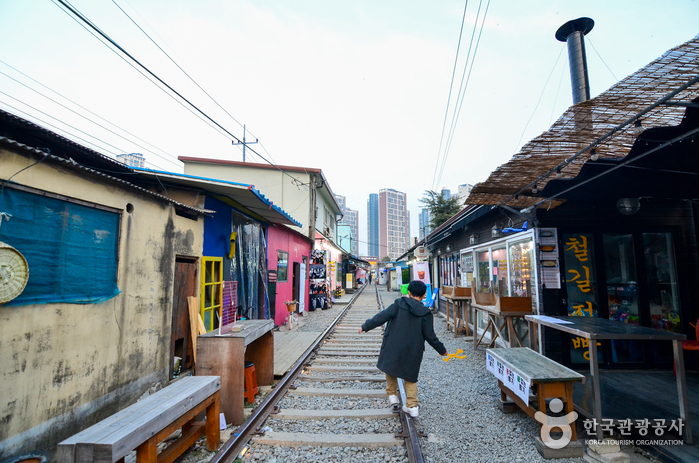
Gyeongam-dong Railroad Village is the name given to the village surrounding the 2.5km railway line that was completed in 1944 in Gyeongam-dong, Gunsan-si, Jeollabuk-do, connecting the Paper Korea factory and Gunsan Station. The name originated from the administrative district where the village is located, calling the village formed along the railroad tracks Gyeongam-dong Railroad Village. People began to gather and live around the railway opened in 1944 during the Japanese colonial period, forming a neighborhood, and the village was fully established in the 1970s. Although trains no longer operate, the railway remains intact, making it a tourist attraction in Gunsan that evokes modern memories. The Gyeongam-dong railway was first opened in 1944 during the Japanese colonial period to transport newsprint materials. Until the mid-1950s, it was called 'Bukseon Paper Railway', until the early 1970s 'Goryeo Paper Railway', and thereafter 'Sedae Paper Line' or 'Sepung Railway'. After the Sepung Group went bankrupt, it was renamed after the new acquiring company and is now called 'Paper Korea Line'. Gyeongam-dong Railroad Village is famous for recreating the scenery of the 1970s and 1980s, allowing visitors to feel retro vibes. Old houses and shops remain throughout, giving the feeling of time traveling to the past. Additionally, along both sides of the railway, items such as ppopgi, dalgona, and ttakji are sold, and there are activities like taking photos in old school uniforms, offering food and entertainment that are popular among travelers.
OTA-ready stop
Built into inbound routes and day-tour planning.
Local context
전북특별자치도 군산시 경촌4길 14 (경암동)
Travel fit
Attraction · Jeollabuk-do



![[Early bird] Elysian Gangchon Ski Tour from Seoul (5 pick-up points)](/_next/image?url=https%3A%2F%2Fadmin.holidaykr.com%2Fapi%2Fadmin%2Fsystem%2Fbasic-settings%2Ffavicon%3Fpath%3D%252Fuploads%252Fproducts%252Fthumbs%252F750_1785201339504_file1.jpg&w=3840&q=75)