Which number to call, a step-by-step 119 call, phrases to say, what to prepare for the ambulance, hospital and pharmacy basics, police and scams, lost passport and belongings, and what typhoons, heat, cold and dust alerts mean. Figures are as of 2026-10-11.
Emergency numbers at a glance (as of 2026-10-11)
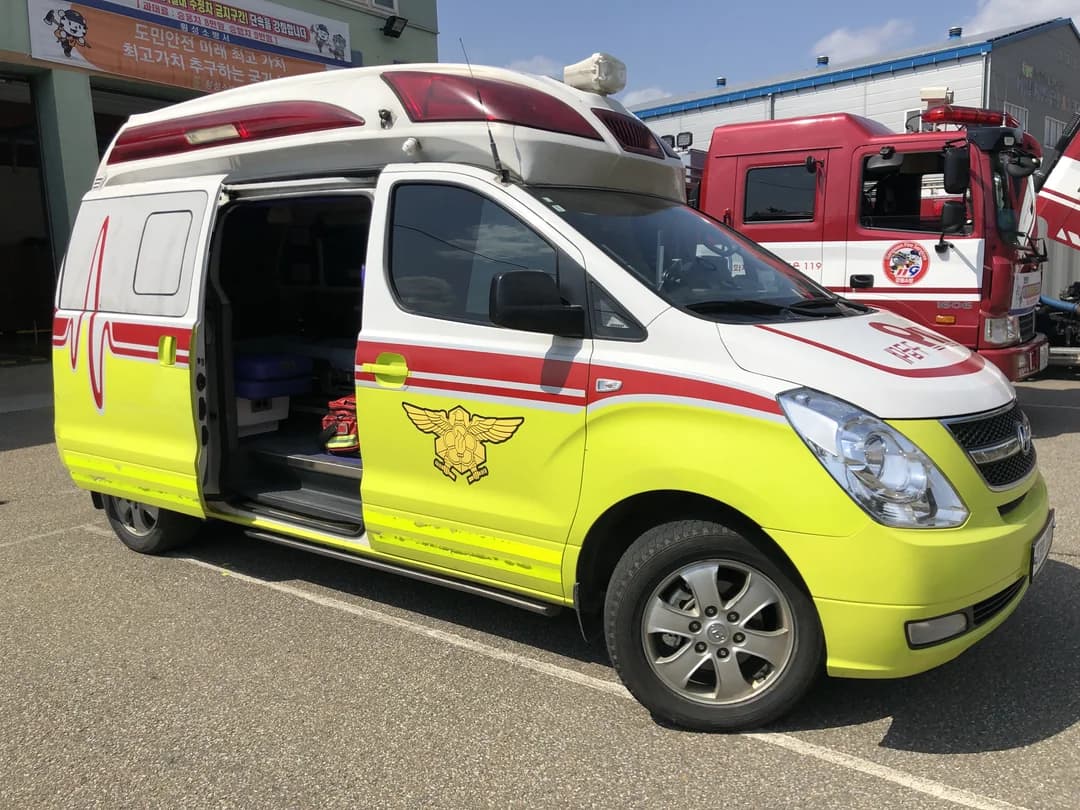
Police: 112. Fire and ambulance: 119. Both work from any phone, free of charge to dial, and an operator answers around the clock. Use them whenever life, health or safety is at risk.
Korea Travel Helpline, 1330 (+82-2-1330 from abroad): tourist interpretation, travel information and complaints by phone and live chat, in Korean, English, Japanese, Chinese, Russian, Vietnamese, Thai and Malay (as of 2026-10-11). It is not an emergency line.
Hours of 1330: the tourism organization lists phone and chat as 07:00 to 24:00 Korea time, while a Seoul city listing describes the line as 24/7 (as of 2026-10-11). Do not count on it in the middle of the night; for danger, call 119 or 112.
Immigration contact center, 1345 (+82-2-1345 from abroad): visa and stay questions, weekdays 09:00 to 22:00 except public holidays (as of 2026-10-11).
Other useful numbers: 1339, the KDCA disease-control call center (infectious-disease questions); 131, the weather call center of the Korea Meteorological Administration; 120, the Seoul city call center for everyday city questions.
Save these numbers in your phone and write the address of your lodging in Korean on a card or in a note, so anyone can read it out for you. Keep the phone charged.
Which number for which problem
Someone is badly hurt, unconscious, not breathing, in severe pain or choking, or a fire has started: call 119 at once. Do not drive a seriously ill person yourself if an ambulance can reach you.
A crime, an assault, a threat, a traffic accident, a missing person or a stolen passport: call 112, or go to the nearest police station for a report.
A tourist question, a taxi or shop dispute, interpretation for a minor problem or where to go: call 1330. It cannot send an ambulance, so never use it instead of 119 or 112.
Visa, stay, registration or passport-status questions: 1345 on weekdays. A fever or cough after travel and a question about quarantine: 1339.
If you are not sure whether it is an emergency, call 119 anyway for a medical worry. The operator decides what to send and may guide you by phone; it is better to call early than late.
Calling 119, step by step
- When the operator answers, they say “119imnida, museun iriseyo?” (119입니다, 무슨 일이세요?). Say first that there is a patient: “hwanja-ga isseumnida” (환자가 있습니다), and give your language, for example “English, please”.
- Give the location: the street address if you know it, otherwise a large nearby building and its phone number, a station and exit number, or a road-sign or utility-pole number. Keep your phone location (GPS) switched on, because 119 can locate mobile callers.
- Describe the patient: who is hurt, what happened, where it hurts, and whether the person is conscious and breathing. Give the age, any serious existing illness, and the medicines they take.
- Give your name and a back-up phone number that can reach you if the call drops; the dispatcher may call to confirm the location or to give medical guidance.
- Do not hang up. The ambulance is already on its way, so stay on the line and follow the dispatcher’s medical guidance and first-aid instructions, for example chest compressions if the person is not breathing.
Calling 112 and what to say
Say your language first: “English, please.” Staff on these lines are used to foreign callers and can bring in interpretation help; speak slowly in short sentences.
Give where you are, what happened, whether anyone is hurt, and whether the person who did it is still nearby. “I was robbed.” 도둑맞았어요 (dodukmajasseoyo). “Someone is attacking me.” 폭행당하고 있어요 (pokhaengdanghago isseoyo).
If you cannot speak safely, keep the line open; the location of your phone can help. Move somewhere with other people, such as a shop or hotel lobby, and wait for the officers there.
Take names and numbers only if it is safe, and keep your passport with you, because the police will want to identify you and the people involved. Ask for a copy of the report before you leave.
Korean phrases for an emergency
Help me: 도와주세요 (dowajuseyo). Please call an ambulance: 구급차 불러 주세요 (gugeupcha bulleo juseyo). Please call the police: 경찰 불러 주세요 (gyeongchal bulleo juseyo).
I need a doctor: 의사가 필요해요 (uisaga piryohaeyo). My chest hurts: 가슴이 아파요 (gaseumi apayo). I cannot breathe: 숨을 못 쉬겠어요 (sumeul mot swigesseoyo).
I have an allergy: 알레르기가 있어요 (allereugiga isseoyo). I take this medicine: 이 약을 먹고 있어요 (i yageul meokgo isseoyo). Show the medicine box or a photo of the label.
Where is the nearest hospital? 가장 가까운 병원이 어디예요? (gajang gakkaun byeongwoni eodiyeyo?) Pharmacy: 약국 (yakguk). Is anyone here who speaks English? 영어 하시는 분 계세요? (yeongeo hasineun bun gyeseyo?)
My passport is lost: 여권을 잃어버렸어요 (yeogwoneul ilheobeoryeosseoyo). My bag was stolen: 가방을 도둑맞았어요 (gabangeul dodukmajasseoyo). Pickpocket: 소매치기 (somaechigi).
Before the ambulance arrives
- Do stay calm, follow the dispatcher’s medical guidance and carry out first aid until the ambulance arrives.
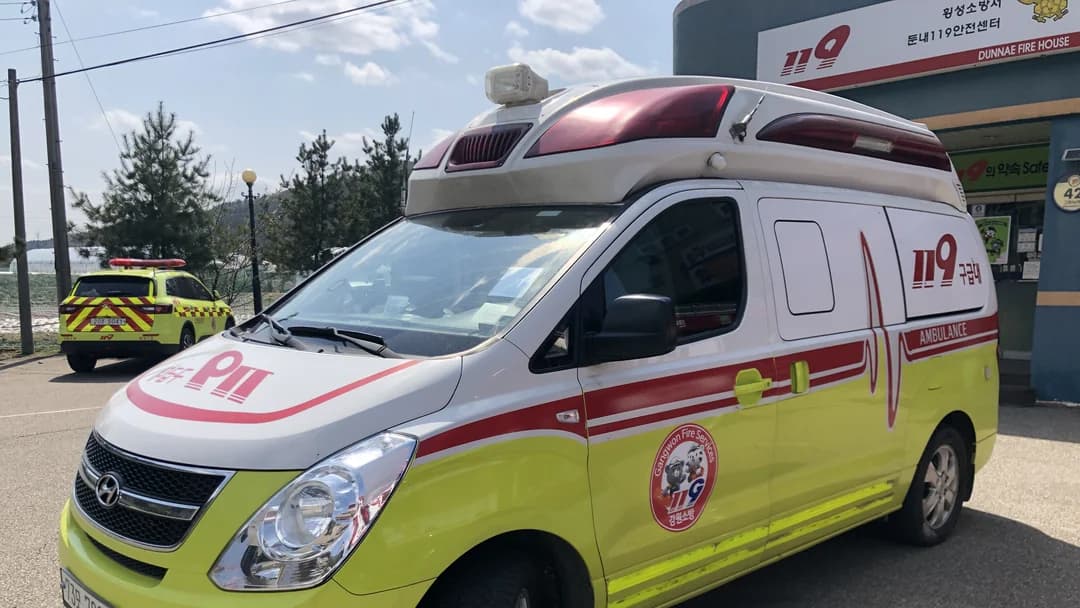
- Do send someone else out to a spot the ambulance can reach to guide it in; this shortens the time to reach the patient.
- Do prepare your ID or passport, your health insurance card, money or a credit card, shoes, the patient’s regular medicines and your room key. Lock the room and switch off electrical devices and gas if you leave.
- Do tell the paramedics what happened or how the condition got worse, any changes and first aid already given, existing illnesses, the hospital you prefer if any, and the medicines taken.
- Do not move an injured person unless they are in danger, and do not give food or drink to someone who may need surgery or who is not fully awake.
Ambulance and emergency room
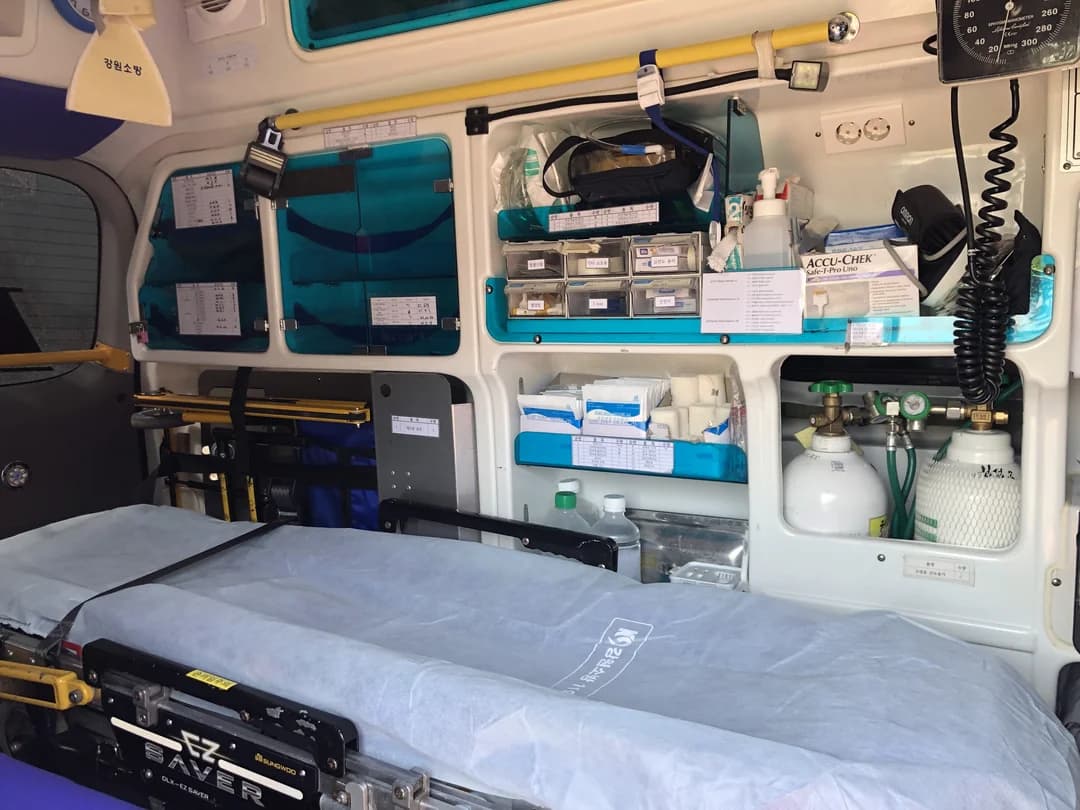
The ambulance crew decides which hospital can treat you, based on your condition and which emergency rooms can take the case. Tell them about allergies, medicines and any health condition, and show your passport and insurance card if you have them.
In the emergency room, staff first assess how urgent your condition is, so you may wait if other patients need care first. Bring or show your passport, as you will usually be registered with it.
Payment and insurance forms usually come after treatment. Ask for an itemized receipt, the diagnosis document and the medical record in English if possible, and keep them for your insurer.
A doctor will usually ask for your symptoms, when they began, allergies, medicines and past illnesses. Write these down in advance on your phone, in Korean if you can.
The HOLIDAY medical tour service is for planning non-urgent care and is not for emergencies: for an urgent condition call 119.
Minor illness: pharmacy, clinic and getting around
For a cold, stomach upset, a mild allergy or a small injury, a pharmacy (yakguk, marked with a green cross sign) or a local clinic is usually quicker than an emergency room. Show your symptoms on a translation app or in a photo.
Pharmacists often suggest over-the-counter medicine. Tell them your allergies, other medicines and, for a child, the age and weight, and never take two products with the same active ingredient together.
Some pharmacies stay open late or take turns opening on Sundays and public holidays, but opening hours differ by pharmacy and district. Ask your hotel front desk which one is open tonight.
In clinics and hospitals you generally pay at the counter after seeing the doctor, and a prescription is filled at a pharmacy, often next door. Keep the receipt and the prescription for your insurer.
Carry a small first-aid kit and enough of your regular medicine in its original package with a doctor’s note. Some medicines that are ordinary elsewhere are controlled in Korea; see the Entry guide for the customs rule.
Crime, scams and the police
Korea is generally safe for visitors, but pickpockets, taxi overcharging and unlicensed sellers exist in crowded tourist areas, markets and late-night entertainment districts. In crowds keep bags closed and in front of you.
Use a metered taxi or a taxi app that shows the fare and route, and note the license number if there is a dispute. Do not follow strangers who offer cheap tours, exchange or “free” gifts on the street.
If something is stolen or you are the victim of a crime, call 112 or go to the nearest police station, and ask for a copy of the report because insurers and embassies usually need it.
Report stolen bank or credit cards to the issuer at once and block them, and use the hotel safe for passports and spare cash. Do not leave drinks or bags unattended in bars and crowded places.
Lost belongings and a lost passport (as of 2026-10-11)
Lost something? Ask the shop, the taxi company or the station staff first, then the police lost-property service (Lost112). Report quickly, because found items are moved on after a short time.
Incheon Airport lost and found is open 07:00 to 21:30 every day: Terminal 1 basement level, phone 032-741-3110 or 3114; Terminal 2, public area on the 2nd floor, phone 032-741-8988 or 8989 (as of 2026-10-11).
At the airport, unclaimed general items are sold, donated or disposed of after six months; phones, tablets and smartwatches are kept for one month and then moved to a mobile-phone lost-property center (phone 1566-4300) (as of 2026-10-11).
Lost or stolen passport, step 1: report it at the nearest police station and ask for a copy of the report. Step 2: contact your own country’s embassy or consulate in Korea, which can usually issue an emergency travel document. Bring a photo of the passport and your booking details.
A passport found at Incheon Airport is kept for one month from the day it is found and then sent to the relevant embassy (as of 2026-10-11). If you lose it elsewhere, do not wait for it to turn up before contacting your embassy.
You may also need to tell the immigration office about the lost passport; the 1345 center answers on weekdays 09:00 to 22:00 except public holidays (as of 2026-10-11). If you held a K-ETA, it is tied to the old passport number.
Weather alerts, typhoons and heavy rain (as of 2026-10-11)
The Korea Meteorological Administration issues advisories (the first level) and warnings (the more serious level) by area. Its weather call center is 131. The national safety app Anjeon Didimdol (안전디딤돌) sends alerts and shows nearby heat shelters.
Emergency alerts reach phones as loud text messages, usually in Korean and sometimes in other languages. If you cannot read one, ask hotel staff what it says, and follow local instructions rather than waiting for a second message.
Typhoon before it arrives: follow the path and timing, leave mountain valleys, rivers, seawalls and low-lying areas, keep a flashlight, spare batteries, water and a charged phone, and ask your hotel about transport suspensions.
During a typhoon: stay indoors away from windows, never go onto flooded roads, underpasses or bridges, keep away from slopes, streams, coasts, construction sites and utility poles, and use a flashlight, not a candle, in a power cut.
Heavy rain: stop hiking, camping, swimming and fishing, leave mountains, streams and seawalls at once, stay out of basements and low ground, and if water starts to enter a building move to higher ground right away.
Strong wind: an advisory is for wind of 14 m/s or more, or gusts of 20 m/s or more; a warning is for 21 m/s or more, or gusts of 26 m/s or more (as of 2026-10-11). Avoid ferries, coastal paths and high places, and secure loose items.
After a storm: contact family, do not cross flooded roads or damaged bridges, do not use tap water or stored water until it is confirmed safe, discard flood-soaked food, and never touch fallen power lines; if a line touches a car, stay inside and call 119.
Heat and cold (as of 2026-10-11)
Heat advisory: a daily maximum feels-like temperature of 33°C or more expected for 2 days or more. Heat warning: 35°C or more for 2 days or more. Severe heat warning: 35°C or more already seen for 2 days and then 38°C feels-like or 39°C air temperature expected (as of 2026-10-11).
In a heat wave the most dangerous hours are 14:00 to 17:00 (as of 2026-10-11). Avoid outdoor sightseeing then, wear a wide-brim hat and light clothes, carry water, drink plenty and avoid alcohol and caffeine.
Heat shelters (mudeoun swimteo) are open for people who need to cool down, and their locations show in the national safety app. Never leave a child or an older person alone in a closed car.
If you feel dizzy, sick, headachy or get muscle cramps, rest somewhere cool and sip cool drinks. If heatstroke is suspected, call 119 at once, move the person somewhere cool, loosen clothes and cool the body.
Cold-wave warnings are issued from October to April. Advisory: the morning low falls 10°C or more from the day before to 3°C or below and is 3°C or more under normal, or is -12°C or lower for 2 days or more. Warning: a 15°C drop, or -15°C or lower for 2 days (as of 2026-10-11).
On icy pavements shorten your stride by 10 to 20 percent, wear non-slip soles, keep your hands out of your pockets and do not look at your phone while walking. If you fall, drop to your knees and roll sideways to soften it (as of 2026-10-11).
Hypothermia (severe shivering, confusion, drowsiness): go to a hospital or call 119, remove wet clothes, wrap in a blanket and warm the armpits and belly. Frostbite: do not rub or put it near a fire; soak it in warm water and get to a hospital.
Heavy snow and driving: avoid driving, carry chains and a shovel if you must, slow down on bends, slopes, bridges and icy stretches, and if stranded stay with the vehicle, keep warm, take turns resting and keep one person awake.
Yellow dust and fine dust (as of 2026-10-11)
Yellow dust has only a warning level, no advisory: it is issued when the hourly average PM10 is expected to stay at 800 micrograms per cubic meter or more for 2 hours or more (as of 2026-10-11). It mainly comes from the Gobi Desert and Inner Mongolia.
Fine-dust grades by 24-hour concentration, PM2.5: good 0 to 15, moderate 16 to 35, unhealthy 36 to 75, very unhealthy 76 and above, in micrograms per cubic meter (as of 2026-10-11).
For PM10 the grades are: good 0 to 30, moderate 31 to 80, unhealthy 81 to 150, very unhealthy 151 and above (as of 2026-10-11). Grades two and three affect sensitive people first, such as children, older people and those with heart or lung conditions.
On a bad-air day reduce outdoor exercise, keep windows closed, wear a mask rated for fine particles when you go out, wash hands and face afterwards, and wash fruit and vegetables well. People with breathing problems should stay indoors.
Avoid
- Do not hang up an emergency call before the operator says you may, and do not call 1330 or 1345 instead of 119 or 112 in an emergency.
- Do not wait to see whether a serious problem “gets better” before calling for help, and do not drive a seriously ill person yourself when an ambulance can reach you.
- Do not ignore evacuation or weather alerts, do not walk or drive through floodwater, and do not hike, swim or fish while a heavy-rain or typhoon alert is active.
- Do not leave your passport in a bag you will check, do not hand your passport to strangers, and do not give card details or PINs to anyone who phones or messages you in the name of the police or the bank.
Quick answers and a note on changing rules
Can I call 119 without speaking Korean? Yes. Say “English, please” or your language, say “hwanja-ga isseumnida” (there is a patient), give your location and keep the line open.
Will my phone connect to 112 or 119? Emergency numbers can usually be dialed from any phone with a signal, but a data-only SIM may not place voice calls, so make sure your plan includes voice calls before you travel.
What should I tell the operator first? That there is a patient or what kind of emergency it is, then the place, then what happened and who is hurt, then your name and a back-up number. Details are in the 119 steps above.
Do I pay for the ambulance on the spot? Payment and insurance matters usually come after treatment at the hospital, so do not delay calling 119 over cost; keep every receipt and the medical record.
Figures and thresholds here are as of 2026-10-11. Alert criteria, help-line hours and opening times change; this guide is refreshed regularly. In an emergency, act on what the operator, the hospital staff and the local alerts tell you at that moment.
Sources and last update
Last updated: 11 October 2026. Figures are as of the date shown.
Source: National Fire Agency · Korea Tourism Organization · HiKorea · Korea Meteorological Administration · AirKorea · Incheon International Airport Corporation · Checked 11 Oct 2026
Written by HOLIDAY in its own words from official public information. This is not an official publication of the Korea Tourism Organization or any government body.
HOLIDAY refreshes this article regularly as fares, hours and event dates change.