Transit cards and passes, subway fares and transfers, city bus types, KTX and SRT, express buses, taxis, the airport trip into Seoul, etiquette and the mistakes that cost travelers time and money.
Getting around Korea at a glance
In Seoul and other big cities, the subway is the backbone: it is frequent, signed in English, and generally runs from about 05:30 until around midnight, with some lines running to about 01:00 (as of 2026-10-11).
City buses fill the gaps between stations. Between cities, KTX and SRT high-speed trains are the quickest, slower trains and express or intercity buses reach smaller towns, and taxis cover short, late or luggage-heavy trips.
Almost everything inside a city can be paid with one rechargeable transit card, so the first job after you land is to get one; the next section explains how.
The easy way to pay: a transit card
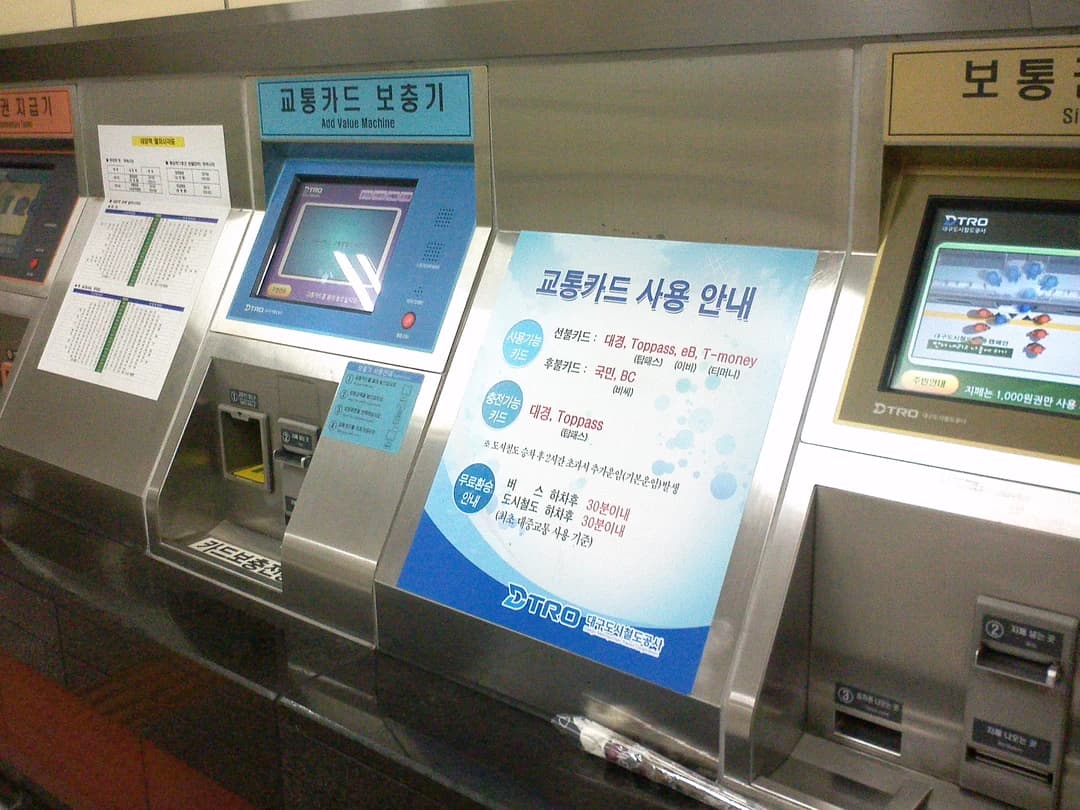
A rechargeable card such as T-money works on subways, most city buses and many taxis across the country, and in some convenience stores. The plastic card itself costs about 3,000 to 5,000 won, depending on the design and the seller (as of 2026-10-11).
Buy it at convenience stores nationwide and at the information centers of Seoul subway stations, then add money at subway ticket machines or convenience-store counters. A single top-up at a subway machine can be up to 500,000 won (as of 2026-10-11).
Tap when you board and again when you get off. If you forget to tap off on a bus or at a subway gate, the fare may be calculated incorrectly, you lose the free transfer, or the gate may not open.
Teenagers and children pay lower fares, but to get the youth rate you must register the date of birth at the convenience store when you buy the card. Children aged 6 to 12 pay the child fare, and children under 6 ride free with a guardian (as of 2026-10-11).
Getting your balance back: the price of the card itself is not refunded. A small leftover balance can be refunded at participating convenience stores for a small fee, while a larger balance (over 50,000 won) can only be refunded at the Tmoney Town desk by Seoul Station exit 10 (as of 2026-10-11). Spend it down before the last day if you can.
Passes and visitor cards
Mpass is a T-money pass for foreign visitors that allows up to 20 rides a day on the Seoul subway, city buses and the all-stop airport train (not the express). Prices: 1 day 15,000, 2 days 23,000, 3 days 30,500, 5 days 47,500, 7 days 64,500 won (as of 2026-10-11).
Mpass is issued and returned at Tmoney Town by Seoul Station exit 10, it is valid for 30 days from issue, and it is paid in cash in won only. Buying after 17:00 takes 3,000 won off the price (as of 2026-10-11).
The Climate Card is Seoul’s unlimited pass for the subway (except the Sinbundang Line and GTX) and Seoul buses. The card costs 3,000 won and the passes are 1 day 5,000, 2 days 8,000, 3 days 10,000, 5 days 15,000 and 7 days 20,000 won (as of 2026-10-11).
The Climate Card pass starts once it is loaded and cannot be topped up until it expires, and it can only be bought or charged with cash or a Korean-issued card. From 2026-10-01 the 30-day version has been discontinued and the card is used in Seoul only (as of 2026-10-11).
Is a pass worth it? Compare the number of rides you expect with the per-ride fare of 1,550 won: a pass pays off on days with many rides, but not on days with only two or three trips (as of 2026-10-11).
Other visitor cards exist too: the EZL card starts at 4,000 won and is sold at convenience stores, and WOWPASS costs 5,000 won and also works for shopping and exchange. Both work for transit with transfer discounts (EZL) or as a prepaid wallet (WOWPASS) (as of 2026-10-11).
Subway fares and the transfer discount
Adult base fare with a transit card in the Seoul area is 1,550 won for trips up to 10 km, then 100 won more for every 5 km between 10 and 50 km, and 100 won more for every 8 km beyond 50 km (as of 2026-10-11).
Teenagers (13 to 19) pay a base fare of 900 won and children (6 to 12) pay 550 won; children under 6 ride free (a guardian can take up to three) (as of 2026-10-11).
A single-journey ticket from a machine costs 100 won more than the card fare, plus a 500 won deposit that you get back by inserting the ticket into a deposit refund machine at your destination station (as of 2026-10-11). The ticket works on the subway only.
Transfers between subway lines run by the same system are free inside the gates. Some lines add a surcharge: the Sinbundang Line adds 500 to 1,900 won depending on the section, the EverLine adds 200 won and the U Line adds 300 won (as of 2026-10-11).
Subway and bus transfers are discounted when you use a transit card and tap on and off every time: if you board the next vehicle within 30 minutes (60 minutes between 21:00 and 07:00), the trip is priced as one combined distance, with the base fare covering up to 10 km and 100 won more for every 5 km after that (as of 2026-10-11).
A trip can include up to five rides at the combined rate. If you do not tap on a reader when getting off, you lose the transfer benefit and each vehicle is charged separately; a ride started after the time limit counts as a new trip.
Early-bird discount: from the first service until 06:30, paying with a prepaid or postpaid transit card takes 20% off the subway fare, but not on a transfer after using another form of transport (as of 2026-10-11).
Using the subway
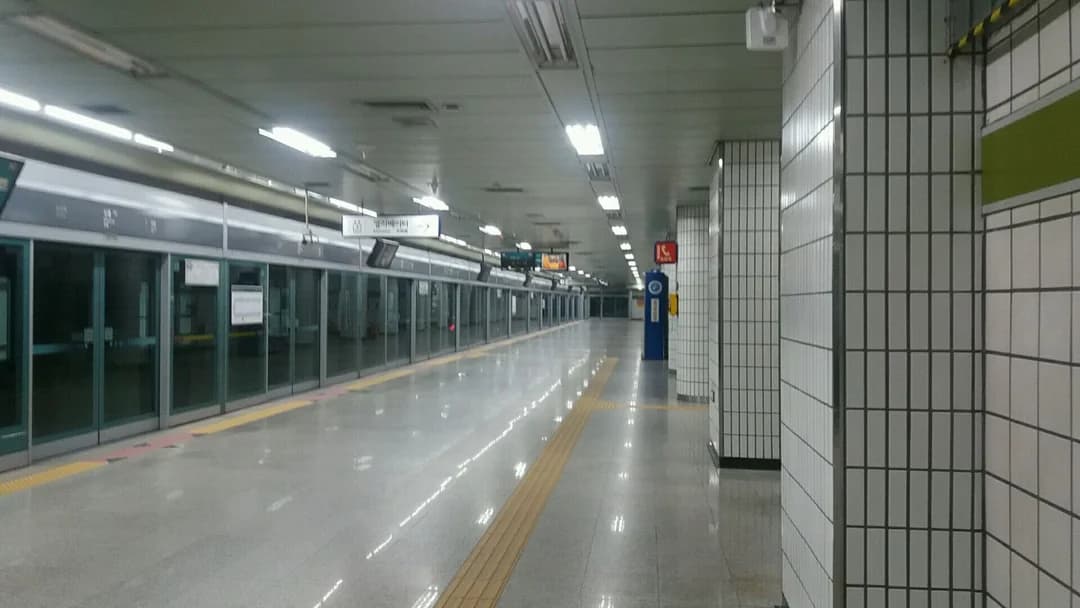
- Find your line by its number and color, then check the name of the last station on the platform sign: that tells you the direction of travel.
- Tap your card at the gate; with a single-journey ticket, tap it on the card reader on the right side of the gate. Wait behind the platform line, let passengers get off first, then board.
- Most stops are announced in Korean and English, often also in Japanese and Chinese, and a screen in the car shows the next station.
- Transfer stations link lines through internal passages that follow colored signs; follow the sign for your line number instead of leaving through the gates.
- Note your exit number before leaving the platform. Addresses and meeting points are often given as a station and exit number, and big stations have many exits.
- At your destination, tap the card at the exit gate. With a single-journey ticket, insert it into the deposit refund machine to get your 500 won back (as of 2026-10-11).
Transit etiquette
- Keep the seats marked for older people, pregnant women and people with disabilities free, even if the carriage looks empty.
- Speak quietly, keep phone calls short and use earphones for videos and music.
- Let people get off before you board, stand behind the line on the platform and do not hold the doors.
- Take large suitcases to the end of the carriage or the doorway so they do not block the aisle, and avoid weekday rush hour when you have a lot of luggage.
- Eating strong-smelling food and putting your feet on the seats are frowned upon; drinks with a lid are usually fine.
City buses
In Seoul, the color of the bus shows the type: blue buses run long trunk routes between districts, green buses are branch routes that connect residential areas to subway stations, red buses are express services to the outer metropolitan area, and yellow circular buses run in loops (most were discontinued; the Namsan loop buses remain). Small green village buses cover short neighborhood routes.
Each type has its own fare, and red express buses and night buses cost more than the blue and green ones. With a transit card the transfer discount in the subway section above applies to blue, green, village and circular buses.
Many city buses no longer accept cash, and the buses in Incheon, Daegu and Gwangju are fully cashless. Do not count on paying cash; carry a transit card.
Board at the front door and tap your card; tap again at the exit door when you get off. Press the stop button before your stop, since buses do not always stop unless someone is waiting or pressing the button.
Night buses in Seoul carry an N in front of the route number and run after the subway has stopped. Local map apps show real-time bus arrivals, and bigger stops have digital boards.
KTX, SRT and intercity trains
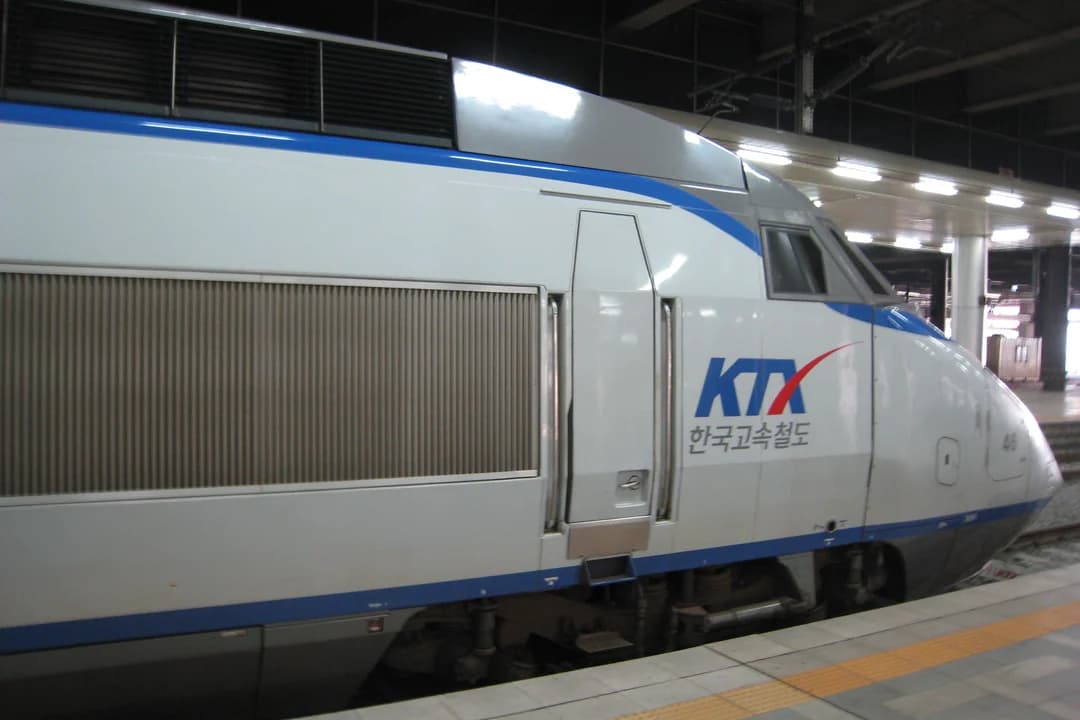
KTX is the high-speed train run by Korail, with a top speed of 330 km/h. It leaves from Seoul Station, Yongsan Station and Cheongnyangni Station, and reaches Busan, Pohang, Mokpo, Yeosu, Gangneung, Andong and other cities (as of 2026-10-11).
SRT is a separate high-speed service with a top speed of 300 km/h that leaves from Suseo Station in southern Seoul towards Busan or Mokpo, so check which operator and which station your ticket is for.
Seoul to Busan is about 447 km along the Gyeongbu Line, and the fastest KTX trains take a little over 2 hours 15 minutes; many take about 2.5 hours, depending on the number of stops (approximate, as of 2026-10-11).
Slower trains run on the same network: ITX-Saemaeul and Saemaeul are premium conventional trains, Mugunghwa trains stop at small stations that KTX skips, and ITX-Cheongchun runs from Yongsan to Chuncheon at up to 180 km/h.
Booking train tickets and rail passes
Tickets go on sale one month before departure at 07:00 and close 20 minutes before the train leaves; in the apps, sales can run until just before departure (as of 2026-10-11).
You can book at a ticket counter or kiosk, in Korail’s online booking or the KORAIL+ app, and through Naver train booking and Kakao T. Online you can pick your seat in advance. Seats sell out around public holidays and weekends, so reserve early for popular routes such as Seoul to Busan.
The KORAIL Pass for foreign visitors comes in 2-, 3-, 4- and 5-day versions that you can use within ten days. It covers unlimited standard-class rides on Korail trains with up to two seat reservations a day, and first-class seats at 50% of the regular fare; SRT, subways and temporary tourist trains are not covered (as of 2026-10-11).
A KORAIL Pass+ card combines the pass with a transit and debit card, and can be picked up and topped up at around 80 kiosks, including those at Incheon Airport and Seoul Station (as of 2026-10-11).
Keep the QR code or ticket until you leave the station; staff may check tickets on board, and you scan out at some stations. Korail’s customer center answers in English every day from 08:00 to 20:00 on 1599-7777 (as of 2026-10-11).
Express and intercity buses
Express buses use expressways and run non-stop between cities; intercity buses use expressways and national highways, make intermediate stops and reach many more destinations. Some routes are about as fast as the train.
Fares depend on the comfort class of the bus, and a late-night surcharge applies on some night services. Standard, premium and deluxe seats differ in width and legroom.
Buy tickets at the terminal counters or kiosks, or through an online reservation service, and have the departure terminal name ready: Seoul has several, such as Seoul Express Bus Terminal in Gangnam and Dong Seoul Bus Terminal in the east.
Luggage normally goes in the hold under the bus; keep valuables and your ticket with you. Long routes stop at highway rest areas, where you have time for the toilet and a snack, so note the departure time and the bus number before you step off.
Taxis
Regular taxis are metered and can be recognized by the TAXI sign on the roof and a yellow license plate; deluxe taxis are usually black, more comfortable and more expensive. In Seoul the regular taxi base fare is about 4,800 won, then roughly 100 won for every 130 to 150 meters, and waiting in slow traffic is added by time (as of 2026-10-11).
A late-night supplement applies from 22:00 to 04:00 and is highest between 23:00 and 02:00; highway tolls are added to the fare, and fares in other cities differ slightly (as of 2026-10-11).
International taxis have drivers who speak English, Chinese or Japanese and can be booked in advance; in Seoul they are metered with a 20% surcharge, and trips from the airport follow a fare table by area (as of 2026-10-11).
Most taxis accept cash, credit cards and a transit card. Show the destination address or a map pin in Korean instead of explaining it; taxi apps such as Kakao T can send a car to your location, but some need a Korean phone number or a locally issued card.
Wear the seat belt and keep your belongings with you. If something goes wrong, note the license plate number; the 1330 Korea Travel Helpline can help with interpretation for complaints.
From Incheon Airport into Seoul
The airport railroad (AREX) has two services. The express runs non-stop to Seoul Station in about 43 minutes from Terminal 1 and about 51 minutes from Terminal 2; the all-stop train takes about 59 minutes from Terminal 1 and about 66 minutes from Terminal 2 (as of 2026-10-11).
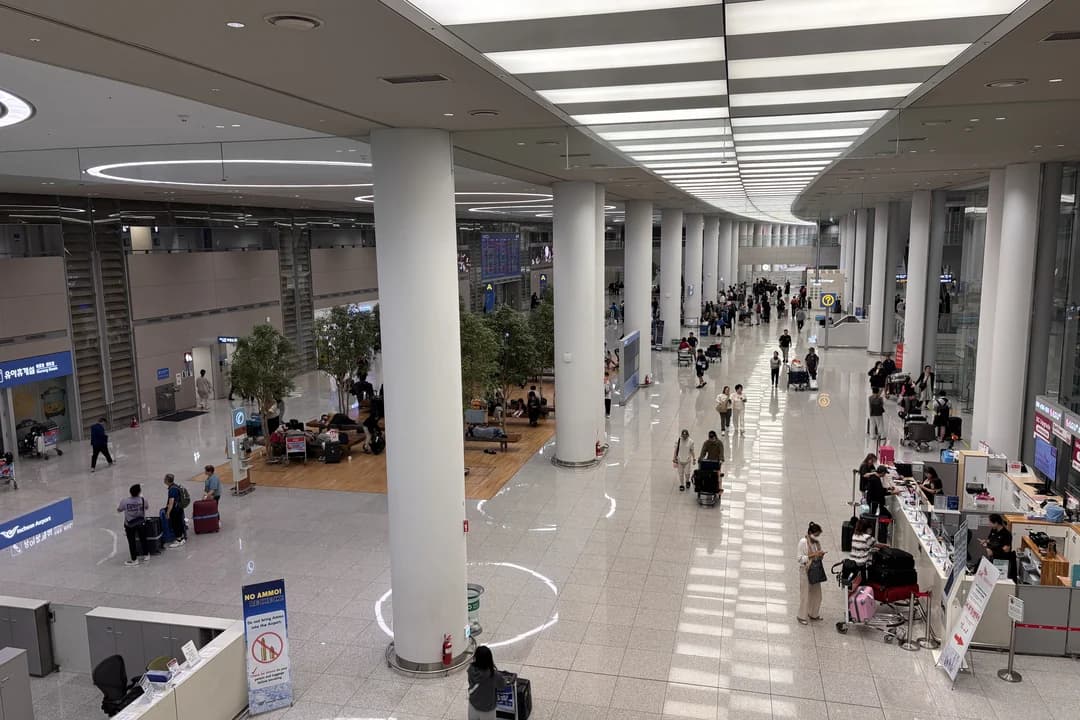
Express tickets are sold online and at the station ticket machines; the all-stop train takes a transit card, so you can tap straight in. Both terminals have a transportation center on the basement 1 level with ticket machines and information desks.
Airport limousine buses reach many parts of Seoul and the capital area and are handy with luggage. Cash and transit cards are not accepted on board, so buy the ticket first: at Terminal 1 the ticket offices are on the first floor inside and outside the terminal, and at Terminal 2 there is a staffed office and a vending machine on the basement 1 transportation center.
Taxis wait at the taxi platform outside both terminals and take cash, credit cards and transit cards. International taxis must be reserved in advance. It is the door-to-door option when you arrive late at night or are traveling in a group.
If you do not want to carry bags, same-day luggage delivery runs between the airport and stations on Seoul Metro lines 1 to 9. At the airport the counters are on level 3 of both terminals opposite check-in counters B and H. The price for a suitcase up to 23 inches is from 20,000 won on weekdays and 29,000 won at weekends (as of 2026-10-11).
Choose by where your hotel is, how much luggage you have and the time of day. For help in English, the airport customer center is open every day from 07:00 to 22:00 on 1577-2600 and the airport railroad answers on 1599-7788 (as of 2026-10-11).
Directions apps and useful phrases
Walking and driving directions in some international map apps are limited in Korea, so a local app such as Naver Map or Kakao Map is often more reliable. They show real-time bus arrivals, subway routes and exit numbers; copy the place name in Korean when you can.
Papago can translate text from your camera and short conversations. Showing the translated Korean address on your screen to a driver is often the fastest way to be understood.
Phrases: Where is the subway station? Jihacheol-yeogi eodiyeyo? (지하철역이 어디예요?). Please go to this address: I juso-ro gaju-seyo (이 주소로 가주세요). Please stop here: Yeogiseo sewo juseyo (여기서 세워 주세요). How do I get to this place? Yeogi eotteoke gayo? (여기 어떻게 가요?).
Subway exit numbers and platform numbers are the easiest way to point someone to a place. If you are lost, ask station staff, who are used to helping visitors, or call the 1330 Korea Travel Helpline for help in several languages.
Common mistakes
- Do not forget to tap off: on a bus or at a subway gate it can mean a wrong fare, a lost transfer discount or a gate that stays shut.
- Do not take the wrong direction or leave by the wrong exit. Check the last station on the platform sign and the exit number before you walk out.
- Do not arrive at the wrong terminal or station for a train or bus: KTX and SRT leave from different stations in Seoul, and a city can have several bus terminals. Check the departure place on the ticket once more before you leave.
- Do not rely on cash for buses or on a foreign card for every machine; carry a transit card and a second way to pay. Do not wait until the last day to deal with your leftover card balance either.
- Do not book a tight connection after a long journey: allow extra time at big stations such as Seoul Station and at the airport, where walking between platforms, ticket machines and security can take longer than you expect.
Quick answers
What is the cheapest way to get around Seoul? A transit card with the subway and bus transfer discount, since each separate ride costs from 1,550 won as an adult and the combined rate can be lower than two separate fares (as of 2026-10-11).
Can I use my own foreign credit card on the subway? Not reliably; most gates and machines are set for a transit card, so buy a card and load it with cash or follow the options shown on the machine.
How early must I be at a KTX station? Plan to arrive well before departure, because the ticket window closes 20 minutes before the train leaves, and big stations take time to cross (as of 2026-10-11).
Where do I leave my luggage for a few hours? Many Seoul Metro stations have lockers priced by size, and staffed storage counters at Seoul Station, Hongik University, Myeongdong and Gimpo Airport stations; a small suitcase starts at 3,000 won for the first four hours on weekdays (as of 2026-10-11).
Fares, passes and timetables change from time to time. This guide is refreshed regularly, and the figures here are as of 2026-10-11.
Sources and last update
Last updated: 11 October 2026. Figures are as of the date shown.
Source: Korail · T-money · Seoul Metro · Incheon Airport Railroad · Kobus · Korea Tourism Organization · Checked 11 Oct 2026
Written by HOLIDAY in its own words from official public information. This is not an official publication of the Korea Tourism Organization or any government body.
HOLIDAY refreshes this article regularly as fares, hours and event dates change.