Suwon Hwaseong and Namhansanseong, the Paju DMZ tour with fees, hours and ID rules, Gapyeong, the Korean Folk Village, local food, festivals and ready-made 3-day and 5-day plans from Seoul.
Overview of Gyeonggi
Gyeonggi is the province that surrounds Seoul. It covers roughly 10,200 km², about 17 times the area of Seoul, and is divided into 31 cities and counties: 28 cities and three counties, Yangpyeong, Gapyeong and Yeoncheon. The largest by area are Yangpyeong (877 km²), Gapyeong (843 km²), Pocheon (826 km²), Hwaseong (689 km²), Yeoncheon (675 km²), Paju (672 km²) and Yeoju (608 km²).
Three UNESCO World Heritage listings touch the province: Hwaseong Fortress in Suwon (1997), the Joseon royal tombs (2009), of which several lie in Gyeonggi, and the mountain fortress of Namhansanseong (2014). Alongside them are the DMZ sites at Paju, the lakes and gardens of Gapyeong, the Korean Folk Village and the potters and farms of Icheon, Yangpyeong, Pocheon and Anseong.
Distances are larger than they look on a map. Plan one main stop per day, or two stops that are in the same county, and return to Seoul in the evening. Ski resorts in Pocheon, Icheon and Gwangju are covered in our ski guides.
Best time to go to Gyeonggi
Spring and autumn suit the fortress walks, villages and gardens. Summer is hot and humid, so plan shade and water stops, and winter brings cold weather that suits the light festivals and the ski resorts. Suwon Hwaseong Haenggung is open for evening visits from 1 May to 1 November 2026 on Fridays, Saturdays, Sundays and public holidays, 18:00 to 21:30 with the last entry at 21:00 (as of 2026-10-11).
The Garden of Morning Calm in Gapyeong runs its winter light garden from early December to mid-March, with hours of 10:00 to 21:00 and until 23:00 on Saturdays (as of 2026-10-11). In October, Pocheon holds the Sanjeong Lake Festival, which has run every October since 1997, and autumn color fills the hills around Namhansanseong and Gapyeong.
Getting there from Seoul and the airport
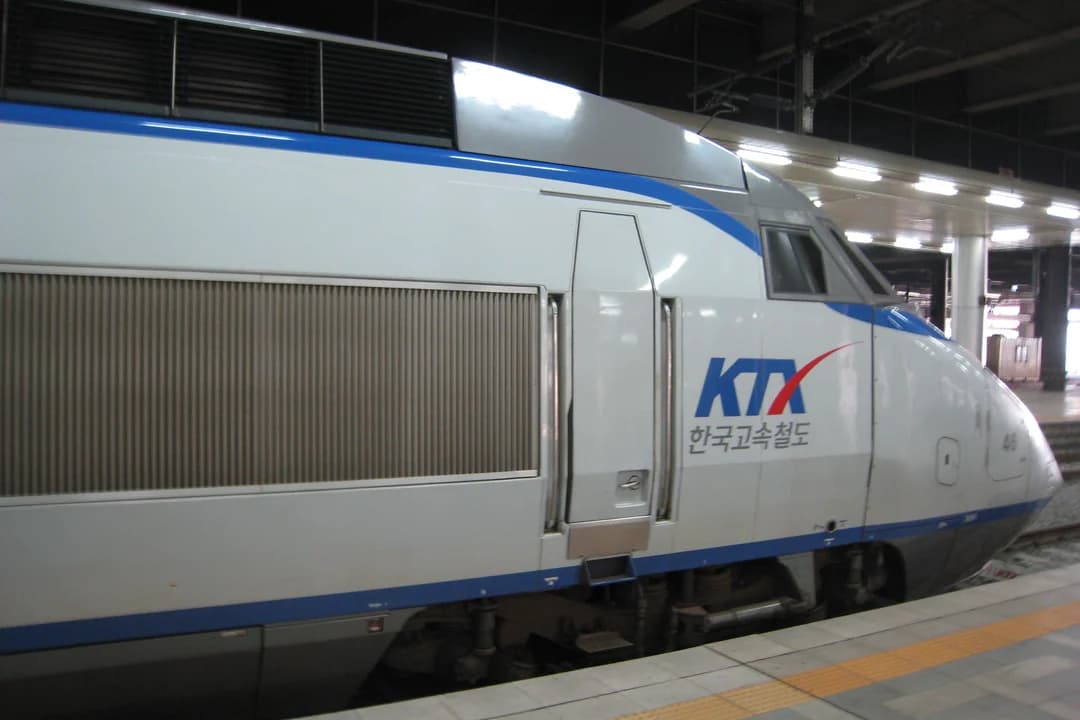
Suwon lies about 30 km south of Seoul on the Gyeongbu line: KTX and other trains stop at Suwon Station, which Subway Line 1 also serves. Gapyeong is on the Gyeongchun line, and the ITX-Cheongchun train between Yongsan, Cheongnyangni and Chuncheon stops at Gapyeong. Paju and the border area are reached on the Gyeongui-Jungang Line to Imjingang Station. Namhansanseong is reached by Subway Line 8 and Line 5 followed by a local bus.
From Incheon Airport, night buses leave Terminal 1 at 00:30 and 04:10 for Gyeonggi towns, for example the N4000 to Suwon and Anyang, the N5300 to Seongnam, the N5700 to Goyang and Paju, the N7200 to Uijeongbu and the N8877 to Yongin and Suwon, which stops at the Korean Folk Village. Fares depend on distance and time, and staff or discount tickets are not accepted (as of 2026-10-11).
For the Korean Folk Village there are direct buses from Seoul: the 5001-1 from Sinnonhyeon Station via Gangnam, the 1560 from Gangnam Station and the 4101 from Seoul Station. By rail you can take the Suin-Bundang Line to Sanggal Station (Exit 3), or Line 1 to Suwon Station (Exit 4), and then bus 37 or 10-5. Others take the Suin-Bundang Line to Jukjeon and change to bus 30 at the Shinsegae Department Store stop.
Suwon Hwaseong Fortress: walls, fees and hours
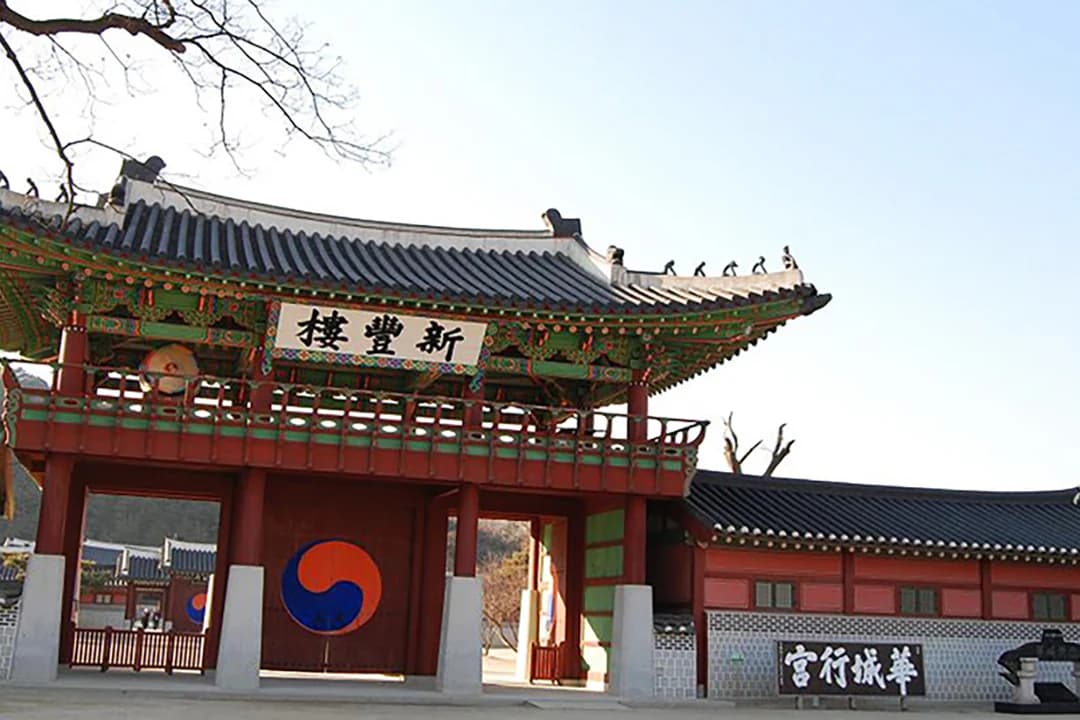
Hwaseong Fortress was built by King Jeongjo between January 1794 and September 1796, after he moved the tomb of his father, Prince Sado, to Suwon. The wall is 5,744 m around and encloses about 130 hectares, with the eastern side on flat ground and the western side climbing Paldalsan hill. The four main gates are Janganmun, Paldalmun, Changnyongmun and Hwaseomun; 49 structures, including gate towers, water gates and watch towers, were recorded, though some were lost to floods and war. UNESCO listed the fortress in December 1997.
Walking the wall itself is free, and the fortress is open all year with night viewing allowed. The paid part is Hwaseong Haenggung, the temporary palace of the king, together with Hwaryeongjeon. It is open daily from 09:00 to 18:00, with the last entry one hour before closing. Adults pay ₩2,000, teens and soldiers ₩1,500 and children ₩1,000; the combined ticket for Haenggung, the Hwaseong Museum and the Suwon Museum is ₩4,000, ₩2,500 and ₩1,000 (as of 2026-10-11). Entry is free on the last Wednesday of the month, for visitors aged 65 and over, children under six, and hanbok wearers.
The Hwaseong Eocha, a sightseeing train that circles the fortress, costs ₩6,000 for adults, ₩3,500 for teens and soldiers and ₩2,000 for children, and traditional archery is ₩3,000 for ten arrows (as of 2026-10-11). Visitors may be refused entry if they carry flammable goods, weapons, alcohol or camping gear, or bring pets, except service dogs. Walk the wall in the morning or the late afternoon and keep the Haenggung for the middle of the day.
On Fridays to Sundays and public holidays the Haenggung opens in the evening, and a free taekwondo show runs at Yuyeotaek from 18:00 to 19:20 on Fridays to Sundays from 16 October to 1 November 2026, with the Haenggung ticket still needed (as of 2026-10-11). Royal tombs of the Joseon dynasty are also nearby: the Yungneung and Geolleung tombs in Hwaseong city are open 09:00 to 18:00 in the spring and autumn periods, closed on Mondays, and most tombs charge ₩1,000.
Namhansanseong and the royal tombs
Namhansanseong is a mountain fortress in Gwangju, Gyeonggi, listed by UNESCO in 2014. The main wall is about 7.5 km around, and with the outer walls the total length reaches about 12.4 km, with walls roughly 3 to 7 m high. In the winter of 1636, King Injo took refuge here during the Manchu invasion with about 13,000 soldiers and only about 50 days of food, and surrendered after 45 days.
It is a walking destination, with the wall as the path. You reach it by Subway Line 8 to Sanseong Station or Namhansanseong Entrance Station, or Line 5 to Macheon, followed by a local bus up the hill. Allow half a day for a section of the wall and a meal at the village inside.
Imjingak and Paju
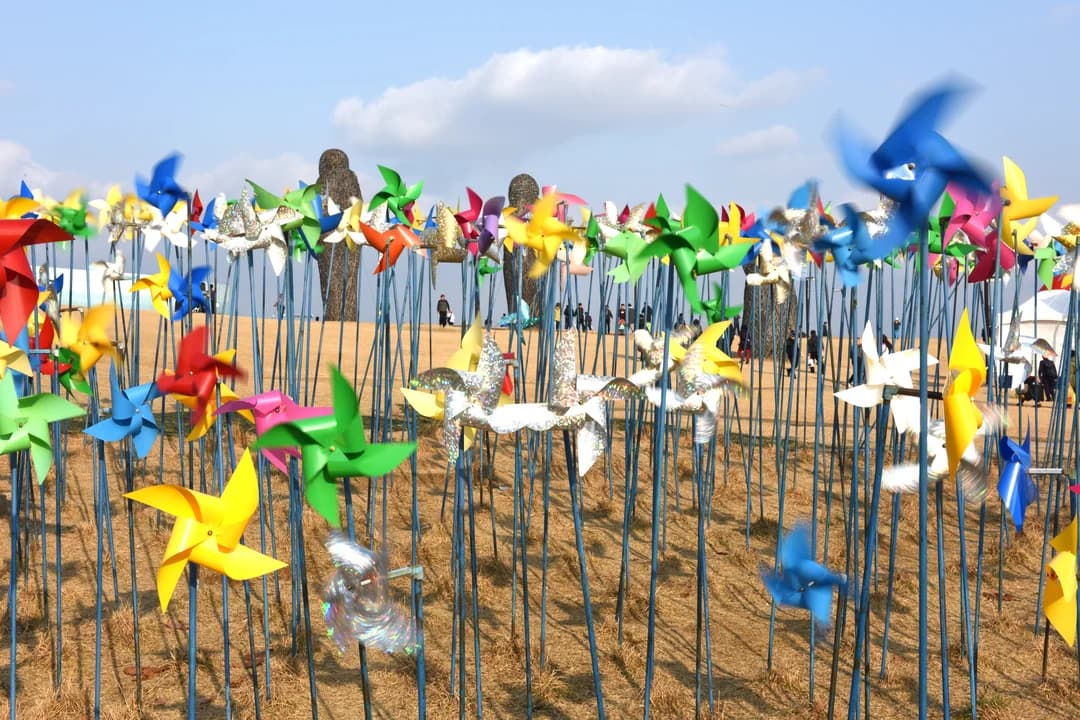
The Korean War ended with a cease-fire on 27 July 1953. The demilitarized zone follows the cease-fire line, extends 2 km to each side, and runs about 250 km across the peninsula. Imjingak, about 7 km from the military demarcation line, was built in 1972 and is the easiest border site to visit because you do not pass a security checkpoint. Admission is free.
Highlights are Freedom Bridge, across which 12,733 prisoners of war returned in 1953, and the Peace Bell, cast in 2000 and weighing 21 tons. The Gyeongui railway line that ran past Imjingak was destroyed in 1950. Paju is also home to Heyri Art Valley, described as Korea’s largest art village, and to Dorasan Station, opened in 2002 as the northernmost station on the line in the south.
To reach Imjingak, take the Gyeongui-Jungang Line to Imjingang Station. From there it is about a 20-minute walk, or you can take the village bus 058A or 058B from the Imjingang Station stop. The parking lot at Imjingak is open from 08:00 to 20:00 (as of 2026-10-11).
The DMZ peace tour: rules, fees and times
The Paju DMZ peace tour covers the Third Tunnel, the DMZ film room and exhibition hall, the Dora Observatory with telescopes, and a monument called One Earth. The individual A course lasts about three hours and runs Imjingak, Third Tunnel, Dora Observatory, Tongil village and back to Imjingak. The tour does not run on Mondays, on weekday public holidays, or on the days of Seollal and Chuseok, and any date can be canceled for security or weather.
Tickets are sold at the Imjingak ticket office from 09:00 to 14:30, and bookings are issued there as well, once everyone in your party has arrived at Imjingak; days often sell out early. Individual shuttle departures from Tuesday to Friday are at 09:20, 09:40, 10:00, 10:30, 11:30, 12:30, 13:00, 13:30, 14:00 and 14:40, and weekends have fourteen departures between 09:20 and 14:40. Each shuttle seats 44 people, of whom 14 can be booked in advance; the rest are sold on the day (as of 2026-10-11).
Individual fares are ₩12,200 for adults on the monorail course and ₩9,200 on the walking course, ₩9,500 and ₩7,000 for students from elementary to high school, and ₩7,700 and ₩6,200 for visitors aged 65 and over (as of 2026-10-11). Foreign visitors do not qualify for the reduced city rates. The monorail course turns into a walking course if the monorail is out of service.
Bring valid ID. Foreign visitors need a passport, a residence card or a US military ID card; a photocopy, a photograph or an expired passport is not accepted. Minors may enter with an adult guardian. Photography and filming are prohibited along the whole course, including drones, and firearms, dangerous goods, alcohol and fishing gear may not be brought in. Stay on the designated roads, because unmarked mine areas lie beyond them. The Third Tunnel is narrow and steep, so people with heart or breathing conditions, high or low blood pressure, wheelchair users and people who have been drinking may be refused entry.
Gapyeong: gardens, lakes and Nami Island
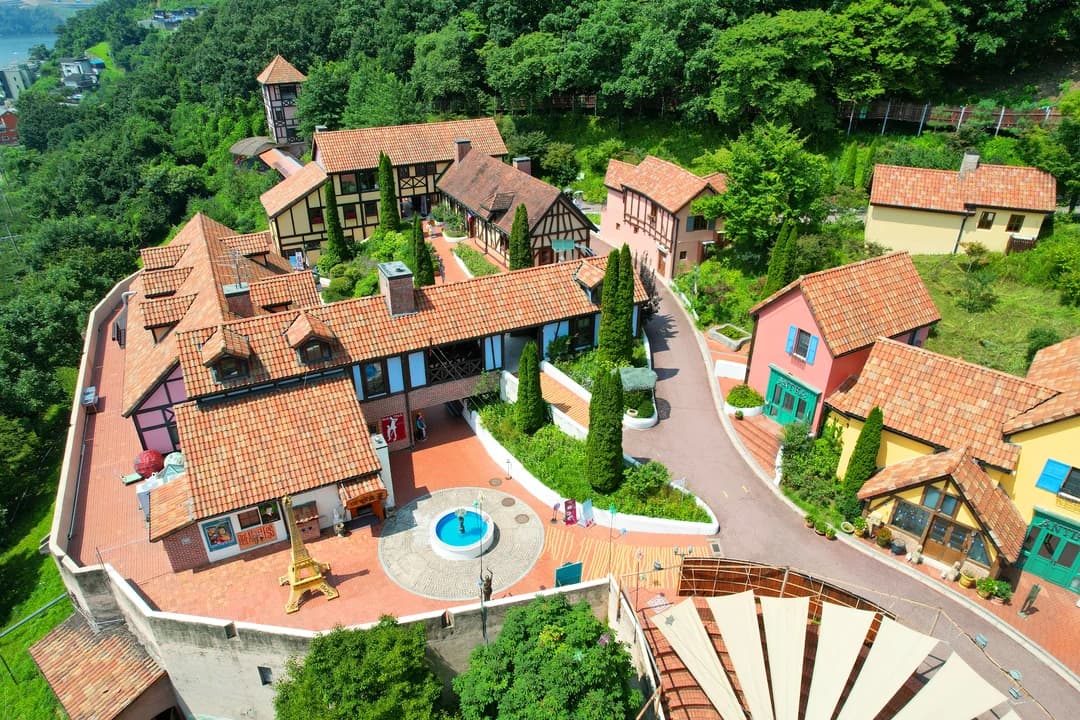
Gapyeong is the second-largest county in the province at 843 km², with lakes, mountains and gardens along the north branch of the Han River. The ITX-Cheongchun train from Yongsan and Cheongnyangni stops at Gapyeong, and the Gyeongchun line serves stations such as Cheongpyeong and Gangchon. Most lodgings cluster near Cheongpyeong Lake and Yumyeongsan.
The Garden of Morning Calm, in the Sangmyeon area of Gapyeong, charges ₩11,000 for adults, ₩10,000 each for groups of 30 or more on weekdays, ₩9,000 for seniors, people with disabilities and merit holders, and ₩8,000 for Gapyeong residents. It is open every day of the year from 08:30 to 19:00, with the last entry at 18:00 (as of 2026-10-11). Its winter light garden takes over from early December until mid-March, with extended hours on Saturdays.
Nami Island is a half-moon-shaped river island of about 430,000 m² in the Bukhan River, just across the provincial border in Chuncheon, Gangwon, and about 3.8 km from Gapyeong. It was formed when the water rose after the Cheongpyeong Dam was built in 1944, and became famous after the 2002 drama Winter Sonata. You reach it by ferry or by zip line. Petite France, a village built in a French style, is a short trip away in Gapyeong, and our blog has a combined day-trip post.
Yongin: the Korean Folk Village and Everland
The Korean Folk Village, at 90 Minsokchon-ro in Giheung-gu, is an open-air museum of traditional houses with daily performances. A weekday all-day adult ticket is ₩37,000 and a weekend ticket ₩39,000; children from 36 months to elementary school pay ₩30,000 and ₩32,000, and a foreigner rate of ₩22,000 is offered on presentation of a passport through 2026 (as of 2026-10-11). Adults are defined as middle-school age and above, and children under 36 months enter free with proof of age.
Daily performances include the welcome show at 10:00, traditional music at 11:30, 14:30 and 16:30, and farmers’ percussion shows at 11:00 and 16:00 from Monday to Thursday and at 16:00 on Fridays to Sundays and holidays. On the day of research the park listed hours of 10:00 to 22:00, and these change with season and weather. Bring a coat in spring and autumn, because the village is open-air.
Everland, also in Yongin, opened in 1976 as Yongin Farmland and was renamed Everland in 1996. It has five themed areas: Global Fair, Zootopia, European Adventure, Magic Land and American Adventure. It can be reached by the EverLine light rail (Jeondae·Everland station), by public buses, or by shuttle buses that stop in Seoul. The Discover Seoul Pass lists Everland among its free-entry attractions.
Yangpyeong, Icheon, Pocheon and Anseong
Dumulmeori in Yangpyeong, the county with the largest area in the province (877 km²), is where the Bukhan and Nam rivers meet to form the Han River. It is known for sunrise mist on the water, a 400-year-old zelkova tree and yellow-sailed boats. Semiwon Garden, the Namhan River cycling lanes and the Yangpyeong five-day market are nearby, and Yongmunsa Temple has a famous ginkgo tree. Yangpyeong is also known for its Korean beef.
Icheon, in the south-east, is a center of ceramics, with a pottery village of more than 300 firms firing porcelain in traditional wood-fired kilns, and it is also known for its rice and for a hot-spring area. Pocheon, in the north-east, covers 826 km² and holds the Gallery Sansawon brewery with its free samples of ten traditional drinks, the Korea National Arboretum at Soheul and a winter lighting festival at Herb Island. Anseong, about 80 km south of Seoul, is known for brassware, Korean beef, pears and grapes.
Gwangmyeong Cave, in Gwangmyeong on the south-western edge of Seoul, has a wine cave, a VR center and cave experiences. It is open 09:00 to 18:00 with the last admission at 17:00, and it is closed on Mondays (as of 2026-10-11).
Food specialties and where to eat in Gyeonggi
Suwon is known for Suwon galbi, a local style of beef ribs, and Yangpyeong and Anseong are known for Korean beef. Icheon rice is a regional product, and Anseong adds pears, grapes and ginseng.
Pocheon and Gapyeong are known for makgeolli, the unfiltered rice wine, and Pocheon’s Gallery Sansawon offers free samples of ten traditional drinks. Around Paju and the border, local Jangdan soybeans are a regional product. Inside the Korean Folk Village you can eat in traditional-style restaurants, and near Namhansanseong the village inside the fortress serves home-style Korean dishes.
Festivals and seasonal highlights in Gyeonggi
Dated events this year are the Haenggung evening openings in Suwon on Fridays to Sundays and public holidays from 1 May to 1 November 2026 (18:00 to 21:30), and the taekwondo show on Fridays to Sundays from 16 October to 1 November (18:00 to 19:20). The Garden of Morning Calm light garden runs from early December to mid-March (as of 2026-10-11).
Recurring festivals are the Sanjeong Lake Festival in Pocheon every October since 1997, the Anseong Namsadang Baudeogi Festival in September, the Hwaseong Cultural Festival in Suwon in October, and Herb Island’s winter lighting festival. The Jarasum International Jazz Festival is held at Gapyeong, and Yangpyeong lists a Kimjang festival and water festival among its events. Exact dates change from year to year and are announced each year, and this guide is updated when they are confirmed.
Where to stay for Gyeonggi trips
Most visitors stay in Seoul and make a day trip, because the main sights are reachable by one rail or bus ride. Stay overnight only when you want an evening or morning that day trips miss, such as the Hwaseong Haenggung night opening, a winter light garden, or an early start at the Third Tunnel.
In Gapyeong, lodgings are mostly near Cheongpyeong Lake and Yumyeongsan, while Suwon Station, served by KTX and Subway Line 1, makes Suwon the easiest town for a rail-based overnight stay. Near the Imjingak area, the Camp Greaves DMZ Experience Center houses a youth hostel for up to 240 guests in a former US Army camp.
Accessibility and families in Gyeonggi
Hwaseong Haenggung lends three wheelchairs and two strollers free of charge, and has accessible parking for three vehicles at the Haenggung and six at Yeonmudae. Admission is free for children under six, visitors aged 65 and over, and registered disabled visitors. The Korean Folk Village sets child prices for ages 36 months to elementary school, and under-36-month children enter free with proof.
The Third Tunnel on the DMZ tour is narrow and steep, so wheelchair users and people who find it hard to walk may be refused entry to the tunnel itself, though the observatory and exhibition halls remain open. Fortress walls at Hwaseong and Namhansanseong include slopes and steps, so use the Hwaseong Eocha train if walking is difficult.
Safety and etiquette in Gyeonggi
Near the border follow every posted rule. Photography and filming, including by drone, are prohibited on the DMZ tour, and you must stay on the marked roads because unmarked mine areas lie beyond them. Carry original ID, and do not drink alcohol before entering the tunnel. Tours can be stopped at short notice for security or weather reasons, so do not plan an onward ticket or flight on the same afternoon.
At Hwaseong, do not bring alcohol, flammable goods, camping gear or pets (service dogs excepted) into the fortress grounds that are controlled, as staff may refuse entry. At villages such as the Korean Folk Village, take only photographs and follow staff instructions during performances.
3-day itinerary for Gyeonggi from Seoul
- Day 1, Suwon: reach Suwon Station by Line 1 or KTX, walk or ride to the Hwaseong wall, and spend the morning on the Janganmun and Changnyongmun sections. Lunch in the old town, then Hwaseong Haenggung (09:00 to 18:00) in the afternoon. On Fridays to Sundays and public holidays until 1 November, stay for the evening opening until 21:30 (as of 2026-10-11).
- Day 2, Paju: take the Gyeongui-Jungang Line to Imjingang Station (not on a Monday), walk about 20 minutes or take bus 058A or 058B to Imjingak, and buy a DMZ peace tour ticket before 14:30. The tour takes about three hours. After it, walk around Imjingak and Freedom Bridge and return to Seoul in the evening.
- Day 3, choose Gapyeong or Yongin. For Gapyeong, take the ITX-Cheongchun train to Gapyeong and visit the Garden of Morning Calm (08:30 to 19:00) and, if time allows, Nami Island. For Yongin, take the direct bus 1560 from Gangnam Station or 4101 from Seoul Station to the Korean Folk Village and watch the 11:30 and 14:30 music performances.
5-day itinerary for Gyeonggi from Seoul
- Day 1: Suwon Hwaseong Fortress and Haenggung, then the evening opening from Friday to Sunday (until 21:30). Day 2: Yungneung and Geolleung royal tombs in Hwaseong city (closed Mondays) and a Korean beef lunch, returning to Suwon or Seoul.
- Day 3: Namhansanseong, using Line 8 to Sanseong or Namhansanseong Entrance Station and a local bus; walk a section of the wall and eat in the village inside. Day 4: Paju, with the DMZ peace tour from 09:20 to 14:40 departures (not Mondays), Imjingak and Freedom Bridge.
- Day 5: choose the Korean Folk Village in Yongin (performances through the day), the Garden of Morning Calm in Gapyeong, or Dumulmeori in Yangpyeong for the river confluence and a cycle ride. Keep each day to one main place and be back in Seoul by evening.
Tips for Gyeonggi day trips
- Start early and book return times in your head: DMZ ticket sales stop at 14:30, the Hwaseong Haenggung closes at 18:00 (evening opening until 21:30 on Fridays to Sundays), and the Garden of Morning Calm admits visitors until 18:00. Check the weekly closing days: the DMZ tour and Gwangmyeong Cave do not run on Mondays, and royal tombs close on Mondays.
- For budgeting, the main fees are these: Hwaseong Haenggung is ₩2,000 for adults, the Garden of Morning Calm ₩11,000 and the Korean Folk Village ₩22,000 for foreign visitors with a passport through 2026 (as of 2026-10-11). Carry a transport card for buses, and keep your passport with you near the border.
- Weekends and holidays are crowded, and evening trains and buses fill up. Leave Gapyeong, Yongin and Paju early enough to avoid the evening rush back to Seoul.
Sources and last update
Last updated: 11 October 2026. Figures are as of the date shown.
Source: Gyeonggi Provincial Government · Korea Tourism Organization · Korea Heritage Service · Royal Palaces and Tombs Center, Korea Heritage Service · Suwon Cultural Foundation · Paju City DMZ Peace Tourism · Korean Folk Village · The Garden of Morning Calm · Yangpyeong County Tourism · Gapyeong County · Incheon International Airport Corporation · Wikipedia · Checked 11 Oct 2026
Written by HOLIDAY in its own words from official public information. This is not an official publication of the Korea Tourism Organization or any government body.
HOLIDAY refreshes this article regularly as fares, hours and event dates change.