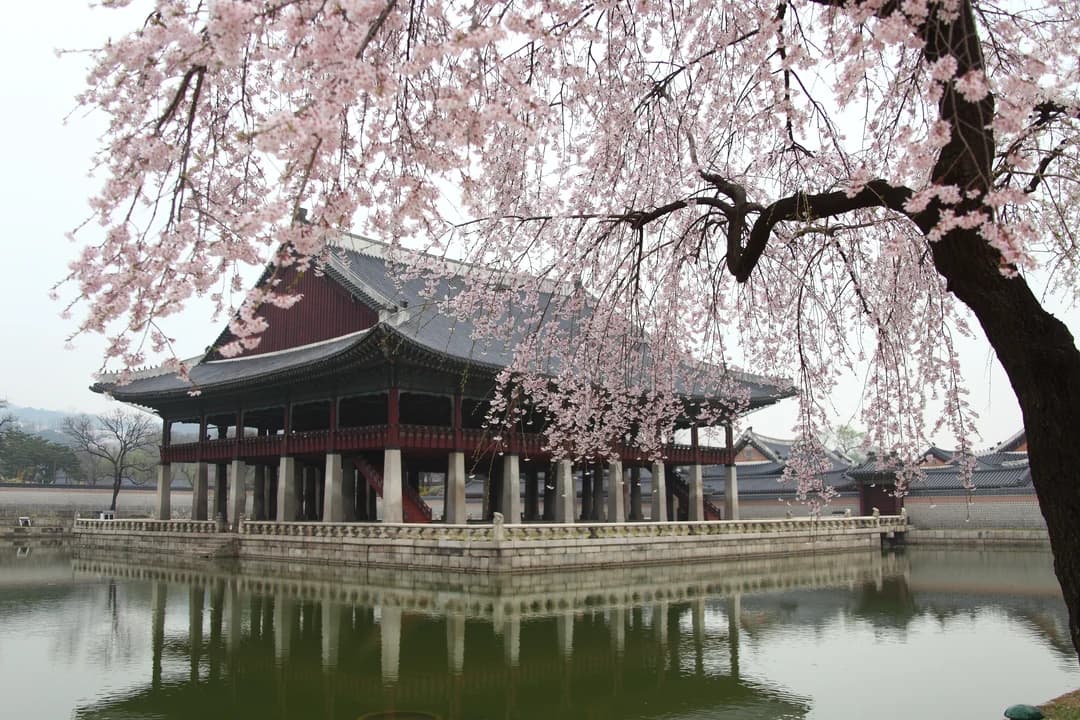
Palace fees, hours and closing days, airport rail times and fares, subway and pass prices, markets, neighborhoods, food, festivals and ready-made 3-day and 5-day plans for Seoul.
Overview of Seoul
Seoul is the capital of Korea. The city covers about 605 km², and the Han River crosses it from east to west, so most visitors think of a northern half and a southern half. North of the river you find the Joseon-era palaces, hanok lanes and the old city wall; the south bank and the river islands hold the business, shopping and sports districts.
The city tourism board groups the districts by character. Jongno, Jung and Yongsan form the historic and commercial core, with Gyeongbokgung, Myeongdong and Itaewon. Mapo, around Hongdae, is the youth culture and arts area. Yeongdeungpo, which includes Yeouido, is the business and finance district. Seocho, Gangnam, Songpa and Gangdong are riverside districts with shopping around Gangnam Station and Samseong-dong and the sports grounds at Jamsil.
Three days is enough for two palaces, the hanok lanes, two markets and one night view. Five days adds the river parks, the southern districts and one day trip outside the city. The sections below give opening hours, fees and transport details so that you can plan without looking anything up elsewhere.
Best time to go to Seoul
Spring and autumn are the easiest seasons. Cherry blossoms line the streets of Yeouido in April, and in October the silver grass festival fills Haneul Park in Mapo while the palaces and the slopes of Bukhansan turn to autumn color.
Summer, from June to August, is hot and humid. The daily high averages about 30 °C in August with lows near 23 °C. The monsoon rains of June and July bring the heaviest rainfall of the year; July averages about 414 mm and August about 348 mm. Typhoons can arrive between July and September. Plan indoor stops for the afternoon and carry water.
Winter is cold and dry. January highs average about 2 °C and lows about −5.5 °C, and snow falls on a couple of dozen days a year. Palaces also close earlier in winter: Gyeongbokgung closes at 17:00 from November to February, against 18:30 from June to August (as of 2026-10-11). Dress in layers and keep palace visits for the morning.
Getting there from Incheon Airport by rail
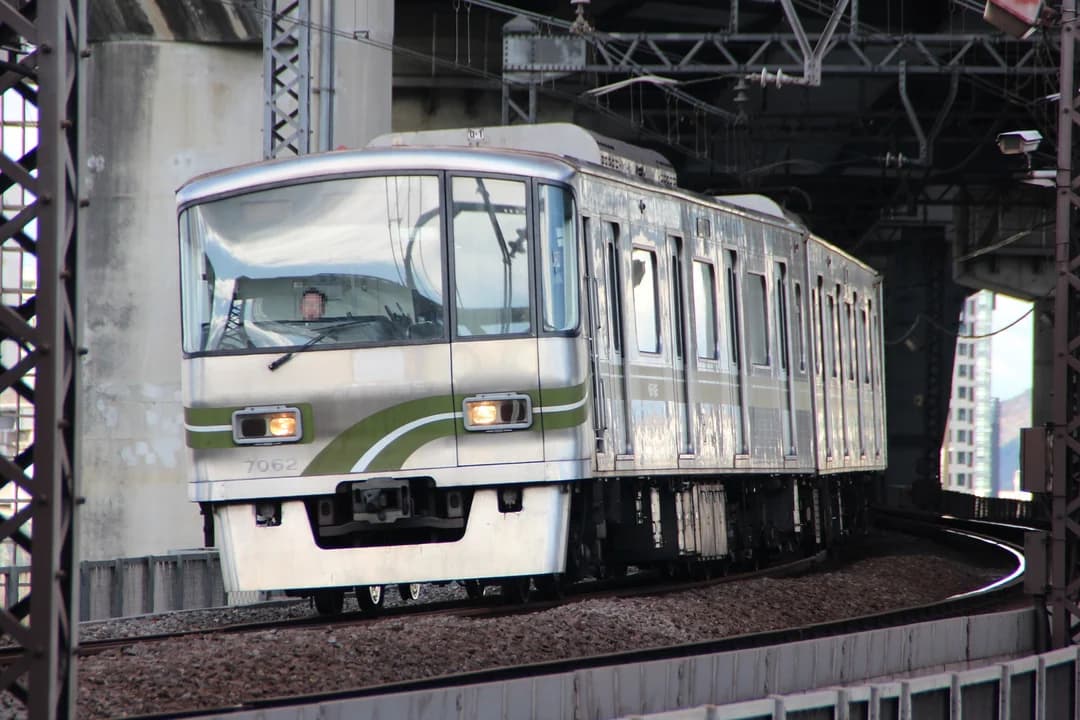
The airport railroad, AREX, links Incheon Airport and Seoul Station with two services. The non-stop express takes about 43 minutes from Terminal 1 and about 51 minutes from Terminal 2. The all-stop train takes about 59 minutes from Terminal 1 and about 66 minutes from Terminal 2, and it stops at Gimpo Airport, Digital Media City and Hongik University, the station for Hongdae.
The adult all-stop fare to Seoul Station is ₩4,750 from Terminal 1 and ₩5,350 from Terminal 2 with a transport card (as of 2026-10-11). A single-use card adds ₩100 and a ₩500 deposit that is refunded at the arrival station. The tourism board lists the express fare at ₩9,500. All-stop trains accept a rechargeable transport card, while express seats are bought online or at station machines.
The all-stop timetable from Seoul Station shows a first train at 05:20 and a last train at midnight, with trains roughly every 3 to 10 minutes during the day and every 4 to 5 minutes in the morning rush (as of 2026-10-11). Express trains leave every 20 to 40 minutes. Allow one to two hours after landing for immigration before you count on a particular train.
Getting there: airport buses, taxis and Gimpo
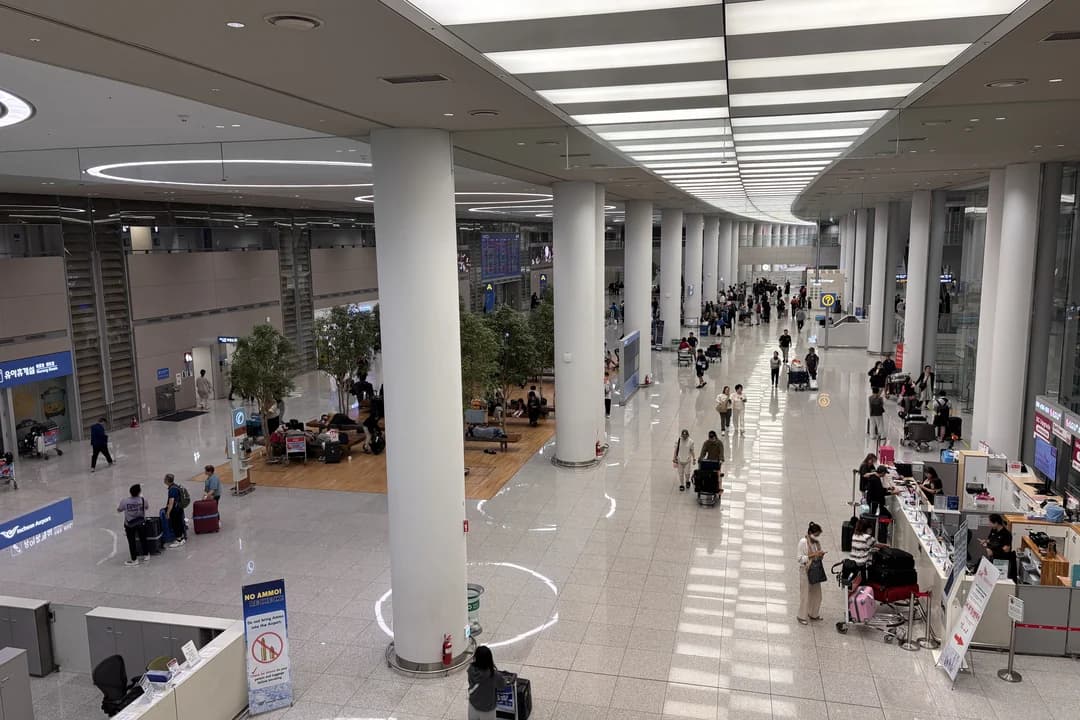
Airport limousine buses run from Incheon to many parts of Seoul. At Incheon they do not accept cash or transport cards, so you buy a ticket in advance. At Terminal 1 the ticket offices are on the first floor, inside and outside the building; at Terminal 2 there is a staffed counter and a machine in the transportation center on the first basement level. Seoul-bound buses stop outside exits 3 to 7 at Terminal 1.
Most airport-to-Seoul transport stops around 23:30. After that, night buses with route numbers starting with N serve points such as Gangnam Express Bus Terminal, Cheonyangni, Dongdaemun Design Plaza and Gwangnaru Station. Night buses to Gyeonggi towns leave Terminal 1 at 00:30 and 04:10, for example the N4000 to Suwon and Anyang and the N8877 to Yongin and Suwon.
Regular taxis from the airport charge a base fare of ₩4,800 for Seoul-bound trips, with a night surcharge of 40% from 23:00 to 02:00 and 20% from 22:00 to 23:00 and from 02:00 to 04:00 (as of 2026-10-11). Pick-up is at stands 5C, 6C and 6D at Terminal 1 and 7C at Terminal 2. International taxis with foreign-language drivers must be booked in advance. Vans marked as call vans have no meter and are not licensed taxis.
Gimpo Airport, used by many domestic and short regional flights, is much closer to the city: the AREX all-stop train reaches Seoul Station in about 23 minutes, and subway Lines 5 and 9 and other lines reach central Seoul within about an hour.
Getting around Seoul: subway, bus and taxi
The subway is the backbone of travel in Seoul. Each line has its own number, name and color, and signs are in Korean, English and Chinese. Trains run from roughly 05:30 to midnight, depending on the station. After the June 2025 revision the adult fare with a transport card is ₩1,550 for the first 10 km, plus ₩100 for each further 5 km, and a single-use ticket costs ₩1,650 plus a ₩500 deposit that you get back at a deposit refund machine (as of 2026-10-11).
Transfers between lines inside the fare gates are free, except to or from the Sinbundang Line, which adds a fee by section. With a transport card, a subway-to-bus or bus-to-subway transfer within 30 minutes is discounted, and the window is one hour between 21:00 and 07:00. Tap in at the start and tap out at the end of each ride.
City buses are color-coded: blue for main routes, green for feeders, yellow for circular routes around the center, red for rapid routes to nearby cities, plus short local routes and late-night buses. Adult card fares are ₩1,500 for blue and green, ₩1,400 for yellow, ₩3,000 for red, ₩1,200 for local routes and ₩2,500 for late-night buses; fares were last adjusted in August 2023 (as of 2026-10-11).
A regular taxi in Seoul starts at ₩4,800 for the first 2 km (as of 2026-10-11) and can be paid by cash, credit card or transport card. Hailing apps such as k.ride, a version of Kakao T for foreign visitors that accepts overseas cards, and the Uber taxi service show a fare estimate in advance. Taxis are easy to find near major sights, but at rush hour the subway is usually faster.
Passes and travel cards in Seoul
A T-money card costs about ₩3,000 to ₩5,000 at convenience stores and at subway information centers on Lines 1 to 8, and it can be reloaded at subway machines up to ₩500,000 (as of 2026-10-11). Remaining balances above ₩50,000 can only be refunded at the T-money counter near Seoul Station; smaller balances are refunded at convenience stores. The card works on subway, buses and many taxis across the capital region.
The Climate Card is a Seoul-only pass for buses and subways, excluding the Sinbundang Line and GTX. The card costs ₩3,000, and the passes are ₩5,000 for 1 day, ₩8,000 for 2 days, ₩10,000 for 3 days, ₩15,000 for 5 days and ₩20,000 for 7 days (as of 2026-10-11). The 30-day version was discontinued and use became Seoul-only from 1 October 2026. It is sold at the Seoul Tourist Plaza and Myeongdong tourist information centers, and at Seoul Metro information centers on Lines 1 to 8, where only cash is taken.
The Discover Seoul Pass has four versions: 72 hours for ₩90,000, 120 hours for ₩130,000, a five-day Pick 3 Basic pass for ₩49,000 that lets you choose three attractions, and a Pick 3 Theme Park pass for ₩70,000 (as of 2026-10-11). The 72- and 120-hour passes give one free entry to each partner attraction, including Lotte World, Everland, N Seoul Tower and SEA LIFE COEX, plus free rides on AREX, K Limousine, Seoul Bike and the Seoul City Tour Bus, and a free five-day data eSIM. The physical card can also be loaded for subway and bus trips, and a mobile version is kept in an app; the Pick 3 passes work only through the app.
Gyeongbokgung Palace: fees, hours and tours
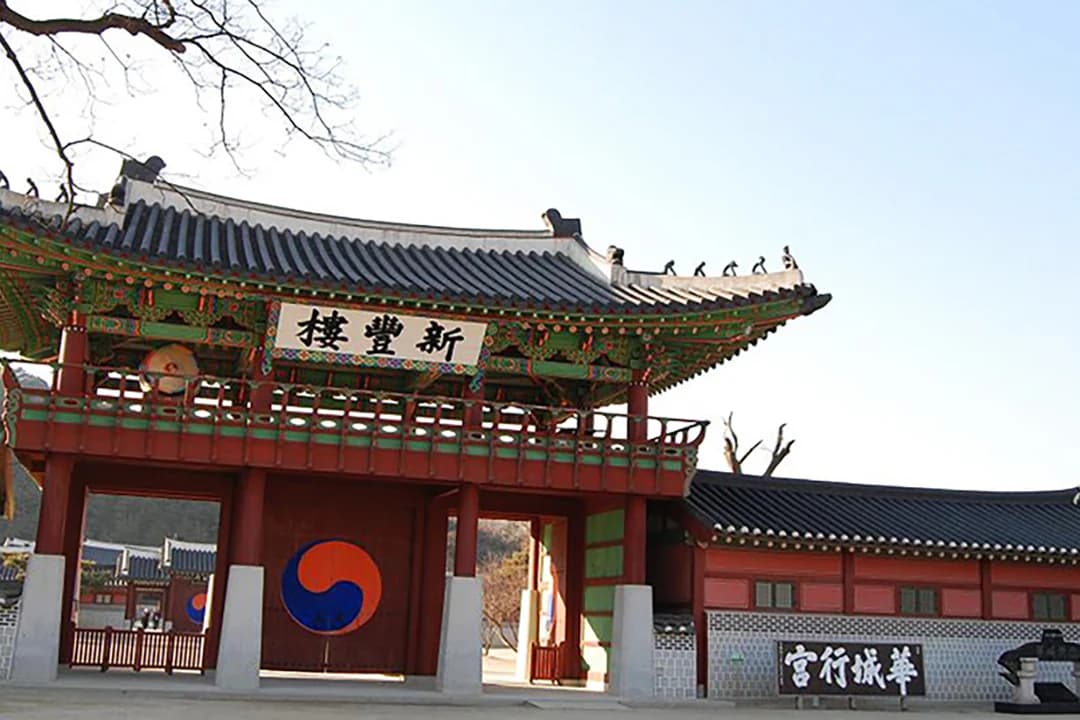
Gyeongbokgung was founded in 1395 as the main palace of the Joseon dynasty. The Korean alphabet was introduced here in 1446. The palace was burnt in 1592 and left in ruins until King Gojong rebuilt it in 1867; most buildings were torn down again in the colonial period, the colonial government building was removed in the 1990s, and restoration has continued since. Allow two to three hours.
Admission is ₩3,000 for adults (foreigners aged 19 to 64), and groups of ten or more pay ₩2,400 each (as of 2026-10-11). Entry is free for visitors in hanbok, for foreign visitors aged 18 and under or 65 and over, and for several other groups with proof. Hanbok must include both a top and a bottom: a jacket over jeans, a hanbok skirt with a T-shirt, or a one-piece dress without a jacket does not qualify.
Hours are 09:00 to 17:00 in January, February, November and December; 09:00 to 18:00 from March to May and in September and October; and 09:00 to 18:30 from June to August. The last entry is one hour before closing (as of 2026-10-11). The palace is closed every Tuesday; when a public holiday falls on a Tuesday, the palace opens and the next weekday without a holiday becomes the closed day. Free English tours run daily except Tuesdays at 11:00, 13:30 and 15:30 for groups under ten without booking.
The nearest stations are Gwanghwamun on Line 5 (Exit 2, about 470 m to the gate) and Gyeongbokgung on Line 3 (Exit 5, about 490 m). The west gate, Yeongchumun, has been open since December 2018, so the palace can be entered from several sides. Accessible restrooms, paths and wheelchair and baby-carriage rental are available.
Changdeokgung Palace and the Huwon garden
Changdeokgung was built in 1405 and is on the UNESCO World Heritage list (inscribed in 1997). Its buildings follow the lie of the land rather than a strict grid, which gives it a more informal feel than Gyeongbokgung. Admission to the palace halls is ₩3,000 for adults, and groups of ten or more pay ₩2,400 each (as of 2026-10-11).
The rear garden, Huwon (often called the Secret Garden), is visited only on timed guided tours and costs an extra ₩5,000 for adults aged 19 to 64, ₩2,500 for youths aged 7 to 18, and nothing for children aged 6 and under, on top of the palace ticket (as of 2026-10-11). Korean-language tours leave every hour from 10:00 to 15:00 from November to February and from 10:00 to 16:00 from March to October, each limited to 100 people. English tours and tours in Japanese (Wednesday, Friday, Sunday) and Chinese (Tuesday, Thursday, Saturday) run in separate slots, and the garden requires an advance reservation.
Changdeokgung is open 09:00 to 18:00 from February to May and in September and October, 09:00 to 18:30 from June to August, and 09:00 to 17:30 from November to January, with the last entry one hour before closing (as of 2026-10-11). It is closed every Monday. The nearest station is Anguk on Line 3, Exit 3, about 390 m away. Because Gyeongbokgung is closed on Tuesday and Changdeokgung on Monday, two palaces can be paired across two days.
Changgyeonggung, Deoksugung, Gyeonghuigung and Jongmyo
Changgyeonggung and Deoksugung each cost ₩1,000, and Jongmyo costs ₩1,000 as well. A combined palace pass costs ₩6,000 and covers Gyeongbokgung, Changdeokgung, Changgyeonggung, Deoksugung and Jongmyo, one visit each within six months, but not the Huwon garden (as of 2026-10-11). Entry to the palaces except Gyeongbokgung and the Huwon is free on the monthly Culture Day, the last Wednesday of the month.
Changgyeonggung and Deoksugung are both listed as open from 09:00 to 21:00 with the last entry at 20:00, closed on Mondays (as of 2026-10-11). At Changgyeonggung the evening-opening area is reached by moving from 17:30 in winter, 18:00 in spring and autumn and 18:30 in summer. At Deoksugung the royal guard changing ceremony takes place at 11:00 and 14:00 in front of Daehanmun gate except on Mondays, and the Western-style Seokjojeon hall is visited on a guided, reservation-only visit from 09:30 to 17:30, the last guided entry at 16:30.
Jongmyo, the Confucian shrine for the Joseon kings and queens, was founded in 1394 and listed by UNESCO in 1995. It is closed on Tuesdays. On Wednesdays, Saturdays, Sundays and public holidays you may walk in freely (as of 2026-10-11); on Mondays, Thursdays and Fridays you enter only on a timed guided visit of about 50 minutes, with English at 10:00, 12:00, 14:00 and 16:00, Chinese at 11:00 and 15:00 and Japanese at 09:40, 11:40, 13:40 and 15:40. Each time slot admits 200 people, half booked online and half sold on site.
Gyeonghuigung, the palace known as the West Palace, was built in 1617 under King Gwanghaegun. Most of its halls were lost in the colonial period, and partial restoration followed after a school left the site in 1980; the restored gate Heunghwamun and the main hall Sungjeongjeon stand today. It is not part of the combined palace pass, and it is a quiet stop for a short visit near the Seoul Museum of History.
Bukchon, Insadong and Ikseon-dong
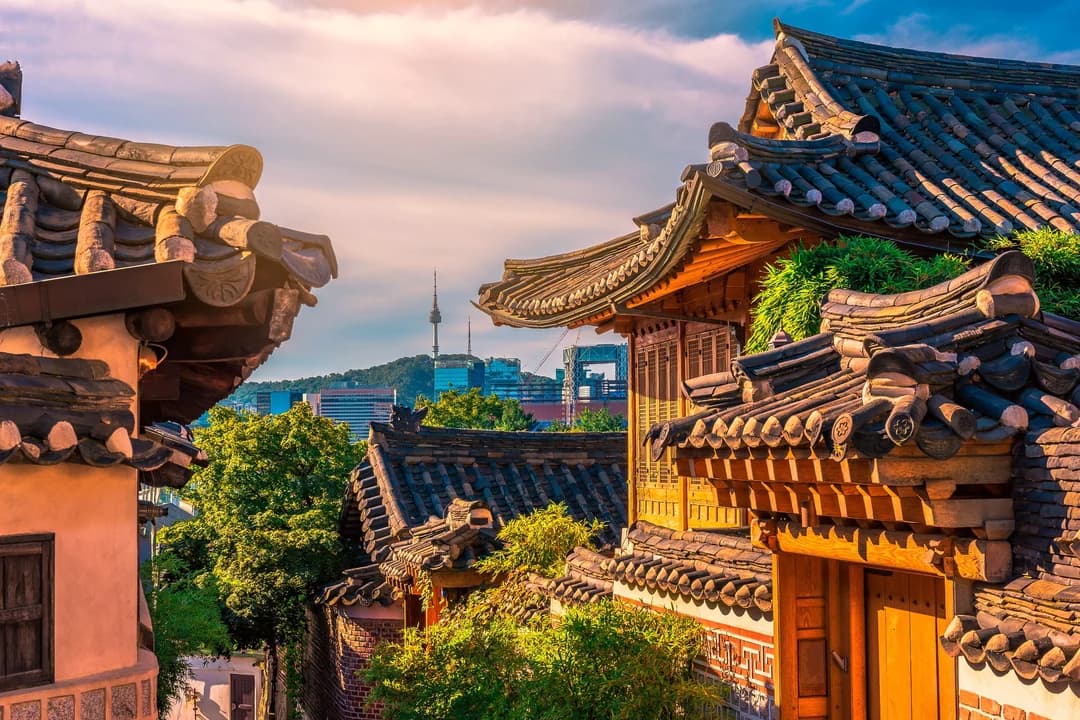
Bukchon Hanok Village lies between Gyeongbokgung and Changdeokgung and is first of all a residential neighborhood. Since November 2024 it has been a special management area, and visitors may be in the village only from 10:00 to 17:00, every day of the year (as of 2026-10-11); the restricted hours run from 17:00 to 10:00 the next morning. Anguk Station on Line 3, Exit 3, is about 520 m from the village.
The village asks for what it calls silent tourism. Keep your voice low, especially around Gahoe-dong, do not use microphones or loudspeakers, keep groups to ten people at most, do not litter, and never photograph or film the inside of a house, even when a door is open. The densest cluster of hanok is in Gahoe-dong; galleries, craft workshops and restaurants occupy some of the houses.
Insadong is a 12.7-hectare neighborhood in Jongno built around the main street Insadong-gil and its side alleys, known for tea houses, craft and calligraphy shops and galleries. Ssamziegil, a craft shopping complex that opened in 2004, sits on the street. You can reach it from Anguk Station on Line 3, Jonggak Station on Line 1 or Jongno 3-ga Station, which is served by Lines 1, 3 and 5.
Ikseon-dong, next to Jongno 3-ga, is one of Seoul’s oldest concentrations of small hanok. The houses were packed along narrow lanes by a developer in the late 1920s and early 1930s, and since the mid-2010s many have become cafés, bars, restaurants and shops. The lanes are very narrow, so go on a weekday morning if you dislike queues, and respect the residents who still live there.
Namsan, Myeongdong and the Seoul City Wall
N Seoul Tower stands on Namsan hill and is open every day of the year (as of 2026-10-11). The cable car runs from 10:00 to 23:00 and costs ₩15,000 round trip or ₩12,000 one way for adults, and ₩11,500 round trip or ₩9,000 one way for children, defined as ages 36 months up to elementary school. Pets are not allowed. You can also walk up from Chungmuro, or take bus 01 from Chungmuro Station (Exit 2) or Dongdaemun Station (Exit 6) to the tower stop.
At the foot of Namsan, Namsangol Hanok Village holds five traditional houses that were moved and restored there in 1998. It is open 09:00 to 21:00 from April to October and 09:00 to 20:00 from November to March (as of 2026-10-11). Seoul Namsan Gugakdang, a hanok-style theater built in 2007 with a 300-seat hall, stages traditional music and dance.
Myeongdong is Seoul’s main shopping district, with Myeongdong Station on Line 4 (Exits 5 to 10) in the middle. It is crowded with Korean cosmetics shops, fashion brands and cafés, and street food stalls fill the lanes in the evening. Myeong-dong Cathedral is a short walk away, and an underground shopping passage links the district to City Hall. Shops set their own hours, and weekends and evenings are the busiest times.
The Seoul City Wall (Hanyangdoseong) is 18.6 km long and runs over four hills: Bugaksan, Naksan, Namsan and Inwangsan. It is open all year and has no admission fee, so you can walk any section you like, for example the stretch up Naksan or the climb on Inwangsan. The tourism board also runs Seoul Guided Walking Tours; they must be booked at least three days ahead (one week ahead for the accessible course) and are canceled when a weather warning is issued.
Markets and shopping: Gwangjang, Namdaemun and Dongdaemun
Gwangjang Market opened in the early twentieth century. The market proper is open daily from 09:00 to 18:00 and the Guie shopping street from 10:00 to 19:00, both closed on Sundays, while the Food Alley is open every day from 09:00 to 23:00 (as of 2026-10-11). Typical dishes are gimbap, mung bean pancakes (bindae-tteok), assorted pancakes, tteokbokki, fish cakes, blood sausage, and raw beef (yukhoe). Hanbok shops and vintage clothing are on the second floor. Jongno 5-ga Station on Line 1, Exit 8, is about 60 m away.
Namdaemun Market has been trading since the early Joseon period and today has more than 10,000 shops on the streets around Namdaemun gate. It runs from Monday to Saturday and is closed on Sundays (as of 2026-10-11); each stall sets its own hours. It sells clothes, kitchenware, souvenirs and food, and its alleys serve braised cutlassfish (galchi-jorim) and hotteok. Hoehyeon Station on Line 4, Exit 7, is only about 20 m away.
Dongdaemun is a district of wholesale and retail fashion malls that stay busy through the night; the shops set their own hours, wholesale stores mostly open early in the morning, and cash can be required. Dongdaemun Design Plaza (DDP), designed by Zaha Hadid and opened on 21 March 2014, holds exhibition halls, a design museum and a design market that is open around the clock, and it has the LED Rose Garden outside. Dongdaemun History and Culture Park Station (Lines 2, 4 and 5), Exit 14, is about 120 m from the market area, and there is a tourist information center in front of it with English, Japanese and Chinese service.
Hongdae, Itaewon and Seongsu
Hongdae, in Mapo near the university, is known for indie music, art and nightlife, and it is liveliest after dark. Hongik University Station, served by Line 2, the Gyeongui-Jungang Line and the AREX airport railroad, is the gateway (Exit 4 is about 50 m from the main shopping lane). That makes it the easiest district to reach from the airport without changing trains, if you take the all-stop service. It has small fashion shops, the Kakao Friends flagship store and an independent cinema, Indiespace.
Itaewon in Yongsan is Seoul’s international district, with restaurants from many countries, bars, shops and the Seoul Central Mosque, which opened in 1976 in neighboring Hannam-dong. Line 6 serves Itaewon, Noksapyeong and Hangangjin stations. The streets are narrow, and Friday and Saturday evenings and festival dates are crowded, so arrive early and follow staff and police directions.
Seongsu is the former factory district east of Seoul Forest. Yeonmujang-gil mixes old shoe factories with cafés, galleries and pop-up shops; the Amorepacific flagship store runs themed exhibitions; and the handmade shoe quarter holds about 70% of the country’s handmade shoemakers (as of 2026-10-11), with custom pairs taking about one to two weeks. A galbi alley of about 40 years serves charcoal-grilled pork ribs. Seongsu Sky Bridge gives views of the Han River and Namsan, and the tourism board advises arriving at least 30 minutes before sunset.
Gangnam, COEX and Jamsil
COEX Mall in Gangnam is a large underground shopping and exhibition complex reached from Samseong Station on Line 2 (Exits 5 and 6) or Bongeunsa Station on Line 9 (Exit 7). The Starfield Library sits in the middle of the mall as an open space where anyone can sit and read, and the multiplex there has 17 screens. SEA LIFE COEX Aquarium charges ₩34,000 for visitors aged 13 and over and ₩30,000 for ages 3 to 12 (as of 2026-10-11). Across the street, Bongeunsa is an old Buddhist temple that offers temple-stay programs.
Jamsil is the home of Lotte World Tower, 555 m tall with 123 floors. Seoul Sky, the observation deck at about 500 m, is entered from Jamsil Station on Lines 2 and 8 (Exit 2 is about 30 m away) and costs ₩31,000 for ages 13 and over and ₩27,000 for ages 3 to 12, with a Fast Pass at ₩62,000 (as of 2026-10-11). Lotte World theme park next door sells an adult full-day pass at ₩64,000 and an after-4 p.m. pass at ₩52,000 in the same period.
The Han River, Yeouido, Cheonggyecheon and the city parks
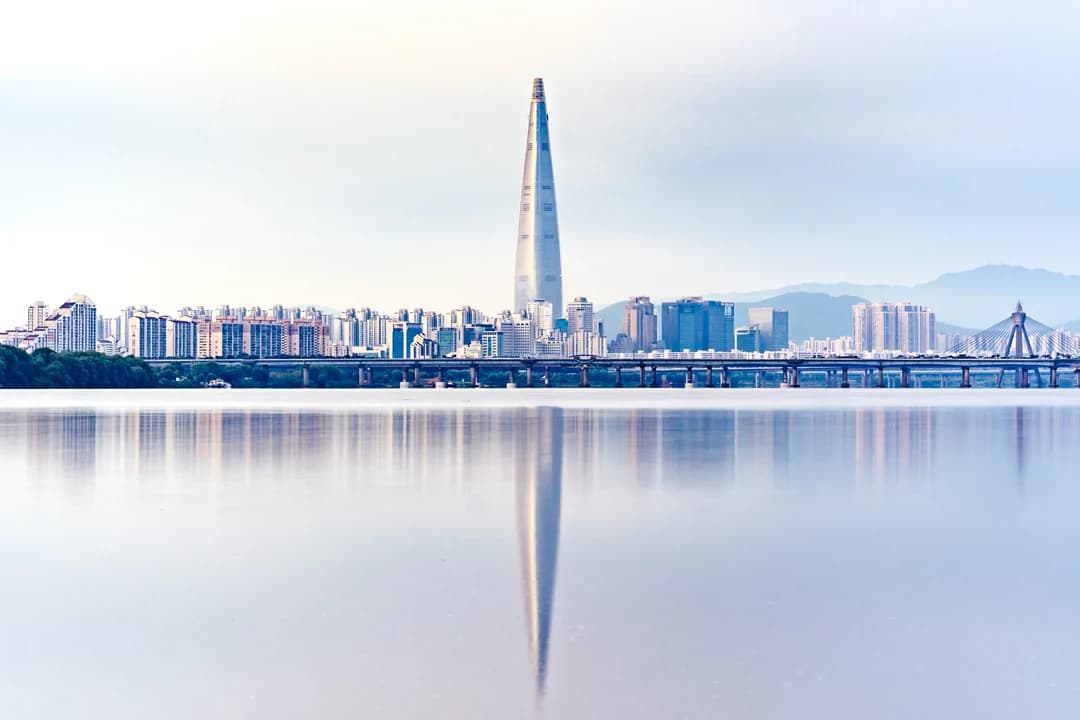
The Han River banks are public parks, open 24 hours and free. They offer bicycle rental, river cruises, bird-watching and, in summer, public swimming pools. Yeouinaru Station on Line 5 (Exit 1, about 250 m) is the usual entry point at Yeouido, where Yeouido Park is known for its cherry blossoms. The Hangang River Bus charges ₩3,000 for adults, ₩1,800 for ages 13 to 18 and ₩1,100 for ages 6 to 12, and the SEOULDAL tethered balloon rises to 130 m over Yeouido Park for ₩25,000 for adults, ₩20,000 for teens and seniors and ₩15,000 for children, weather permitting (as of 2026-10-11).
Cheonggyecheon is an 11 km stream through the city center. It was covered by an elevated highway after the Korean War until the highway was removed in 2003. The walkway is open 24 hours and passes under 22 bridges on its way to the Han River, but access can be closed in heavy rain. The nearest stop is City Hall Station (Lines 1 and 2, Exit 4, about 380 m), and eleven subway stations connect to the stream. The Seoul Outdoor Library runs beside it from 23 April to 1 November 2026 (as of 2026-10-11).
Seoul Forest opened in 2005 and covers about 496,000 m² in five themed areas. It is free and open around the clock. Within it, the insect garden is open 10:00 to 17:00 and closed on Mondays, closing at 16:00 from November to February; the butterfly garden is open from May to October; and the ground fountain plays six 30-minute shows from 12:00 to 17:00 between May and October (as of 2026-10-11). The 2026 Seoul International Garden Show runs there until 27 October. Wheelchairs and strollers can be borrowed free for up to two hours with ID. Ttukseom Station on Line 2 (Exit 8) and Seoul Forest Station on the Suin-Bundang Line (Exits 3 and 4) are the nearest stops.
Haneul Park in Mapo is open 06:00 to 22:00, with hours depending on the month and the sunrise; the Silver Grass Festival is held there every October and the park stays open until 22:00 during it (as of 2026-10-11). Bukhansan National Park is the only national park in the Seoul area, named Samgaksan for its three peaks, Baegunbong, Insubong and Mangyeongbong. It is open daily 09:00 to 18:00 with the last entry at 16:00 in summer and 15:00 in winter, and entry is free. From Gwanghwamun Station (Line 5, Exit 2), bus 1020 goes to the park entrance.
Food specialties and where to eat in Seoul
Seoul’s food culture is organized around alleys that specialize in one dish. Jangchung-dong is known for jokbal, braised pig’s trotters. Sindang-dong Tteokbokki Town is called the birthplace of tteokbokki cooked at the table. Dongdaemun has an alley of charcoal-grilled fish such as mackerel and yellow croaker, where lunch queues are common. Euljiro’s Nogari Alley serves dried pollack and beer at outdoor tables that fill up in the evening, and the Seongsu galbi alley grills marinated pork ribs over charcoal.
Markets are the quickest way to try many dishes at low cost. At Gwangjang Market the Food Alley is open every day from 09:00 to 23:00 (as of 2026-10-11), and its well-known plates are the thin gimbap often called addictive, mung bean pancakes, tteokbokki, sundae and beef tartare. Namdaemun Market’s alley serves braised cutlassfish, usually made with fish from Yeosu, Mokpo or Busan; choose a restaurant that also grills fish if the spice is too strong for you.
Around Hongdae you will find marinated raw crab (ganjang gejang), pork soup with rice (dwaeji gukbap) and hot-pot restaurants within a few hundred meters of Hongik University Station. For a calmer meal, traditional soft tofu (sundubu) and handmade noodle soup restaurants cluster near the National Gugak Center in Seocho. Carry some cash for market stalls and wholesale shops, and agree the portion and price before you sit down if a stall has no printed menu.
Festivals and seasonal events in Seoul
The 2026 Seoul Light Hangang Bitseom Festival, a large laser and media-art show on Nodeul Island with the theme Rhapsody of Light, runs from 2 to 11 October 2026 between 18:30 and 22:30, so the 2026 edition ends today (as of 2026-10-11). The venue is reached from Nodeul Station on Line 9 (Exit 2, about 740 m). Dates for next year are announced each year and this guide is updated when they are confirmed.
Other dated events this year are the 2026 Seoul International Garden Show at Seoul Forest, which runs from 1 May to 27 October (as of 2026-10-11), and the Seoul Outdoor Library beside Cheonggyecheon, open from 23 April to 1 November. Among exhibitions, the Grand Panorama of Seoul Urban Planning runs from 14 August to 8 November, and an exhibition on Joseon wooden furniture runs from 1 March to 31 December.
Recurring seasonal highlights are cherry blossoms along the streets of Yeouido every April, the Silver Grass Festival at Haneul Park every October, and the Seoul Lantern Festival, which has been held since 2009 around Cheonggyecheon and the Gwanghwamun and Cheonggye areas. The lantern festival belongs to winter, and in recent years it has run for more than a month in December. Exact dates of recurring festivals change from year to year and are announced each year.
Where to stay in Seoul
Choose the area by the stations you will use most. Myeongdong and the surrounding Jung district sit on Line 4 and Line 2 with the underground passage to City Hall, and are within reach of Namsan, Namdaemun Market and the palaces. Jongno and Insadong put you beside Anguk, Jongno 3-ga and Jongno 5-ga stations and within walking distance of the palaces, Bukchon and Gwangjang Market, with quiet side streets at night.
Hongdae suits visitors who want nightlife and a direct ride from the airport, because Hongik University Station is on the AREX all-stop line. Gangnam and Jamsil, on the south bank, suit people who attend exhibitions at COEX or plan a day at Lotte World; Jamsil Station is on Lines 2 and 8 and Samseong Station on Line 2. Seongsu and Itaewon suit travelers who prefer cafés and international dining over palaces.
Accessibility and families in Seoul
The major palaces and N Seoul Tower provide accessible restrooms, accessible routes and information centers that rent wheelchairs, and Gyeongbokgung and Changdeokgung also rent baby carriages. Seoul Forest lends wheelchairs and strollers free for up to two hours against ID, and pets on a lead of no more than 2 m are allowed there. Cheonggyecheon has stairs, lifts and accessible toilets, but the walkway can be closed in rain.
For children, foreign visitors aged 18 and under enter the palaces free of charge, while hanbok wearers of any age also enter free. The Seoul Science Center has free admission, and the Seoul Robot and AI Museum charges adults ₩2,000 while children up to 13 enter free, with reservation required (as of 2026-10-11). The tourism board’s three-day family course also uses the Hangang River Bus, Seoul Botanic Park, Lotte World and SEA LIFE COEX.
Safety and etiquette in Seoul
Seoul is presented by its tourism board as a safe travel destination, and the multilingual Korea Travel Helpline, 1330, answers visitor questions. Use only licensed taxis: vans labeled as call vans have no meter and charge more. Do not rely on being able to flag a taxi at rush hour or after midnight, when the night surcharge applies, and use the subway for long trips in the day.
At Bukchon, keep to the 10:00 to 17:00 visiting hours and the silent-tourism rules. In palaces, wear hanbok that meets the guideline if you want free entry; being properly dressed is also expected, as the guideline discourages revealing clothing. In summer heat the tourism board suspends its guided walking tours in a long heatwave period and cancels them whenever a weather warning is issued, so keep a rain or heat alternative for outdoor days.
Day trips from Seoul
Seoul is a good base for day trips. The Gyeonggi guide covers Suwon Hwaseong Fortress, Namhansanseong, the DMZ at Paju, Gapyeong and the Korean Folk Village, with fees, hours and directions. From Seoul, direct buses 1560 from Gangnam Station and 4101 from Seoul Station run to the Korean Folk Village, and the Suin-Bundang Line to Sanggal Station plus a short bus ride also works. The Gangwon guide covers Chuncheon, Nami Island and the east coast.
3-day itinerary for Seoul
- Day 1, morning: Gyeongbokgung. Be at the gate at 09:00 when it opens, join the free English tour at 11:00 if you like, and allow two to three hours. The palace is closed on Tuesdays, so do not put this day on a Tuesday. Afternoon: walk to Bukchon (open 10:00 to 17:00) and then Insadong and Ikseon-dong, using Anguk and Jongno 3-ga stations.
- Day 1, evening: walk Cheonggyecheon from City Hall Station (Exit 4) toward Dongdaemun, then eat at a Gwangjang Market Food Alley stall in the late evening, since the alley is open until 23:00 every day, including Sundays (as of 2026-10-11).
- Day 2, morning: Changdeokgung and the Huwon garden (closed Mondays). Book a Huwon time slot in advance, enter the palace first, and allow about three hours in total. Midday: lunch at Gwangjang Market or the Jongno 3-ga area. Afternoon: Dongdaemun Design Plaza and the Dongdaemun fashion malls, using Dongdaemun History and Culture Park Station, Exit 14.
- Day 2, evening: Namsan. Ride the cable car, which runs until 23:00, or take bus 01 from Dongdaemun Station (Exit 6) to the tower stop, then walk down toward Myeongdong for dinner.
- Day 3, morning: Deoksugung (closed Mondays); the royal guard ceremony takes place at 11:00 and 14:00. Then Namdaemun Market, which is closed on Sundays, for lunch in the cutlassfish alley. Afternoon: take the subway to Yeouido (Yeouinaru Station, Exit 1) for the Han River park. Evening: Hongdae, reached by Line 2, for dinner and nightlife.
5-day itinerary for Seoul
- Day 1: Gyeongbokgung at 09:00, the 11:00 English tour, then Bukchon, Insadong and Ikseon-dong, ending with a walk along Cheonggyecheon from City Hall Station. Avoid Tuesday for this day.
- Day 2: Changdeokgung and the reserved Huwon slot in the morning (closed Mondays), Jongmyo near Jongno 3-ga Station if it is a free-entry day or you have a timed slot (closed Tuesdays), lunch and the evening at Gwangjang Market, and Dongdaemun Design Plaza.
- Day 3: Deoksugung with the 11:00 guard ceremony (closed Mondays), Namdaemun Market for lunch (closed Sundays), Myeongdong in the afternoon, and Namsan at dusk, taking the cable car (last operating until 23:00) or bus 01 up to N Seoul Tower.
- Day 4: Seongsu in the morning (Yeonmujang-gil, handmade shoe street, Amorepacific), Seoul Forest in the afternoon (open around the clock, free), then Seongsu Sky Bridge at least 30 minutes before sunset, and dinner in the Seongsu galbi alley. Evening alternative: Yeouido and the Han River, or Hongdae.
- Day 5, choose one: Bukhansan National Park (open 09:00 to 18:00, last entry 16:00 in summer and 15:00 in winter) by bus 1020 from Gwanghwamun; or the south bank, with COEX, the Starfield Library, Bongeunsa temple and Seoul Sky in Jamsil; or a Gyeonggi day trip, such as Suwon Hwaseong Fortress or the Paju DMZ tour (the DMZ tour does not run on Mondays).
Tips for Seoul
- Check the weekly closing days before you fix dates: Gyeongbokgung and Jongmyo close on Tuesdays, Changdeokgung, Changgyeonggung and Deoksugung close on Mondays, Namdaemun Market and the main part of Gwangjang Market close on Sundays, and the DMZ tour from Paju does not run on Mondays.
- If you plan to see four palaces and Jongmyo, the ₩6,000 palace pass costs less than buying five separate tickets (₩3,000 + ₩3,000 + ₩1,000 + ₩1,000 + ₩1,000 = ₩9,000), and it is valid for one visit to each within six months; the Huwon is always extra (as of 2026-10-11).
- Carry a transport card, some cash for market stalls and wholesale shops, and a phone with a translation app. Book the Huwon and Jongmyo guided slots, and the Seoul Guided Walking Tours, in advance. Dress in layers in winter, take water in summer, and keep one indoor stop in reserve for rain.
Sources and last update
Last updated: 11 October 2026. Figures are as of the date shown.
Source: Visit Seoul · Korea Tourism Organization · Korea Heritage Service · Royal Palaces and Tombs Center, Korea Heritage Service · Airport Railroad Co. · Incheon Airport Railroad · Incheon International Airport Corporation · Seoul Metro · T-money · Wikipedia · Checked 11 Oct 2026
Written by HOLIDAY in its own words from official public information. This is not an official publication of the Korea Tourism Organization or any government body.
HOLIDAY refreshes this article regularly as fares, hours and event dates change.