Korea's volcanic island in detail: UNESCO sites, Hallasan trails and booking rules, lava tubes, Seongsan, Udo, Seogwipo waterfalls, haenyeo culture, Olle walks, food, 2026 festivals, weather and ready-made 3- and 5-day plans.
Overview
Jeju is a volcanic island off the south coast of Korea, about 73 km from east to west and 41 km from north to south, with an area of roughly 1,850 km² and a coastline of about 550 km. Hallasan, at about 1,950 m the highest mountain in South Korea, stands in the middle. Around it lie some 360 small volcanic cones called oreum and about 160 lava tubes. The island was built by eruptions that began about 1.8 million years ago; the last recorded one was about 1,000 years ago.
Jeju carries three UNESCO designations: a biosphere reserve (2002), a World Natural Heritage site called Jeju Volcanic Island and Lava Tubes (inscribed on 27 June 2007, the first natural heritage site in Korea) and a Global Geopark (2010). In November 2016 the haenyeo, the women divers of Jeju, were added to UNESCO's intangible heritage list.
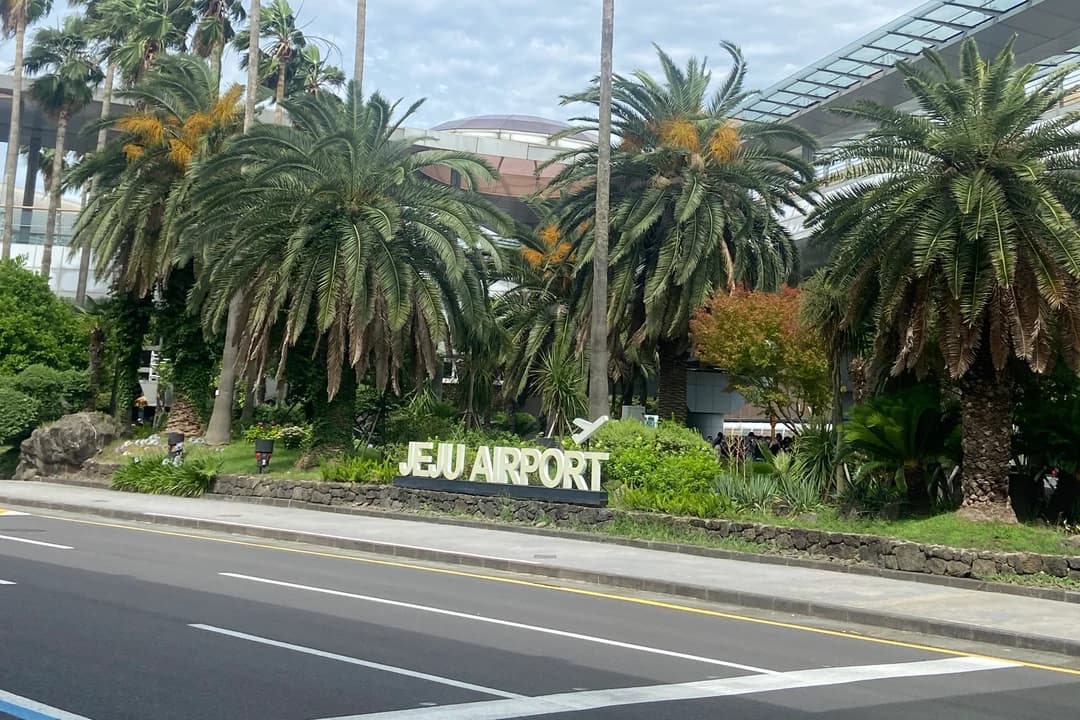
Plan three to five days. Distances are larger than the map suggests: the airport is on the north coast beside Jeju City, Seogwipo is on the south coast, Seongsan and Udo are at the east end, Hallim and its beaches are in the west, and crossing the island takes an hour or more. A bus from the airport to Seongsan Ilchulbong takes about 70 minutes. Choose two bases, for example Jeju City and Seogwipo, instead of changing hotels every night.
Best time to go
Spring means canola flowers and cherry blossom. In 2026 the Seogwipo Canola Festival ran on 4 and 5 April at the Gasi-ri canola plaza, the Sinpung cherry-blossom tunnel festival on 28 and 29 March, and the green-barley festival on the small island of Gapado from 17 April to 17 May. On Hallasan the early azalea opens from early May and peaks in mid-May, and the later mountain azalea blooms from mid-May to early June (as of 2026-10-11).
Summer is hot and humid, and the beaches at Hyeopjae and Hamdeok are busiest in July and August. On Udo the Hagosudong Beach summer festival was held on 15 August in 2026. Typhoons usually pass between summer and early autumn and can cancel flights and ferries, so keep a spare day at the end of the trip.
Autumn color on Hallasan peaks from early to mid-October. Events still ahead in 2026: the Honinji Festival on 17 and 18 October at Onpyeong-ri near Seongsan, the Seogwipo Chilsimni Festival on 23 to 25 October beside the Cheonjiyeon car park, the Jeju Olle Walking Festival from 5 to 7 November on routes 19 and 20, and the Mosulpo amberjack festival from 19 to 22 November (as of 2026-10-11). Dates for next year are announced each year and this guide is updated when they are confirmed.
Winter is cool and windy, with snow on Hallasan. From October to March the Hallasan trails open at 05:00 and the entry cut-off times are earlier than in summer. Hallabong tangerines are harvested from about December to February, and the Seongsan sunrise festival is held on 1 January at Seongsan Ilchulbong (as of 2026-10-11).
Getting there
Almost everyone flies. Jeju International Airport is on the northern edge of Jeju City, with frequent domestic flights from Gimpo and other airports and some international routes. Ferries from mainland ports also exist and can carry cars. Fares, timetables and car-rental rules are in our Jeju transport guide, so this guide only covers what is on the island.
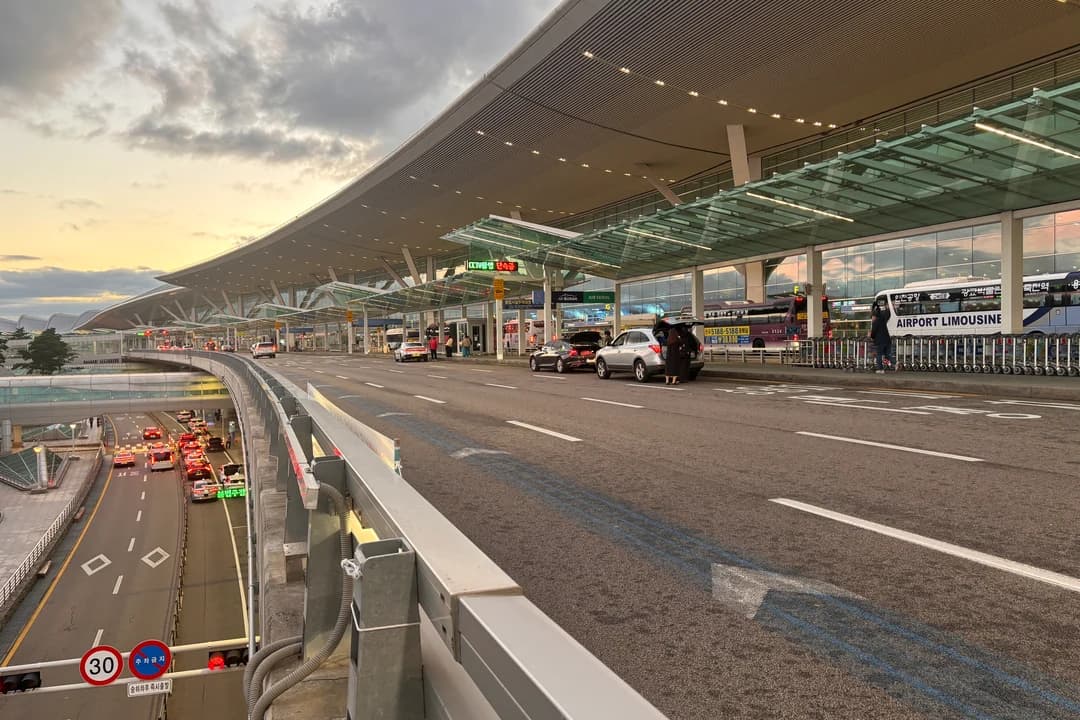
At the terminal the airport groups its buses by direction: express buses to the east coast (Pyoseon, Seongsan, Namwon), express buses by the 5.16 road and the east coastal road, express buses to the west (Daejeong, Hwasun) and by the Pyeonghwa road, ordinary and night buses to Yongdam and the city hall and to Nohyeong and Yeondong, an airport limousine bus and a tourist circuit bus. Intercity buses need a ticket bought in advance at a kiosk or by app. The airport bus on the Jungmun and Seogwipo line runs about every 15 minutes, and about 45 minutes is quoted for the Jungmun area (as of 2026-10-11).
Typical times from the airport: about 50 minutes by car to Manjanggul, about 70 minutes by bus to Seongsan Ilchulbong, about 60 minutes by car to the Haenyeo Museum, and 40 to 70 minutes to the Hallasan trailheads from the Jeju intercity bus terminal (as of 2026-10-11).
Getting around
On the island the choices are buses, taxis and a rental car; the rules and fares for each are in the transit guide. Seogwipo City publishes the bus numbers for its paid sights: buses 611, 612, 641, 642 and 880 run to the Cheonjiyeon terminus; the stops near Cheonjeyeon are served by buses 633, 655, 690, 202, 282, 510, 520, 521, 531 and 532; and Jusangjeolli is a 15-minute walk from the Jeju Convention Center stop (buses 510, 520, 521 and 690) (as of 2026-10-11).
Other published routes: the Haenyeo Museum is served by bus 201 (every 20 minutes, about 80 minutes from the Jeju bus terminal) and bus 260 (every 50 minutes, about 60 minutes), plus express bus 101 from the airport to the Sehwa interchange (about 70 minutes, then a 10-minute walk). Udo has its own express, village and coastal-road buses, with separate summer and winter timetables (as of 2026-10-11).
A rental car suits the east and west coasts, where the sights are spread out, but not the Seongpanak trailhead of Hallasan: its car park is small, often full before the trail opens in busy seasons, and parking on the road nearby has been enforced since 1 January 2021. For the mountain, buses 240 (Eorimok, Yeongsil) and 281 (Seongpanak) leave from the Jeju intercity bus terminal, and the Hallasan sections below give the minutes.
UNESCO natural heritage sites
The World Heritage listing has three parts: the Hallasan Natural Reserve, the Geomunoreum Lava Tube System and the Seongsan Ilchulbong Tuff Cone. Hallasan has been a Natural Monument since 1966 (No. 182), a national park since 1970 and a UNESCO biosphere reserve since December 2002. The protected reserve covers about 91.7 km² of the 153.4 km² national park.
The Geomunoreum Lava Tube System is a family of caves formed when lava from Geomun Oreum flowed about 14 km to the north-east coast. The listed features are Geomun Oreum itself and the caves Bengdwigul, Utsanjeongul, Bukoreumgul, Daerimgul, Manjanggul, Gimnyeonggul, Yongcheon cave and Dangcheomul cave. Only Geomun Oreum (by guided booking) and a 1 km section of Manjanggul are open to visitors; the other caves are closed to protect them (as of 2026-10-11).
The three parts are far apart: Hallasan in the center, the lava tubes on the north-east coast and Seongsan at the east end, so treat them as separate outings. In the south, the columnar cliffs of Jusangjeolli are Natural Monument No. 443 and the dome-shaped Sanbangsan is a designated scenic site whose slopes are closed to the public for protection; they are protected in their own right rather than part of the World Heritage listing.
Hallasan: trails and walking times
Hallasan National Park has seven trails. By the park office figures: Eorimok is 6.8 km (about 2 hours to Witseoreum shelter, 3 hours to the Nambyeok junction); Yeongsil is 5.8 km (about 1 hour 30 minutes from the Yeongsil rest stop to Witseoreum, 2 hours 30 minutes to the junction); Donnaeko is 7 km (3 hours 30 minutes to the junction); Eoseungsaengak is 1.3 km (30 minutes to the top); Seokgulam is 1.5 km (50 minutes). Seongpanak (9.6 km, about 3 hours to Jindallae shelter and 4 hours 30 minutes to the summit) and Gwaneumsa (8.7 km, about 3 hours 20 minutes to Samgakbong shelter and 5 hours to the summit) are the only two that reach the Baengnokdam crater (as of 2026-10-11).
Seongpanak is the gentler summit route: 9.6 km one way and 19.2 km there and back, mostly through forest and with the largest Korean-fir woods on the mountain. A 600 m side path from the 5.8 km point climbs to the Sara Oreum viewpoint over a crater lake. Gwaneumsa starts lower (the park office there is at 570 m, the lowest in the park), runs beside deep valleys and is steeper. A summit day takes 9 to 10 hours, so many hikers go up Seongpanak and down Gwaneumsa; the park advises doing the long Gwaneumsa descent in a group and finishing before dark in winter.
For a half day without the summit, the Yeongsil and Eorimok trails both end at Witseoreum shelter at 1,700 m, the highest point inside any Korean national park. From the Yeongsil rest stop it is 3.7 km, from the Eorimok trailhead (970 m) 4.7 km. Yeongsil has the dramatic rock pillars and a pine forest, and is the place to see roe deer at close range; the 2.5 km road from the Yeongsil office up to the rest stop is open only to small passenger vehicles, otherwise it takes about 40 minutes on foot. The weather above 1,500 m changes fast, with fog, lightning and low temperatures, so carry a windproof layer.
Food and water: the two shops at 1,500 m and 1,700 m closed in January 2018, the Seongpanak and Eorimok trailheads have only vending machines, and Yeongsil and Gwaneumsa have shops at the entrance. Carry enough water and snacks. Eating is not allowed on the summit itself, only at Jindallae and Samgakbong shelters, and nobody may stay overnight in the shelters. A summit certificate can be printed the same day at the Seongpanak and Gwaneumsa kiosks by card, using location-tagged summit photos.
Hallasan: booking and entry rules
Booking applies only to the summit sections: Seongpanak from Jindallae shelter to Baengnokdam, and Gwaneumsa from Samgakbong shelter to Baengnokdam. Since 3 May 2025 you may walk Seongpanak up to Jindallae shelter and Gwaneumsa up to Samgakbong shelter without a booking during the entry hours, and the other five trails need no booking at all. Booked hikers are checked at the shelters. The Samgakbong to summit section of the Gwaneumsa trail was closed for construction and reopened at 05:00 on 24 September 2026, with bookings restarting on 21 September (as of 2026-10-11).
Booking rules: reservations open at 09:00 on the first working day of the previous month (for May, from 1 April; if that day is a weekend or holiday, the next working day). One booking covers up to four people, and one person can hold one booking per week by hiking date; after you scan your code on a hike you can book again from the next day. You can cancel until your entry slot ends, after which a no-show penalty applies, and you must cancel with the same login method you booked with (real-name or social login). If weather closes the trail, cancel that day's booking and book again. The booking system offers foreign-language screens (as of 2026-10-11).
Entry opens at 05:00 on every trail. The latest entry times, October to March and then April to September: Eorimok trailhead 12:00 and 15:00; Witseoreum shelter (towards Nambyeok) 13:00 and 14:00; Yeongsil 12:00 and 15:00; Seongpanak trailhead and Jindallae shelter 11:30 and 12:30; Gwaneumsa trailhead and Samgakbong shelter 11:30 and 12:30; Eoseungsaengak 17:00 in both; Donnaeko 10:00 and 11:00; Seokgulam 17:00 in both. Last descent times, winter and summer: Witseoreum 15:00 and 17:00; summit 13:30 and 14:30; Jindallae and Samgakbong shelters 15:30 and 16:30; Nambyeok junction 14:00 and 15:00 (as of 2026-10-11).
The park closes trails fully or partly when the weather service issues heavy-rain, heavy-snow, storm or gale warnings, when a sudden downpour could cause flash floods on the path, when fog or wind makes the target point unsafe, when a day's snowfall reaches 30 cm or the path cannot be followed, and as a rule when wind reaches about 14 m/s. Entering outside the permitted hours is an offense under the Natural Parks Act and carries an administrative fine. Self-heating lunch boxes are allowed, but boiling water in pots or heat packs is restricted, and all rubbish must be carried out.
Hallasan: trailheads, parking and camping
From the Jeju intercity bus terminal the park office gives these bus and taxi times to the trailheads: Eorimok by bus 240, 40 minutes (taxi 40); Yeongsil by bus 240, 60 minutes (taxi 50); Seongpanak by bus 281, 40 minutes (taxi 40); Gwaneumsa by bus 281 and a change to bus 475 at Sancheondan, 50 minutes (taxi 30); Donnaeko by bus 281 and a change to bus 611 or 612, 70 minutes (taxi 60). Bus 240 runs hourly and a winter snow-flower bus runs in season. Bus 475 serves Gwaneumsa from 06:39 to 20:04 with 14 trips (as of 2026-10-11).
There is no admission fee, only parking. The first 30 minutes are free; after that a small car pays ₩1,000 up to the first hour, then ₩500 for each further 20 minutes, with a daily maximum of ₩13,000 for nine hours or more. Larger vehicles pay ₩2,000, ₩800 and a ₩20,000 daily maximum. Light cars and low-emission vehicles pay half, and each trailhead car park is charged separately. The Seongpanak car park is small and often full before the trail opens in busy seasons, so use the bus there (as of 2026-10-11).
The only campground is at Gwaneumsa. A large site costs ₩9,000 a night and a medium site ₩7,000; check-in is from 13:00 and check-out by 11:00 the next day. A coin shower costs ₩1,000 for six minutes plus ₩500 for each extra three, and runs 09:30 to 11:00 and 14:00 to 17:00. Pitches are booked through the park's own system, which opened for use in February 2026, and walk-ins are accepted for the same day only; a camper car parks for ₩7,000 a night (as of 2026-10-11).
Seongsan Ilchulbong and the east coast
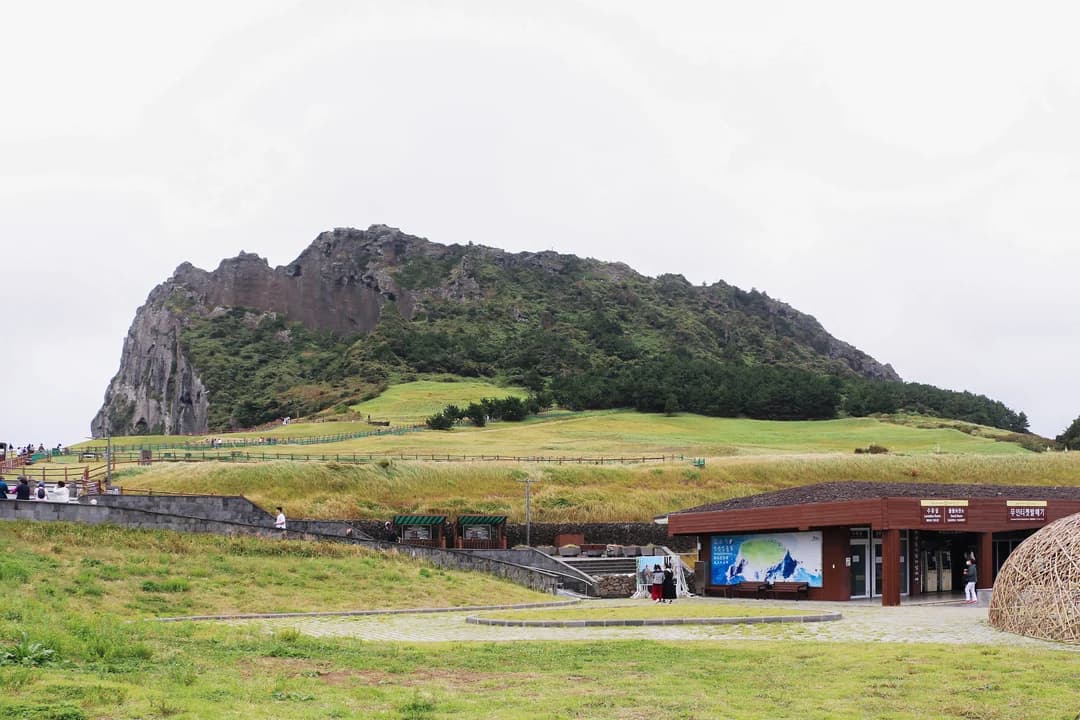
Seongsan Ilchulbong is a tuff cone 180 m high, formed about 5,000 years ago when rising magma met shallow sea water and threw out ash that piled up in layers. Waves have cut the cone into steep cliffs that expose those layers, and a bar of sand and gravel later joined it to the main island. A ring of about 99 rock peaks surrounds the crater. The name means "castle mountain" with a sunrise added, and the sunrise here was ranked first among the ten classic scenes of Jeju.
Adult admission is ₩5,000, and youths (13 to 24) and children (7 to 12) pay ₩2,500 each (as of 2026-10-11). Opening hours depend on the month: March, April, September and October 05:00 to 19:00 with the last ticket at 18:00; May to August 04:30 to 20:00 with the last ticket at 19:00; January, February, November and December 06:00 to 18:00 with the last ticket at 17:00. It is closed on the first Monday of every month. By bus it takes about 70 minutes from the airport, 68 from Jungmun and 57 from Seogwipo. The climb to the rim is short, so allow one to two hours including the viewpoint.
Around Seongsan, Olle route 1, the first route ever opened, runs from the Siheung coast road past the Jongdal salt fields to Gwangchigi beach, with Seongsan and Udo in view from the small oreum on the way. Seongsan's big sunrise gathering is the Seongsan Sunrise Festival on 1 January, and the Honinji Festival at Onpyeong-ri takes place on 17 and 18 October 2026 (as of 2026-10-11). Gujwa to the north holds the Haenyeo Museum, the Bijarim forest and the lava-tube sites described below.
Geomun Oreum and Manjanggul lava tubes
Geomun Oreum can be entered only on a guided walk. Tours leave every 30 minutes from 09:00 to 14:00 (11 departures a day, 50 people each) from the Jeju World Natural Heritage Center in Jocheon-eup. Every Tuesday is a nature rest day, and Seollal and Chuseok are closed. Booking by phone or online opens at 09:00 on the 1st of the previous month and closes at 17:00 the day before; leftover places are given out on the day. The routes are 2.1 km (summit, about 1 hour), 5.0 km (crater, about 2 hours 30 minutes) and 6.7 km (full, about 3 hours 30 minutes); the 13:30 and 14:00 departures cannot do the full route. Adults pay ₩2,000 and youths, soldiers and children ₩1,000 (as of 2026-10-11).
On the walk you need closed shoes: slippers, high heels and open-toe sandals are not allowed, food is banned except emergency sweets, pets are not allowed, there are no toilets on the route, and you must carry the entry pass and follow the guide. Children aged six and under, Jeju residents and Korean nationals over 65 enter free.
Manjanggul reopened on 30 May 2026 after being closed since 29 December 2023. The cave is about 7.4 km long, with a main passage up to 18 m wide and 23 m high, and its roof has collapsed in places to make three entrances. Visitors use Entrance 2 and may walk 1 km, ending at a 7.6 m lava column reported to be the largest in the world. Visits run 09:00 to 18:00 with tickets sold until 17:00, and it is closed on the first Wednesday of every month. Adults pay ₩4,000 and youths, soldiers and children ₩2,000. Parking is free (135 spaces) and free guides are on site 09:00 to 16:00. Bring a warm jacket, a torch and sneakers (as of 2026-10-11).
To get there by public transport, take a bus from the airport to the intercity terminal, then an east-coast intercity bus towards Jocheon and get off at the Manjanggul entrance; the cave is then about a 30-minute walk. By car it is about 50 minutes from the airport, 80 minutes from Seogwipo and 24 minutes from Seongsanpo. Bijarim, Geomun Oreum and the World Natural Heritage Center are close by, so the area works as one day trip.
Udo island
Udo, off the east end of Jeju, is the largest of the island's smaller islands and takes its name from a shape like a lying ox lifting its head. It is reached only by a short ferry ride from the east coast. The district office promotes its "Eight Sights of Udo", and the island has its own express, village and coastal-road buses with separate summer and winter timetables, so you can see the island without a car (as of 2026-10-11).
Highlights are Seobin Baeksa beach on the west shore, designated Natural Monument No. 438 in 2004, whose white sand is made of fragments of red algae and shells and glows turquoise in the shallows; Udobong, the peak that forms the ox's head, with the Udo lighthouse park on top (14 models of famous lighthouses, a viewing deck and a walking path); and Hagosudong, a broad white beach under Udobong where fishing boats light the sea on summer nights. Udo is also the subject of Olle route 1-1, which circles the island on stone-wall lanes and field paths between barley, rye and peanuts.
Udo peanuts are the local product, and the island has a memorial to the 1932 haenyeo uprising, in which Udo divers joined those of Sehwa, Jongdal and Hado against exploitation by the colonial authorities. Allow a full day, take the first ferries you can and plan the return crossing before the last boat, whose time is set by the season and the weather.
Haenyeo culture, the museum and Bijarim
Haenyeo are women who dive without breathing equipment to gather seafood such as turban shells and abalone, a work called mulzil. Jeju haenyeo culture covers the diving skills, work clothes and tools, the songs, the sea-spirit rituals and the community around them, and UNESCO inscribed it on the intangible heritage list on 30 November 2016. Records of diving off Jeju go back to the Three Kingdoms period, and a 1702 painting shows haenyeo at work near what is now Yongduam.
The tradition is shrinking. At the end of 2025 Jeju had 7,482 registered haenyeo, of whom 2,371 were still diving, 252 fewer active divers than a year earlier. Their breathing whistle, the sumbi sound, is the sharp exhale you may hear from the sea; their old changing huts, bultuk, are round stone-walled spaces where they warmed up around a fire, and about 70 survive (as of 2026-10-11).
The Jeju Haenyeo Museum in Gujwa-eup is open 09:00 to 18:00 with tickets until 17:00, and is closed on 1 January, Seollal, Chuseok and every Monday. Adults from outside Jeju pay ₩1,100, youths and soldiers ₩500, and children aged 12 and under enter free. Jeju residents pay half price with proof of address. Exhibition halls cover the life and work of the haenyeo (as of 2026-10-11). Bus 201, bus 260 and express bus 101 serve it, as listed in the getting-around section.
Nearby, Bijarim (the Pyeongdae-ri torreya forest) is Natural Monument No. 374, designated in 1993: 2,570 torreya trees aged an estimated 300 to 600 years grow in a protected grove of about 449,000 m², one of the largest of its kind in the world. It is an easy, shaded walk and pairs well with the Haenyeo Museum and Manjanggul on an east-coast day.
Jeju City: Dongmun night market, Mokgwana and Yongduam
The Dongmun Market night market opened in March 2018 and runs every day of the year from 18:00 to 24:00, with 32 mobile stalls beside Gate 8 of the Dongmun traditional market. There is a public car park to the south, in front of Gate 8-1. It is the easiest place in Jeju City to try many local snacks in one evening (as of 2026-10-11).
Jeju Mokgwana is the restored government office complex of old Jeju, with the Gwandeokjeong pavilion and several exhibition halls, including one on the 1702 Tamna Sullyeokdo painting album. It is open 09:00 to 18:00 every day; adults pay ₩1,500, youths ₩800 and children ₩400, with commentary 10:00 to 17:00. From 1 May to 31 October there is free night opening from 18:00 to 21:00, except on Mondays and Tuesdays (as of 2026-10-11).
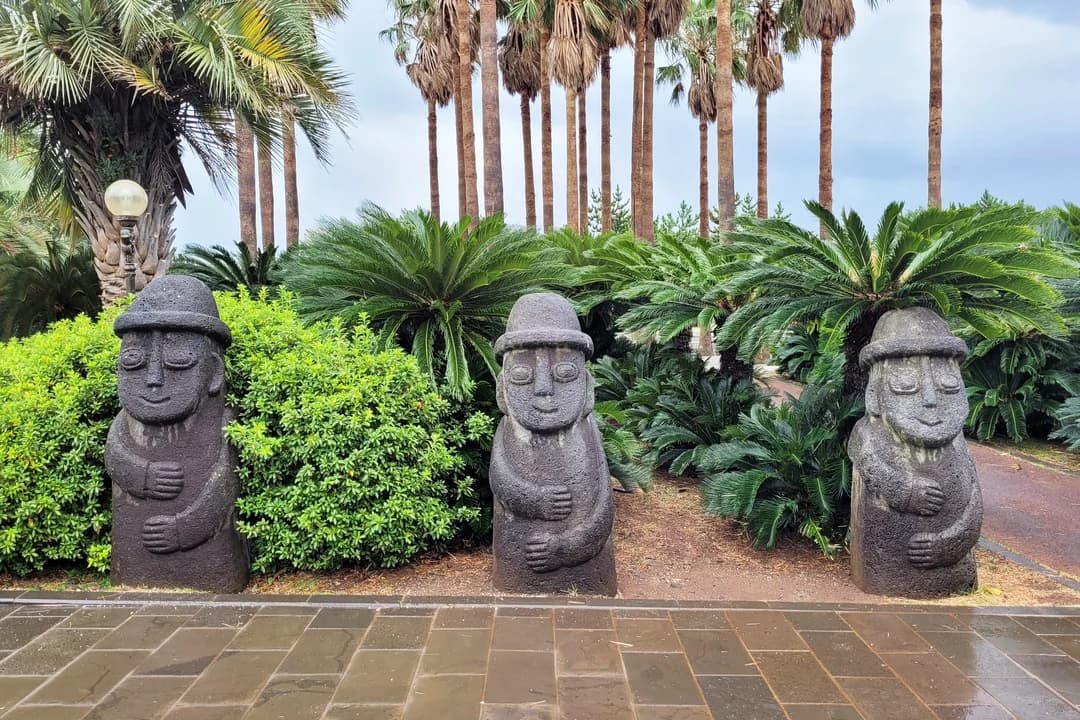
Dol hareubang, "stone grandfathers", are guardian figures carved from volcanic basalt, with a round hat, bulging eyes and a closed smile; they stand about 130 to 190 cm tall. The surviving historic ones are dated to about 1754 and number about 45: 21 in Jeju City (including Gwandeokjeong, the city hall, Samseonghyeol and Jeju National University), 12 in Seongeup village and 12 around Daejeong. They once stood at town gates and were designated Jeju folk cultural property No. 2 in 1971; copies are now sold everywhere as souvenirs.
Yongduam is a rock about 10 m high on the shore at Yongyeon pond in Yongdam-dong, shaped like a dragon's head, with two local legends: a would-be dragon shot by the mountain spirit and turned to stone, or the head of a sea-king's messenger floating on the water. It is on the coast close to the airport and is a short stop at the start or end of a trip. The Jeju Fire Festival, run by Jeju City around the first full moon of the lunar year, is held at Saebyeol Oreum in Aewol; since 2025 it has been reorganized to use less fire. Dates are announced each year and this guide is updated when they are confirmed.
Seogwipo: waterfalls, Olle market and night events
Cheonjiyeon Falls drops 22 m and is 12 m wide into a pool in a subtropical valley; the pool is the habitat of the Jeju giant mottled eel (Natural Monument No. 27), which is active at night. It is open 09:00 to 22:00 with the last entry at 21:20, adults pay ₩2,000, and a visit takes 30 to 60 minutes. The evening opening from 18:00 to 22:00 resumed on 1 October 2026 after a short pause that began on 27 September. Buses 611, 612, 641, 642 and 880 run to the terminus beside the falls (as of 2026-10-11).
Jeongbang Falls, 23 m high, is the one that falls straight into the sea; Seogwipo's tourist office describes it as unique in Korea. It is reached by about five minutes of stairs from the car park, takes under an hour, and is open 09:00 to 17:50 (the closing time follows sunset) with the last entry at 17:30; adults pay ₩2,000. Admission to the public sites is free for children aged six and under, over-65s, disabled visitors and Jeju residents with ID (as of 2026-10-11).
Seogwipo Maeil Olle Market sits beside Lee Jung-seob Street in the old downtown, with street food, fresh seafood and local produce, and the street itself has the Lee Jung-seob Museum. In 2026 Seogwipo runs three evening programs: the Geumto Geumto Saeyeon Show at Saeyeon Bridge on Fridays and Saturdays from 25 April to 31 October, 19:00 to 20:40, with performances, fireworks and fountains; the Old Town Culture Festival on Lee Jung-seob Street on Fridays to Sundays from 11 April to 30 October, 19:00 to 20:40; and drone light shows on 23 October after 20:00 at the Cheonjiyeon car park and on 31 October near Saeyeon Bridge (as of 2026-10-11).
Jungmun, Jusangjeolli and Sanbangsan
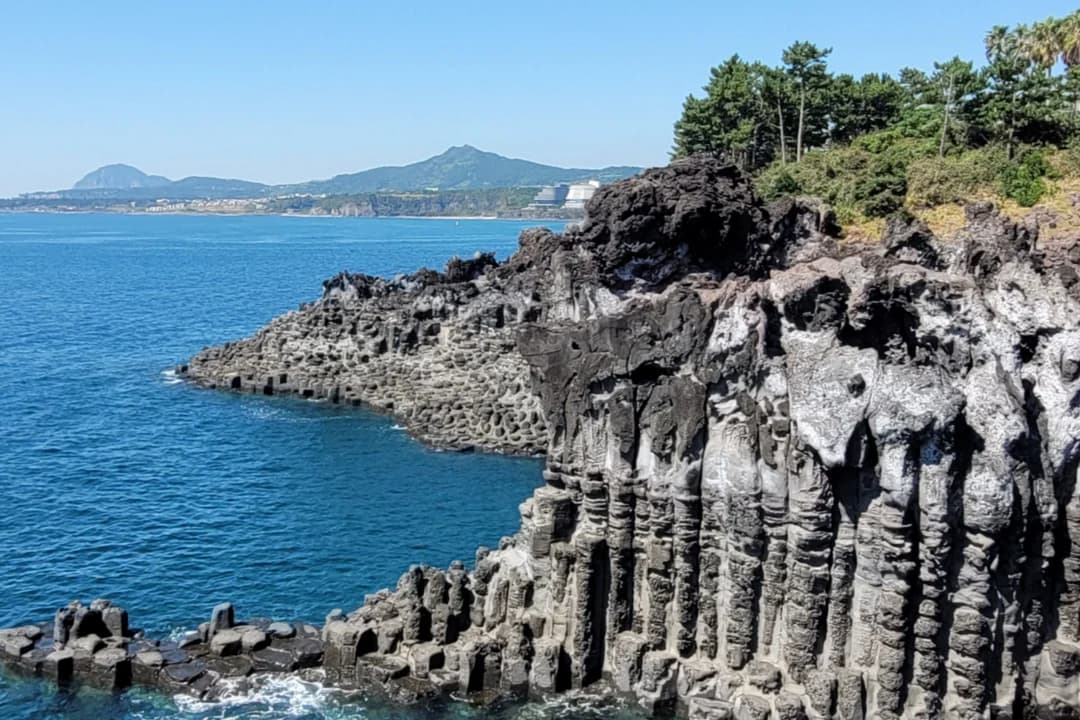
Jusangjeolli is a stretch of the Jungmun and Daepo coast where lava cooled into four- to six-sided stone columns; the designated Natural Monument (No. 443, from 2005) runs about 3.5 km and the tallest columns are around 20 m. When waves are strong, spray leaps high up the cliff. The viewing area is open 09:00 to 17:50 with the last entry at 17:30, adults pay ₩2,000, parking is free, and a visit takes under an hour. The airport limousine bus 600 and buses 510, 520, 521 and 690 serve the area (as of 2026-10-11).
Cheonjeyeon Falls, a short walk from the stops served by buses 202, 282, 510, 520, 521, 531 and 532, has three tiers: the first falls drops 22 m into a pool 21 m deep, and the arched Seonimgyo, the "seven fairies bridge", gives the best view. It is open 09:00 to 17:50 with the last entry at 17:10, adults pay ₩2,500, and the Yeomiji botanical garden is next door (as of 2026-10-11). The Jungmun Chilseonnyeo Festival was held there on 12 and 13 September 2026.
Sanbangsan, in the south-west, is a dome-shaped volcano that rises from flat farmland and is counted with Hallasan and Seongsan as one of Jeju's three great mountains. Legend says the Jade Emperor tore the top off Hallasan and threw it here. A cave temple halfway up the south-west slope looks over the Yongmeori coast and gives a fine sunset view. The mountain itself is a designated scenic site and its slopes are a restricted area that can be entered only with permission, so enjoy it from below and from the cave temple area.
West and north coasts: Hyeopjae, Hamdeok, Aewol and the gotjawal
Hyeopjae, in Hallim on the west coast, is a beach about 1.1 km long and 30 to 90 m wide, white sand dotted with black basalt, with shallow water and a gentle slope that suits families. The small volcanic island of Biyangdo sits just offshore. It was developed in the 1980s as part of the island's tourism development plan.
Hamdeok, in Jocheon on the north coast not far from Jeju City, lies right beside the Seoubong hill, so its full name is Hamdeok Seoubong beach. Jeju City used the beach and the hill as the venue of its Leisure Healing Festival on 12 and 13 September 2026, with water sports, yoga and drawing sessions. Aewol, between Jeju City and Hallim on the north-west coast, is where Saebyeol Oreum stands, the hill where the Fire Festival takes place.
Gotjawal is the Jeju word for the dense forest that grows on rough, rocky lava ground between Hallasan and the coasts, where the thin soil and broken lava blocks keep warm-climate and cool-climate plants growing side by side. Rain sinks quickly through the lava, so these forests are important for recharging the island's groundwater. The Jeju Gotjawal Provincial Park in Daejeong is the organized way to walk one. Wear shoes with grip, because the paths cross uneven rock.
Jeju Folk Village and Seongeup
Jeju Folk Village, on the south-east coast near Pyoseon, recreates traditional island life with exhibition halls, craft rooms, experience houses, a nature study area and folk performances with interpreters. It opens at 09:00 and sells tickets until 18:00 from 1 March to 31 October and until 17:00 from 1 November to the end of February; you can stay for an hour after the ticket office closes. Adults pay ₩15,000, over-65s ₩13,000, youths ₩12,000 and children from age four to elementary school ₩11,000; groups of 20 or more and Jeju residents pay less (as of 2026-10-11).
Nearby Seongeup is an inland village with 12 of the historic dol hareubang and traditional houses; it holds a traditional-life re-enactment festival on 3 and 4 October 2026 at the south gate plaza. Together with the Folk Village it makes a half day on the south-east side between Seongsan and Seogwipo.
Olle walking trails
Jeju Olle is a network of marked walking routes that opened with route 1 in 2007 and now has 27 routes totaling about 437 km, built by the non-profit Jeju Olle Foundation: numbered main routes around the island plus shorter extra routes such as 1-1 on Udo. Routes usually take four to six hours. There is no guide or entry fee; you walk freely and carry your own water, because many stretches pass no shops (as of 2026-10-11).
Following the marks is simple. Blue and orange ribbons tied together hang on poles and branches (blue for the sea, orange for the tangerines); blue arrows point the way when you walk in the normal direction and orange arrows the reverse way; a pony-shaped signpost called a ganse stands at forks and its head points the forward direction; 16 cm plates show the distance walked and the total; and two orange ribbons mark a temporary detour. Basalt stones at the start and end of each route show a map and toilets.
Each route has stamp boxes at the start, the midpoint and the end. Collect all three stamps in the Olle passport for a route and you can receive a completion certificate and medal at the Olle travel center. The foundation advises long sleeves and trousers even in summer because of the forest sections, a light waterproof jacket, trekking shoes, cash for places that do not take cards, and reusable cups and cutlery, since disposable items are discouraged. The 2026 Jeju Olle Walking Festival runs from 5 to 7 November: route 19 (13 km), routes 19 to 20 (11.5 km) and route 20 in reverse (12.9 km) on the north-east coast (as of 2026-10-11).
Food: black pork, seafood and hallabong
Jeju black pork is the island's signature meal. The breed has been Natural Monument No. 550 since 2015, with a protected herd kept at the Jeju livestock institute. It is usually grilled at the table; the older way was boiled sliced pork (dombe-gogi) dipped in salted anchovy sauce, and a thick cut with the skin on has become the popular style. Black pork also appears in blood sausage, in mom-guk, a pork broth thickened with sargassum seaweed, and in gogi-guksu, noodles in pork broth. Jeju runs a certification scheme for pork shops, and a certified shop is a sensible starting point.
Seafood comes from the haenyeo and the boats: turban shells and abalone are the haenyeo's classic catch and appear grilled, as abalone porridge and in soups, alongside hairtail soup (galchi-guk) and sea-snail noodle soup and porridge. Seogwipo marks the seafood calendar with the Bomok damselfish festival (22 to 24 May 2026), the silver hairtail festival at Seogwipo port (8 to 10 October) and the Mosulpo amberjack festival (19 to 22 November) (as of 2026-10-11).
Hallabong is the large tangerine with a bump on top, a Japanese-bred variety (created in 1972) that Jeju began growing in the 1990s and named after Hallasan because the bump looks like a peak; the fruit has been a registered geographical indication since 2015. The main harvest is in winter, roughly December to February, and Seogwipo's roadside stalls and markets sell the fruit, juice and sweets made from it.
Where to eat in practice: the Dongmun night market in Jeju City (18:00 to 24:00), the Seogwipo Maeil Olle Market beside Lee Jung-seob Street, and village-port restaurants along the coast for fresh fish. Udo peanuts, in ice cream and sweets, are the island snack, and Hallabong juice is sold at most tourist stops.
Festivals and seasonal events in 2026
Dates published for 2026 by Jeju City, Seogwipo City and the Olle Foundation. Winter and spring: Seongsan Sunrise Festival, 1 January; Jeju Fire Festival, around the first full moon of the lunar year, at Saebyeol Oreum; Sinpung cherry-blossom tunnel and Daeryun-dong blossom events, 28 and 29 March; Seogwipo Canola Festival, 4 and 5 April, at the Gasi-ri canola plaza; Gapado green-barley festival, 17 April to 17 May; Hallasan bracken festival at Hannam-ri, 18 and 19 April (as of 2026-10-11).
Summer: Bomok damselfish festival, 22 to 24 May; Gwangpyeong buckwheat festival, 6 and 7 June; Yerae Nonjitmul festival, 25 and 26 July; Pyoseon White Sand Festival, 8 and 9 August; Hagosudong summer festival on Udo, 15 August; Yeongcheon-dong sunflower festival, 29 and 30 August. Autumn: Jeju Leisure Healing Festival at Hamdeok, 12 and 13 September; Jungmun Chilseonnyeo Festival, 12 and 13 September; Soesokkak festival, 19 and 20 September; Seongeup and Deoksu-ri traditional-life events, 3 and 4 October (as of 2026-10-11).
Still ahead: Seogwipo Silver Hairtail Festival, 8 to 10 October, at the east wharf of Seogwipo port; Gomaroma Culture Festival, 9 to 11 October, in Jeju City; Samdo Pungnyu Festival, 17 October, at the Gwandeokjeong plaza and Mokgwana; Honinji Festival, 17 and 18 October, at Onpyeong-ri; Seogwipo Chilsimni Festival, 23 to 25 October, at the Cheonjiyeon car park; Jeju Olle Walking Festival, 5 to 7 November; Mosulpo Amberjack Festival, 19 to 22 November, at Mosulpo port (as of 2026-10-11).
The Jeju Fire Festival was first held in 1997 and has been at Saebyeol Oreum since 2000; it recreates the old custom of burning pasture to clear dead grass and pests. Dates for next year are announced each year and this guide is updated when they are confirmed.
Where to stay
Choose by what you want to see. Jeju City suits the first and last night: it is beside the airport and has the Dongmun night market, Mokgwana and Yongduam. Seogwipo on the south coast suits the waterfalls, Olle Market evenings and the Saeyeon night show, and the Jungmun tourist complex to its west has Jusangjeolli and Cheonjeyeon. The Seongsan and Gujwa area in the east suits sunrise at Seongsan Ilchulbong, Manjanggul and Udo; Hallim and Aewol in the west suit the beaches. Two bases are enough for a five-day stay.
Other options: Udo has guesthouses that the district office lists, Hallasan's Gwaneumsa campground is the park's only campground (₩9,000 or ₩7,000 a night), and Jeju promotes safety-certified rural guesthouses. In the autumn and spring holidays and on long weekends, book rental cars and rooms early (as of 2026-10-11).
Accessibility and families
Public tourist sites give free entry to disabled visitors (with a carer for severe disabilities), children aged six and under and people over 65, and the Haenyeo Museum is free for children aged 12 and under. Easy short walks include Eoseungsaengak (1.3 km, 30 minutes on Hallasan), the Cheonjiyeon and Jeongbang falls (under an hour each) and the walk to Seongsan's rim. The Yeongsil road lets small cars reach the rest stop and shortens the walk to Witseoreum to 3.7 km (as of 2026-10-11).
Hyeopjae is a good beach for children, with shallow water and a gentle slope. Traveling with small children, avoid the long Hallasan summit and Geomun Oreum full route, which take four to ten hours and have no toilets on parts of the way.
Weather by season and wind
The island's yearly average temperature is around 16 °C and the climate is humid subtropical: hot, humid and rainy in summer, cool in winter. Weather differs sharply between the coast and the mountain, and Hallasan can have snow and gales while the coast is dry. Treat summer typhoons and winter gales as the main risk to flights, ferries and Hallasan access.
By season: spring has blossom and the first long walks, with changeable weather; summer is the beach season and the rainiest, most humid time; autumn color on Hallasan peaks in early to mid-October; winter brings snow to the mountain, early cut-off times on the trails and, in some years, icy conditions on the 1100 and 5.16 roads. Hallasan closes trails when wind reaches about 14 m/s or a day's snow reaches 30 cm. Pack layers, a windproof jacket and rain cover in every season (as of 2026-10-11).
Safety and etiquette
- Enter Hallasan only within the permitted hours and turn back at the cut-off time; going in outside them is fined.
- Eat only at the shelters, never on the summit, and carry all rubbish out; boiling water in pots is restricted.
- On Geomun Oreum and in Manjanggul wear closed shoes, take no food in and follow the guide.
- Stay on the marked path at Seongsan, Jusangjeolli and Yeongsil; the slopes of Sanbangsan are closed and leaving the path on the cliffs risks falls.
- Treat the haenyeo and their work areas with respect: keep your distance from divers, ask before taking close photographs and leave the shellfish on the shore.
3-day itinerary
- Day 1, Jeju City. Land, drop the bags and walk to Jeju Mokgwana (09:00 to 18:00, ₩1,500) and the dol hareubang beside Gwandeokjeong. Take a short taxi or bus to Yongduam on the shore. Eat at the Dongmun night market, open 18:00 to 24:00 beside Gate 8 (as of 2026-10-11).
- Day 2, the east. Drive about 50 minutes from the airport to Manjanggul (tickets until 17:00, ₩4,000), then the 24 minutes on to Seongsan Ilchulbong. In October the last ticket for Seongsan is at 18:00 (₩5,000). Spend the night in the Seongsan area, or take the 57-minute bus to Seogwipo (as of 2026-10-11).
- Day 3, Hallasan and Seogwipo. Take bus 240 from the Jeju terminal (about 60 minutes) to Yeongsil, enter before 12:00 in winter (15:00 in summer) and walk 3.7 km to Witseoreum shelter in about 1 hour 30 minutes, with no booking needed. In the evening visit Cheonjiyeon, open until 22:00, and Seogwipo Maeil Olle Market. Keep a spare buffer before a flight (as of 2026-10-11).
5-day itinerary
- Day 1, Jeju City: Mokgwana, the dol hareubang, Yongduam and the Dongmun night market (18:00 to 24:00). Day 2, the east coast: Manjanggul (about 50 minutes from the airport by car), Bijarim, the Haenyeo Museum (closed Mondays) and Seongsan Ilchulbong before its last ticket (18:00 in October) (as of 2026-10-11).
- Day 3, Udo: cross by ferry from the east coast, ride the island buses or walk Olle route 1-1 past Seobin Baeksa, Udobong and Hagosudong, and come back before the last boat. Day 4, Hallasan: book the Seongpanak to Gwaneumsa traverse (entry before 11:30 in winter), start at 05:00 and be off the summit by 13:30; without a booking choose Yeongsil to Witseoreum instead (as of 2026-10-11).
- Day 5, the south and west: Cheonjiyeon in the morning (open from 09:00), Jeongbang Falls, Jusangjeolli and Cheonjeyeon (all close at 17:50, last entry 17:10 to 17:30), then Hyeopjae beach on the way back to the airport. Leave at least two hours of margin for a flight; typhoon or gale days can cancel departures, so keep one spare day in the plan (as of 2026-10-11).
Tips
Book the Hallasan summit slot when the month opens (09:00 on the first working day of the previous month), and keep the booked entry window in mind: the summit turn-around is 13:30 in winter and 14:30 in summer.
Keep one spare day. Typhoons, gales and snow can cancel flights, ferries and Hallasan access, and Udo ferries follow the weather.
Use the bus for Seongpanak and Hallasan in general; the car park is small and road parking is enforced. Carry cash for market stalls and Olle sections without shops.
Check the closing day of each paid sight: Seongsan closes on the first Monday, Manjanggul on the first Wednesday, the Haenyeo Museum every Monday and Geomun Oreum every Tuesday.
Sources and last update
Last updated: 11 October 2026. Figures are as of the date shown.
Source: Hallasan National Park Management Office · Jeju World Heritage Headquarters · Jeju City · Seogwipo City · Jeju Haenyeo Museum · Jeju Olle Foundation · Jeju Folk Village · Korea Heritage Service · Checked 11 Oct 2026
Written by HOLIDAY in its own words from official public information. This is not an official publication of the Korea Tourism Organization or any government body.
HOLIDAY refreshes this article regularly as fares, hours and event dates change.