Season windows, distances and transport from Seoul, tickets, rental and lessons, clothing, slope levels, safety rules, cold-weather limits, a first-day plan and emergency numbers.
Season windows
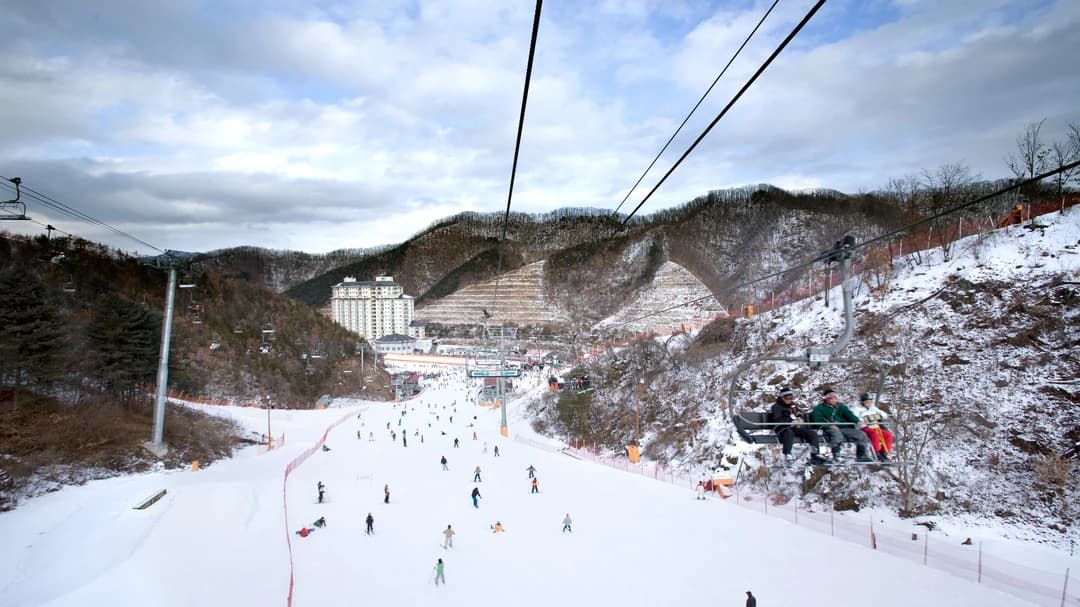
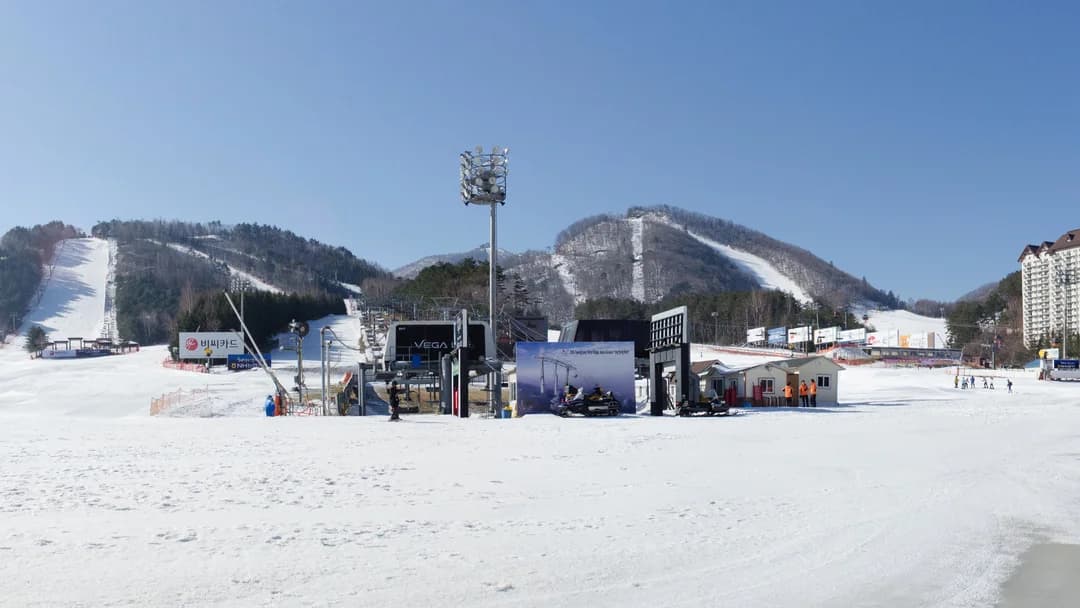
Korean resorts typically open between November and December and close in March or April, depending on the resort and the year (as of 2026-10-11). Each resort announces its own dates in autumn, so the season you plan for may shift by a week or two.
Last season’s openings show the pattern: Phoenix Pyeongchang and Mona Yongpyong on 21 November 2025, High1 on 28 November, Alpensia on 3 December, Vivaldi Park on 4 December, Elysian Gangchon and Welli Hilli on 5 December, Oak Valley on 12 December, and Konjiam and Jisan in mid-December (as of 2026-10-11).
Closing is usually early to mid March for most resorts (Oak Valley closed earlier, on 20 February last season), and Yongpyong’s season is described as running to early April (as of 2026-10-11). Late-season snow depends on temperature, so mornings are firmer and afternoons softer.
Peak crowds come on weekends, school holidays and the Lunar New Year break (7 February 2027, a three-day holiday); weekdays and the first hours of the morning are calmer. Slopes can close at short notice for strong wind, warm weather or a lift fault, and snow-making means early-season runs are often limited to a few pistes.
Resorts and distances from Seoul
Near Seoul (day-trip range): Konjiam about 52 km and Jisan Forest about 61 km from Seoul Station, both roughly 40 minutes by car from Gangnam; Elysian Gangchon about 85 km; Oak Valley about 96 km; Vivaldi Park about 97 km (about 1.5 hours by car) (as of 2026-10-11).
Gangwon “weekend” range: Welli Hilli about 143 km (about 1 hour 40 minutes from Gangnam), Phoenix Pyeongchang about 156 km, Alpensia about 194 km, Yongpyong about 197 km (about 2 hours), High1 about 222 km (about 2.5 hours) (as of 2026-10-11). Staying a night or two suits these.
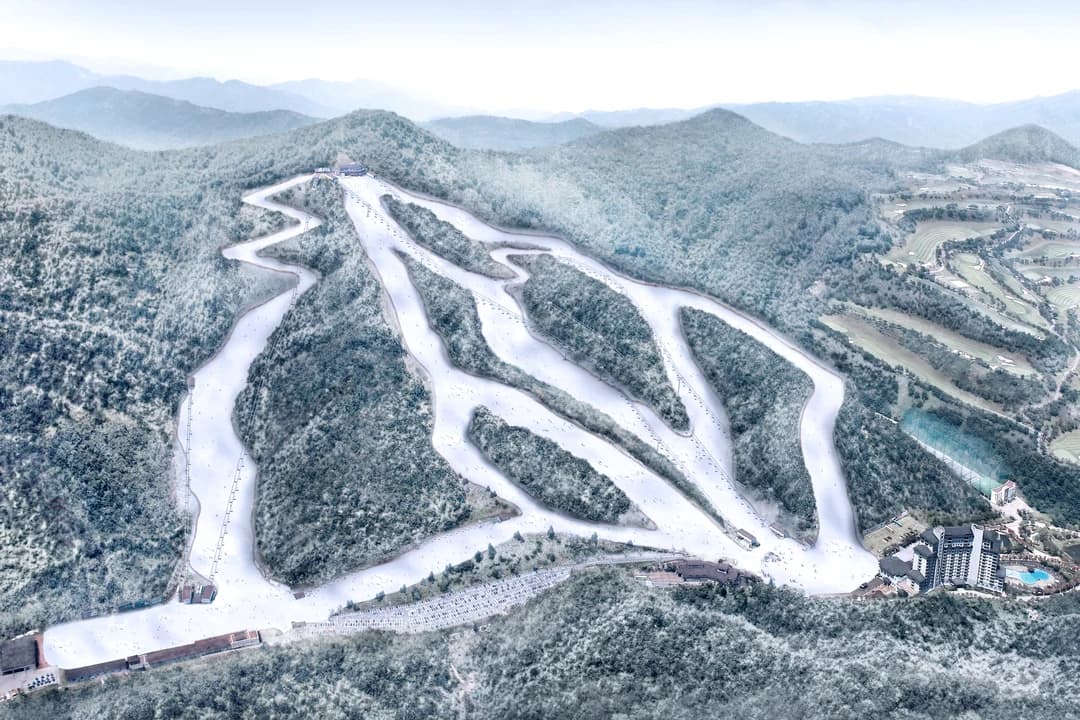
Size at a glance: Mona Yongpyong planned to open all 28 slopes by the end of last year; Phoenix Pyeongchang has 18 slopes plus a kids-only practice slope, High1 has 15 and Elysian Gangchon has 10. High1’s longest run is a gentle 4.2 km valley course with a 645 m drop, popular with beginners (as of 2026-10-11).
Getting there from Seoul
By car or taxi: the closest resorts are about 40 minutes from Gangnam, Gangwon resorts about 1.5 to 2.5 hours (as of 2026-10-11). Winter weekends add traffic on the expressways, so leave early. Snowy mountain roads may call for winter tyres or snow chains, so choose a rental car fitted with winter tyres.
By train: the Gangneung Line (KTX-Eum, opened 22 December 2017 for the 2018 Winter Olympics) serves the Pyeongchang area; from the station a resort shuttle or taxi covers the last stretch, for example Phoenix Pyeongchang is about 15 minutes by taxi from Pyeongchang station (as of 2026-10-11).
Elysian Gangchon is the resort best reached by commuter-style rail: the ITX-Cheongchun from Yongsan takes about 1 hour 5 minutes to the Gangchon area, then a short shuttle or taxi (as of 2026-10-11). Hold a metro T-money card for the connecting rides.
By resort shuttle bus: many resorts run buses from central Seoul stations and some, such as Vivaldi Park, have offered free or low-cost rides from Seoul and Incheon with a booking made in advance (as of 2026-10-11). Seats are limited, and buses leave on time; arrive early at the pickup point.
Planning your first trip
- Pick a resort that has a beginner area and a ski school. For a day trip choose one near Seoul; for a night or two choose a Gangwon resort with lodging beside the slopes so you can leave your gear and rest.
- Choose your dates: avoid the Lunar New Year weekend and school-holiday weekends if you can, and keep a spare day in case wind or warm weather closes slopes.
- Book the lift ticket, rental and lesson as a bundle if the resort offers one, and book transport. Lessons in your language are limited, so confirm the language and start time when you book.
- Pack and dress in layers, and aim to arrive 60 to 90 minutes before the lifts open to rent, change and use the lockers (as of 2026-10-11). The morning of the trip, look at the forecast and slope status and keep a backup such as a hot spring or an indoor activity.
Lift tickets and rental
Lift tickets come in time blocks and sessions: for example Konjiam sells 1-, 2-, 3-, 4- and 6-hour tickets, and many resorts sell half-day, full-day and night tickets (as of 2026-10-11). The clock usually starts when you first pass a gate, so buy a block that fits your level of fatigue.
Many resorts use a contactless RF card kept in your jacket pocket that opens the lift gates automatically; High1, for example, uses a disposable paper RF card. Keep it dry and do not lose it, since a replacement or an unreturned card can be charged.
Rental counters sit near the base. Expect to show ID, fill in a form and try the boots on. Ask for another size if they hurt: boots that do not fit spoil the whole day. Rental usually covers skis or board, boots, poles, helmet and sometimes wear; goggles and gloves are often extra.
Lockers: use a coin or card locker in the base building for shoes, bags and valuables, and carry only your phone, card and lift pass on the slope. Cloakrooms and boot-drying racks are common in the bigger resorts.
Lessons and kids
Beginners should take at least one lesson: a group lesson teaches stopping, turning and getting up in a few hours, which is worth more than a day of trial and error. Instructors who speak your language may be limited, so choose a group lesson with clear demonstrations if none is available.
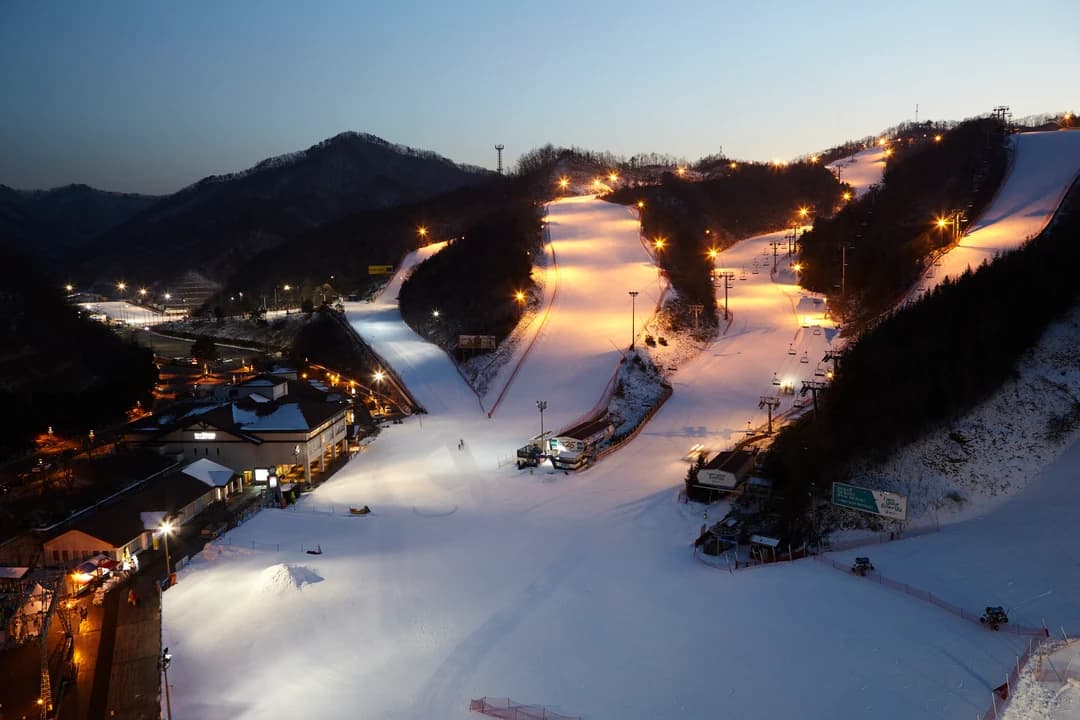
Most resorts have a beginner slope and a gentle moving carpet or “magic carpet”; some also have a kids-only practice slope, as Phoenix Pyeongchang does, and snow-sled areas for families. Children need warm, waterproof layers and a helmet that fits snugly.
Try snowboarding or skiing for a half day first and see how your legs feel. Snowboard terrain parks with jumps and rails are separate from beginner slopes; stay out until you are comfortable on blue or red runs.
What to wear and bring
- Wear three layers: a snug base layer that wicks sweat, a fleece or light down middle layer, and a waterproof, windproof shell. Take layers off when you warm up, since sweat that cools makes you colder.
- Waterproof gloves or mittens (bring a spare pair), thick ski socks (one pair, not two), a neck warmer or balaclava, and goggles; sunglasses are fine on bright days, and sunscreen is needed because snow reflects strongly even under cloud.
- Wear a helmet. Rental counters normally have helmets, and a helmet is the simplest protection against head injuries from falls and collisions. Wrist guards are a good idea for snowboard beginners.
- Bring your passport or ID for rental, a card and a little cash, lip balm, a small bag or pocket case for your phone, and a change of dry socks and a top for the ride back.
Slope levels and colors
There is no single national color code. The usual order is green for the easiest, then blue and/or red for intermediate, and black for the hardest, but the exact shades and numbers of levels differ by resort. Always read the legend of the slope map at the base.
Color in a name is not a level: Yongpyong’s runs are named Yellow, Pink, Red, Blue, Silver, Gold, Rainbow and so on, and some of those names do not match difficulty. Use the difficulty symbol on the map and the signs at the top of the lift.
Beginners start on the green runs next to the base, then step up one level at a time. Most resorts post a “no straight running” (직활강 금지) warning: ski in turns across the slope rather than straight down, because high speed on crowded runs causes collisions.
Safety rules to follow
- Follow the international FIS-style code: ski and board in control and at a speed that suits your skill and the conditions; the skier or boarder ahead and below you has priority, so you must avoid them.
- Look uphill before you start, merge or set off again, and overtake only with plenty of room on either side. Stop at the edge of the slope or where you can be seen, never in the middle, in a narrow spot or just below a crest.
- If you fall, get out of the way quickly. If you must climb or walk on the slope, use the edge. Obey signs, markers and closures, and stay on marked runs. If someone is hurt, stay with them, mark the spot above with crossed skis or boards, and send someone to ski patrol.
- Know the safety set-up: at High1, for instance, patrol stations stand at Mountain Top and Valley Top and emergency phones run along the slope edges (as of 2026-10-11). Look for patrol huts and emergency phones when you read the slope map.
Please avoid
- Do not ski on closed slopes or roped-off areas, and do not leave the marked runs in the dark or in poor visibility.
- Do not drink alcohol before or during skiing, and do not use your phone while moving. Do not ride a lift you are unsure about, and do not unload at the wrong station.
- Do not sit in the middle of the slope or just below a bump, and do not wear jeans or cotton: they soak through and chill you. Do not skip the boot-fit check on the first morning, or ignore pain from the boots.
Cold, wind and weather limits
Mountain mornings in Gangwon are often below freezing in January and February, and wind makes it feel colder. Skin that goes white, numb or waxy is a warning sign of frostbite; go inside, warm the area gently and tell the staff.
The Korea Meteorological Administration issues a cold-wave advisory when the morning low drops 10 degrees or more from the day before and reaches 3 degrees C or below, or stays at minus 12 degrees C or lower for two days or more; the warning level uses 15 degrees and minus 15 degrees (as of 2026-10-11).
On advisory days, wear a balaclava, add a mid layer, take more warm-up breaks and limit your time on exposed chairlifts. Strong wind often closes upper lifts first, so the lower beginner slopes are the likelier ones to stay open.
The weather call line is 131 (24 hours, paid call). Rules and thresholds can change; this guide is refreshed regularly.
Night skiing and snowboard etiquette
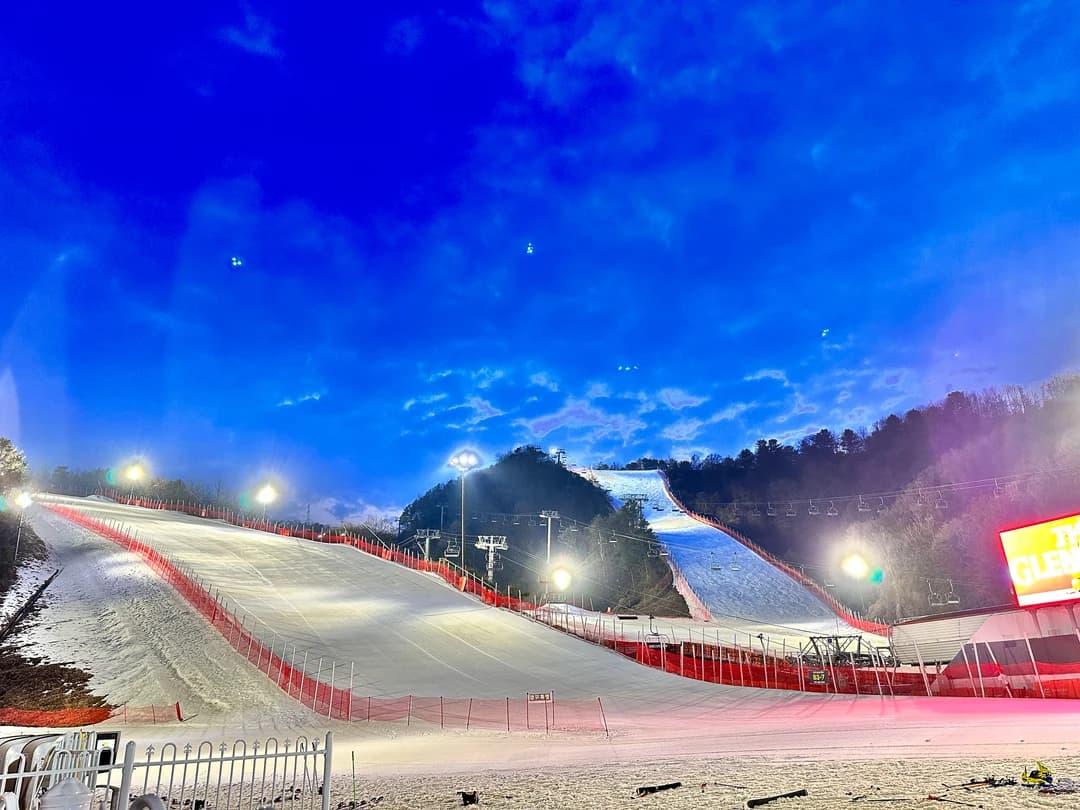
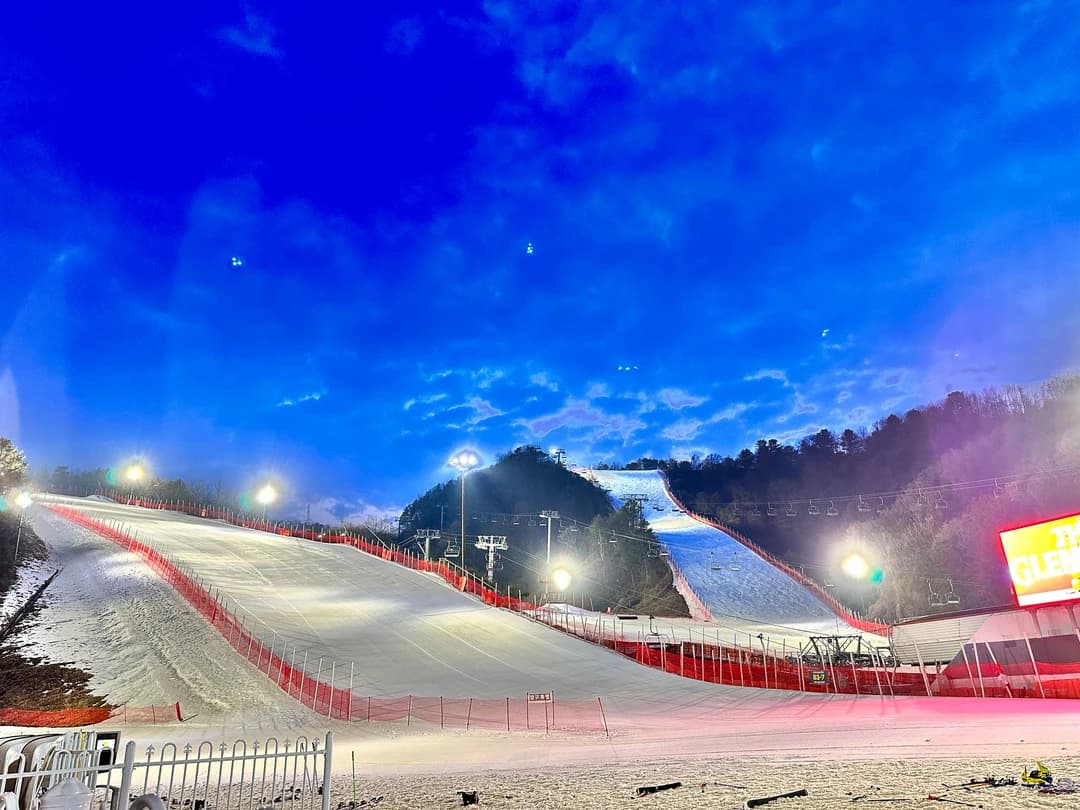
Night sessions run into the small hours at some resorts near Seoul; Konjiam’s weekday night ticket window, for example, covers 18:00 to 02:00 (as of 2026-10-11). Slopes are lit but contrast is flatter and it is colder, so take clear or low-light goggles and one more layer than for daytime.
Snowboarders: sit at the side of the slope, not in the middle, and never just below a bump or crest; strap in and unstrap off the run, and use the leash or brake on your board so it cannot slide away. Clear the lift unloading area quickly.
Skiers and boarders share the slope: boarders have a blind side on their back edge, and skiers have poles to keep clear. Give each other space, and in the terrain park look first, wave if someone is on the take-off, and do not stop on the landing.
A first-day plan
- Arrive early, pick up your lift pass and rental, put everything non-essential in a locker, and walk around a few meters in the boots to check the fit before leaving the base building.
- Take a 2-hour group lesson or a self-taught session on the beginner slope: learn to stop, to turn both ways and to get up after a fall (as of 2026-10-11).
- Break for lunch and a warm drink, change a wet layer, and drink water. Fatigue is the main cause of afternoon falls, so rest as soon as your legs shake.
- Try one longer green run in the afternoon, return your rental at the agreed time and check that your lift card is returned. Finish with a hot spring, sauna or meal near the resort before the ride home.
Injuries, insurance and emergency numbers
For a hurt skier on the slope, go to the nearest patrol hut or use a slope-side emergency phone; patrol staff give first aid and move people down. Common injuries for beginners are wrist, knee and tailbone injuries, so wrist guards and padded shorts help.
Emergency numbers: 119 for an ambulance or fire (including a mountain rescue request), 112 for police, and 1330 for the Korea Travel Helpline, which gives multilingual help (as of 2026-10-11). Tell the call-taker the resort name, the slope or lift name and the nearest landmark.
Insurance: many ordinary travel policies list winter sports as an exclusion or an optional add-on, and policies differ on rescue cost, medical costs and equipment. Read the exclusion list of your own policy before you go; this guide does not recommend any product.
Quick answers
Can I ski if I have never tried? Yes, most resorts have beginner slopes and lessons; start with a half day and see how you feel. Do I need to bring my own gear? No, skis, boards, boots and helmets can be rented at the resort.
Which is easier to learn, skiing or snowboarding? Skiing is usually easier on day one, snowboarding often feels easier from day two. Is the day trip from Seoul realistic? Yes, from Konjiam, Jisan, Elysian Gangchon, Oak Valley and Vivaldi Park (as of 2026-10-11).
Does my travel insurance cover skiing? Not always; read the exclusion list and the add-on terms of your own policy before you go. Can I wear my own clothes? Yes if they are waterproof and warm; jeans and cotton are poor choices.
Season dates, slope status and rules change every year; the 2026-27 opening dates are announced by each resort in the autumn, and this guide is refreshed regularly and shows the as-of date on every figure.
Sources and last update
Last updated: 11 October 2026. Figures are as of the date shown.
Source: Korea Tourism Organization · Yongpyong Resort · High1 Resort · Korea Meteorological Administration · Checked 11 Oct 2026
Written by HOLIDAY in its own words from official public information. This is not an official publication of the Korea Tourism Organization or any government body.
HOLIDAY refreshes this article regularly as fares, hours and event dates change.


![[Early bird] Elysian Gangchon Ski & Snowboard Gugok Ice Wall Tour](/_next/image?url=https%3A%2F%2Fadmin.holidaykr.com%2Fapi%2Fadmin%2Fsystem%2Fbasic-settings%2Ffavicon%3Fpath%3D%252Fuploads%252Fproducts%252Fthumbs%252F750_1791455110103_file1.jpg&w=3840&q=75)