KTX, KTX-Sancheon, KTX-Eum, ITX and Mugunghwa trains plus express buses: 2026 fares, travel times, the new two-month booking window and how to buy tickets between Seoul and the regions.
Overview: trains and buses between Seoul and the regions
Since 1 September 2026, Korail runs the former SRT trains together with KTX as one high-speed network, so a single booking screen shows trains leaving from Seoul, Yongsan and Suseo stations (as of 2026-10-11). Korail's own figures show weekday KTX trips rising from 379 to 402 a day and weekend trips from 431 to 457 after the merger, and the network carried about 9.36 million passengers in September 2026, roughly 312,000 a day.
Korail's route list (dated 1 January 2025) shows two high-speed trunk lines: the Gyeongbu line to Busan (398.2 km) and the Honam line between Osong and Gwangju Songjeong (183.8 km). KTX trains then continue on ordinary tracks to places such as Mokpo, Yeosu, Pohang and Jinju, and the KTX-Eum reaches Gangneung.
Use trains for the big corridors: Seoul to Daejeon, Daegu and Busan; the Honam line to Gwangju and Mokpo; the Jeolla line to Jeonju and Yeosu; and Seoul to Gangneung. Use express buses for towns the rail network does not serve, for late departures after the last train, or when train seats are sold out. The sections below give travel times taken from the 1 September 2026 timetable, the fares from the same date, the new booking window and the steps to buy.
KTX family: KTX, KTX-Sancheon, KTX-Cheongryong and KTX-Eum
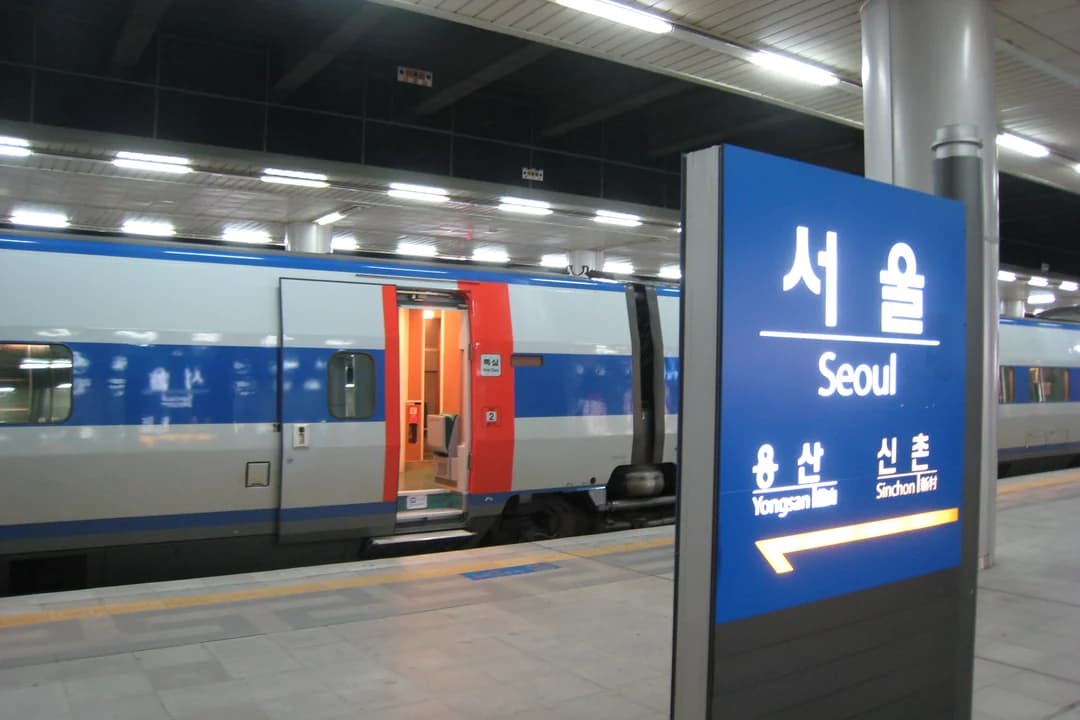
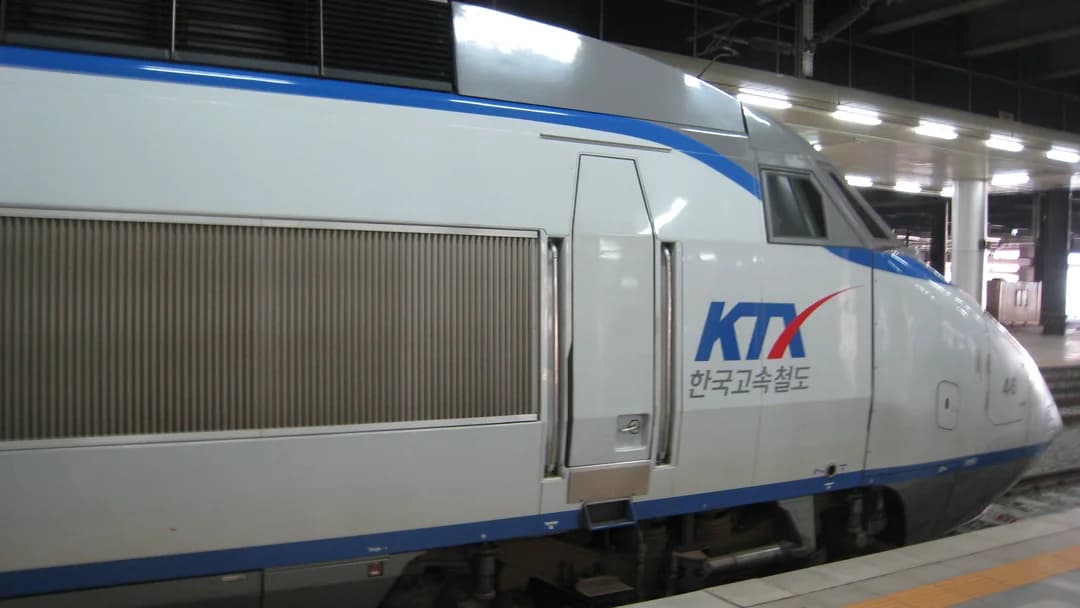
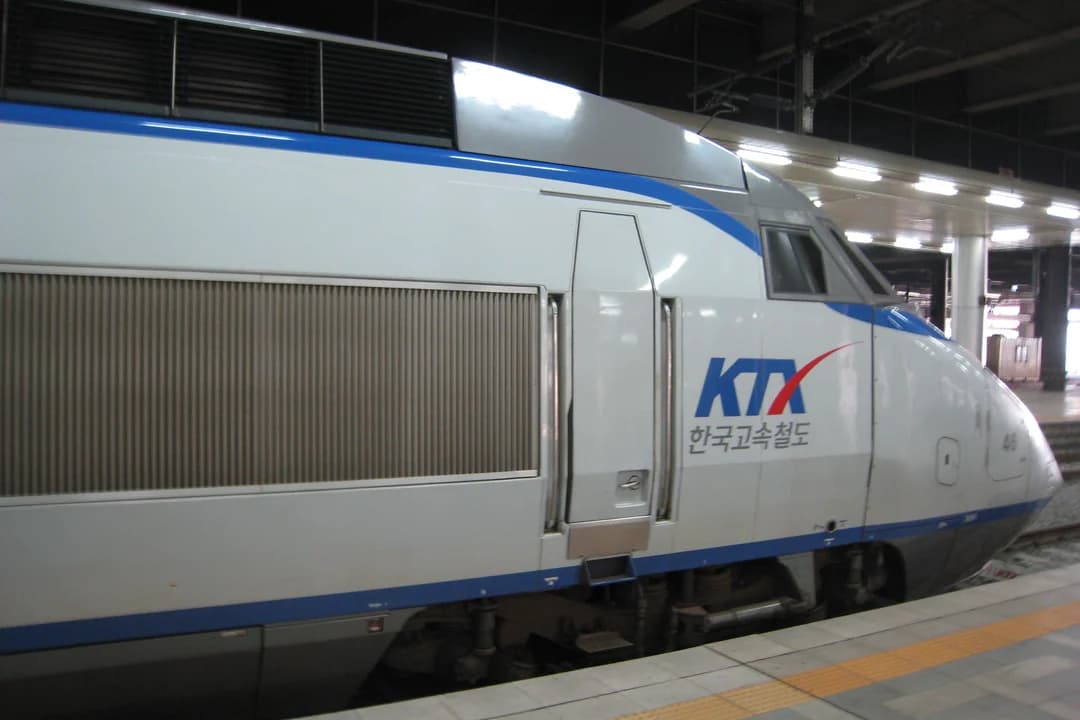
The first-generation KTX seats 955 people per set; Korail lists a design top speed of 330 km/h, while regular service runs at up to 305 km/h. Since the merger the Suseo-station departures use the big 955-seat sets (as of 2026-10-11).
KTX-Sancheon is the second-generation set with roughly 360 to 410 seats depending on the series. The trains that used to run as SRT now run under this name, so Suseo departures appear as KTX-Sancheon in the booking list. KTX-Cheongryong is the newest eight-car set (515 seats, up to 320 km/h), in service on the Gyeongbu and Honam lines since May 2024; in the 1 September 2026 timetable the fastest Seoul to Busan departures use it, at 2 h 18 min.
KTX-Eum is a six-car electric train (381 seats, 260 km/h maximum) built for semi-high-speed lines. In the timetable it runs Seoul to Cheongnyangni, Pyeongchang and Gangneung, and Korail added two daily Seoul to Busan KTX-Eum trips on the Jungang line in September 2026. The old SRT brand no longer exists; Korail advises checking the train number and destination before boarding, because Seoul-axis and Suseo-axis trains now appear together.
Slower trains: ITX-Saemaeul, ITX-Maum, ITX-Cheongchun and Mugunghwa
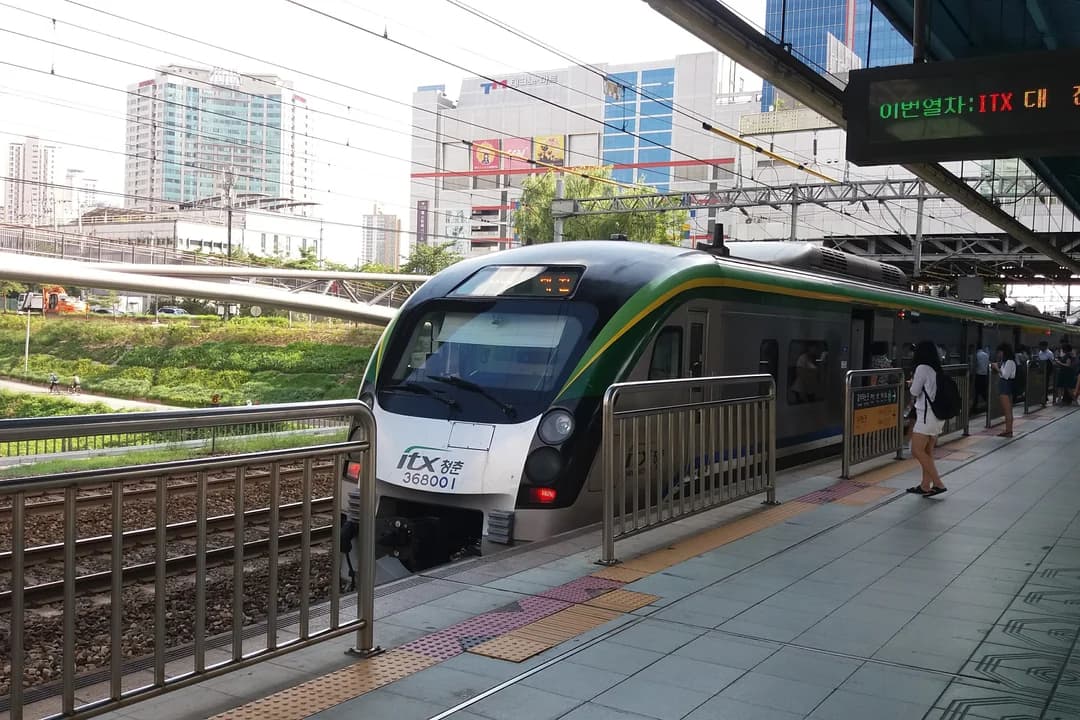
ITX-Saemaeul seats 376 and runs up to 165 km/h (Korail lists 23 sets); ITX-Maum is the same class of train introduced in late 2023. Mugunghwa-ho is the basic conventional train with the most stops. ITX-Cheongchun serves Chuncheon on the Gyeongchun line (Korail's route list shows that line running 80.7 km from Mangu to Chuncheon). Fares for these trains are not quoted here; they are shown on the search result in the Korail+ app (as of 2026-10-11, schedule of 1 September 2026).
The timetable shows how much slower they are. Seoul to Daejeon takes a typical 1 h 52 min on ITX-Saemaeul and 2 h 10 min on Mugunghwa. Seoul to Dongdaegu takes about 3 h 40 min and 4 h 17 min. Seoul to Busan takes about 4 h 52 min on ITX-Saemaeul (4 h 49 min on ITX-Maum) and 5 h 49 min on Mugunghwa, against 2 h 18 min to 3 h 27 min by KTX.
On the southern lines the same pattern holds. From Yongsan, ITX-Maum takes about 3 h 07 min to Jeonju and 4 h 23 min to Mokpo, ITX-Saemaeul about 3 h 20 min and 4 h 49 min, and Mugunghwa about 3 h 46 min and 5 h 14 min, while KTX takes about 1 h 43 min to Jeonju and 2 h 34 min to Mokpo. Slower trains are worth it when KTX is sold out or when your stop is not served by KTX.
Main stations
Seoul Station and Yongsan Station are the main Seoul gateways: most Gyeongbu, Gyeongjeon and Donghae KTX trains leave from Seoul, while many Honam and Jeolla trains (Gwangju, Mokpo, Jeonju, Yeosu) leave from Yongsan (as of 2026-10-11, from the 1 September 2026 timetable). Suseo Station in Gangnam-gu, the former SRT terminus, is on Subway Line 3 and the Suin-Bundang Line; its trains call at Dongtan, Pyeongtaek Jije, Osong, Daejeon and Dongdaegu on the way to Busan, and also serve Mokpo, Yeosu, Jeonju and Pohang. Haengsin (Goyang) and Gwangmyeong are extra Seoul-area stops.
Along the lines the stops are as follows. Gyeongbu: Cheonan-Asan, Osong, Daejeon, Gimcheon-Gumi, Seodaegu, Dongdaegu, Gyeongju, Ulsan, Miryang, Gupo and Busan. Honam: Gongju, Iksan, Jeongeup, Gwangju Songjeong, Naju and Mokpo. Jeolla: Jeonju, Namwon, Suncheon and Yeosu Expo. Gangneung line: Cheongnyangni, Yangpyeong, Pyeongchang, Jinbu (Odaesan), Gangneung and on to Donghae. Donghae line: Pohang. Gwangmyeong is also the KTX stop with an airport bus and a city airport terminal for Incheon flights.
Travel times between key cities
These are taken from Korail's timetable that took effect on 1 September 2026 (as of 2026-10-11). Seoul means Seoul Station. Seoul to Busan: 2 h 18 min fastest, up to about 3 h 27 min, typically about 2 h 45 min. Suseo to Busan: 2 h 11 min to 3 h 09 min, typically 2 h 36 min. Seoul to Dongdaegu (Daegu): 1 h 38 min to 2 h 41 min, typically about 1 h 55 min; Suseo to Dongdaegu 1 h 31 min to 2 h 01 min. Seoul to Gyeongju: 1 h 58 min to 2 h 53 min, typically 2 h 14 min. Seoul to Ulsan: 2 h 09 min to 3 h 06 min, typically 2 h 23 min. Seoul to Daejeon: 54 min to 1 h 51 min, typically 1 h 06 min.
South and west: Yongsan to Gwangju Songjeong takes 1 h 36 min to 2 h 47 min, typically 2 h 01 min (Suseo to Gwangju Songjeong: typically 1 h 52 min). Yongsan to Mokpo takes 2 h 22 min to 2 h 46 min, typically 2 h 34 min (Suseo to Mokpo about 2 h 30 min). Yongsan to Jeonju takes 1 h 28 min to 2 h 29 min, typically 1 h 43 min. Yongsan to Yeosu Expo takes 2 h 54 min to 3 h 51 min, typically 3 h 06 min. East: Seoul to Pohang takes 2 h 15 min to 2 h 34 min, typically about 2 h 26 min. Seoul to Gangneung by KTX-Eum takes 1 h 57 min to 2 h 11 min, typically 2 h 03 min, and Cheongnyangni to Gangneung 1 h 27 min to 1 h 50 min.
Standard fares for key pairs
Korail's fare table that took effect on 1 September 2026 gives these one-way adult fares for a standard seat on KTX, before any discount (as of 2026-10-11). Gyeongbu corridor: Seoul to Busan ₩54,400 (it was ₩59,800 before the merger), Suseo to Busan ₩52,900, Seoul to Ulsan ₩48,400, Seoul to Gyeongju ₩44,500, Seoul to Dongdaegu ₩39,000, Suseo to Dongdaegu ₩37,500, Seoul to Daejeon ₩21,600, Seoul to Osong ₩16,900 and Seoul to Cheonan-Asan ₩12,800. The lowest KTX fare in the table is ₩7,500.
Honam and Jeolla lines: Yongsan to Gwangju Songjeong ₩42,000 (it was ₩46,800 before the merger; Seoul to Gwangju Songjeong ₩42,400, Suseo ₩40,900). Yongsan to Mokpo ₩48,000 (Seoul ₩48,300, Suseo ₩46,800). Yongsan to Jeonju ₩31,600 (Seoul ₩31,900, Suseo ₩30,400). Yongsan to Suncheon ₩42,300 and to Yeosu Expo ₩45,400 (Seoul ₩45,700, Suseo ₩44,200). East and south coast: Seoul to Pohang ₩48,800, Seoul to Jinju ₩53,100, and Seoul to Gangneung by KTX-Eum ₩27,600.
Korail says the average KTX fare fell about 10% to match the former SRT level, and that the competition review set a minimum of three years for keeping the fare and mileage terms, with any later change needing ministry approval. Fares for ITX-Saemaeul, ITX-Maum and Mugunghwa are quoted on the search screen in the Korail+ app.
Seat classes: standard, premium and first class
The fare table lists up to three classes: standard (the base fare), premium and first class (called special in the table). Premium adds a surcharge of about 20% of the base fare on the Gyeongbu line and about 30% on the Honam line, and first class adds about 45%. Seoul to Busan: standard ₩54,400, premium ₩65,300, first class ₩78,900. Yongsan to Gwangju Songjeong: standard ₩42,000, premium ₩54,600, first class ₩60,900. Seoul to Gangneung by KTX-Eum: standard ₩27,600, premium ₩33,100. The tables for departures from Suseo list standard and first class only, for example Suseo to Busan ₩52,900 and ₩76,700 (as of 2026-10-11).
Seats are reserved by default. Using a wheelchair space or other reserved seat without qualifying is charged ten times the base fare under the operator's terms, so use only the seats meant for you.
Discounts, changes and refunds
Discounts announced for the merged network (as of 2026-10-11): ages 13 to 24 get 10% to 30% off KTX and ages 25 to 33 get 10% to 40%, depending on how full the train is; pregnant women get 40% off KTX and ordinary trains or a free first-class surcharge; online special fares take 10% to 30% off lightly booked KTX trains; the N Card, sold only in Korail+, gives 15% to 40% off KTX and 15% to 30% off ordinary trains on set routes and periods. Mileage returns 5% of the amount paid, including on Suseo trains, and works like cash. Buying a KTX ticket together with an ordinary-train ticket takes 30% off the ordinary-train fare.
Changes and refunds: a ticket can be changed without a fee to a date within 7 days before or after the travel date, up to 30 minutes before departure. A ticket refunded within 10 minutes of payment carries no penalty up to 30 minutes before departure, twice a day. When the delay is Korail's fault, compensation is 50% of the fare for 60 to 90 minutes, 75% for 90 to 120 minutes and 100% from 120 minutes. Children need their own ticket from age 6 (a child of 6 or older without a ticket is charged an additional fare under the operator's terms).
Booking window and how to book a train
- Sales open two months before the travel date. From 1 October 2026 Korail moved the earliest booking day from one month to two months before departure (Korail release of 8 October 2026; as of 2026-10-11). For some trains the sale date is announced separately: Korail set the sale of 12 KTX and 3 ordinary trains running from 1 November 2026 for 8 October 2026 at 16:00.
- Install Korail+, the merged app that replaced Korail Talk on 3 August 2026, and sign in with a PIN, fingerprint or face. Booking now takes four steps instead of seven.
- Search by station pair and date. Trains from Seoul, Yongsan and Suseo appear in one list, and the result shows travel time, number of stops and fare on the same screen.
- Choose the train and seat class. Self seat change in the Korail+ app now covers Suseo trains, and you can change a seat in the app even while on board.
- Pay on the payment screen, where coupons, mileage and the payment method are handled together. Show the mobile ticket in the Korail+ app; a ticket can also be forwarded by KakaoTalk or SMS.
Foreign visitors: how to buy
- Use Korail+ in one of its 7 languages; Korail has announced 10 languages from November 2026 (as of 2026-10-11). Korail counted about 1.02 million foreign passengers in one month of 2026, up roughly 80% on a year earlier.
- You can book without joining as a member. The Korail+ app asks for a simple identity check, accepts card or simple payment only, and gives no mileage; a ticket bought this way is found under My Tickets by choosing the non-member login, or through the Korail channel on KakaoTalk.
- Station ticket counters also sell and issue tickets. Paying at a counter with Samsung Wallet issues a digital ticket automatically, with the platform number shown live.
- Holiday-period sales (Chuseok, Seollal) are for integrated members only, so create a Korail+ account well before a holiday if you plan to travel then. Korail has also planned to open ticket forwarding to non-member bookings from November 2026.
Mobile tickets, standing tickets and standby
Tickets live in the Korail+ app and can be forwarded: about 49,000 people a day used the forwarding service in the first half of 2026, mostly through KakaoTalk (as of 2026-10-11). At the counter, only tickets bought by phone during holiday sales must be issued in person with ID.
Korail plans to operate standing tickets and has widened them on the Suseo lines within safety limits, without publishing a count. On weekday commuting hours, 1 to 3 cars of Suseo KTX trains are free-seat cars open first-come, first-served to holders of commuter passes and free-seat tickets.
For sold-out holiday trains Korail keeps a reservation waiting list: reservations not paid by the deadline are canceled automatically and the seats go to waiting passengers in order. Traveling without a ticket, or beyond the ticketed section, is charged an additional fare equal to the fare.
Express and intercity buses: terminals and classes
Buses reach towns the rail network skips and run when trains have finished. Seoul has four main departure terminals on the Kobus list: Seoul Express Bus Terminal (Gyeongbu and Yeongdong lines) and Central City (Seoul) both at Banpo-dong in Seocho-gu, Dong Seoul at Gangbyeon-yeok-ro 50 in Gwangjin-gu, and Sangbong in Jungnang-gu (as of 2026-10-11). Which one you use depends on the destination, and the departure terminal is shown in the booking list.
Kobus searches offer premium, deluxe (called udeung) and ordinary classes. Premium buses carry a 15% discount from Monday to Thursday and 5% from Friday to Sunday. Intercity deluxe tickets are 10% cheaper when bought at least 2 days ahead, in a group of 5 to 10, or as a round trip, for adults who book online or in the Kobus app with a credit card and outside major holidays.
Buying and changing a bus ticket
- Book in the Kobus app or online: members log in, non-members look up a booking by phone number or card. One booking holds up to 6 tickets, or 10 on some intercity deluxe routes. Online sales for a same-day departure close 1 hour before the bus leaves (as of 2026-10-11); after that use the mobile app.
- Pick the ticket type: a counter ticket is issued at the departure terminal with the credit card used to book, a home ticket is printed at home, and a mobile ticket lets you board by scanning the ticket code at the E-Pass terminal. With no booking you can pay on the spot with a transit card or credit card if seats remain. T-money cards carrying the One Card All Pass logo and the Tmoney Go app can buy express bus tickets; EZL cards cannot.
- Cancellation is free 2 or more days before departure. From 1 day to 3 hours before it costs 5% on Monday to Thursday, 7.5% on Friday to Sunday and holidays, and 10% at Seollal and Chuseok; inside 3 hours it is 10%, 15% and 20%. You may change the time, quantity or seat class once, up to 1 hour before departure, with no fee; dates cannot be changed.
Luggage, pets and accessibility
Luggage delivery is built into Korail+: after booking, the departure and arrival stations show luggage delivery, and it is available at the former SRT stations such as Suseo and Dongtan too (as of 2026-10-11). Small pets are allowed on the high-speed trains under SR's rules: a dog or cat up to 60 cm long in a carrier of about 45 x 30 x 25 cm, carrier and animal together up to 10 kg, kept in the carrier under the seat; guide dogs are allowed.
For wheelchair users Korail has added online requests for boarding and alighting help, and the priority seats for older and pregnant passengers now cover Suseo trains as well. For the Chuseok 2026 sale, advance booking before the general sale was open to passengers aged 65 and over, registered disabled people, eligible veterans and pregnant women, and 183,000 tickets were sold that way.
Holidays: Chuseok, Seollal and other busy days
Chuseok 2026 shows how the holiday sale works (as of 2026-10-11). For trains on 23 to 27 September, advance booking for older, disabled, veteran and pregnant passengers ran on 3 and 4 September from 09:00 to 15:00; the general sale ran from 7 to 11 September from 07:00 to 13:00, one group of trains per day (ordinary trains on the 7th, Gyeongjeon, Gangneung, Donghae, Jungang and Jungbunaeryuk KTX on the 8th, Honam and Jeolla KTX on the 9th, Suseo KTX on the 10th, Gyeongbu KTX on the 11th). Payment opened at 00:00 on the 12th and was due by the 15th, or by the 18th for advance bookings.
Korail sold 1.8 million tickets in that sale, a booking rate of 84% (KTX 92.7%, ordinary trains 58.6%), and the Jungang line was the fullest at 112.7%. It also referred 35 suspected scalping cases for investigation and expelled 8 members. Next year's Seollal and Chuseok sale dates are announced each year and this guide is updated when they are confirmed; with the new two-month window, plan to book on the first day.
Tips
- Compare Seoul, Yongsan and Suseo departures in the same list: for Busan and Gwangju the Suseo fares are lower (Suseo to Busan ₩52,900 against ₩54,400 from Seoul, as of 2026-10-11), and Suseo is on Subway Lines 3 and Suin-Bundang.
- Check the train number and destination before boarding, because the old SRT trains now run as KTX-Sancheon and many trains stop at different stations.
- Book on the first day of the two-month window for holidays, summer weekends and the autumn leaf season; use the fee-free change within 7 days and the 10-minute free refund if plans move.
- Allow time for the last leg: Osong KTX station lies outside Cheongju city and several other KTX stations are on the edge of town, so add a bus or taxi to your plan.
Sources and last update
Last updated: 11 October 2026. Figures are as of the date shown.
Source: Korail · SRT · Kobus · SR notices and published tables · Wikipedia · The Korea Herald · Seoul Economic Daily · Checked 11 Oct 2026
Written by HOLIDAY in its own words from official public information. This is not an official publication of the Korea Tourism Organization or any government body.
HOLIDAY refreshes this article regularly as fares, hours and event dates change.