Destination briefing
Why travelers stop here
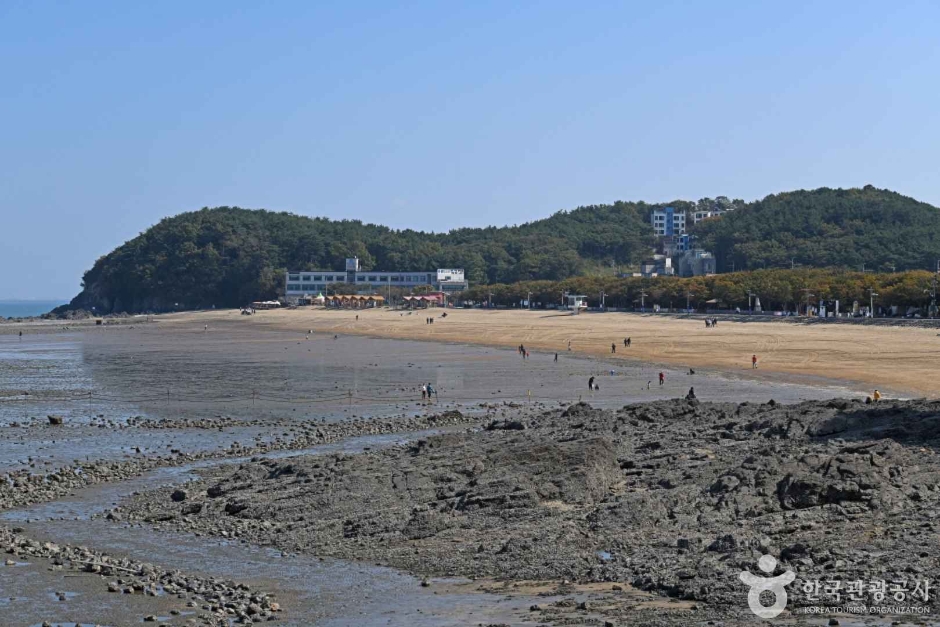
Behind Sip-ripo Beach in the northern part of Yeongheungdo Island lies the largest colony of hornbeam trees in Korea. About 350 hornbeam trees gather here, with an age of around 150 years. Hornbeam trees, belonging to the birch family, are also called sosa trees. The residents of Naeri Village tried planting various trees to block wind and rain and protect the fields and rice paddies near the coast, but they repeatedly failed due to the soil mixed with sand and gravel. Eventually, they planted hornbeam trees, which grow well even in barren land, and carefully tended them to form the colony seen today. The branches, grown while facing the sea breeze, do not stretch straight but twist and bend in crooked shapes, creating a unique landscape. In the past, people used to pitch tents and camp under the shade of the trees, but since it was designated as a Forest Genetic Resource Reserve in 1997, a fence has been placed around the trees. Hornbeam wood has uneven grain and is not hard, so it has no special use other than as firewood. However, it provides excellent shade for the beach. Serving as a windbreak in winter and offering cool shade in summer, the hornbeam tree colony is a pride of Sip-ripo Beach on Yeongheungdo Island.
Address: 420-26 Yeongheungbuk-ro, Yeongheung-myeon, Ongjin-gun, Incheon
OTA-ready stop
Built into inbound routes and day-tour planning.
Local context
인천광역시 옹진군 영흥면 영흥북로 420-26
Travel fit
Attraction · Incheon


![[Early bird] Elysian Gangchon Ski Tour from Seoul (5 pick-up points)](/_next/image?url=https%3A%2F%2Fadmin.holidaykr.com%2Fapi%2Fadmin%2Fsystem%2Fbasic-settings%2Ffavicon%3Fpath%3D%252Fuploads%252Fproducts%252Fthumbs%252F750_1785201339504_file1.jpg&w=3840&q=75)