Destination briefing
Why travelers stop here
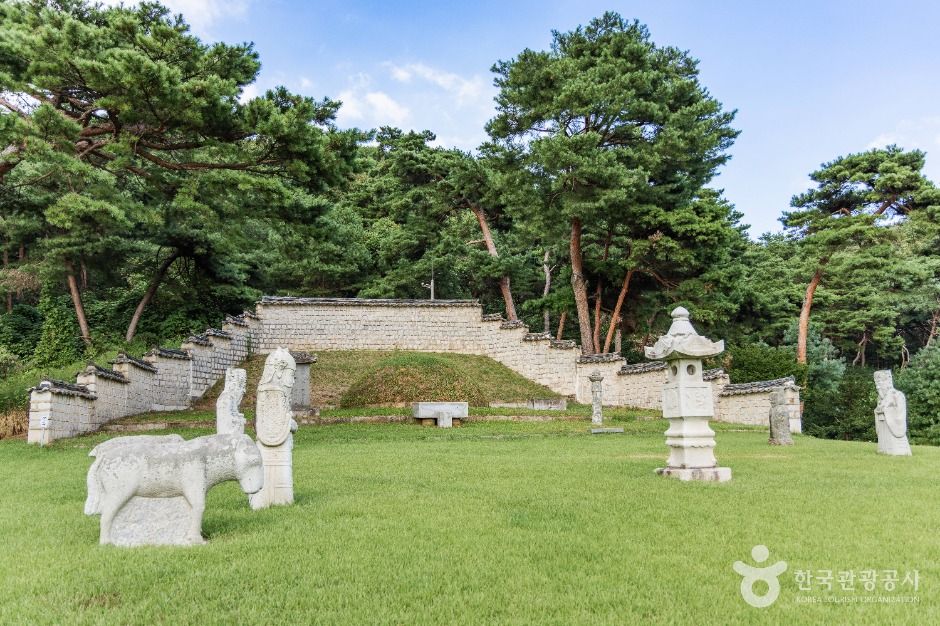
Yongamsa Temple is located on Jangjisan Mountain in Yongmi-ri, Gwantang-myeon, Paju-si, Gyeonggi-do. Heading from Beakje-gwan in Goyang-si toward Gwantang, after passing the Hyeeumnyeong Pass, you can see the Paju Yongmi-ri Rock-carved Standing Buddhas (Treasure No. 93) towering to the right. It is unknown when a temple was first established here, but according to legend, there is a tale related to the creation of the Paju Yongmi-ri Rock-carved Standing Buddhas during the reign of King Seonjong (1083–1094), the 13th monarch of the Goryeo Dynasty, and the founding of the temple. Thus, the 11th century, when the Rock-carved Standing Buddhas were made about 900 years ago, is considered the founding year. There are no records from the Joseon Dynasty, but in modern times, the temple was re-established in the 1930s, and in April 1935, the three-bay Daeungjeon Hall was rebuilt. At that time, Master Jang Seon-hwan, who was in Jangdan-gun, took office as the head monk and protected the temple. It was then that the temple's name was changed to the current Yongamsa Temple (龍庵寺) and registered as a branch temple of Bongseonsa Temple. In October 1954, President Syngman Rhee, Vice President Ham, the U.S. Ambassador, and other dignitaries attended the unveiling ceremony of the seven-story stone pagoda and the child statue. In the center of the temple grounds, Daeungbojeon Hall faces south on a relatively spacious site, and to the right of Daeungjeon Hall is the Yongamsa Temple administrative office. At the foot of the hill where the Rock-carved Standing Buddhas are located, there is Mireukjeon Hall, and below the stone Buddha, Samshingak (Three Spirits Hall) is situated. In the front yard of Daeungbojeon Hall, there is a bell pavilion housing a bronze bell modeled after the Bongdeoksa Temple bell.
OTA-ready stop
Built into inbound routes and day-tour planning.
Local context
경기도 파주시 광탄면 혜음로 742-28
Travel fit
Attraction · Gyeonggi-do


![[Early bird] Elysian Gangchon Ski Tour from Seoul (5 pick-up points)](/_next/image?url=https%3A%2F%2Fadmin.holidaykr.com%2Fapi%2Fadmin%2Fsystem%2Fbasic-settings%2Ffavicon%3Fpath%3D%252Fuploads%252Fproducts%252Fthumbs%252F750_1785201339504_file1.jpg&w=3840&q=75)