The won in detail, how prices are written, cards and phone payments, where cash is still needed, how to exchange and compare rates, ATMs, tipping and the mistakes that cost travelers money.
Money basics
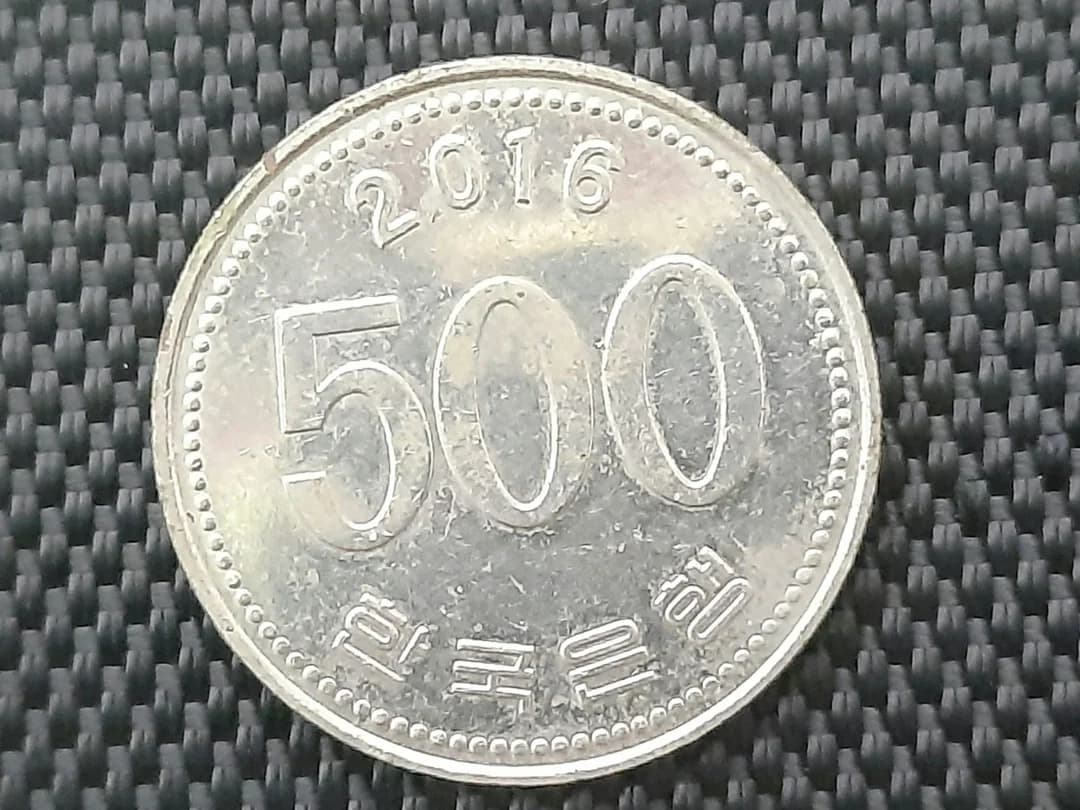
The currency is the Korean won, written KRW or with the symbol ₩. The Bank of Korea has four banknotes in circulation, 1,000, 5,000, 10,000 and 50,000 won, and everyday coins of 10, 50, 100 and 500 won (as of 2026-10-11).
Korean prices have no decimals. Everything is in whole won, and cash totals are rounded to the nearest 10 won, so 1 and 5 won coins are practically never seen.
The won is a high-denomination currency: a coffee or a bowl of noodles costs thousands of won and a hotel night costs tens or hundreds of thousands, so a wallet with many zeros is normal, not a warning sign.
Banknotes and coins
1,000 won: blue, 136 x 68 mm, with the scholar Yi Hwang on the front. It is the note for vending machines, small snacks and bus tickets that still take cash (as of 2026-10-11).
5,000 won: reddish orange and yellow, 142 x 68 mm, with the scholar Yi I (Yulgok). Good for street snacks and a short coffee or a locker.
10,000 won: green, 148 x 68 mm, with King Sejong the Great. It is the workhorse note for meals and taxis, and the one you will use most.
50,000 won: yellow, 154 x 68 mm, with Shin Saimdang, the first woman on a Korean banknote (issued 2009). It is the largest note and the one to break first at a convenience store.
The 5,000 and 50,000 won notes have similar warm colors, so read the number and look at the portrait: the 50,000 note is the longer one. Take a second to check before you hand it over, especially in a dim bar or taxi.
500 won: the largest coin, silver, 26.5 mm, with a red-crowned crane. It is accepted by coin lockers and vending machines (as of 2026-10-11).
100 won: silver, 24 mm, with Admiral Yi Sun-sin. 50 won: silver, 21.6 mm, with a stalk of rice. 10 won: copper-colored, 18 mm, with a pagoda. The 10 won coin is the smallest you will normally get as change (as of 2026-10-11).
Coins add up fast. Put 100 and 500 won coins in a separate pocket for lockers, laundry machines and vending machines, and spend the rest as you go.
Reading prices
Prices often use Korean number units: man (만) is 10,000 and cheon (천) is 1,000. So 1만 5천 (man o cheon) means 15,000 won, and 3만 means 30,000 won (as of 2026-10-11).
Market menus and small shops sometimes drop the last three zeros: a board that says 8 or 8.0 next to a dish can mean 8,000 won. If you are unsure, ask the staff to type the number on a calculator or phone.
A quick conversion: divide the won amount by roughly 1,000 and multiply by your own currency’s rate; ask yourself whether the number feels right before you pay.
Paying by card
Visa, Mastercard and American Express are accepted at hotels, department stores and most general shops (as of 2026-10-11). Cards are used more than cash in cities, even for a single coffee.
Some shops, market stalls and small restaurants take no cards or prefer cash for small amounts, so look for the card logos at the door or ask before you order.
Some machines, such as certain ticket machines, self-order kiosks and parking machines, only work with Korean-issued cards. Even a transit pass can be limited: one tourist pass can only be bought and topped up with cash or a Korean-issued card (as of 2026-10-11).
Keep a second card and some cash, because a card may be declined for a foreign-use limit or a blocked online setting. Ask your bank to switch on overseas use before you fly, and carry cards in separate places.
Phone wallets and contactless
Tap-to-pay terminals are common, and Apple Pay has been available in Korea since March 2023. Whether a foreign-issued card works in your phone wallet at a given terminal depends on your bank and the shop, so test it once at a convenience store before you rely on it.
Many local mobile-payment apps ask for a Korean bank account or phone number, so do not plan around them. A physical card, a phone wallet that accepts international cards, or cash is more reliable.
A prepaid visitor card is an option for people who prefer to avoid cash. One of them, WOWPASS, costs 5,000 won, works for transit, shopping and currency exchange, needs your passport and must be activated after you get it. The balance you do not use can be withdrawn as won cash at its machines (as of 2026-10-11).
When cash is still needed
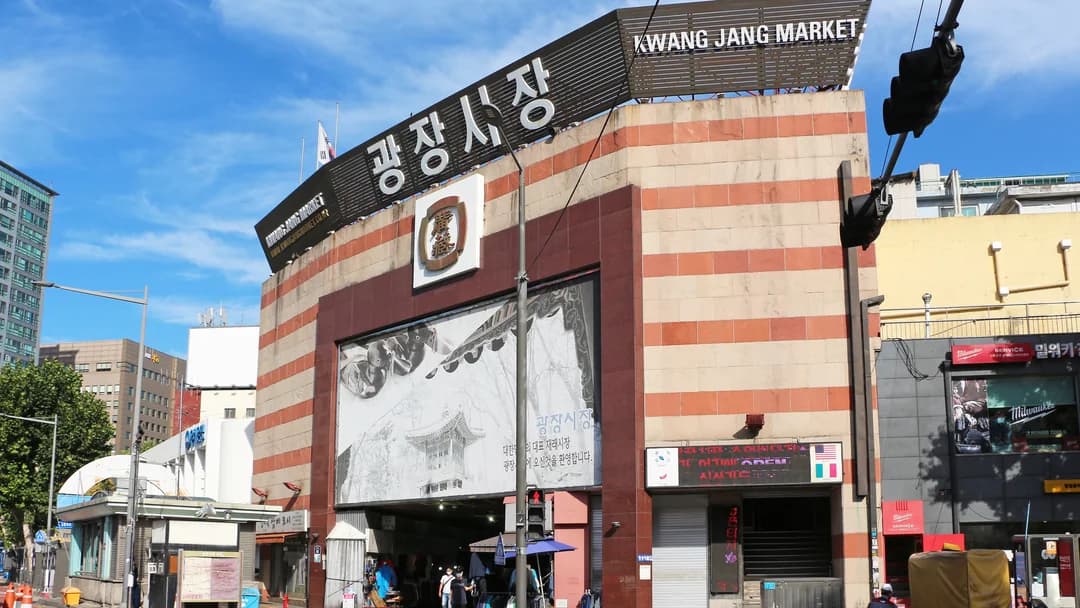
Traditional markets, street-food stalls, small village shops and some taxis outside the main cities may prefer cash or may have no working card reader.
Coin lockers, laundry machines, some vending machines and the cash lane of a few buses want coins or small notes. Carry a few 1,000 won notes and several 100 and 500 won coins (as of 2026-10-11).
Many city buses no longer accept cash at all, and some cities are fully cashless on buses. A transit card is the practical answer; see the Transport guide for how to get one.
Cash is also your backup when a card is declined, a terminal is down or a shop’s card reader has no signal.
Exchanging money, step by step
- Decide how much cash you need. Most travelers use cards for most things, so exchange a modest amount for markets, lockers and small payments.
- Choose a bank or a registered money changer, including those at the airport. Visitor-heavy areas have many changers; look for a visible license or sign and a posted rate board.
- Bring your passport, because exchanging usually needs it, and bring clean, undamaged notes; old, torn or marked foreign notes can be refused at some locations.
- Ask for the exact number of won you will receive for your amount, with all fees included, before you hand over any money (as of 2026-10-11).
- Count the money in front of the cashier, and keep the receipt in case you want to change leftover won back before you leave.
Where and when to exchange
Banks are generally open from 09:00 to 16:00 on weekdays, with hours varying by branch and region; Korea Post Bank is open 09:00 to 16:30 (as of 2026-10-11). Most banks are closed on weekends and public holidays.
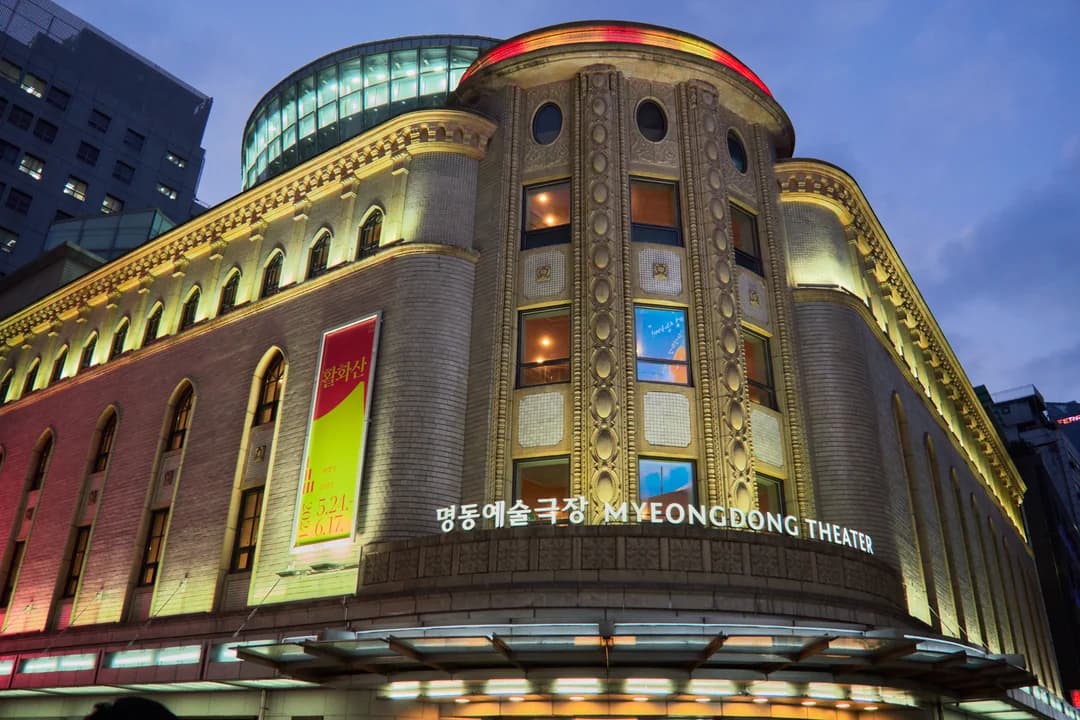
Licensed money changers are packed into popular areas such as Myeongdong and post their rates on boards. The rates vary from shop to shop, so look at two or three boards before you choose.
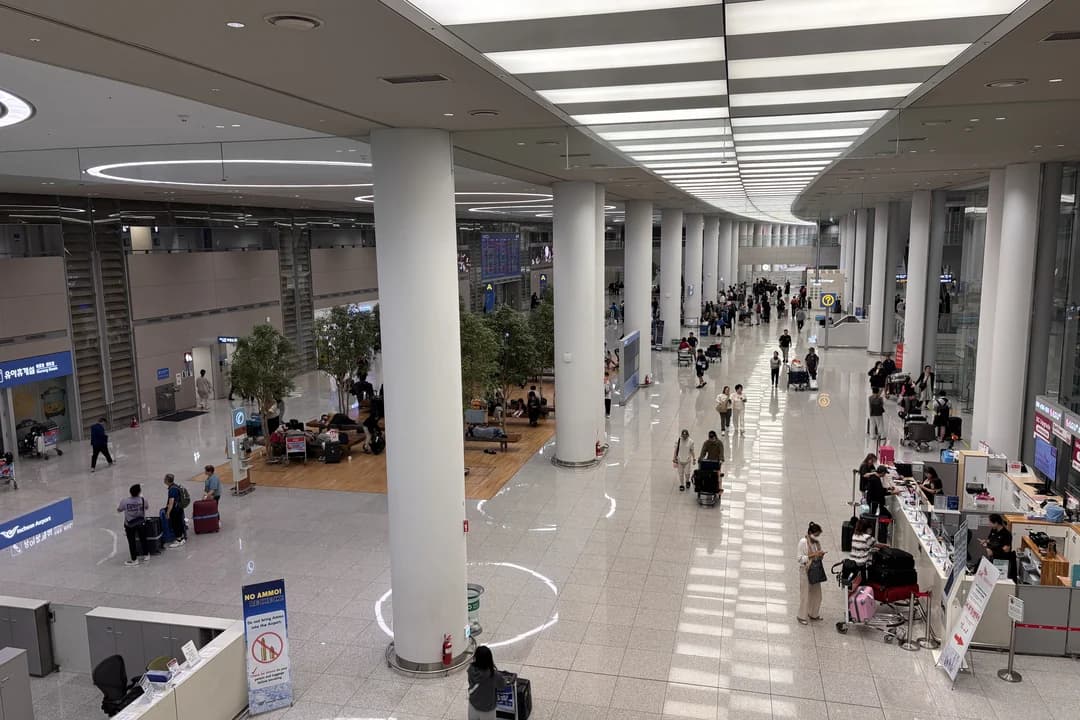
Airport changers are the easiest on arrival and their rates are posted; use them for a small starting amount and compare in the city for the rest.
Exchange when you need to: it is easier to top up a small amount twice than to change back a large amount at the end of a trip.
Reading a rate board
A rate board shows a buying price and a selling price for each currency. You always get the less favorable of the two: when you give foreign cash and receive won you get the lower number, and when you buy foreign cash back you pay the higher one.
Example of the gap: on 2026-10-08 one bank listed the US dollar at a mid-rate of 1,344 won, a cash selling price of 1,367.52 won and a cash buying price of 1,320.48 won. That is a total gap of about 3.5% between buying and selling (as of 2026-10-11).
The mid-rate is the benchmark, not a price you can get in cash. The best way to judge a changer is to ask: how many won will I receive for exactly this amount, and are there any fees?
Larger bills of common currencies such as US dollars, euros, Japanese yen and Chinese yuan are the easiest to exchange; other currencies may get a poorer rate or not be accepted at all.
ATMs
Machines that take foreign cards are common at bank branches, airports, subway stations and convenience stores; look for the sign for international or global cards, because some machines accept only local cards.
Your own bank sets its fees, daily limits and any foreign-transaction charge, and the machine owner may add a fee on screen. The screen shows the fee before you confirm, so read it.
Choose an English menu, withdraw in won, and decline any offer on the screen to convert the amount into your home currency; the machine’s conversion is usually a worse rate than your bank’s (as of 2026-10-11).
Use machines inside a bank or shop rather than on a quiet street, cover the keypad when you enter the PIN, and take the card and receipt before you walk away.
Tipping and a cash-light trip
Tipping is not expected in restaurants, cafes, taxis or hotels, and there is no tip line on a normal receipt. If a service charge applies, it is already shown in the bill.
Leaving money on the table can cause confusion, and staff may run after you to return it. A thank-you in Korean, kamsahamnida (감사합니다), is the polite way to show appreciation.
A cash-light trip works in Seoul and other big cities: cards for shops and restaurants, a transit card for buses and the subway, and a small cash reserve for markets and lockers.
Big notes, change and what to say
Small shops and taxis dislike being paid with a 50,000 won note for a tiny bill, and a street stall may not have change. Break the large note at a convenience store or supermarket first, by buying something you need (as of 2026-10-11).
Hand over and receive money with both hands or with the right hand supported by the left; it is a sign of respect and is appreciated, though not required of visitors.
How much is this? Eolmayeyo? (얼마예요?). Card OK? Kadeu doeyo? (카드 돼요?). Please give me change in small bills: Jan-don juseyo (잔돈 주세요). I would like to change money: Hwanjeon haego sipeoyo (환전하고 싶어요).
Do
- Do keep a few small notes and coins for markets, street food, lockers and buses that do not take cards.
- Do always choose won when a terminal or machine asks whether to charge you in won or your home currency (as of 2026-10-11).
- Do tell your bank about the trip and check that your card works abroad, and keep the card’s lost-card phone number somewhere other than your phone.
- Do use a transit card for subways and buses and top it up with cash or by card as the machines allow.
Avoid
- Do not exchange money with people on the street or at unlicensed stalls, and do not agree to a rate that is not shown in writing.
- Do not pay in your home currency when a shop or terminal offers it. This “dynamic currency conversion” is usually a worse deal than letting your card issuer convert the won.
- Do not carry more cash than you need, change everything on the first day because of a poor first rate, or leave a wallet in a back pocket in crowded places.
- Do not forget that shopping can include a tax refund; see the Tax refund guide before you spend, because only receipts of 15,000 won or more count (as of 2026-10-11).
Quick answers
Can I pay in a foreign currency? Generally not; shops expect won. Some duty-free shops take foreign currency, but ask before you choose your goods.
What do I do with leftover won? Spend it, keep it for next time, load it onto a transit card, or change it back at a bank or exchange counter with your receipt; the rate for selling won back is usually worse than for buying it.
Are old or damaged banknotes accepted? Not always; some counters refuse old foreign notes, and damaged won notes may be refused at shops, so ask for clean notes when you exchange and check your change.
Where can I get help with a lost card? Call the issuer’s emergency number from your card’s paperwork right away; the 1330 Korea Travel Helpline can help with interpretation in several languages.
Exchange rates change daily, so this guide does not quote a live rate. Rules, fees and hours also change from time to time, and this guide is refreshed regularly; the figures here are as of 2026-10-11.
Sources and last update
Last updated: 11 October 2026. Figures are as of the date shown.
Source: Bank of Korea · Incheon International Airport Corporation · Korea Tourism Organization · Checked 11 Oct 2026
Written by HOLIDAY in its own words from official public information. This is not an official publication of the Korea Tourism Organization or any government body.
HOLIDAY refreshes this article regularly as fares, hours and event dates change.
Photo credits: Lê Huỳnh Bộ, CC BY-SA 4.0.