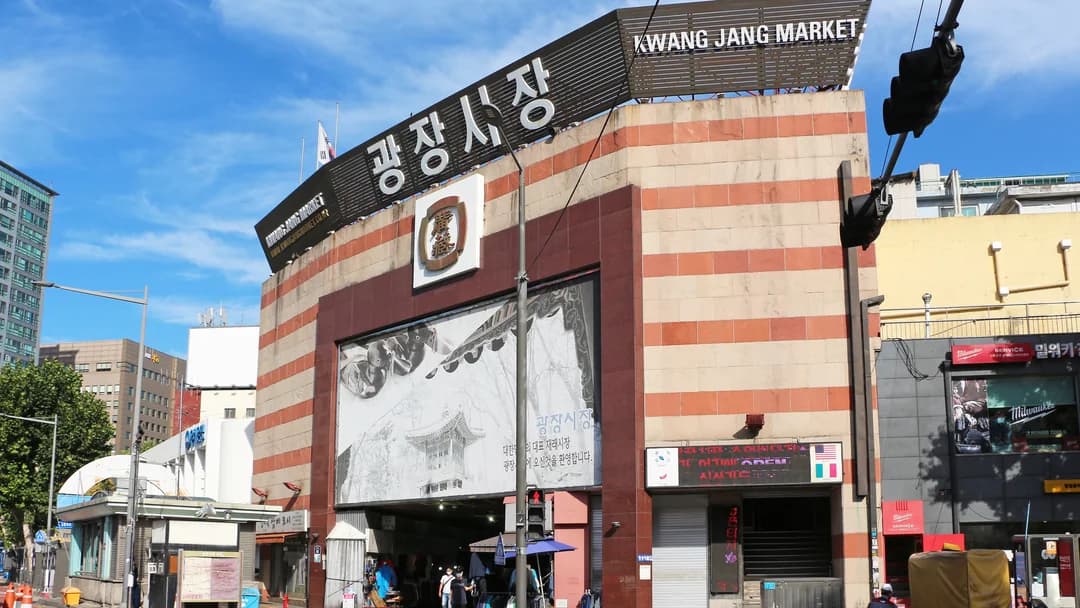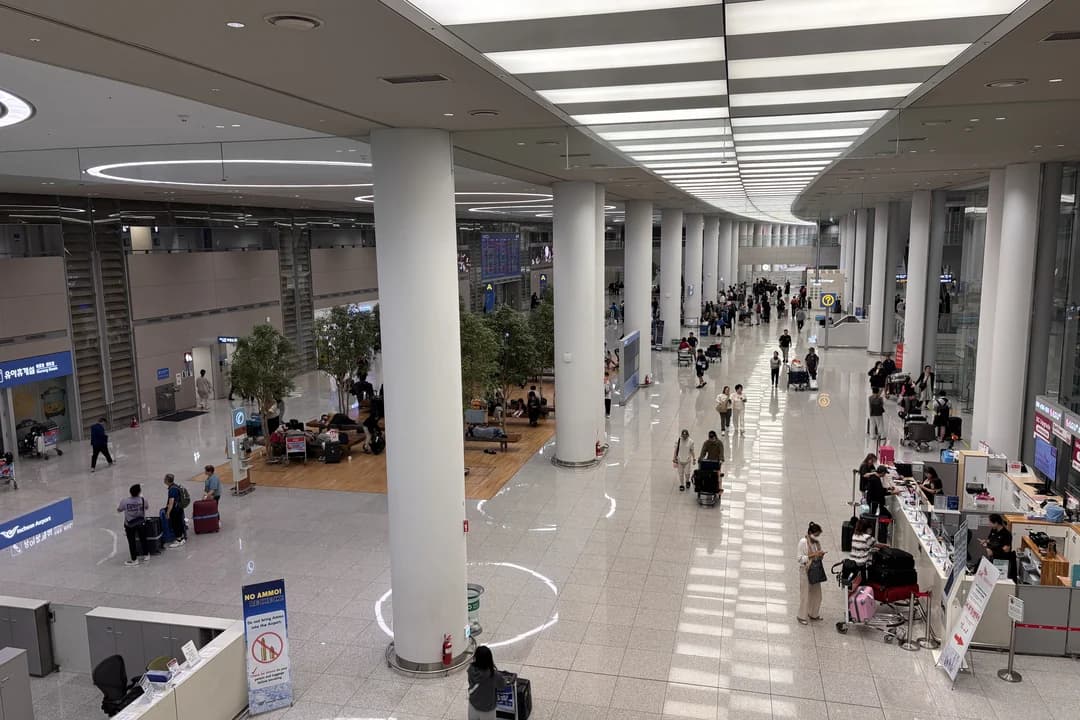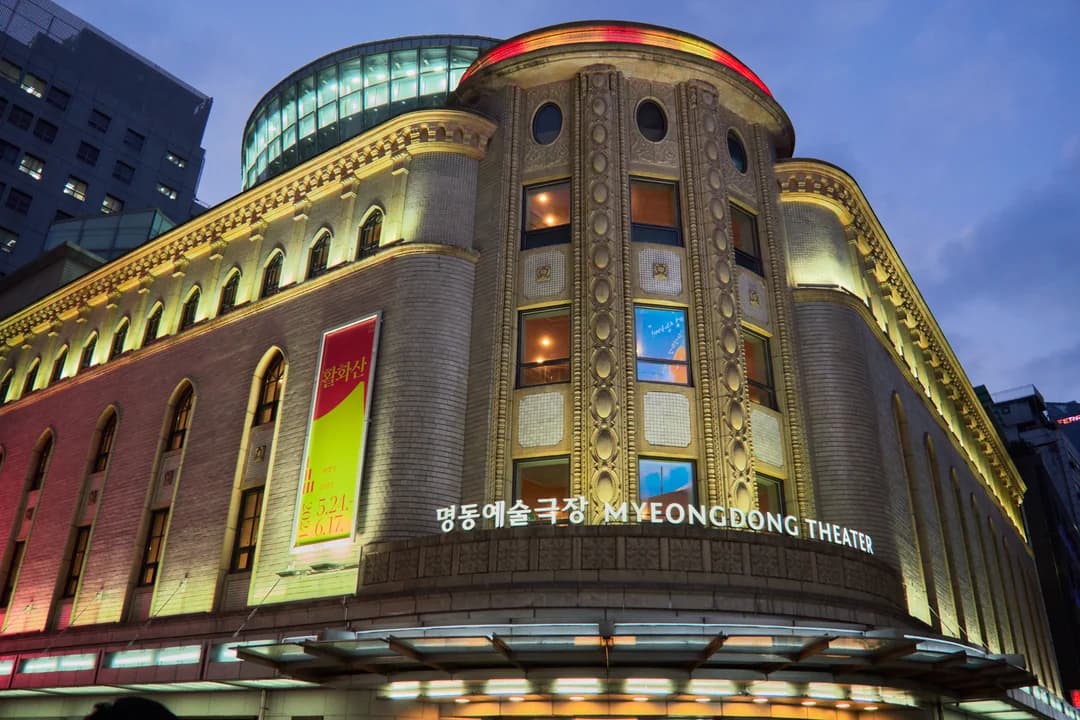
Everything about paying in Korea in one place: the won notes and coins, cash versus card, airport counters and bank hours, how exchange rates and spreads work, ATMs, transit and prepaid cards, tax refund numbers and tipping. As of 2026-10-11; no live rates are shown.
The won at a glance
Korea uses the won (KRW, written ₩). Prices are plain numbers with a comma every three digits, and the word “won” or the symbol is often left out, so 10,000 simply means ten thousand won. Everyday notes come in four values, 1,000, 5,000, 10,000 and 50,000 won, and everyday coins in four values, 10, 50, 100 and 500 won (as of 2026-10-11).
Prices are rounded to the nearest 10 won, so you never deal with cents. The 1 and 5 won coins still exist but have hardly circulated since 1992, and a commemorative 2,000 won note issued in 2017 is rarely seen in change. Treat the four notes and four coins above as the complete set you will handle.
Telling the notes and coins apart
1,000 won is the blue note and the smallest (136 × 68 mm), showing the scholar Yi Hwang. It is the note for vending machines, street snacks and small change (as of 2026-10-11).
5,000 won is orange (142 × 68 mm) with the scholar Yi I, and 50,000 won is yellow (154 × 68 mm) with Shin Saimdang. In dim light or a hurry the two are easy to mix up, so read the number in the corner before you hand a note over.
10,000 won is the green note (148 × 68 mm) with King Sejong the Great, the workhorse for meals, taxis and shopping. The 50,000 won note is the largest, and small shops or street vendors may not have change for it early in the day, so break it at a convenience store or a larger shop first.
Coins: the 500 won coin is the largest and silver with a crane (26.5 mm), the 100 won coin shows Admiral Yi Sun-sin (24 mm), the 50 won coin a rice stalk (21.6 mm) and the 10 won coin the Dabotap pagoda (18 mm, copper-colored). Keep a few 500 and 100 won coins for vending machines and small stalls.
Cash or card: what is normal
Cards are accepted at most hotels, department stores and general shops, and Visa, Mastercard and American Express are the networks usually listed as accepted (as of 2026-10-11). Some shops do not take cards at all, and traditional markets, small restaurants and street vendors are where cash still decides things.
A sensible plan is to carry enough cash for the first day: a transit card, a meal, a taxi and a few snacks. After that, use a card in shops and restaurants and take out more cash only when you actually run low, instead of exchanging a large sum at once.
Some self-service machines accept only Korean-issued cards. Certain ticket machines, kiosks and parking machines are examples, and so is topping up a Climate Card, which takes cash or a Korean credit or debit card only. Keep cash as the fallback whenever you meet a machine.
Where you can exchange cash
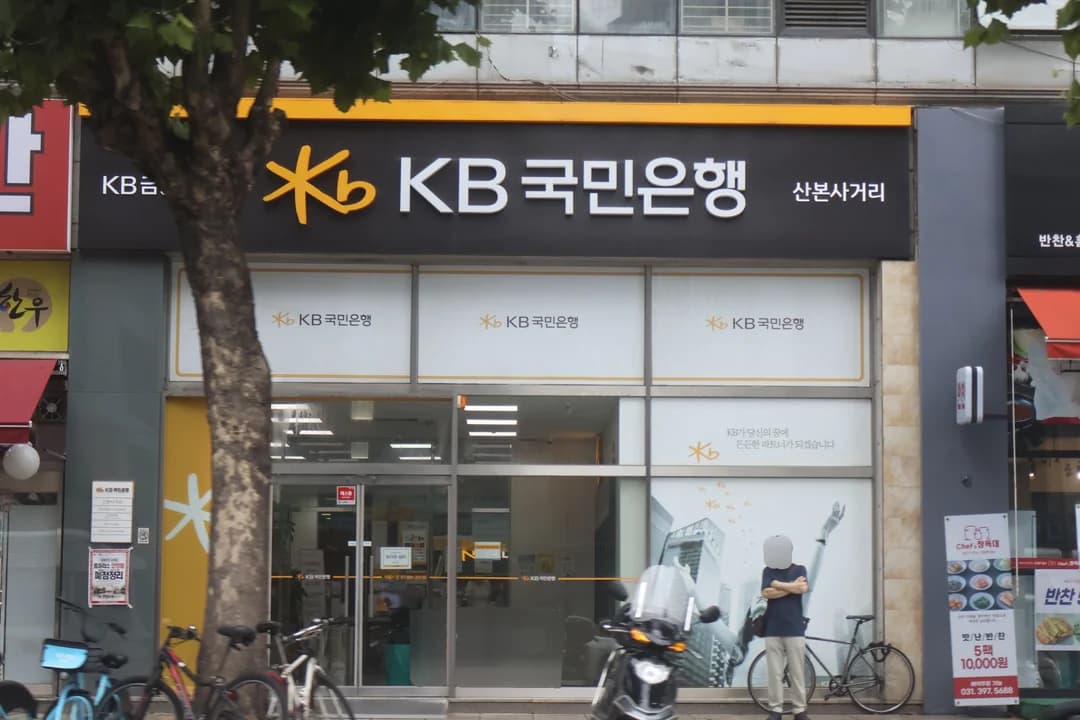
Use a bank or an authorized exchange center. Banks are generally open 09:00 to 16:00 on weekdays, with hours that vary by bank and region, and Korea Post Bank is open 09:00 to 16:30 (as of 2026-10-11). Exchange centers in busy visitor districts such as Myeongdong often stay open later than banks.
Bring your passport, because exchanging usually involves showing it. Some places refuse older-series notes and damaged or marked notes, so bring clean, undamaged bills from home. Ignore anyone on the street who offers to exchange money; a licensed counter shows its rate board in the window.
Exchange counters at the airports
Incheon has exchange counters and bank branches in both terminals. Standard counter hours are 06:00 to 22:00, and some locations are open 24 hours (as of 2026-10-11). Bank branches follow weekday hours, 09:00 to 16:00, and are closed on weekends and public holidays. Hours and locations differ by bank, and language help depends on who is on shift.
Branch locations: KB Kookmin Bank sits on B1 West Wing in both terminals, Hana Bank on the 2nd floor center area of Terminal 1 and on B1 East Wing of Terminal 2, and Woori Bank on the 1st floor East Wing of both. If you land at night or on a weekend, plan on a 24-hour counter, not a bank branch.
Gimpo Airport has exchange booths for arrival and before departure, and a Shinhan Bank counter on the 1st floor of the domestic terminal, to the right of the arrival gate, open 09:00 to 16:00 and closed on weekends and public holidays. Airport rates are not always the best, so for a first-day budget exchange a small amount and the rest in the city.
At the counter, step by step
- Decide the amount in won first. Think in terms of what you want to receive, such as “a round sum in won”, rather than how much of your own currency you want to give up; it keeps the arithmetic simple and avoids surprises.
- Look at the rate board and ask the staff to show the amount you will actually receive after any commission. Compare two counters if they are next to each other; a better-looking rate can come with a fee, and the difference is what matters.
- Hand over your passport and the foreign cash, then read the slip before you sign. Check the amount in won, the rate and any fee on it. If a figure is unclear, ask the staff to type it on a calculator or write it down.
- Count the notes at the counter before you step away, ask for a mix of small and mid-size notes, and keep the receipt. The receipt is also what you need if you later want to change leftover won back at the airport.
Posted rates, spreads and the reference rate
A reference rate is a neutral mid-market figure, the kind of daily benchmark that central banks and market data providers publish. It is a yardstick, not a price you can trade at. Banks and exchange centers start from the market and add their own margin, so there is no single “official” retail rate in Korea.
Every counter quotes two prices: a lower one when it buys your foreign cash and a higher one when it sells you won back. The gap between them is the spread. Cash is usually the most expensive way to exchange, because handling and storing notes costs the counter money.
To see your real cost, compare what you received with what the reference rate implies. Illustration with made-up round numbers: if the reference rate implies you should receive 100 and the counter hands you 96 for the same money, you paid the missing 4 in margin and fees. The smaller that gap, the better the deal.
This guide shows no live rate on purpose, because rates move through the day and an old number would mislead you. What you need on the day is the rate board at the counter and the receipt amount, and the comparison above works with any figure you are shown.
ATMs and foreign cards
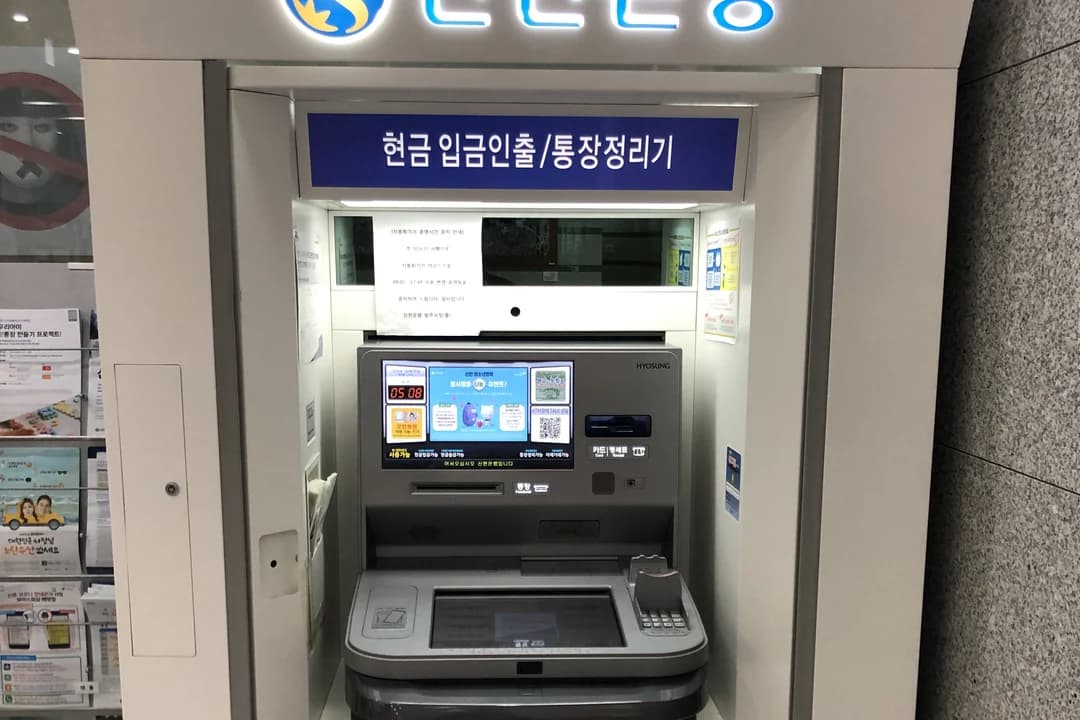
ATMs that accept foreign cards are common at bank branches, airports, subway stations and convenience stores. Look for the sign for global or international cards, because some machines take only local cards, and choose a machine with an English option on the first screen. Machines in 24-hour convenience stores are handy at night, although English is not always offered.
Three costs can stack up: the Korean machine operator’s own fee, which a machine may show on screen before you confirm, your home bank’s foreign-transaction fee, and the exchange rate it applies. You can see the first one at the machine; if it looks high, cancel and try another. Always withdraw in won and decline any offer to convert to your home currency.
Per-withdrawal and daily limits come from your own bank and from the machine, so a large sum may need several transactions. For safety, prefer machines inside a bank lobby or a staffed shop, cover the keypad when you type your PIN, take the card and receipt before you leave, and avoid quiet street-corner machines at night.
Mobile payment and foreign visitors
Many Korean payment apps need a Korean phone number or a Korean bank account, so do not plan to depend on them. A physical card, a phone wallet that works with your international card, or cash is safer. Some services are built for visitors: k.ride, the English-language version of Kakao T, accepts overseas credit cards, and Uber Taxi works with your existing Uber payment details.
Visitor-focused products have their own payment rules (as of 2026-10-11). The Mpass transit pass is sold for Korean won cash only, a Climate Card can be bought or topped up only with cash or a Korean-issued credit or debit card, while WOWPASS kiosks accept won and foreign currencies such as US dollars, Japanese yen and Chinese yuan.
Alipay and WeChat Pay show up mainly on the refund side: tax refunds can be paid to an international credit card, Alipay or WeChat Pay. In shops, do not assume they are accepted; look for the logo at the register before you shop.
Transit cards and prepaid cards
T-money is the standard transit card: the card costs about 3,000 to 5,000 won, it is sold at convenience stores nationwide and at Seoul subway information centers on Lines 1 to 8, and it can be topped up at subway ticket machines up to 500,000 won (as of 2026-10-11). It also pays at many shops showing the logo, and works on buses, subways, taxis and expressway toll gates.
Refunds are limited. Balances above 50,000 won can be refunded only at Tmoney Town near Seoul Station, while smaller balances can be refunded at convenience stores, and the card price itself is not returned. The simple rule is to spend the balance before you leave.
WOWPASS is a prepaid card for visitors that costs 5,000 won and needs a passport to buy. It is sold at kiosks in airports, major subway stations and hotels, and works as a debit-style card at card-accepting shops and on public transport. Any WOWPASS kiosk will give your remaining balance back as won cash. The EZL card starts from 4,000 won and is sold at convenience stores.
Tax refund: the routes and the numbers
Visitors who live abroad and stay in Korea less than six months can get the tax back on goods bought at shops with a “Tax Refund” or “Tax Free” sign (as of 2026-10-11). Each receipt must be at least 15,000 won, the goods must be new, unopened and unused, and they must leave Korea within three months of the purchase date. Services such as cooked food and massage, opened or used goods, and duty-free purchases do not qualify.
Immediate refund: at certified shops, mostly department stores, large supermarkets, convenience stores and some smaller shops, you show your passport at the register and pay the price with tax already taken off. Each payment must be at least 15,000 won and under 1,000,000 won, and the total for the trip must not exceed 5,000,000 won. You still show the goods at departure.
Airport refund and city refund: you pay the full price, collect a refund voucher, and claim later. At an airport or port there is no purchase limit; show the goods and vouchers to customs for the export stamp, then collect the refund after security. City refund booths handle up to 6,000,000 won per receipt, each booth refunds only its own company’s vouchers, and you still report at customs when you leave.
How the money arrives: an immediate refund is simply the lower price. Other refunds are paid in cash at an airport counter or sent to an international credit card, Alipay or WeChat Pay, in many cases within one to two months. The amount you receive is lower than the tax printed on the receipt because the refund operator keeps a fee, so check the final figure on the counter display.
Tax refund at the airport: counters and hours
Incheon Terminal 1: customs confirmation is on the 3rd floor near counters E and J, and the refund counter is on the 3rd floor near Gate 28. The staffed counter is open 07:00 to 22:00 and pays in won, US dollars, yuan and yen (as of 2026-10-11). Unstaffed kiosks run 24 hours and pay in won, Alipay or WeChat Pay.
Incheon Terminal 2: customs is on the 3rd floor near counters F and G, and the refund counters are on the 3rd floor near Gates 225, 249 and 274. The staffed counter is open 07:30 to 21:30 with the same currencies, and kiosks are open 24 hours. Gimpo: customs on the 2nd floor near Gate 1, refund counter on the 3rd floor near Gate 36, staffed 06:30 to 20:00.
The order that matters: if the goods will go in checked luggage, go to customs first, with the goods, vouchers and passport, to get the export stamp, and only then check the bag at the oversized baggage counter. After the stamp, pass security and immigration and claim the refund. If the counter is closed, write your details on the voucher and drop it in the box provided.
Duty-free shopping and what you can carry in
Duty-free shops, run by chains such as Lotte, Shilla and Shinsegae in airports and downtown, sell goods with value-added tax and individual consumption tax already left out of the price. This is different from a tax refund: you pay a price without tax at the register (as of 2026-10-11). Purchases made in duty-free shops do not qualify for the tourist refund.
When you come back into Korea or return home, remember the allowance for what you bring in. For Korea, a traveler’s duty-free allowance is up to USD 800 in total purchases, with alcohol up to USD 400 and 2 bottles and 2 liters, up to 200 cigarettes and up to 100 ml of perfume. Travelers aged 19 or younger cannot claim the alcohol and tobacco exemption.
Tipping, receipts and everyday habits
Tipping is not expected in Korea. In taxis the meter fare is what you pay, and restaurants, cafés and hotels do not need a tip, so you do not have to keep small notes for that purpose. Leaving extra money on a table can even cause confusion, and staff may run after you to return it.
Keep your receipts. Card slips and tax-refund vouchers are what you need if a charge looks wrong or you claim a refund later. Many restaurants ask you to pay at the counter on the way out rather than at the table, so wait to be told rather than expecting a bill to arrive.
Markets and street food usually have fixed prices shown on the stall, and a little friendly bargaining is only occasionally welcome in traditional markets, while department stores and chains never haggle. A friendly smile and a small purchase often matter more than the final price.
Leftover won and your last day
Spend the coins and small notes before you leave, because coins are normally not exchanged back into foreign currency. Larger leftover notes can often be converted at an airport counter with your receipt and passport, but you lose a little on both directions of the exchange, so avoid exchanging more than you expect to use.
Plan the cards too. Spend the balance on a T-money card, because refunds above 50,000 won are only possible at one office near Seoul Station (as of 2026-10-11). A WOWPASS balance can be withdrawn at any kiosk, and a foreigner without a Korean bank account can have a Climate Card balance refunded at the Tmoney head office, but it is easier to use it up.
On departure day keep your passport, boarding pass, tax refund vouchers and the goods together, and allow extra time for the customs stamp and the refund counter queue. Exchange counters sit both before and after security at Incheon, but the bank branches close on weekends, so convert leftover notes during the counter hours listed earlier.
Safety and common mistakes
- Do not exchange money with people on the street or at stalls without a license and a rate board, and do not agree to a rate that is not shown in writing. If a deal looks much better than the posted rates at banks and licensed counters, it is probably not a real deal.
- Do not choose to pay in your home currency when a card terminal offers it. The conversion offered at the shop is usually a worse deal than your card issuer’s rate, and the same is true at ATMs. Choose won every time.
- Do not exchange everything at the first counter on the first day, do not carry more cash than the day needs, and do not leave a wallet in a back pocket in crowded places such as markets and subway platforms. Split cash and cards between two places, so one loss does not end the trip.
- Do not pack tax-refund goods into your checked bag before the customs stamp, do not open or use them, and do not forget the vouchers. Missing the stamp is the most common reason a refund cannot be completed, and the stamp has to come before check-in.
Sources and last update
Last updated: 11 October 2026. Figures are as of the date shown.
Source: Korea Tourism Organization · Bank of Korea · Incheon International Airport Corporation · Korea Customs Service · Checked 11 Oct 2026
Written by HOLIDAY in its own words from official public information. This is not an official publication of the Korea Tourism Organization or any government body.
HOLIDAY refreshes this article regularly as fares, hours and event dates change.