Daejeon, Sejong, the Baekje towns of Gongju and Buyeo, Boryeong's Mud Festival, Taean and Anmyeondo, Seosan, Cheongju, Danyang and Songnisan, with fares, dates and 3- and 5-day plans.
Overview
Chungcheong is the central region of South Korea, south of Seoul and Gyeonggi, split into four administrative units: Daejeon, a metropolitan city of about 1.44 million people; Sejong, the planned administrative city; South Chungcheong (Chungnam), which has the west coast; and North Chungcheong (Chungbuk), Korea's only landlocked province. It is a region of former Baekje capitals, beaches and islands, lakes and mountain temples, and it is easy to reach on high-speed rail.
Daejeon is Korea's science city, built around the 1993 Expo site and the Daedeok research complex; Sejong is the de facto administrative capital where many ministries moved after 2012, though Seoul remains the legal capital. Gongju and Buyeo were the capitals of the Baekje kingdom, and their monuments are part of a UNESCO World Heritage listing. Allow three days for Daejeon and the Baekje towns, five days if you add the coast or Danyang.
Best time to go
Spring and autumn are best for sightseeing. In Daejeon the January average is about minus 1 °C and the August average about 25.6 °C, with about 1,350 mm of rain a year, mostly in July and August. Gongju averages about 10.8 °C a year and Danyang about 11.7 °C, both with cold dry winters and hot rainy summers.
Each season has its event. Tulips bloom in Taean for about a month from mid-April, the royal azalea festival on Mt Sobaek in Danyang is held in spring, and summer is for beaches and the Boryeong Mud Festival, which ran from 24 July to 9 August in 2026 (as of 2026-10-11). The Baekje Cultural Festival fills Gongju and Buyeo in early autumn, mountain foliage peaks at Songnisan in October, and Yuseong's hot springs suit winter.
Getting there
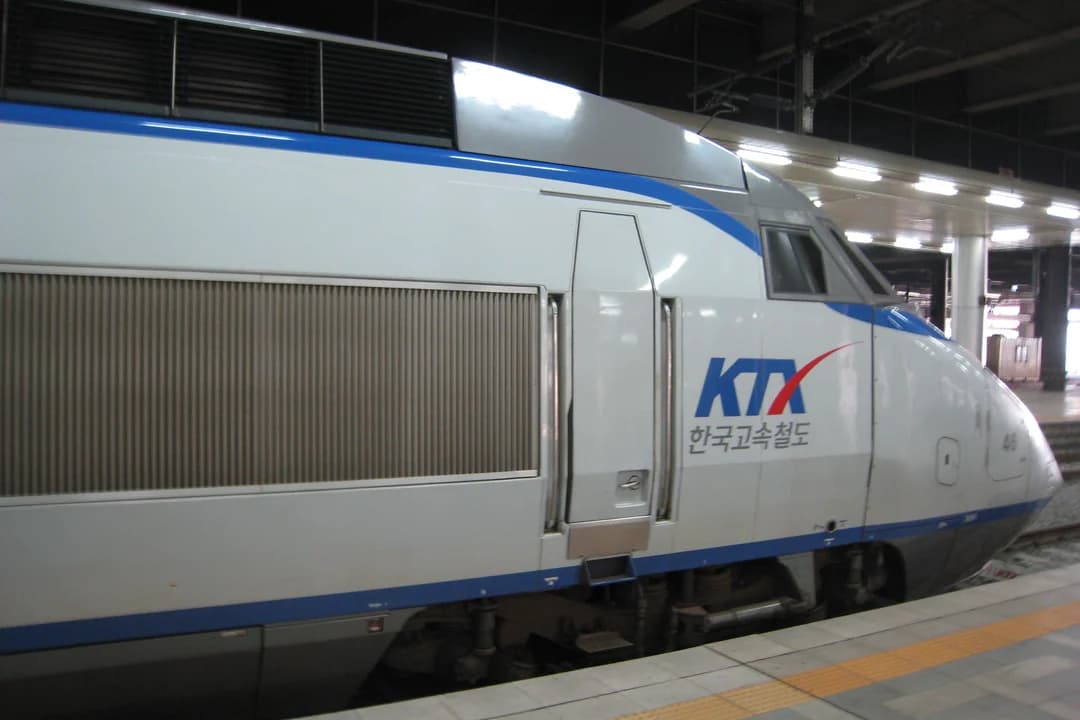
The Gyeongbu high-speed line carries KTX and SRT trains from Seoul to Daejeon in about 50 minutes to an hour. Osong Station, open for KTX since November 2010, serves Cheongju and Sejong, while the Honam high-speed line stops at Gongju Station, opened on 2 April 2015, with SRT trains added from December 2016. Gongju Station is in Ini-myeon, about 17 km from the city center, so you need a connecting bus or taxi.
Boryeong's Daecheon Station is on the Janghang Line, which runs from Yongsan through Cheonan towards Iksan. Seosan and Taean have no railway: express buses from Seoul's Gangnam terminal reach Seosan in about 90 minutes. Danyang is on the Jungang line and a highway from the Seoul area; Cheongju also has an international airport. From Incheon Airport Terminal 1, buses to other regions leave from outside exits 11 to 13 on the first floor.
Getting around
Daejeon has a subway (Line 1, running since 2007 from Daejeon Station towards Dunsan), which is enough for the city. Elsewhere, buses link towns but sights can be far apart; a rental car or a taxi helps on the west coast and around Danyang. The Sejong city BRT links the government complex with Osong Station.
In Gongju the main Baekje sites, the Songsan-ri tombs, the National Museum and Gongsanseong, lie within about a ten-minute walk of each other, and a shuttle train called the Goma train links Gongsanseong, the Muryeong tomb, the hanok village and the museum. In Buyeo a short river cruise joins the Goransa landing below Busosanseong with the Gudeurae landing in 10 minutes each way.
Daejeon
Daejeon is the fifth-largest metropolis in Korea, about 1.44 million people in February 2026. The Expo Science Park occupies the site of the 1993 world fair and houses the National Science Museum, with Hanbit Tower and Expo Bridge as landmarks. Next to it the Hanbat Arboretum is the largest man-made arboretum in Korea. North of the Gapcheon river, the Daedeok complex holds KAIST and more than twenty government research institutes.
The city's 12.7 km Hanbat-daero avenue and the Gapcheon river banks make easy walks between sights, and the mountain Gyejoksan is a popular day hike. Daejeon also works as a hub: from here intercity buses reach Gongju and Buyeo, and Daejeon Station is on both the Gyeongbu and Honam lines.
Yuseong hot spring, with alkaline water, has a free public foot-spa area and hotels with bath facilities, and the Yuseong Oncheon festival is held here. Daecheong Lake, Gyejoksan and the Hanbat daero avenue are good for walks. The best-known local bakery, Sungsimdang, was founded in 1956 near Daejeon Station and draws queues, so go early.
Sejong
Sejong Special Self-Governing City was created in July 2012 from Yeongi County and parts of neighboring areas. At 465 square kilometers it is Korea's smallest first-level division and had about 395,000 residents in mid-2024. The Government Complex Sejong sits on a 213,000 square meter site and houses the Prime Minister's Office and several ministries.
For visitors, Sejong Lake Park (finished in March 2013, with a 322,800 square meter lake and five artificial islands) and the Sejong National Arboretum are the main stops. The arboretum is described as Korea's first urban arboretum and its largest indoor one, with about 1.7 million plants of roughly 2,800 species. An extension of Daejeon Metro Line 1 to the government complex is tentatively planned for 2029.
Baekje Historic Areas and Gongju
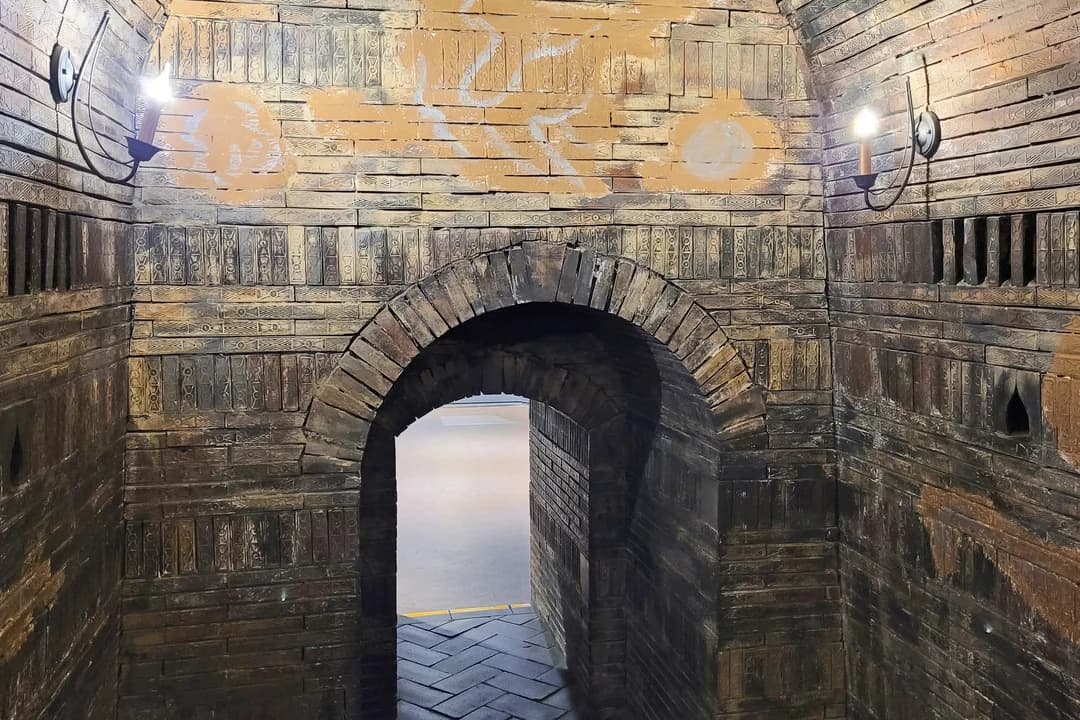
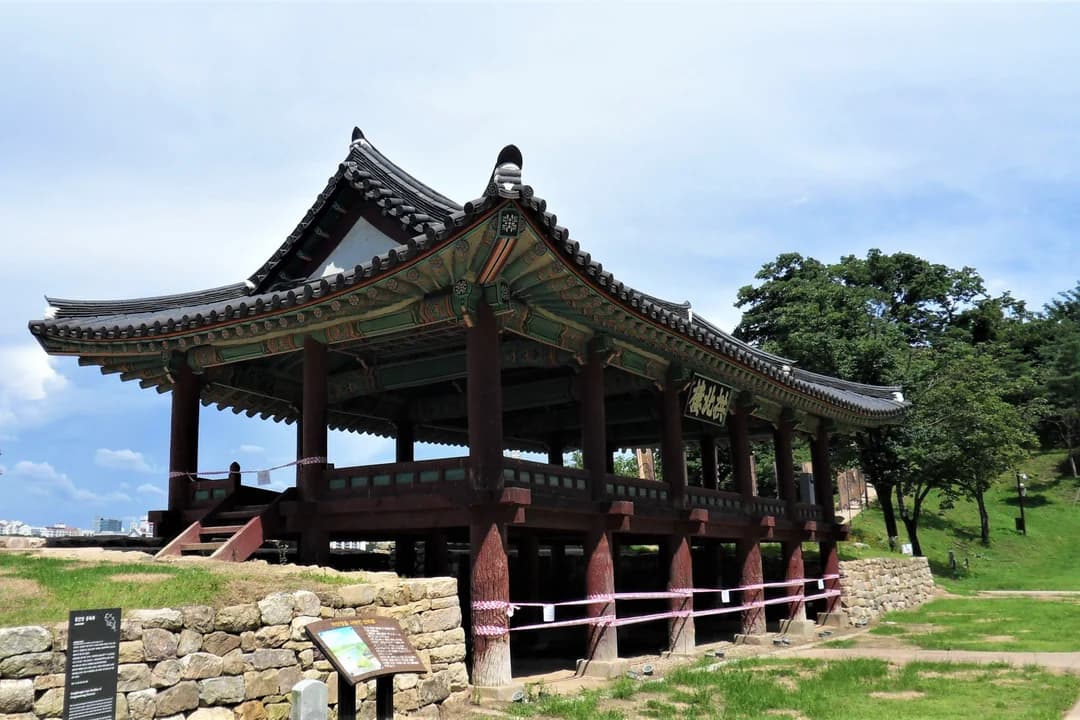
The Baekje Historic Areas were inscribed on the UNESCO World Heritage List on 8 July 2015. They cover eight sites in three cities, Gongju, Buyeo and Iksan, from the last period of the kingdom, about 475 to 660. Gongju, then called Ungjin, was the capital from 475 to 538: Gongsanseong fortress and the Songsan-ri royal tombs are its two listed sites.
Admission is ₩3,000 for adults at Gongsanseong and ₩3,000 at the Muryeong royal tomb site, with a combined ticket for ₩6,000 that also covers the Seokjang-ri museum; the National Gongju Museum is free but closed on Mondays (as of 2026-10-11). King Muryeong's tomb was excavated in 1971, and the original chamber is closed, so visitors see a replica and the finds in the museum. Gongsanseong and the royal tombs close only on Seollal and Chuseok days.
Two more free stops are the Chungnam History Museum (09:00 to 18:00, to 17:00 in winter, closed Mondays) and the grounds of Magoksa, a mountain temple reached by bus and a short walk. The Korean Folk Drama Museum is closed on Mondays too, so a Monday visit to Gongju is best spent on the fortress, the tombs and the hanok village (as of 2026-10-11).
Allow half a day for the Gongju sites, using the Goma shuttle train or walking. Gyeryongsan National Park is close for hiking from Gapsa temple, and the Baekje Cultural Festival is held in Gongju and Buyeo together every autumn.
Buyeo
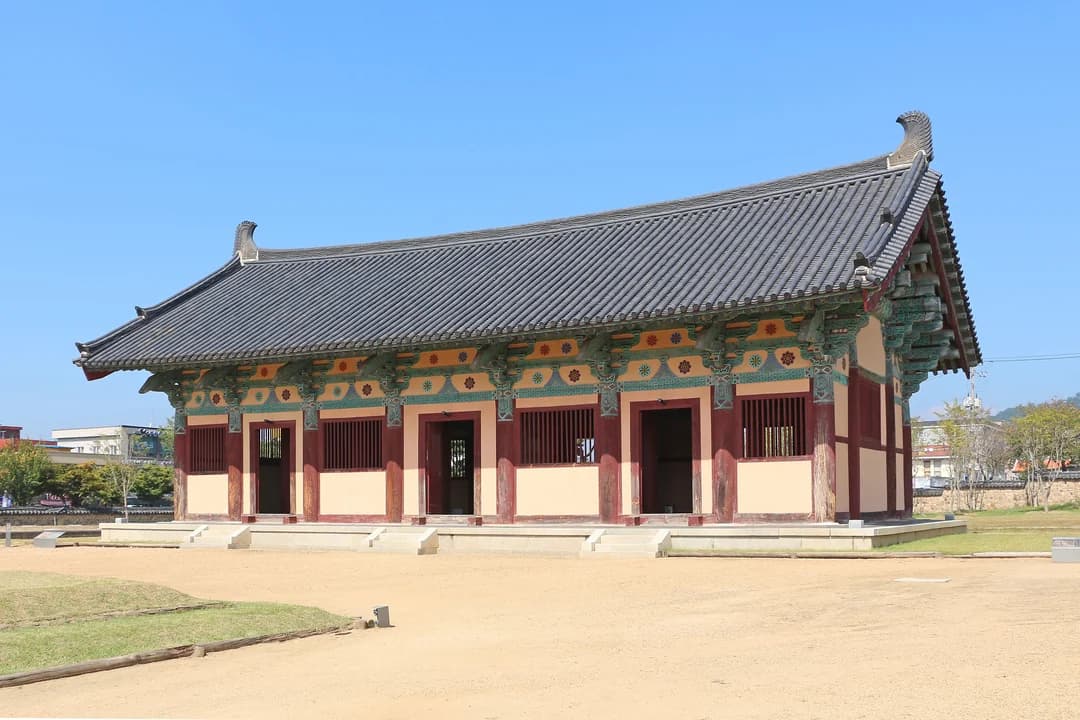
Buyeo, formerly Sabi, was the Baekje capital from 538 to 660, and four of the listed sites are here: the Gwanbuk-ri archaeological site with Busosanseong fortress, the Jeongnimsa temple site, the Neungsan-ri royal tombs and the Naseong city wall. Busosanseong, the town's guardian hill, holds Nakhwaam, the cliff of the legend of the court women, and the Goransa temple at the river. The Jeongnimsa five-story stone pagoda dates from the early sixth century, and the National Buyeo Museum holds the famous Baekje gilt-bronze incense burner.
The county's July 2026 price list for adults is: Busosanseong ₩2,000, Buyeo royal tombs ₩1,000, and Baekje Cultural Land ₩6,000 (closed Mondays). The Jeongnimsa museum and the National Buyeo Museum are free (the museum is closed on Mondays). Busosanseong and the royal tombs are free to enter between 12:00 and 13:00 and for visitors aged 65 or over. A river cruise from Goransa to Gudeurae costs ₩7,000 one way or ₩11,000 return (as of 2026-10-11). Hours are 09:00 to 18:00 from March to October and 09:00 to 17:00 from November to February.
The county lists how long to allow: about 2 hours for Busosanseong, 40 minutes for the Jeongnimsa pagoda and for the royal tombs, one hour for the National Museum and 2 hours for Baekje Cultural Land, a reconstruction of a Baekje palace. Gungnamji, a lotus pond tied to the legend of King Mu and Princess Seonhwa, is one of Buyeo's three famous sights, and the annual Seodong lotus festival was held for the 24th time in 2026.
Boryeong, Daecheon beach and the Mud Festival
Boryeong, known locally as Daecheon, is the country's best-known beach resort town. Daecheon beach lies about 3 km from the center of Boryeong and is linked by public bus. The Janghang Line serves Daecheon Station, and the Seohaean Expressway runs from Seoul through Boryeong to Mokpo.
The 29th Boryeong Mud Festival ran for 17 days, from Friday 24 July to Sunday 9 August 2026, on Daecheon beach. Its program included a drone light show, K-pop concerts, an air show, a mud show and beach parties, with general, family, water-park and pet-friendly experience zones, mud body painting and mud massage. Entry to the experience zones needs a ticket booked in advance. The festival began in 1998; the dates for the next edition are announced each year and this guide is updated when they are confirmed (as of 2026-10-11).
Ferries run to Wonsando in about 30 minutes from Daecheon port, and the island is joined by a bridge to Anmyeondo and by a 7 km undersea tunnel to the mainland. In mid-August the Muchangpo sea-parting festival marks the full-moon tides when the sea opens a path of about 1.5 km to Seokdaedo island. The local specialties include seafood and salted sand lance, caught in spring.
Taean and Anmyeondo
Taean County forms the Taean Haean National Park, designated in 1978, about 327 square kilometers with some 130 islands and 30 beaches; Korea's only coastal national park. Mallipo beach, over 3 km long, was hit by the Hebei Spirit oil spill in December 2007 and is the best-known name. The Chollipo Arboretum, a private garden founded in 1979, covers 64 hectares with about 6,900 plant species. Sinduri has a coastal dune system under protection.
Anmyeondo, in Taean, was once a peninsula that was cut into an island by a canal in the 17th century and reconnected by the 208.5 m Anmyeon Bridge in 1970. It has 14 beaches, including Kkotji, and the Anmyeondo Recreation Forest of roughly century-old red pines, managed by the province since 1965. The World Tulip Festival runs for about a month from mid-April. Public transport is thin, so a car makes the day much easier.
Seosan
Seosan sits in the north-western corner of South Chungcheong. Haemieupseong, finished in 1491, is a Joseon-era town fortress unusual for standing on a flat plain, and nearby Yeosutgol is a Catholic memorial for martyrs of the 1866 persecution. The rock-carved Buddha triad at Yeonghyeon-ri, a National Treasure of the late sixth or early seventh century, the Bowonsa temple ruins with a Baekje-style pagoda, and Gaesimsa temple, built in 1484, round out a day.
There is no railway: the nearest station is Hongseong, about 40 km south, and express buses from Seoul's Gangnam terminal take about 90 minutes. Local specialties are oysters, garlic, gegukji (a stew of crab and fermented kimchi) and marinated blue crab.
Cheongju and the Jikji
Cheongju, the capital of North Chungcheong with about 850,000 people, is the home of the Jikji, a Buddhist anthology printed with movable metal type in 1377 at Heungdeoksa temple and regarded as the oldest surviving book printed that way. The surviving volume is held in the French National Library and the work was inscribed in UNESCO's Memory of the World register in 2001. The Early Printing Museum stands on the site of the temple.
Other stops are the Sangdangsanseong fortress, the Cheongju National Museum, the MMCA Cheongju art museum in a former tobacco factory and Cheongnamdae, a former presidential retreat. The Cheongju International Craft Biennale is usually in September or October. Osong Station, just outside the city, brings KTX trains.
Danyang
Danyang is a lake-and-mountain county of about 27,000 people, 84 per cent mountainous, on the Namhan River and Chungju Lake. Its Eight Views are Dodamsambong (three rock peaks standing in the river, the best known), Seokmun, Sainam, Gudambong, Oksunbong and the Sangseonam, Jungseonam and Haseonam rocks. Gosu Cave, a limestone cave designated Natural Monument No. 256 in 1976, has about 1.7 km of walkways.
The Mancheonha Skywalk is a glass-floored walkway over the river, and the observation deck costs ₩4,000 for an adult, with a 400 m monorail up to it at ₩3,000 one way (as of 2026-10-11). Spring brings the Sobaeksan royal azalea festival, and the Ondal culture festival takes place in early autumn. Garlic is the local theme: look for garlic bread, black-garlic dishes and garlic tteokgalbi around the market.
Songnisan and Beopjusa
Songnisan National Park lies in the Sobaek Mountains on the border between North Chungcheong and North Gyeongsang. It covers 234.5 square kilometers in three areas, its highest peak Cheonhwangbong rises to 1,058.4 m, and Munjangdae, 1,029 m, is the best-known rock summit. The name is often rendered as the mountain removed from worldly life.
The park is reached by road from the Songnisan interchange on the expressway, and the temple area is the usual starting point for walkers. Autumn foliage in October is the busiest season, so go on a weekday and start early; the peaks above the temple are for hikers with proper shoes and clear weather.
Beopjusa temple, in Boeun, is said to have been founded in 553. Its Palsangjeon is a multi-story wooden pagoda hall (National Treasure No. 55), and the twin-lion stone lantern (No. 5) and the stone lotus basin (No. 64) are also National Treasures. The temple was inscribed in 2018 on the UNESCO World Heritage List as one of Korea's mountain monasteries, and it runs a templestay program.
Food and where to eat
Chungcheong food is simple and local. Seosan is known for oysters, garlic, gegukji and marinated blue crab; Taean for six-clove garlic and sand-lance fish sauce; Boryeong for fresh seafood and, in spring, salted sand lance. Danyang is garlic country, with garlic bread and black-garlic fried chicken near the market.
In Gongju, restaurants near the old bus terminal and Magoksa serve noodles, braised fish and spicy catfish stew; in Buyeo, lotus-themed meals and buckwheat noodles are common near the Gungnamji pond. In Daejeon, the Sungsimdang bakery is the city's landmark treat. The weekly Gongju market is held on days ending in 1 and 6.
Festivals and seasonal highlights
Dated events for 2026 that have been confirmed: the Boryeong Mud Festival, 24 July to 9 August on Daecheon beach; the 24th Buyeo Seodong Lotus Festival at Gungnamji; and the Baekje Cultural Festival, held jointly by Gongju and Buyeo each autumn since the first edition in Buyeo in 1955 (as of 2026-10-11).
Regular events by season: the world tulip festival in Taean from mid-April, the royal azalea festival in Danyang in spring, the Muchangpo sea-parting festival in mid-August, the Ondal culture festival in Danyang in early October, and the Cheongju Craft Biennale in September or October. Dates for next year are announced each year and this guide is updated when they are confirmed.
Where to stay, families and safety
Daejeon, near the station or at Yuseong hot spring, is the practical base for the Baekje towns, Cheongju and Sejong. Gongju has motels around the old bus terminal and a hanok-style stay near the museum; Buyeo is small and quiet; Daecheon beach has hotels and pensions, especially booked in the festival period. Danyang suits a night near the river.
Families will enjoy the science museum and arboretum in Daejeon, the mudflats and beaches of the west coast, and the lake cruises of Danyang. The sea-parting at Muchangpo follows the tides, so go out only with the festival crowd and watch the time to return. Dress modestly in temples, and use rails on cave steps.
3-day itinerary
- Day 1, Daejeon: KTX from Seoul (about 50 minutes to an hour), the Expo Science Park and National Science Museum, the Hanbat Arboretum, a bakery stop at Sungsimdang, and an evening foot soak at Yuseong hot spring.
- Day 2, Gongju and Buyeo: take an intercity bus to Gongju for Gongsanseong, the Songsan-ri tombs and the National Museum (about half a day), lunch there, then a bus to Buyeo for the Jeongnimsa pagoda and Gungnamji at dusk.
- Day 3, Buyeo and return: Busosanseong and Nakhwaam in the morning, the river cruise to Gudeurae, the National Buyeo Museum (closed Mondays), then return to Seoul or Daejeon.
5-day itinerary
- Days 1 to 3 as above, then four more stops.
- Day 4, coast: from Buyeo or Daejeon go by bus or car to Daecheon beach, take the 30-minute ferry to Wonsando, or head to Taean for Anmyeondo, Chollipo Arboretum and the sunset at Kkotji beach. Plan a night on the coast.
- Day 5, Cheongju or Danyang: either Cheongju (Early Printing Museum, Sangdangsanseong) and Sejong Lake Park via Osong Station, or Danyang (Dodamsambong, Gosu Cave, Mancheonha Skywalk) and then Songnisan and Beopjusa if you have a car.
Tips
Gongju Station is far from the city, so check which bus meets your train. Many museums and Baekje Cultural Land are closed on Mondays. Entry to Busosanseong and the royal tombs is free from 12:00 to 13:00. Book Mud Festival experience-zone tickets and coast hotels early in the summer. The west coast needs a car for Anmyeondo; buses are sparse.
Sources and last update
Last updated: 11 October 2026. Figures are as of the date shown.
Source: Boryeong Festival and Tourism Foundation · Buyeo County · Gongju City · Incheon International Airport Corporation · Checked 11 Oct 2026
Written by HOLIDAY in its own words from official public information. This is not an official publication of the Korea Tourism Organization or any government body.
HOLIDAY refreshes this article regularly as fares, hours and event dates change.
![[Spring] Taean Tulip Festival and Flower Park Day Tour](/_next/image?url=https%3A%2F%2Fadmin.holidaykr.com%2Fapi%2Fadmin%2Fsystem%2Fbasic-settings%2Ffavicon%3Fpath%3D%252Fuploads%252Fproducts%252Fthumbs%252F750_1731309018_file1.jpg&w=3840&q=75)