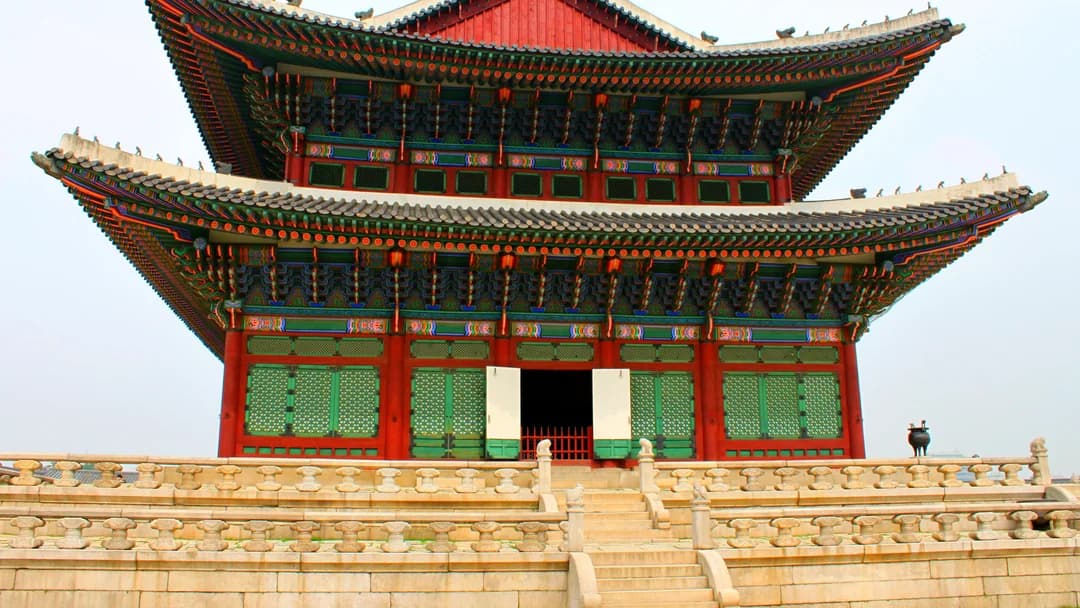
Etiquette, 2026 and 2027 public holidays, palaces and hanbok, temples and Templestay, museums, public baths, smoking rules and phrases in Hangul.
Greetings, bowing and age
- Greet people with a slight bow or a nod and say “annyeonghaseyo” (안녕하세요). Say it when you enter a small shop, restaurant or guesthouse, too.
- Age and position matter in speech and seating. Older people are greeted first, served first and given the better seat, and Koreans may ask your age to choose the right level of politeness.
- Use both hands, or support your right forearm with your left hand, when you give or receive something from someone older, including money, cards, glasses and gifts.
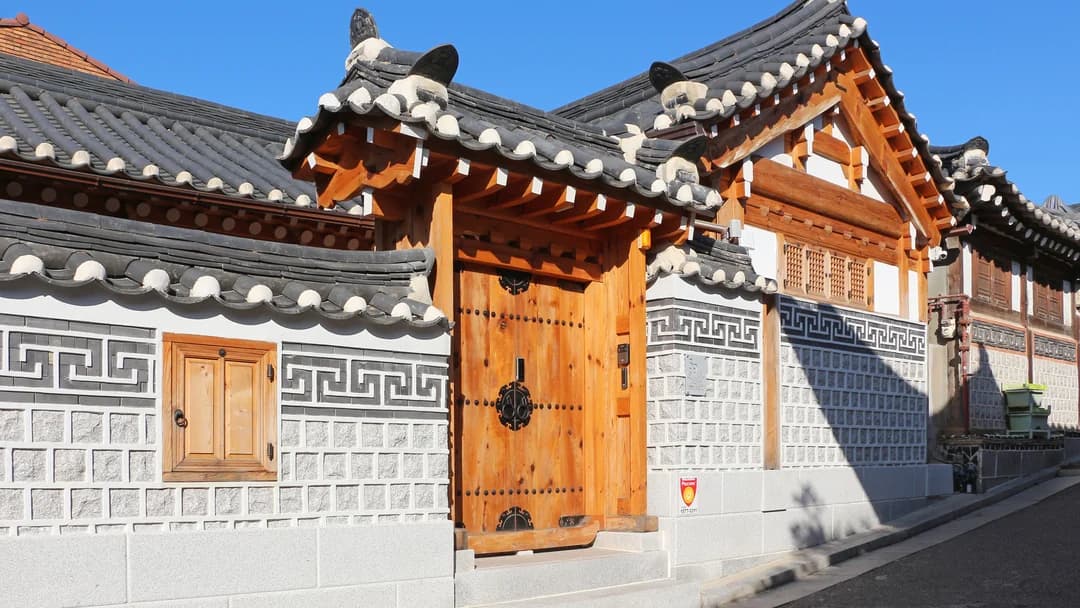
- Take shoes off wherever you see shoes lined up at the door: homes, hanok rooms, temple halls, guesthouses and restaurants with floor seating.
- Take a hand-over from staff or a stranger with a “gamsahamnida” (감사합니다, thank you) and a small nod. A friendly tone matters more than perfect Korean.
Everyday etiquette: avoid
- Do not tip. It is not expected in restaurants, cafes, taxis or hotels, and a service charge is often already in the price.
- Do not photograph strangers up close without asking, especially children, and respect “no photo” signs in temples, museums and shops.
- Do not point at people with a finger, snap your fingers to call staff, or let a door swing shut on the person behind you; hold it open for them.
- Do not step on a floor seat, a heated ondol floor or a raised hanok room in outdoor shoes, and do not put bags or feet on seats in the subway.
- Do not raise your voice in an argument in public. A calm, polite tone works much better with staff than a loud complaint.
Homes, gifts and personal space
If you are invited to a home, take your shoes off at the door, accept the slippers if they are offered, and bring a small gift such as fruit, sweets or a drink.
Hand a gift over with both hands and a slight bow. It is common for the receiver to put it aside and open it later rather than in front of you.
At a meal in someone’s home, accept refills a little at a time; leaving a small amount shows you have had enough, while an empty plate can lead to more food being offered.
Personal space is small in crowded places. Brief contact in the subway, markets and on stairs is common and usually not meant rudely; just move aside politely and do not block the flow.
Do not touch strangers’ children or pets without asking. Praise is welcome, but a camera or a hand reaching for them is not.
Public behavior and noise
- Keep your voice low on the subway and buses, take calls briefly and quietly, and use earphones for video and music.
- Give up the seats reserved for older people, pregnant women and people with disabilities. On the Seoul subway the pink seats are for expectant mothers.
- Queue in the marked lines on subway platforms, let passengers get off first, and stand on one side of the escalator if the crowd is moving.
- Sort rubbish and recycling where bins are marked, and carry small items with you if there is no bin; public bins on streets are fewer than visitors expect.
- Most public places have English signs, and major attractions often add Japanese and Chinese. Crime is low and the streets are quite safe, even at night (as of 2026-10-11).
Smoking, vaping and drinking age
Smoking is banned indoors in every bar, restaurant and cafe regardless of size, a rule that covered all venues from 1 January 2015, and also in train stations, airports, hospitals, schools, hotels, taxis, public baths and internet cafes (as of 2026-10-11).
Seoul adds outdoor no-smoking zones: a 10 m radius around subway exits, every bus stop, gas stations and many streets and parks. Other cities, such as Incheon, Busan and Daegu, set their own zones (as of 2026-10-11).
Smoking in a non-smoking area can bring a fine of 100,000 won, and residents can report it. Use designated smoking booths or areas, which are usually marked (as of 2026-10-11).
For e-cigarettes and heated tobacco products, treat them like cigarettes: do not use them indoors or in any no-smoking zone, and use only the designated areas.
Alcohol and tobacco can only be sold to people who are 19 or older in the calendar year: in 2026 that means those born in 2007 or earlier. Sellers must check age and identity, so carry your passport or photo ID (as of 2026-10-11).
Public holidays in 2026
New Year’s Day: Thursday 1 January. Seollal (Lunar New Year): Monday 16 to Wednesday 18 February, with Seollal day itself on 17 February (as of 2026-10-11).
Independence Movement Day fell on Sunday 1 March, so Monday 2 March was the substitute day off. Labor Day on Friday 1 May and Constitution Day on Friday 17 July became public holidays from 2026 (as of 2026-10-11).
Children’s Day: Tuesday 5 May. Buddha’s Birthday: Sunday 24 May, with Monday 25 May as the substitute day. Local election day on Wednesday 3 June and Memorial Day on Saturday 6 June (as of 2026-10-11).
Liberation Day fell on Saturday 15 August, with Monday 17 August as the substitute day. Chuseok (harvest festival): Thursday 24 to Saturday 26 September, with Chuseok day on 25 September (as of 2026-10-11).
National Foundation Day on Saturday 3 October had Monday 5 October as the substitute day; Hangul Day was Friday 9 October. The remaining holiday this year is Christmas on Friday 25 December (as of 2026-10-11).
Public holidays in 2027 and what they mean for travel
New Year’s Day: Friday 1 January. Seollal: Saturday 6 to Monday 8 February with Seollal day on Sunday 7 February; Tuesday 9 February is the substitute day, so the break runs 6 to 9 February (as of 2026-10-11).
Independence Movement Day: Monday 1 March. Labor Day: Saturday 1 May, with Monday 3 May listed as the substitute day. Children’s Day: Wednesday 5 May. Buddha’s Birthday: Thursday 13 May (as of 2026-10-11).
Memorial Day falls on Sunday 6 June with no substitute day. Constitution Day: Saturday 17 July, substitute Monday 19 July. Liberation Day: Sunday 15 August, substitute Monday 16 August (as of 2026-10-11).
Chuseok: Tuesday 14 to Thursday 16 September, with Chuseok day on Wednesday 15 September. National Foundation Day: Sunday 3 October, substitute Monday 4 October. Hangul Day: Saturday 9 October, substitute Monday 11 October (as of 2026-10-11).
Christmas: Saturday 25 December, substitute Monday 27 December. Labor Day substitution follows labor law for private employers, so some companies may still work on those days (as of 2026-10-11).
Seollal and Chuseok are family holidays. Many small shops and restaurants close for a few days, trains, buses and highways are very crowded and tickets sell out early, so book transport well before those periods (as of 2026-10-11).
Royal palaces: days, hours and fees
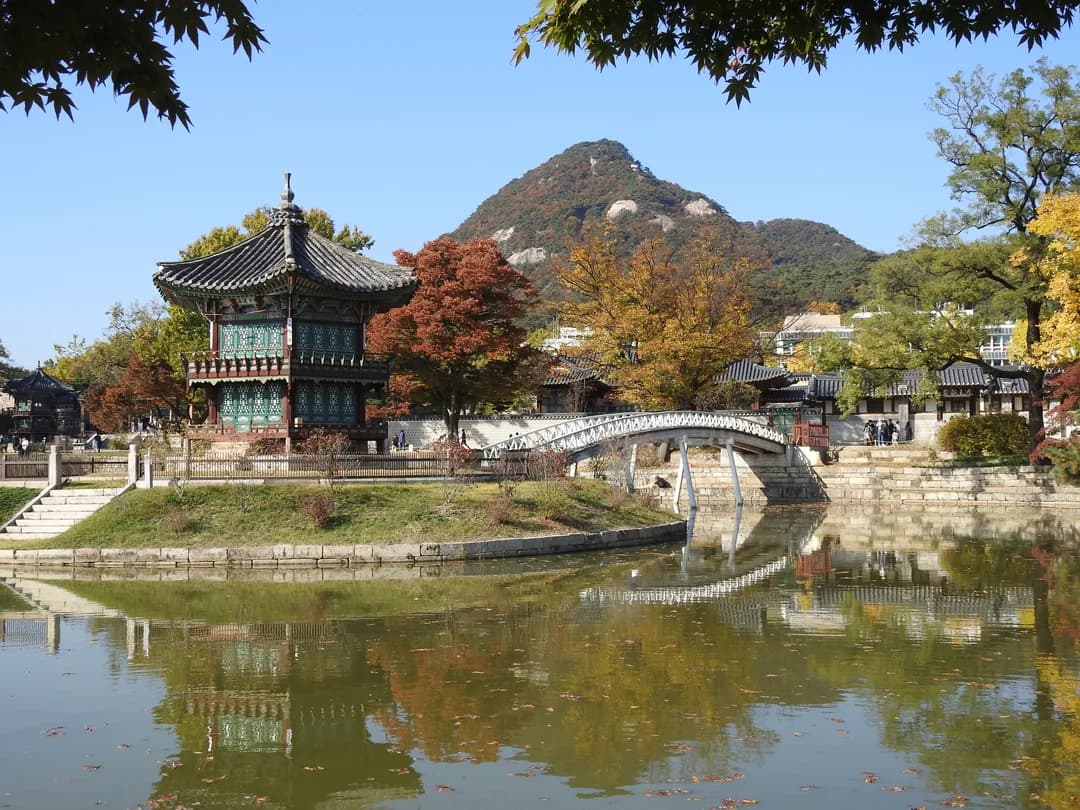
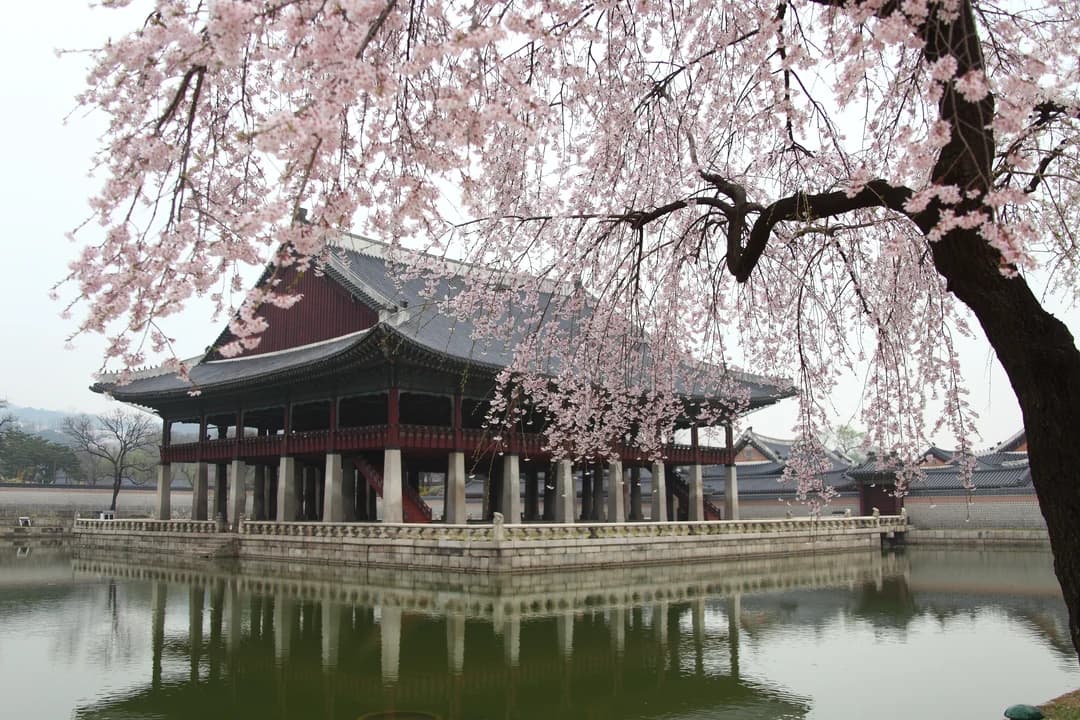
Seoul’s royal sites are Gyeongbokgung, Changdeokgung, Changgyeonggung and Deoksugung, plus the Jongmyo shrine. Each has its own weekly closing day and hours, and some areas open only with a guided tour.
Gyeongbokgung is closed on Tuesdays. Opening hours by season: November to February 09:00 to 17:00, March to May and September to October 09:00 to 18:00, June to August 09:00 to 18:30. Last admission is one hour before closing (as of 2026-10-11).
Gyeongbokgung admission is 3,000 won for ages 19 to 64 and 1,500 won for ages 7 to 18; visitors aged 65 and over and children under 7 enter free. Entry on the last Wednesday of each month (Culture Day) is free (as of 2026-10-11).
A palace pass at 10,000 won for adults covers Gyeongbokgung, Changdeokgung, Changgyeonggung, Deoksugung and Jongmyo, and stays valid for three months from purchase (as of 2026-10-11).
Changdeokgung is closed on Mondays and costs 3,000 won. Its Secret Garden (Huwon) adds 5,000 won and can only be entered on a timed guided tour of about 90 minutes, with English tours at 10:30, 11:30, 14:30 and 15:30 depending on the season (as of 2026-10-11).
Changgyeonggung, Deoksugung and Jongmyo have their own weekly closing days that differ from these two palaces, so plan palace days around each one rather than assuming the same day.
At Gyeongbokgung, free guided tours of about one hour start at the Heungnyemun Gate information center, usually in English at 11:00, 13:30 and 15:30 and in Chinese at 10:30 and 15:00 on days the palace is open. The guard-changing show at Gwanghwamun Gate runs at 10:00 and 14:00 and is not held on Tuesdays (as of 2026-10-11).
Evening openings are seasonal: in 2026 Gyeongbokgung opened at night from 2 September to 2 October, Wednesday to Sunday, 19:00 to 21:30 with last entry at 20:30. That run has ended (as of 2026-10-11).
Hanbok and palace conduct
Visitors wearing hanbok (traditional dress) enter free at the four grand palaces, the Jongmyo shrine and the Joseon royal tombs, a policy in place since 2013. Rental shops are clustered around the palaces (as of 2026-10-11).
To count as hanbok you need a jeogori (short jacket with an overlapping collar) plus a separate skirt (chima) or trousers (baji). Modern and fusion styles are accepted, and either gender’s style is allowed (as of 2026-10-11).
A one-piece dress, a jeogori without an overlapping collar, or a top so short that the chest shows may be refused, and outer robes worn over ordinary clothes may be denied. Outfits are expected to suit the dignity of the palace (as of 2026-10-11).
A hanbok rental usually includes shoes and a small bag. Choose comfortable shoes you can walk in, because stone paths are uneven, and avoid dragging the skirt hem on wet ground.
Do not touch buildings, step over ropes or sit on stone steps; stay on the marked paths. Photograph people respectfully and avoid blocking doorways or narrow gates for a long shot.
The colors of palace and temple buildings
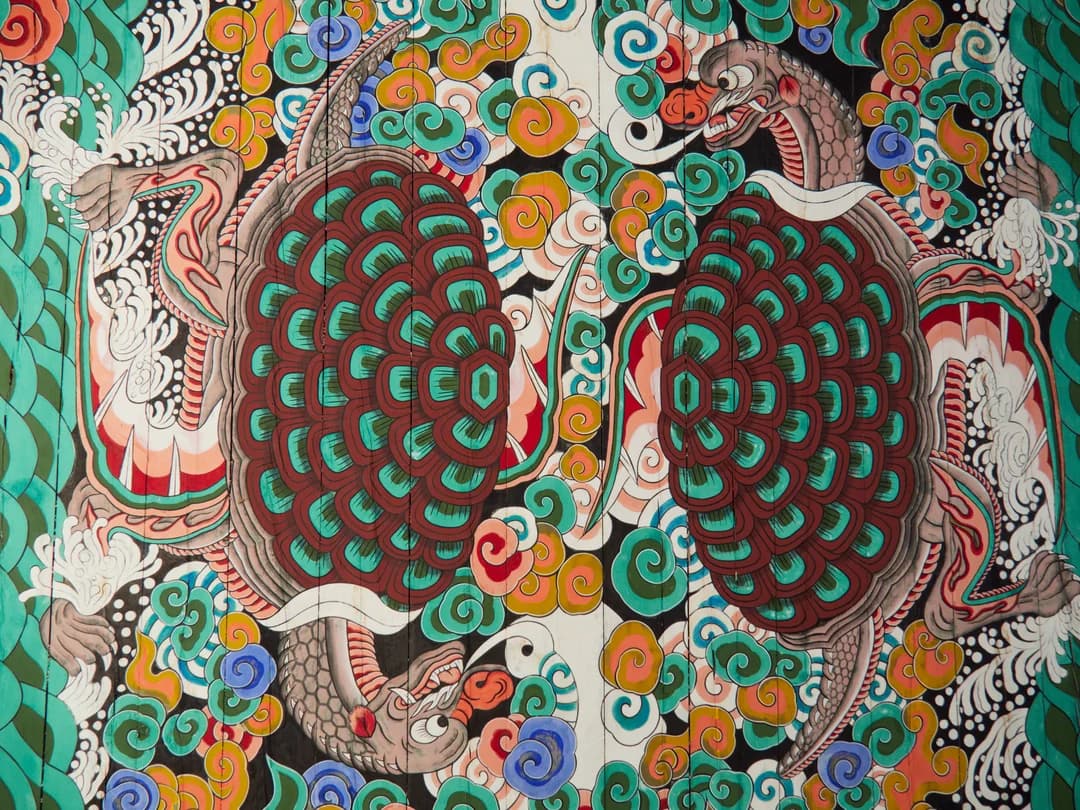
The painted patterns under the eaves are called dancheong. They protect the wood and decorate the building; the details differ from palace to palace and from temple to temple.
Stand a little back from the gate or hall to see the whole roof, then walk closer for the details. Notice that palace halls are grander and temple halls are often more colorful and ornate.
Staff or signs usually say where photography is allowed. Inside halls with a Buddha statue or a throne, photography is often restricted even when the courtyard outside is open.
Visiting a temple
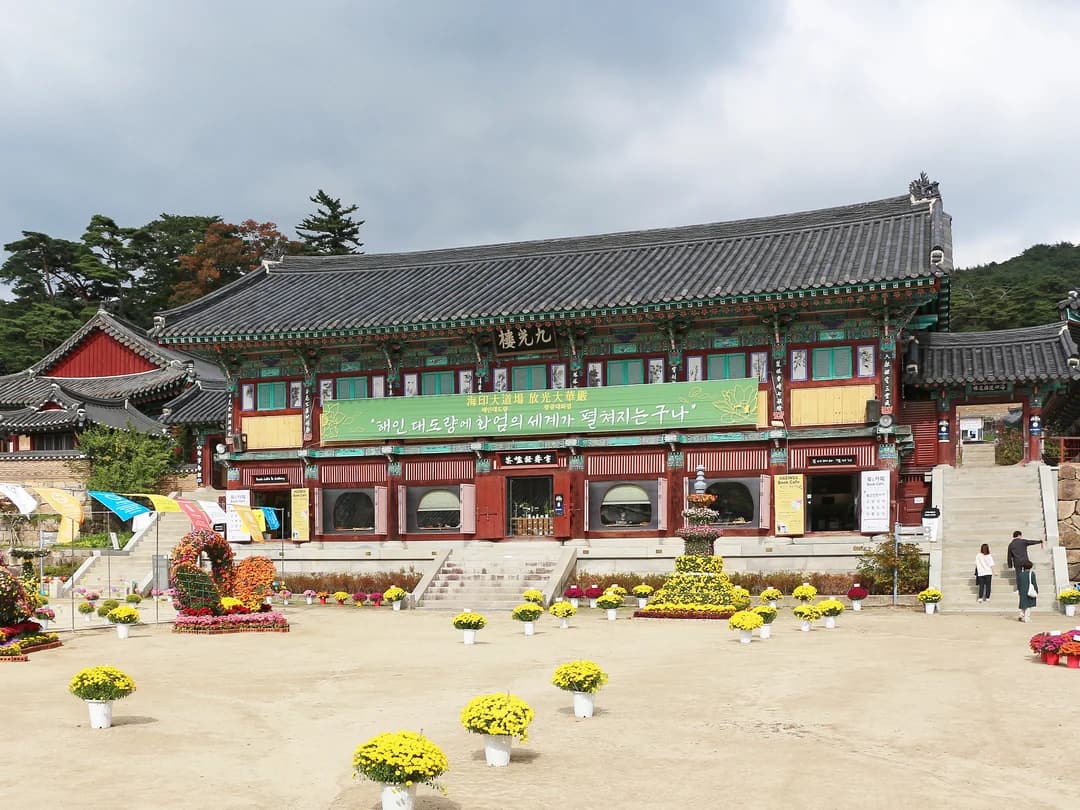
Dress modestly, walk quietly and take off your shoes before entering a hall. Take off your hat inside and keep your voice and phone low.
Outside, greet monks and the Buddha with palms together and a slight bow (hapjang). Enter a hall by a side door, since the central door is used by the monks, and sit off to the side rather than in the center.
Do not touch statues or offerings, and do not point your feet towards the Buddha statue when you sit. Walk behind people who are praying or bowing, never in front of them. Photographing worshippers is considered rude.
Some temples charge an entry fee or close outer areas during ceremonies. Many mountain temples need a walk up from the road, so wear comfortable shoes with grip.
Templestay: sleeping at a temple
Templestay is a cultural program started in 2002 in which visitors share the daily life of Buddhist monks. Around 170 temples across 14 regions take part, and all nationalities and faiths are welcome (as of 2026-10-11).
Three main types: day programs for people who cannot stay overnight (at least two hours, starting around 10:00 or 13:00), the experience type with about one night, and the rest type with free time apart from services and meals (as of 2026-10-11).
A typical experience-type day: check-in around 14:00 to 15:00 with etiquette guidance, dinner, the evening service, 108 bows and meditation, the dawn service around 04:00, then breakfast, communal work and tea with a monk, and lunch around 12:00 to 13:00 (as of 2026-10-11).
Taking part is voluntary: you may skip any activity, including the dawn service and the 108 bows, for health or personal reasons.
Rules: no drinking, smoking, shouting or excessive public affection. Meals are vegetarian, with no meat or eggs, and some temples serve them in the traditional bowl style (balwoo gongyang), eating everything you take.
Bring shampoo, conditioner, toothbrush, cleansing foam, a hair dryer, a towel and spare clothes, plus a cardigan or jacket because mornings and evenings at mountain temples are cold outside midsummer. A vest and trousers are lent at check-in, and supplies vary by temple.
The Templestay information center can be reached by phone at 02-2031-2000. Prices differ by temple and program and are shown on each program’s listing when you book.
Museums, heritage and K-culture
The National Museum of Korea in Seoul is open Monday, Tuesday, Thursday, Friday and Sunday from 09:30 to 17:30, and Wednesday and Saturday from 09:30 to 21:00. Admission closes 30 minutes before closing (as of 2026-10-11).
Admission to the museum’s permanent galleries is free; special exhibitions charge a fee. Individual galleries close for refurbishment from time to time, for example the Central Asia Gallery from 12 to 22 October 2026 (as of 2026-10-11).
Audio guides or guide apps are often offered in English, Japanese and Chinese, but availability varies from museum to museum. Heritage sites such as the royal tombs and fortresses often follow the same hanbok free-entry rule as the palaces.
The Korea Tourism Organization lists hands-on cultural activities including royal palace experiences, hanbok programs, Korean cooking classes, craft classes in Insa-dong, Gahoe-dong and Bukchon Hanok Village, ceramics in Icheon, taekwondo and Templestay.
K-drama and K-pop are part of why many people visit. Filming locations such as Paju’s drama road, the Gunsan film locations and Jeju scenery are popular, but treat them as ordinary public places: respect residents and private property.
Public baths and jjimjilbang
A jjimjilbang is a Korean bathhouse and spa. You pay at the front, receive a locker key and a set of clothes (usually a T-shirt and shorts, color-coded by gender), and change in the locker room.
The bathing areas are separated by gender, and you wash on the shower stools before entering the hot tubs. In the same-gender bathing area bathers are unclothed, which is the normal custom; swimsuits are not worn in the baths.
After bathing, the shared areas are mixed. They include heated-floor ondol rooms, sleeping mats and rooms with different temperatures. Keep your voice low, because some visitors are sleeping; some places allow overnight stays.
Policies on tattoos differ from venue to venue. Small, covered tattoos rarely cause a problem, but some places ask large tattoos to be covered or refuse entry, so ask at the front desk before you pay.
Phone cameras are not allowed in the bathing and changing areas. Hours differ by venue, and many stay open late; do not assume 24 hours.
Phrases, emergencies and quick answers
Hello: 안녕하세요 (annyeonghaseyo). Thank you: 감사합니다 (gamsahamnida). Goodbye to someone staying: 안녕히 계세요 (annyeonghi gyeseyo). Goodbye to someone leaving: 안녕히 가세요 (annyeonghi gaseyo).
Excuse me / sorry (passing someone): 실례합니다 (sillyehamnida). I am sorry: 죄송합니다 (joesonghamnida). It is okay: 괜찮아요 (gwaenchanayo). How much is it?: 얼마예요? (eolmayeyo?).
Where is the toilet?: 화장실 어디예요? (hwajangsil eodiyeyo?). Do you speak English?: 영어 하세요? (yeongeo haseyo?). May I take a photo?: 사진 찍어도 돼요? (sajin jjigeodo dwaeyo?).
At a bath: Is a tattoo okay?: 문신 있어도 돼요? (munsin isseodo dwaeyo?). At a temple or home: May I come in?: 들어가도 돼요? (deureogado dwaeyo?).
Emergency numbers: 112 for the police and 119 for fire and ambulance. In an emergency, shout “dowajuseyo!” (도와주세요, help me) or “119 bulleo juseyo” (119 불러 주세요, please call 119); politeness rules are not a concern then.
The Korea Travel Helpline 1330 (+82-2-1330) offers call and chat support in several languages including English, Japanese and Chinese for travel questions and complaints (as of 2026-10-11).
Do I need to speak Korean? Not at major sites, where signs are usually in English and often Japanese and Chinese, but a few polite words are always welcome. Can I visit in the rain? Yes, but wear shoes that grip wet stone.
Rules and opening days change. This guide is refreshed regularly; the facts here were last reviewed on 2026-10-11.
Sources and last update
Last updated: 11 October 2026. Figures are as of the date shown.
Source: Korea Tourism Organization · Korea Heritage Service · Templestay · Checked 11 Oct 2026
Written by HOLIDAY in its own words from official public information. This is not an official publication of the Korea Tourism Organization or any government body.
HOLIDAY refreshes this article regularly as fares, hours and event dates change.