South-west Korea in detail: Gwangju, Mokpo, Yeosu, Suncheon, Damyang, Boseong, Gurye, the islands, Namwon and Gochang, with trains, food, dated 2026 festivals and 3- and 5-day routes.
Overview
Jeolla is the south-west corner of the Korean peninsula: wide rice plains, a ragged coast with thousands of islands, and the western slopes of Jirisan. Visitors come first for the food, then for slow scenery such as tea terraces, bamboo groves, tidal wetlands, mountain temples and harbor towns. Jeonju, the best-known city in the north, has its own guide, so this one covers Gwangju and the south and west coast, with a short look at Namwon and Gochang.
One change to know about: on 1 July 2026 the city of Gwangju and South Jeolla Province were merged into a single unit named Jeonnam-Gwangju Special Metropolitan City (as of 2026-10-11). As a visitor you will not notice it. Gwangju, Mokpo, Yeosu, Suncheon, Damyang and every other town keep their names, stations and bus terminals, and signs have not changed. Maps and news may use Jeonnam-Gwangju, or the short legal name Gwangju Special City, as the umbrella label.
How many days: three days is enough for Gwangju, Suncheon and Yeosu. Five days adds Mokpo, Damyang or Boseong, and one of the islands. Distances look short on a map but trains and buses are slower than in the Seoul area, so group sights by town and treat each transfer between towns as part of the day.
Best time to go
Autumn is the most comfortable season: clear air, reed beds turning gold at Suncheon Bay and the metasequoia avenue in Damyang changing color from late October into early November. Spring brings plum and cherry blossom, the yellow cornelian-cherry flowers around Gurye, new green on the tea terraces of Boseong in May, and the spring tides that open the sea path at Jindo.
Summer is hot and humid, with the rainy season in July and a typhoon risk in August and September. It is good for beaches and island trips, but ferries can be canceled at short notice. Winter is milder than Seoul and quiet, with light festivals in the tea fields, steaming seafood stews and fermented skate in Mokpo; snow is mostly limited to the high ground of Jirisan and Mudeungsan.
Crowds peak on spring weekends, in the golden-reed weeks of autumn and on holiday weekends such as Chuseok and Seollal, when trains sell out and car traffic on the expressways is heavy. Midweek visits in late spring and mid-autumn give the best mix of weather and space.
Getting there
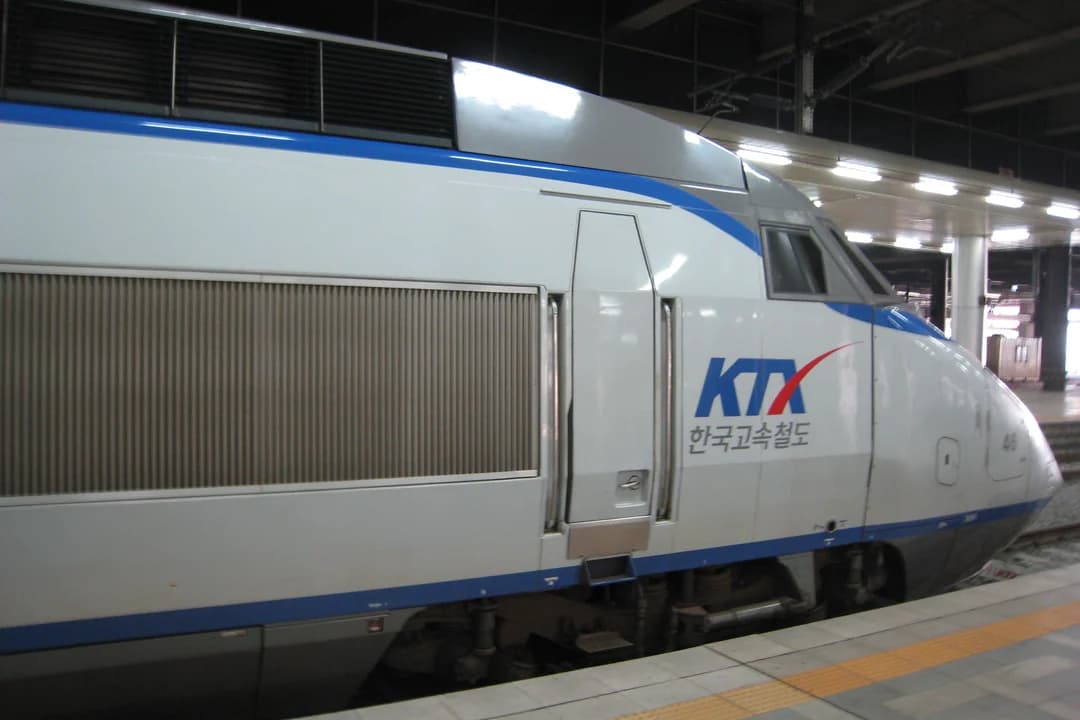
By rail from Seoul the Honam high-speed line is the fastest route. The quickest KTX trains from Yongsan reach Gwangju Songjeong Station in about 1 h 35 min, and trains with more stops take about 2 h. Mokpo, at the end of the line, is about 2 h 15 min to 2 h 40 min away. SRT trains from Suseo in southern Seoul also serve Gwangju Songjeong and Mokpo, which is handy if you are staying south of the river (as of 2026-10-11).
For Suncheon and Yeosu, KTX trains run on the Jeolla line from Yongsan. Expect about 2 h 40 min or a little more to Suncheon and roughly 2 h 40 min to just over 3 h to Yeosu-Expo Station, which stands beside the 2012 Expo grounds. The Jeolla line also stops at Namwon and Gurye-gu, and slower ITX and Mugunghwa trains serve the small stations in between (as of 2026-10-11).
Express buses are slower than the train but reach towns without stations. Gwangju’s U-Square is the largest bus terminal in Korea and the hub for onward buses to Damyang, Boseong, Naju and the coast; a direct bus from Seoul to Namwon takes about 3 h 15 min. Gwangju Airport, with domestic flights, is two subway stops from Songjeong Station. Muan International Airport, the only international airport in the region, was reported with all flights suspended in 2026, so plan around Incheon or Gimpo and rail rather than flights into Jeolla (as of 2026-10-11).
Getting around
Gwangju has one subway line, Line 1, which opened in full in April 2008. It links Songjeong Station, the airport, the city center and the Sangmu district; the ride from Songjeong Station to Sangmu takes about 9 minutes. The old center around Geumnam-ro and the Asia Culture Center sits on the line at Munhwajeondang (Culture Center) Station, whose exits 1 and 2 connect straight to the complex. City buses cover the rest, and a prepaid transport card works on buses and the subway.
Between towns, trains and intercity buses do most of the work. From Suncheon Station local buses reach Nagan Folk Village (routes 16 and 61 pass through) and the Suncheon Bay garden, and a sky-cube pod line runs between the garden and the wetland. Yeosu’s sights are strung along the waterfront, so a taxi or the cable car saves time between Odongdo, Dolsan and the Expo area. Taxis are inexpensive for short hops; show the Hangul name on your phone.
A rental car makes sense for Damyang, Boseong, Gurye and the coast, where buses are infrequent and sights are scattered. An international driving permit or a Korean license is needed. For the islands, plan around ferry timetables and weather rather than distance; bridges connect Jindo and Dolsan to the mainland, while Cheongsando and many others need a boat.
Gwangju: Asia Culture Center and Yangnim-dong
The Asia Culture Center (ACC) opened in November 2015 and is described as the largest cultural complex in Korea. Much of it is built below street level around a large open plaza in Dong-gu, and it has five parts: a culture exchange center, a children’s center, an archive and research center, a creation center and a theater. Allow half a day. Exhibitions, performances and the archive rooms keep their own schedules, but the plaza and surrounding streets are pleasant to walk at any time.
Next to the ACC stands the former South Jeolla provincial office, the building at the center of the May 1980 events. It was restored and officially opened in May 2026 as a space for history education, memorial and exhibition, and it sits in the same walking area as 5·18 Democracy Square. Pair the two in one visit, ideally in the morning when the plaza is quiet.
Yangnim-dong is a small hillside district of early modern history, with missionary-era houses, old churches and narrow lanes, and it hosts pavilions of the 16th Gwangju Biennale, which runs from 5 September to 15 November 2026 under the title “You Must Change Your Life”. Evening tours of Yangnim-dong run on Fridays and Saturdays from 2 to 31 October 2026 at 18:00, 19:00 and 20:00, in two versions: a theater tour and a tour of the Biennale pavilions in the district (as of 2026-10-11).
Gwangju: May 18 history
In May 1980 peaceful protests in Gwangju against the military takeover led by Chun Doo-hwan were put down by troops. The crackdown grew into a nine-day uprising in which civilians took up arms, and hundreds of civilians and a number of police and soldiers died. The event became a turning point in Korea’s democratization, and a national cemetery was later established for the victims.
The records of the uprising, including official documents, parliamentary hearing minutes, compensation files and citizens’ testimonies, photographs and hospital bills, were inscribed on UNESCO’s Memory of the World register in 2011. The material is held by several institutions, and the 5·18 Democratization Movement Archives in Gwangju keeps the citizens’ records.
Treat these places as memorials rather than attractions: keep voices low, ask before photographing people laying flowers, and avoid casual poses at the cemetery. The cemetery lies outside the center, so combine it with a taxi or bus ride and allow about two hours. In the old center, 5·18 Democracy Square and the former provincial office can be seen in about an hour.
Gwangju: Mudeungsan
Mudeungsan rises to 1,187 m above the eastern edge of Gwangju and became a national park in the early 2010s. It is also recognized as a UNESCO Global Geopark. Its signature feature is the columnar joints, tall hexagonal rock pillars, at Seoseokdae (about 1,100 m) and Ipseokdae. The true summit, Cheonwangbong, lies inside a military zone and stays closed to the public apart from rare, approved openings.
The easiest approach by public transport is the Jeungsimsa entrance, with a trail that climbs from the temple to the Jungmeoritjae ridge in about an hour; the full route to the columnar joints is a long day hike, so start early and carry water and a rain layer. Other temples on the slopes include Wonhyosa and Yaksasa. A short ridge walk is enough if you only want the views over Gwangju.
At the foot of the mountain a barley-rice street serves the classic post-hike meal of rice with assorted seasoned vegetables. Mudeungsan watermelon, a premium local variety, ripens from late summer into early autumn and is sold in the area; it is expensive, and many people buy one slice rather than a whole fruit.
Mokpo
Mokpo is a port city at the south-western tip of the peninsula, opened to foreign trade in October 1897. It is about 2 h 15 min to 2 h 40 min from Seoul by KTX. The old town climbs the side of Yudalsan, a rocky hill of 228 m that looks over the harbor; hiking paths, a ring trail and a circular road lead around and up it, and a marine cable car also runs from the waterfront towards the hill.
The modern-history quarter is the second reason to come. The Mokpo Modern History Museum I occupies the former Japanese consulate building of 1900, and Museum II is in a neoclassical building of 1920 that once belonged to the Oriental Development Company. Lanes of old merchant houses and shops around them are being re-used as cafes and small museums. Gatbawi, a pair of tafoni-carved rocks by the river mouth on the east side of the harbor, is a short taxi ride away.
Mokpo’s signature dish is hongeo, fermented skate, served raw in a sharp, ammonia-scented salad or as hongeo samhap, together with pork and aged kimchi. It is an acquired taste, so ask for a mild portion the first time. The North Harbor fish markets are known for octopus, and ferries leave the passenger terminal for islands such as Heuksando and Hongdo, and for Jeju.
Yeosu
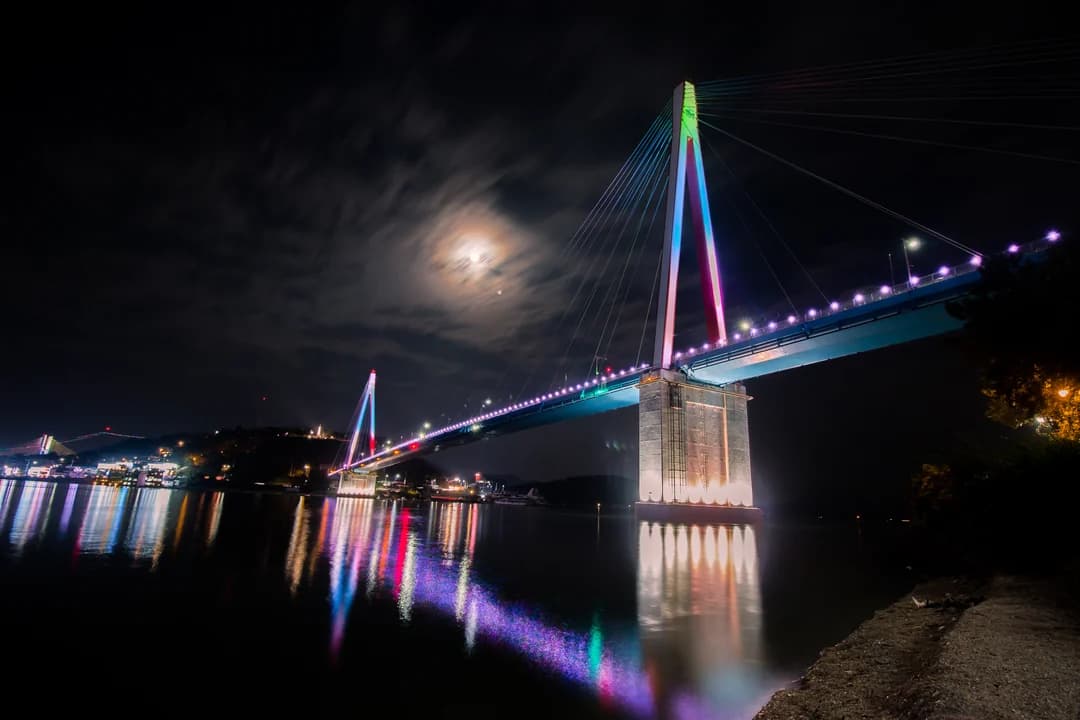
Yeosu is a harbor city on a ragged peninsula facing a sea dotted with islands. It hosted the 2012 World Expo, only the second in Korea after Daejeon in 1993, and Yeosu-Expo Station stands at the former site. The mood is best after dark, when the lights of Dolsan Bridge, a 450 m span linking the town to Dolsan Island, and the waterfront food stalls bring out the “night sea” that Korean songs made famous.
Right now the town has an extra draw: the 2026 Yeosu World Island Expo runs from 5 September to 4 November 2026, with the old Expo site as the main venue and Dolsan Jinmo, Gaedo and Geumodo as sub-venues. It is organized in seven themed “islands”, covering the value of islands, marine ecology, the future, culture, treasure, international exchange, and a food and market zone. A companion Namdo K-Garden Festival in Yeosu runs from 11 September to 31 October 2026 (as of 2026-10-11).
Beyond the Expo, the classic stops are Odongdo, a camellia island joined to the mainland by a breakwater walkway, where the flowers bloom in late winter and early spring; the Yeosu Maritime Cable Car crossing the strait between the mainland and Dolsan; and Hyangiram, a hermitage said to be founded in 644 by the monk Wonhyo, built on a sea cliff on Dolsan and famous for sunrise. Jinnamgwan, a 75 m wooden hall completed in 1599 and designated National Treasure No. 304, stands on the site of the old naval base of Admiral Yi Sun-sin.
Eat marinated raw crab (gejang), which is a Jeolla specialty, and gat kimchi, a pungent kimchi made from mustard greens that was developed on Dolsan. The Hanwha Aqua Planet aquarium and Ungcheon Beach Park suit families, and Manseongri beach has dark volcanic sand and sea views. Yeosu and Suncheon are neighbors, so many travelers combine them in one trip.
Suncheon
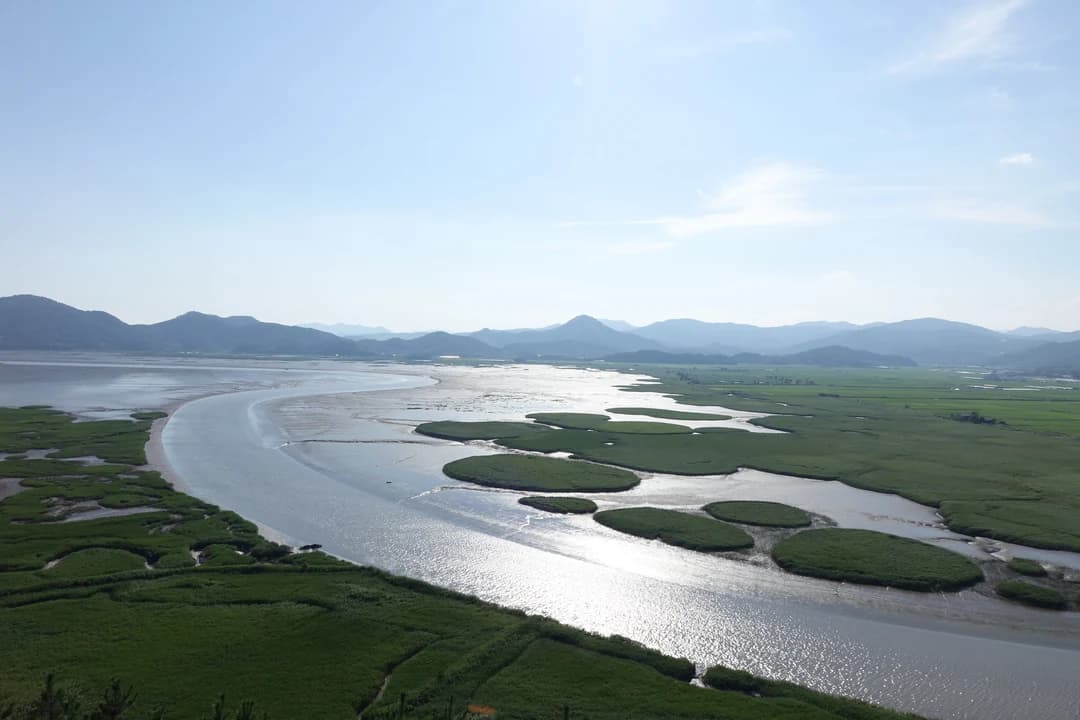
Suncheon Bay National Garden grew out of the 2013 Suncheon Bay International Garden Expo and was designated a national garden in 2015. It covers about 1.12 km², lies beside roughly 28 km² of tidal bay, and is linked to Suncheon Bay Wetland by a small sky-cube rail pod. Day admission is ₩10,000 for adults, ₩7,000 for teenagers and soldiers and ₩5,000 for children; the evening rate for the garden is half price, at ₩5,000, ₩3,500 and ₩2,500. The wetland charges the same day rates (as of 2026-10-11).
During the Yeosu Expo period, from 5 September to 4 November 2026, you can buy a ticket at either the garden or the wetland, show it at the other site and get a discounted second entry: adults pay ₩7,000 instead of ₩10,000, teenagers ₩4,000 instead of ₩7,000 and children ₩2,000 instead of ₩5,000. Night, group and combined tickets are excluded. Ticket sales at the garden were listed as closing at 19:00 at the time of reading (as of 2026-10-11).
The wetland is part of Getbol, the Korean Tidal Flats inscribed by UNESCO in 2021, and the reed beds are at their best in autumn, when a boardwalk and the hill-top viewpoint show the winding creeks. Nagan Folk Village is a Joseon-era walled town where residents still live in thatched houses, and a short bus ride from the station; weekend folk-music performances were announced there for 10 to 25 October 2026 (as of 2026-10-11).
Seonamsa, on the slope of Jogyesan, is one of the seven mountain monasteries inscribed by UNESCO in 2018. It is reached across Seungseongyo, a rainbow-shaped granite bridge about 14 m long built in the early 18th century, and it keeps a traditional wooden lavatory that is itself a registered cultural heritage item. The walk from the car park is gentle but takes about 30 minutes each way.
Damyang and Boseong: bamboo and tea
Damyang is one of the northernmost places on the peninsula where bamboo grows well. Juknokwon, a bamboo garden opened in May 2003, has eight themed trails and is a good walk for an hour or two. Just outside town, the Gwanbangjerim embankment forest lines the river, and the noodle street beside it serves cold or warm wheat noodles with a boiled egg, a simple lunch for sightseers.
The metasequoia avenue is a pedestrian-only walk of about 2 km, planted in the 1970s, and it is most striking from late October to early November when the leaves turn rust-red. A small entrance fee is charged and bicycles are not allowed. Soswaewon is a private garden of pavilions beside a stream, built in the 16th century by the scholar Yang San-bo; the area is also the home of gasa, a Joseon-era poetic form.
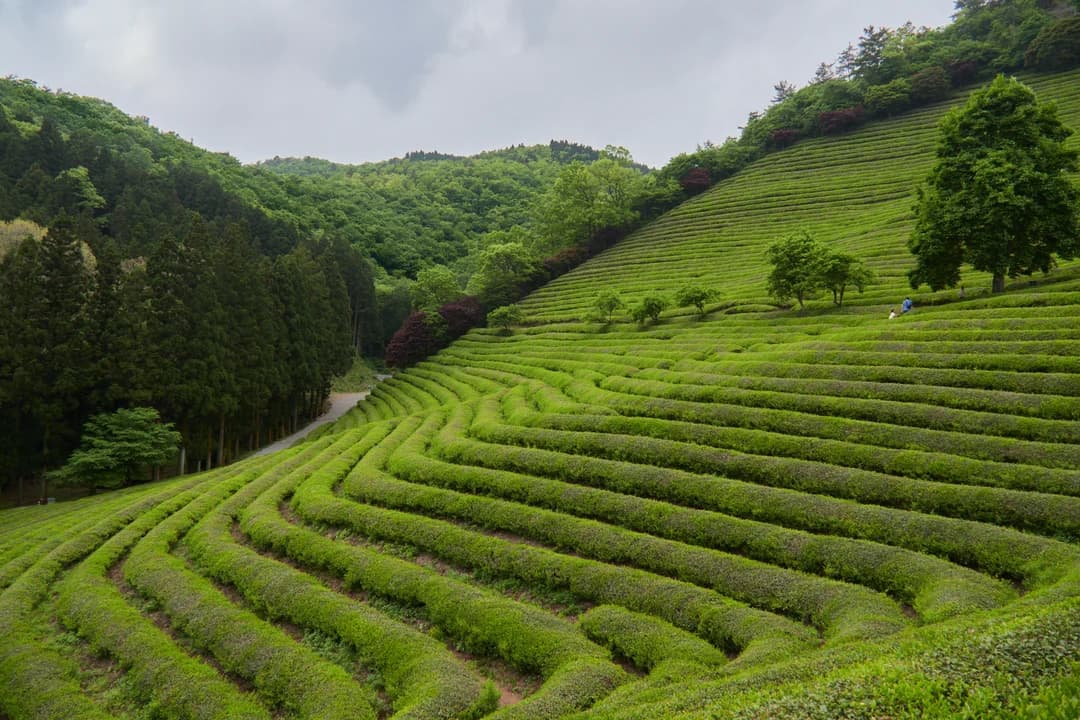
Boseong is Korea’s best-known tea county, producing a large share of the country’s tea. Daehan Dawon, the largest plantation, climbs a hillside in terraced rows and is easy to reach by local bus from the town. The Boseong Tea Festival takes place every May, with tea picking and tasting, and winter nights bring a light show on the terraces. Near the coast, Yulpo beach has a pine grove and baths using green-tea seawater, and Beolgyo, a town on the south coast, is known for cockles.
Gurye, Jirisan and Naju
Jirisan, at 1,915 m, is the highest peak on the Korean mainland and its national park is the largest in the country, spreading over North Jeolla, South Jeolla and South Gyeongsang. Hwaeomsa, on its southern slope in Gurye, was founded in 544 by the monk Yeongi. Its Gakhwangjeon hall is National Treasure No. 67, and the stone lantern in front of it, 6.4 m tall, is National Treasure No. 12. Hwaeomsa is not one of the seven UNESCO-listed mountain monasteries, but it is among the most impressive.
Other Gurye highlights include the cornelian-cherry (sansuyu) villages that turn yellow in early spring, the old manor houses of Omi village and Sagseongam, a hermitage clinging to a cliff on Osan with wide views over the river valley. Buses run to Hwaeomsa from Gurye town, but services are limited, so a taxi from Gurye-gu Station or a rental car makes the day easier.
Naju sits on the Honam line between Gwangju and Mokpo. The name Jeolla itself combines the first syllables of Jeonju and Naju, a reminder of how important the town was in the Goryeo period. Today it is known for the Naju pear, for a clear beef soup called Naju gomtang served around the Geumseonggwan area, and for fermented skate from Yeongsanpo. It makes an easy stop between Gwangju and Mokpo.
Islands: Wando, Cheongsando and Jindo
Wando is a county of many islands on the south-west coast, and in 828 the commander Jang Bogo founded the Cheonghaejin garrison and trading base here. It is a major producer of laver and seaweed. From Wando, ferries cross to Cheongsando, which was named Asia’s first Slow City and where the stepped rice terraces, called gudeuljang, were designated Korea’s first Important Agricultural Heritage site on 22 January 2013.
Cheongsando has about 33 km² of land and a marked walking network called the Slow Walk, opened in 2010, which has 11 courses totaling 42.195 km, the length of a marathon. The island was the setting of the film Seopyeonje and parts of other dramas. Plan a full day or an overnight stay, check the weather before you cross, and keep the return ferry time in your pocket.
Jindo is joined to the mainland at Haenam by Jindo Bridge, which is lit at night. The island is known for the Jindo dog, a registered natural monument (No. 53) that may leave the county only with a permit, for Jindo hongju, a red liquor with a protected geographical indication, and for the Myeongnyang Strait, where the current runs very fast and where Admiral Yi Sun-sin fought and triumphed in a famous naval battle. In spring the tide drops low enough to reveal a stone-and-sand path between the shore and a small island at Hoedong; the sea-parting festival there is usually held in late March or early April, and dates follow the tide table, so they are announced each year.
Namwon and Gochang
Namwon, in North Jeolla, is called the City of Love because of the Chunhyang folk tale. Gwanghalluwon, a pavilion garden with a bridge and a pond, is the centrepiece, and the spring Chunhyang Festival lasts four days with parades and lantern-lit paths. Namwon borders Jirisan National Park and is about 50 minutes from Jeonju and about an hour from Gwangju’s U-Square terminal; a direct bus from Seoul takes about 3 h 15 min.
Gochang is the best place in Korea to see dolmens. Its roughly 440 documented dolmens near Maesan village, on low hills 15 to 50 m above sea level, form part of the Gochang, Hwasun and Ganghwa Dolmen Sites that UNESCO inscribed in 2000. The town’s walled fortress, built in 1453, can be walked in a loop of about 1.7 km, and a folk custom has visitors carry a stone on their head for luck.
Gochang is also known for its green-barley fields in mid-April to mid-May, the camellias of Seonunsa temple, and eel and black-raspberry products, and its tidal flat is one of the four sites of the 2021 UNESCO Getbol listing. Gochang and Namwon are best reached by rental car or by taking the bus from Gwangju or Jeonju, so they suit a stop on the way to or from the north rather than a base.
Food and what to eat
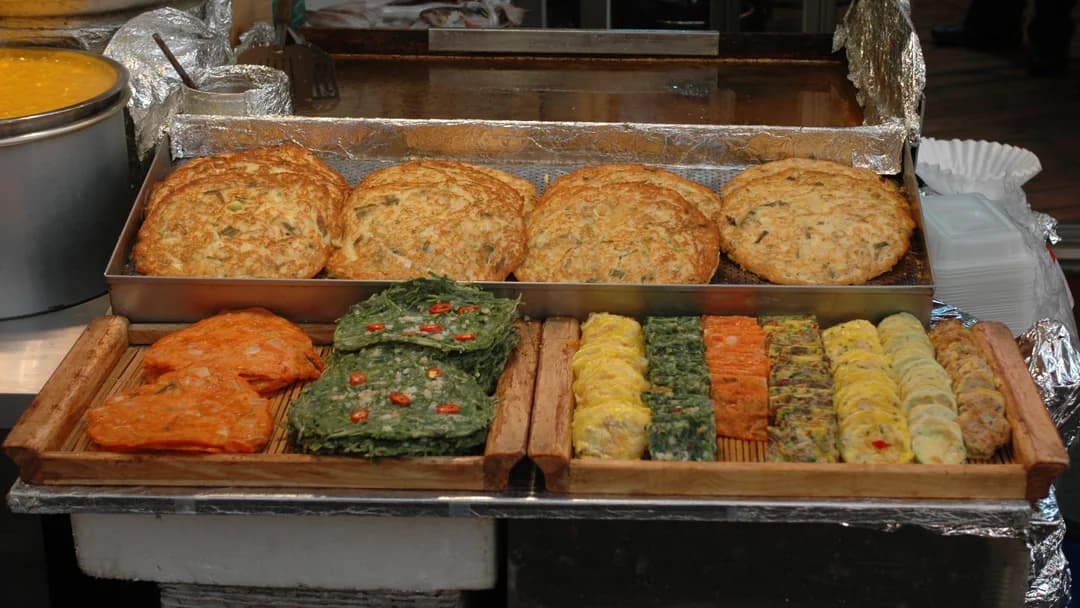
Jeolla has Korea’s reputation for generous eating: a standard meal arrives with a dozen or more small side dishes, and the quality of the seasoning is the point. In Gwangju the city has marked six food streets: Songjeong grilled short-rib patties (tteokgalbi), Yudong duck soup, Mudeungsan barley rice, Donggok marinated blue crab set meals, Daein Market raw fish, and an Asian food street. For a first meal, tteokgalbi, a chopped beef patty grilled on the bone, is the safest and most popular order.
Each town has its own signature. Damyang offers its own tteokgalbi and bamboo-rice dishes, plus the noodle street by the river. Naju serves clear beef soup. Yeosu is known for soy-marinated crab and mustard-green kimchi. Mokpo is the place for fermented skate and octopus. Beolgyo in Boseong is known for cockles, Jindo for red liquor, and Gochang for eel. Local tea desserts, such as green-tea ice cream or noodles, appear all over Boseong.
Practical points: many restaurants set a two-portion minimum for grilled or stewed dishes, solo travelers can find single servings at noodle shops and in market stalls, and raw or fermented seafood such as hongeo can have a strong smell, so ask what you are ordering. Vegetarian options are limited outside temple food; say clearly that you do not eat meat or fish stock, and check whether kimchi contains fish sauce.
Markets and shopping
Yangdong Market in Gwangju’s Seo-gu, next to Yangdong Market subway station, started in 1910 and moved to its present site in 1940. It now has about 1,500 shops across six markets and is known for ceremonial food supplies, bedding and its roast-chicken shops. A 5·18 historic-site marker stands across the road from exit 1. Mokpo’s North Harbor markets are the place for fresh octopus and raw fish; ask the stall to cook or slice what you buy.
Good souvenirs follow the region’s crops: Boseong green tea and tea bowls, Damyang bamboo crafts, Wando and Jeolla laver, Jindo red liquor, and Naju pears in autumn. Many towns sell vouchers in local currency through their own programs, which stores accept; they are for residents or participants in travel schemes and not something to buy on arrival.
Festivals and seasonal highlights
Events running right now in the region: the 2026 Yeosu World Island Expo (5 September to 4 November 2026), the Namdo K-Garden Festival in Yeosu (11 September to 31 October 2026) and the 16th Gwangju Biennale (5 September to 15 November 2026). Gwangju also holds its Yangnim-dong evening tours on Fridays and Saturdays until 31 October 2026 (as of 2026-10-11).
Mokpo’s autumn calendar is full: the Mokpo Port Festival on 16 to 18 October 2026 around the port and Samhakdo island, a World Culture Festival stage on 17 October at 16:30, the North Harbor Sunset Festival on 24 October from 17:00 to 21:00, and the Mokpo Heritage Night tour on 30 October to 1 November 2026 around the modern-history quarter. A marathon follows on 22 November 2026 at 09:00 (as of 2026-10-11).
Money-saving programs for outside visitors are running too. A half-price island travel scheme from 29 August to 4 November 2026 returns up to ₩100,000 in local currency to visitors from outside the region who spend on its islands; it covers 16 islands in 8 cities and counties, needs advance registration through the regional tourism platform, and allows one claim per person. Mokpo’s own scheme from 1 October to 4 December 2026 returns 50 percent of travel spending, up to ₩200,000, and excludes residents of Mokpo, Sinan, Muan and Yeongam (as of 2026-10-11).
Seasonal highlights for planning another year: cornelian-cherry blossoms around Gurye and plum blossoms in March, the Jindo sea-parting festival in late March or early April, pear blossom in Naju in April, green barley in Gochang from mid-April to mid-May, the Damyang bamboo festival around Children’s Day on 5 May, the Boseong tea festival in May, and the Chunhyang Festival in Namwon in spring. The Gwangju Kimchi Festival (its 33rd edition in 2026) and the Namdo food festival are held in autumn. Dates for next year are announced each year and this guide is updated when they are confirmed.
Where to stay
In Gwangju, stay near Songjeong Station if you arrive by KTX and want early starts, or near Geumnam-ro and Munhwajeondang Station for the Asia Culture Center, Yangnim-dong and evening walking. In Suncheon, the area around the station is the easiest base for buses to Nagan and the bay, and Nagan itself has guesthouses inside the walled village. In Yeosu, the waterfront by the Expo site and the Dolsan side both have sea views; the second is quieter and better for sunrise.
During large events and holiday weekends, rooms near the venues sell out, and the Yeosu Expo period runs until 4 November 2026. Book early, and consider Suncheon or Gwangju as a base when Yeosu is full. Traditional hanok stays in Nagan and Damyang give a different feel but usually have floor bedding and shared bathrooms, and rural guesthouses can be hard to reach without a car.
Accessibility and families
Suncheon Bay National Garden is largely flat and has a children’s zoo, a therapy garden, a history hall, themed gardens and a sky-cube rail link to the wetland, which makes it the easiest large site for strollers and slow walkers. The wetland boardwalk is flat too, but the viewpoint on the hill involves a climb. Ferris wheel and boat rides may be closed at times, so do not plan the day around them.
Temples such as Seonamsa and Hwaeomsa involve stairs and uneven stone paths. Juknokwon has uphill sections, whereas the Damyang metasequoia avenue is flat and closed to bicycles. Cable cars in Yeosu and Mokpo shorten steep climbs. For children, the Yeosu aquarium, the beaches and the tea fields are easy wins; for older travelers, split long days into a morning and an evening outing and use taxis between sights.
Weather and sea conditions
The south coast is milder than the capital in winter and noticeably wetter in summer. Spring and autumn days are mostly dry and pleasant, but sea fog can cut visibility in spring and make ferries late. The rainy season runs through July, and typhoons mostly pass in August and September, which can close ferries, bridges and trails for a day or two.
For the islands and tidal paths, the tide table matters more than the forecast. Check the sailing status on the day you travel, keep a flexible half day in the plan, and bring a light waterproof jacket in every season.
Safety and etiquette
At the May 18 memorial sites and cemetery, dress simply and speak quietly. In temples, enter halls without shoes where shoes are lined up outside, do not point cameras at worshippers, and stay off ropes and fenced areas. On mudflats, do not walk out on the flat when the tide is changing; the Jindo sea path is safe only during the official opening times with staff on duty, and the water returns quickly.
For emergencies, dial 112 for police and 119 for fire and ambulance; the 1330 tourist hotline offers interpreter help in several languages. Mountain trails such as Mudeungsan and Jirisan can change quickly, so start early, carry water and turn back in poor weather. Do not take a Jindo dog or its pups out of the county without the required permit.
3-day itinerary
- Day 1, Gwangju: KTX from Yongsan to Gwangju Songjeong Station (about 1 h 35 min to 2 h), lunch at a tteokgalbi restaurant in Songjeong, then the subway to Munhwajeondang Station for the Asia Culture Center, the restored former provincial office and 5·18 Democracy Square. Early evening in Yangnim-dong; on Fridays and Saturdays in October, join one of the evening tours.
- Day 2, Suncheon: Travel to Suncheon in the morning (allow most of the morning with the transfer). Spend the afternoon at Suncheon Bay National Garden, take the sky-cube pod to the wetland and stay for the golden hour on the reed boardwalk. Stay in Suncheon.
- Day 3, Yeosu: Morning bus or train to Yeosu. Visit the Expo site, walk the Odongdo breakwater and take the maritime cable car over the strait to Dolsan. Have crab or gat kimchi for lunch, watch Dolsan Bridge light up in the evening, and return from Yeosu-Expo by KTX; check the last train before you plan dinner.
5-day itinerary
- Day 1, Mokpo: KTX from Yongsan (about 2 h 15 min to 2 h 40 min). Walk the modern-history quarter and museums, go up Yudalsan or ride the marine cable car for the harbor view, and eat hongeo samhap or octopus at dinner. If the Port Festival or Heritage Night is on, stay out for the evening programs.
- Day 2, Gwangju via Naju: Travel inland by train or bus and stop at Naju for a bowl of gomtang if the timing suits. Arrive in Gwangju by mid-afternoon, then visit Yangdong Market, the Asia Culture Center area and Yangnim-dong in the evening. Stay in Gwangju.
- Day 3, Mudeungsan and Damyang: Hike from Jeungsimsa to the Jungmeoritjae ridge in the morning, eat barley rice at the foot of the mountain, then take a bus or taxi to Damyang for Juknokwon, the metasequoia avenue, the embankment forest and a bowl of noodles. Return to Gwangju or sleep in Damyang.
- Day 4, Suncheon: Move to Suncheon (a long transfer, so treat it as half a day). In the afternoon visit Nagan Folk Village by local bus and stay for sunset inside the walls. Sleep in the village or in Suncheon.
- Day 5, Suncheon Bay and Yeosu: Visit Suncheon Bay National Garden and the wetland in the morning, or Seonamsa if you prefer a temple walk. Continue to Yeosu in the afternoon for the Expo site, the cable car and the night sea. Return to Seoul on the evening KTX or the next morning; book the return seat before you start the trip.
Tips
Book KTX and SRT seats before the weekend or any holiday, since popular trains on the Honam and Jeolla lines fill up, and choose a return train before you leave Seoul. Keep the Hangul names of your sights on your phone for taxi drivers: Asia Culture Center (국립아시아문화전당), Suncheon Bay National Garden (순천만국가정원), Juknokwon (죽녹원), Daehan Dawon (대한다원) and Yeosu Expo (여수엑스포).
Pack by the season: layers and a windbreaker for spring and autumn evenings on the coast, sunscreen and a hat for summer, and warm layers and non-slip shoes for winter. A lightweight rain shell is useful all year. Carry some cash for market stalls and small ferries, even though cards work in most restaurants and shops.
Do not try to see everything: pick two or three bases and one island at most. If your time is short, Suncheon with Yeosu gives the best ratio of sights to travel, and Gwangju is the best choice for history and city life. Keep an extra buffer day in autumn weekends and festival weeks.
Sources and last update
Last updated: 11 October 2026. Figures are as of the date shown.
Source: Jeonnam-Gwangju Special Metropolitan City · Jeonnam-Gwangju tourism platform · Gwangju tourism · Suncheon Bay · 2026 Yeosu World Island Expo organising committee · Mokpo City · Wikipedia · Namuwiki · Checked 11 Oct 2026
Written by HOLIDAY in its own words from official public information. This is not an official publication of the Korea Tourism Organization or any government body.
HOLIDAY refreshes this article regularly as fares, hours and event dates change.


![[Spring] Taean Tulip Festival and Flower Park Day Tour](/_next/image?url=https%3A%2F%2Fadmin.holidaykr.com%2Fapi%2Fadmin%2Fsystem%2Fbasic-settings%2Ffavicon%3Fpath%3D%252Fuploads%252Fproducts%252Fthumbs%252F750_1731309018_file1.jpg&w=3840&q=75)