How a Korean meal works, regional specialties, ordering step by step, table manners, allergens, vegetarian and halal realities, drinking rules and phrases in Hangul.
What a Korean meal looks like
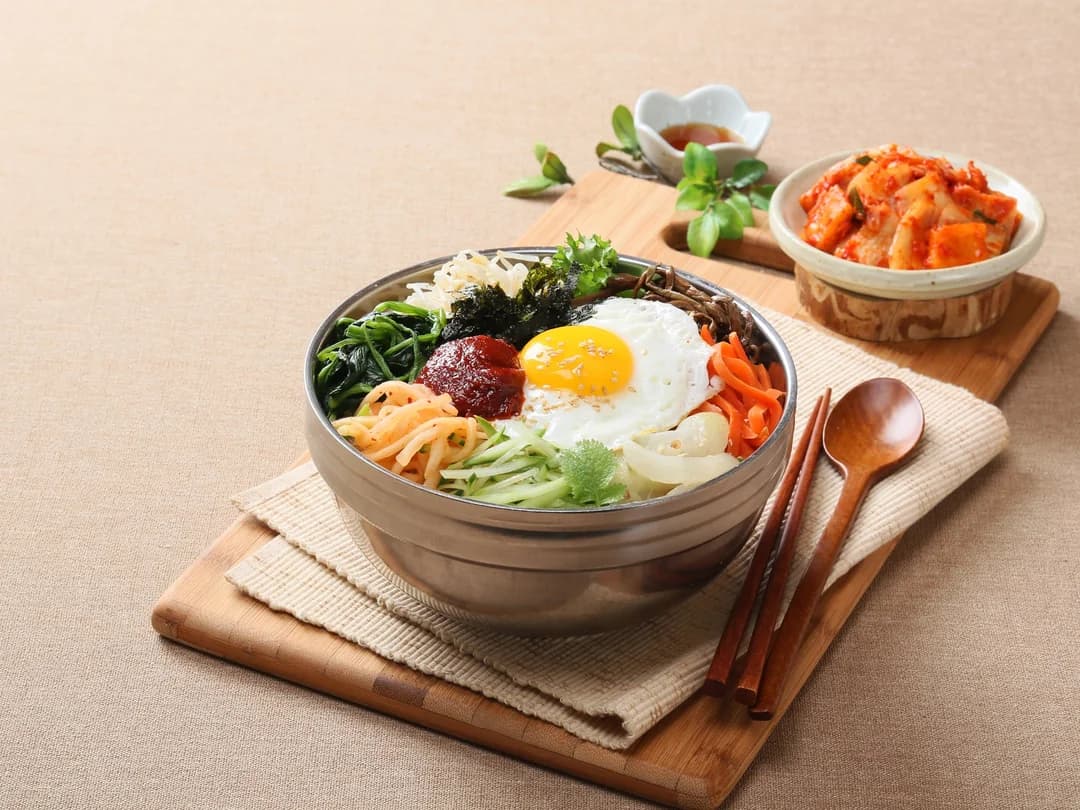
A traditional meal is laid out on a low or dedicated table. Each person gets their own rice and soup, a spoon and chopsticks, and the main dish and side dishes are arranged around them.
Banchan are the small side dishes shared from the middle of the table: seasoned vegetables (namul), stir-fried and braised items, and kimchi. Kimchi is always on the table.
You pick the side dishes you want with each spoonful of rice. The spoon is the main tool for rice, soup and mixing, and using it together with chopsticks is completely normal.
Most restaurants expect about one main dish per person, even if you share. Soups, stews and noodles normally come one serving per person; some stews and barbecue are sized for two or more.
Bibimbap, warm rice topped with seasoned vegetables and gochujang chili paste, is the dish most often presented as the face of Korean food, and a safe first order in almost any town.
Dishes worth trying
Rice and bowls: bibimbap, dolsot bibimbap served in a sizzling stone pot, and gimbap, seaweed rice rolls that are the standard quick meal and picnic food.
Grilled meat: samgyeopsal (pork belly) is the most popular, then galbi (marinated ribs), bulgogi (thin marinated beef) and hanu (Korean beef), all wrapped in lettuce or perilla leaves.
Stews and soups: kimchi-jjigae, doenjang-jjigae (soybean paste stew, the usual way to finish a barbecue meal), sundubu-jjigae (soft tofu) and samgyetang (whole young chicken with ginseng and rice).
Noodles: naengmyeon (cold buckwheat or starch noodles in icy broth), jajangmyeon (black bean noodles), kalguksu (hand-cut noodle soup) and ramyeon cooked in a pot.
Snacks and sweets: tteokbokki (rice cakes in chili sauce), hotteok (sweet filled pancakes), fish cake skewers, dalgona candy and bingsu, a shaved-ice dessert that is a summer favorite.
By season: cold noodles, bingsu and samgyetang in summer, when samgyetang is traditionally eaten to restore energy; hot stews, fish cake broth, roasted sweet potato and hotteok in winter.
Regional specialties: Seoul, Gyeonggi, Incheon and Gangwon
Seoul: the capital mixes everything. Back-alley food streets such as Seosulla-gil (fusion dishes and traditional sweets) and Yongnidan-gil (global cuisine in a multicultural neighborhood) are good for wandering.
Incheon is known for jajangmyeon, which has a long history in its Chinatown area, and ganjang-gejang, raw crab marinated in soy sauce. Suwon is famous for wanggalbi, huge grilled ribs.
Uijeongbu is the home of budae-jjigae, the “army base stew” of sausage, ham, instant noodles and kimchi in a spicy broth. It is a good dish to share between two or more people.
Gangwon: Chuncheon is the place for dakgalbi (spicy stir-fried chicken), Gangneung for chodang sundubu (soft tofu made with seawater brine), and Hoengseong for hanu beef.
Gangwon seasonal ingredients: wild mountain vegetables from Pyeongchang and pine mushrooms from Yangyang. Sokcho’s fishery market is a favorite for fresh seafood on the east coast.
Regional specialties: Jeolla, Gyeongsang, Daejeon and Jeju
Jeonju is Korea’s first UNESCO City of Gastronomy and the home of Jeonju bibimbap and kongnamul-gukbap, a bean sprout and rice soup, which many travelers have for breakfast.
Elsewhere in the southwest: Damyang is known for tteokgalbi (grilled rib patties), Gwangju for yukjeon (battered pan-fried beef), and the coast for Mokpo skate, Wando abalone and laver, and Yeosu pike eel.
Busan: dwaeji-gukbap (pork and rice soup) is the local comfort food, and winter pufferfish is a seasonal specialty. In the Huinnyeoul area you can try ramyeon in a pot and sea urchin roe gimbap with an ocean view.
Daegu: fried chicken is the signature dish, and the Apsan area serves local dishes such as makchang and gopchang (grilled intestines), flat dumplings and gwabaegi, a twisted doughnut.
Andong has jjimdak, braised chicken with glass noodles, and Andong soju, a traditional distilled spirit. Daejeon is known for kalguksu, hand-cut noodle soup.
Jeju: heukdwaeji (black pork), jeonbok ttukbaegi (abalone cooked in a clay pot), hallabong citrus desserts and meljeot, a salted fish sauce dip. Coastal seasonal picks include Tongyeong oysters and Uljin snow crab.
How ordering works
- Step in and wait to be seated, or sit down yourself when a sign or the staff points you to a free table. Say the number of people if asked: “han myeong” is one person.
- Look for the menu, a tablet or a QR code on the table. Photo menus are common, and many places also have English, Japanese or Chinese pages. Self-service ordering machines are becoming more common.
- Most tables have a call button. Press it, or call out “yeogiyo!” (excuse me), when you want to order, ask for water or get more side dishes. Waving is not needed.
- Spoons and chopsticks are often in a small drawer or box on the table, and water is usually self-serve. Pour your own, and refill the table’s water jug yourself if there is one.
- Order one main dish per person, and add side orders to share. Say if you want something not spicy before the food is cooked, because stews and stir-fries are seasoned in the kitchen.
- Pay at the counter near the exit when you leave, not at the table. Some places use a kiosk where you order and pay first. Cards are accepted almost everywhere, including for small purchases.
Paying, tipping and what is free
Tipping is not expected in restaurants, cafes or taxis, and staff may try to hand the money back. Service is part of the price.
Water and refills of basic side dishes normally cost nothing. Meat, fish or egg extras, and side dishes ordered as separate menu items, can be charged.
Credit cards are accepted almost everywhere, even for small purchases, but a few small family-run places prefer cash, so keep a little won as a backup (as of 2026-10-11).
Many convenience stores, restaurants and ATMs are open around the clock all year, so a late meal or a snack is rarely a problem (as of 2026-10-11).
This guide gives no menu prices, because they differ by city, restaurant and year and cannot be verified here against a statistics source. Every menu shows the price in won next to each dish.
Table manners: do
- Let the oldest person at the table start eating first, and use both hands when handing or receiving a dish or a drink from an older person.
- Use the spoon for rice and soup and the metal chopsticks for side dishes. Take side dishes from the shared plate, a little at a time.
- Say “jal meokgesseumnida” (I will eat well) before you start and “jal meogeosseumnida” (I ate well) when you finish. It is warm, not required.
- Ask for side-dish refills politely and finish what you take. Eating most of what is served is seen as appreciation.
Table manners: avoid
- Do not stand chopsticks upright in a bowl of rice; it resembles incense at a memorial.
- Do not start eating before the elders, and do not lift the rice bowl to your mouth. In Korea the bowl stays on the table and you bring the spoon to your mouth.
- Do not blow your nose loudly at the table or leave the spoon in the shared stew; step away to blow your nose, and use the serving spoon or your own clean spoon.
- Do not leave a lot of food untouched when you share, and do not spit bones or shells on the table; use the small plate or bowl provided for scraps.
Korean barbecue step by step
Meat restaurants (gogi-jip) have a grill built into the table and a ventilation hood or tube above it. Samgyeopsal (pork belly) is the most popular order.
Barbecue is usually ordered by portions of meat and many places require at least two portions, so it is harder to order alone. Ask for the minimum before you sit down (as of 2026-10-11).
Staff often grill the first batch and cut the meat with scissors. After that, turn the pieces yourself and cut them smaller with the scissors; do not leave the grill unattended.
Make a ssam: put a piece of meat on a lettuce or perilla leaf with a little ssamjang (a sauce of chili paste, soybean paste and garlic), garlic and kimchi, fold it, and eat it in one bite with your mouth open wide.
Finish with doenjang-jjigae or a cold noodle dish, the usual closing courses. Smoke and grease cling to clothes, so avoid delicate fabrics; many places provide a bag or hanger for coats.
Markets, street food and convenience stores
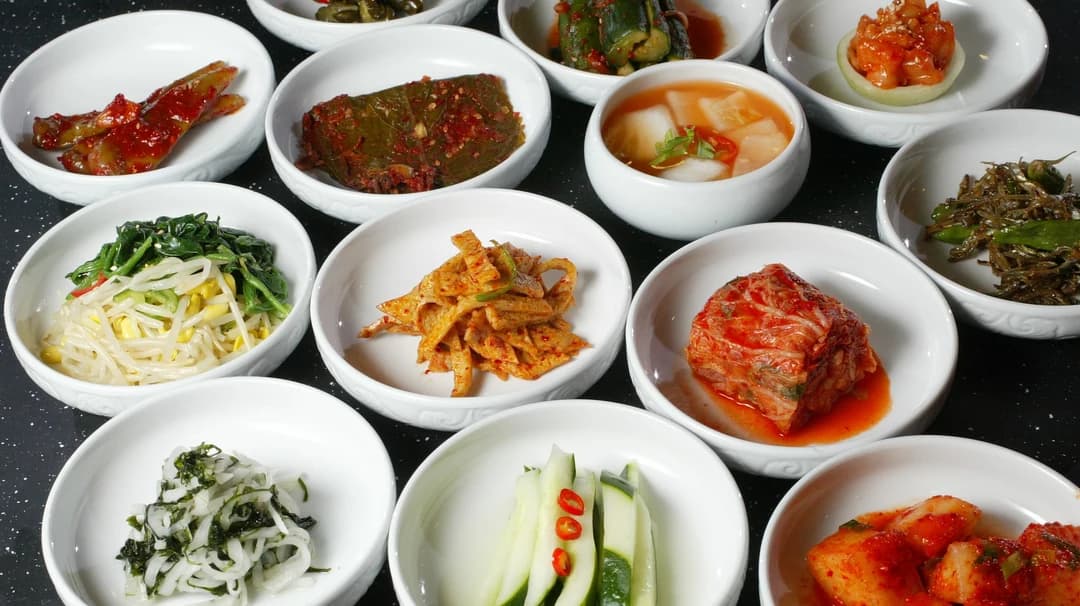
Traditional markets are good places to try small portions of many things, and they are described as safe and welcoming for solo travelers. Look at what people queue for, and point if you do not know the name.
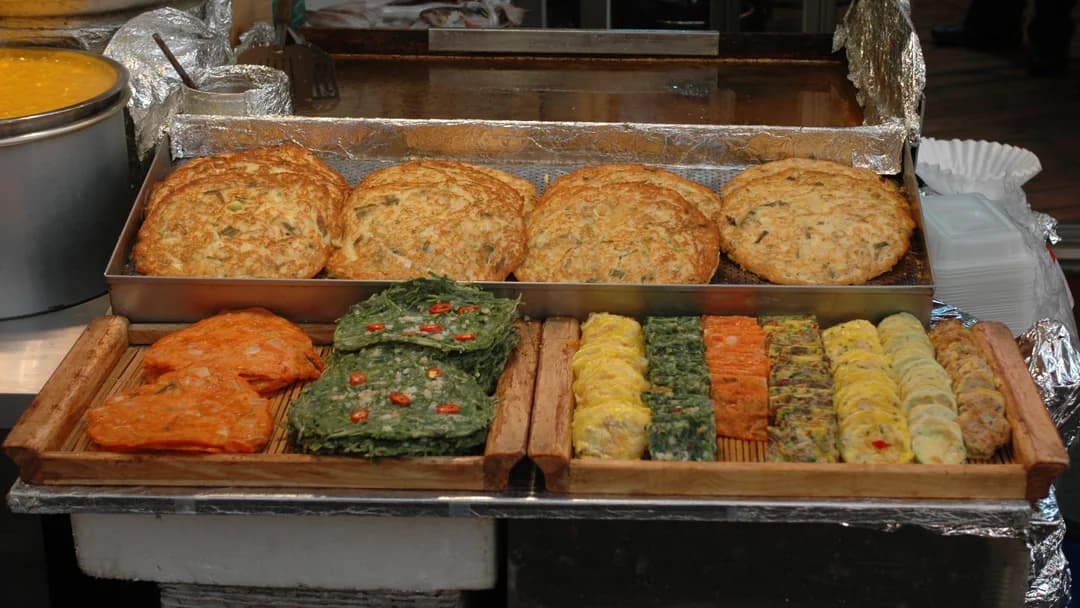
Typical stall food: tteokbokki, gimbap, fried snacks (twigim), fish cake skewers in broth, hotteok and dalgona candy. Markets often sell side dishes by weight, so you can buy a small box to eat with rice.
Many stalls take cards, but small ones may prefer cash. Eat near the stall and put sticks and cups in the bin the vendor points to; do not walk away with a dripping skewer through a crowd.
Markets are busiest at lunchtime and in the evening. Visiting a little before or after the rush means shorter waits and easier seating. The Korea Tourism Organization features markets in Seoul, Sokcho, Suwon, Jeonju, Daegu, Busan and Jeju, among others.
Convenience stores sell ready-made gimbap, triangle rice balls, instant noodles you can cook at the store, hot-water stations and microwaves. They are a cheap and fast fallback, open around the clock (as of 2026-10-11).
Allergens: what is in the food
Korea’s food labeling standard lists 19 allergen items that must be declared on packaged food: eggs, milk, buckwheat, peanuts, soybeans, wheat, mackerel, crab, shrimp, squid, clams (including oyster, abalone and mussel), pork, chicken, beef, peach, tomato, walnut, pine nut and sulphites (as of 2026-10-11).
Sesame, the staple of Korean cooking, is not on that list: sesame oil and sesame seeds go into namul, gimbap, bibimbap and dipping sauces without being flagged. Perilla and mustard are not on the list either. Say so before ordering if you react to them.
Hidden ingredients: soy sauce and doenjang contain soy and usually wheat; gochujang often contains wheat; kimchi seasoning contains salted seafood or fish sauce; jeon (pancakes) and gimbap often contain egg; many sauces and stir-fries contain peanuts or nuts.
The 19-item rule is a labeling standard for packaged food. Menus in restaurants often do not list allergens, and kitchens share woks, oil and grills, so say your allergy clearly before ordering and ask what is in the dish.
Safer routes for packaged food: convenience-store gimbap, noodles and snacks carry an allergen statement on the back of the pack, set apart from the ingredient list, and may add a warning that cross-contact with allergens cannot be ruled out.
Vegetarian, vegan and halal: honest picture
Korean food is often made with meat or fish stock, and many restaurants have no separate vegetarian menu. Soups and stews are commonly based on dried anchovy or beef bones even when no meat is visible.
Kimchi is often not vegetarian: its seasoning most often contains salted seafood, fish sauce or meat broth. Tofu stews and braised tofu often add salted shrimp.
Watch the toppings: bibimbap usually comes with meat and egg, vegetable gimbap may still contain ham, egg or crab stick, kongguksu (cold soy milk noodles) can come with an egg garnish, and some jeon batters contain egg.
Easier options: temple food, which uses no meat at all and is now served in restaurants outside temples; yachae gimbap (vegetable gimbap, ask for no egg or ham); muk dishes such as acorn jelly salad; and plain or pan-fried tofu.
Temple stays serve vegetarian meals without meat or eggs, built around seasonal vegetables, wild greens, tofu and beans. Vegetarian restaurants, bakeries and dessert cafes are increasing, mostly in cities.
Vegan labeling: a certified vegan logo on packaged food means no animal products or by-products and no animal testing. Without a logo, assume that fish sauce, anchovy, egg or honey may be present.
Halal: ordinary Korean restaurants are not halal-certified, and pork, lard, animal stock and cooking alcohol are common. The Korea Tourism Organization classifies Muslim-friendly restaurants and prayer rooms, mainly in the large tourist cities; elsewhere choice is limited, so plan meals ahead.
Drinking culture and age rules
Legal age for alcohol and tobacco: the Youth Protection Act defines a “youth” as someone under 19, but excludes anyone who reaches 19 during the calendar year. In 2026 that means people born in 2007 or earlier can buy and drink (as of 2026-10-11).
Sellers must check the buyer’s age and identity, so carry your passport or a photo ID when you buy alcohol or cigarettes, or when staff ask at a bar (as of 2026-10-11).
Soju (clear spirit) and beer are the usual drinks with meat; makgeolli is a cloudy rice wine. The Korea Tourism Organization highlights Yangpyeong makgeolli and Andong soju as regional traditional liquors.
Etiquette: pour for others, not for yourself first, and receive a glass with both hands from someone older. With elders, turn your head slightly away when you drink. “Geonbae!” means cheers.
You never have to drink. A simple “I don’t drink” or a hand held over the glass is accepted, and Korean friends will usually pour water or soft drinks for you.
Phrases to say or show
Excuse me / calling staff: 여기요 (yeogiyo). One person: 한 명이에요 (han myeong-ieyo). Menu, please: 메뉴판 주세요 (menyu-pan juseyo). This one, please: 이거 주세요 (igeo juseyo).
Water, please: 물 주세요 (mul juseyo). More side dishes, please: 반찬 더 주세요 (banchan deo juseyo). Take away, please: 포장해 주세요 (pojang-hae juseyo). Check, please: 계산해 주세요 (gyesan-hae juseyo).
Not spicy, please: 안 맵게 해 주세요 (an maepge hae juseyo). Is it spicy?: 매워요? (maewoyo?). Card okay?: 카드 돼요? (kadeu dwaeyo?).
I am a vegetarian: 저는 채식주의자예요 (jeoneun chaesikjuuija-yeyo). I cannot eat meat, fish or eggs: 고기, 생선, 달걀은 못 먹어요 (gogi, saengseon, dalgyal-eun mot meogeoyo). Is there anchovy stock?: 멸치 육수 들어갔어요? (myeolchi yuksu deureogasseoyo?).
Allergy words: 알레르기가 있어요 (allereugi-ga isseoyo, I have an allergy) plus 땅콩 (ttangkong, peanut), 새우 (saeu, shrimp), 달걀 (dalgyal, egg), 밀 (mil, wheat), 콩 (kong, soy), 참기름 (chamgireum, sesame oil).
Diet words: 돼지고기 못 먹어요 (dwaeji-gogi mot meogeoyo, I cannot eat pork); 돼지고기 빼 주세요 (dwaeji-gogi ppae juseyo, leave out the pork); 할랄 음식 있어요? (hallal eumsik isseoyo?, is there halal food?).
Before and after eating: 잘 먹겠습니다 (jal meokgesseumnida) and 잘 먹었습니다 (jal meogeosseumnida). Cheers: 건배 (geonbae). Delicious: 맛있어요 (masisseoyo).
Common mistakes and quick answers
Mistake: going at the peak of lunch or dinner and waiting a long time. Come a little earlier or later, or register on the waiting-list tablet at the door if there is one.
Can I eat alone? Yes at gimbap shops, noodle shops, stew restaurants, food courts and markets. Barbecue places are the main exception because of their two-portion minimum.
Is it fine to ask for scissors, a spoon or a fork? Yes, staff are used to it. Scissors are normally used to cut meat, kimchi and noodles at the table.
Is the food too spicy for me? Spiciness varies a lot. Choose naturally mild dishes such as bulgogi, gimbap, samgyetang, galbi-jjim or plain noodle soups, or ask for a milder version.
Do small places close during the day? Some restaurants shut between lunch and dinner and many have one weekly closing day, so look at the sign on the door for hours when you arrive.
Rules change and menus differ. This guide is refreshed regularly; the facts here were last reviewed on 2026-10-11.
Sources and last update
Last updated: 11 October 2026. Figures are as of the date shown.
Source: Korea Tourism Organization · Checked 11 Oct 2026
Written by HOLIDAY in its own words from official public information. This is not an official publication of the Korea Tourism Organization or any government body.
HOLIDAY refreshes this article regularly as fares, hours and event dates change.