Hanok Village, Gyeonggijeon and the old town, bibimbap and market food, 2026 festivals, getting there and around with times and fees, day trips, and 3- and 5-day plans.
Overview
Jeonju (全州) is the capital of North Jeolla Province in south-western Korea, a city of roughly 640,000 people that is best known for its traditional-house district, its royal-portrait shrine and its food. It was the ancestral seat of the Yi family that founded the Joseon dynasty in 1392, which is why a shrine to the dynasty's founder stands here, and in 2012 the city was named a UNESCO Creative City of Gastronomy.
The old-town core is compact. The Hanok Village, Gyeonggijeon Shrine, Jeondong Cathedral, the Confucian school (Hyanggyo), the Pungnammun city gate and Nambu Market lie close together, with the gate standing between the hanok district and the market, so most sights can be linked on foot in a single day.
From Seoul it can be a day trip by KTX, but an overnight stay lets you walk the lanes after the day visitors have left and join the evening programs described below. Plan two days for the city itself and a third for a day trip to Namwon, Gimje or Gunsan. When you buy tickets, check that the destination reads Jeonju and not Gyeongju, Cheongju or Jinju, which look similar on a ticket screen.
Best time to go
Spring brings flowering trees to the lanes and riverbanks, and the Jeonju International Film Festival, which began in 2000, is held in spring, usually from late April into early May. Summer is hot and humid, but the city leans on evenings: its summer themes are moonlight, lake and forest walks, and Friday and Saturday night programs run in Deokjin Park from late May. Autumn is the busiest festival season, and in 2026 the Bibimbap, Hanji and Makgeolli events all fall in October.
Winter is cold, and the city promotes it as the season for snowy scenery and hanok stays; walking through fresh snow in the Gyeonggijeon grounds is one of the ten classic views of the Hanok Village. Weekends and festival days are crowded, and KTX seats sell out quickly on those days, so book train tickets early. Dates for next year's festivals are announced each year and this guide is updated when they are confirmed.
Getting there
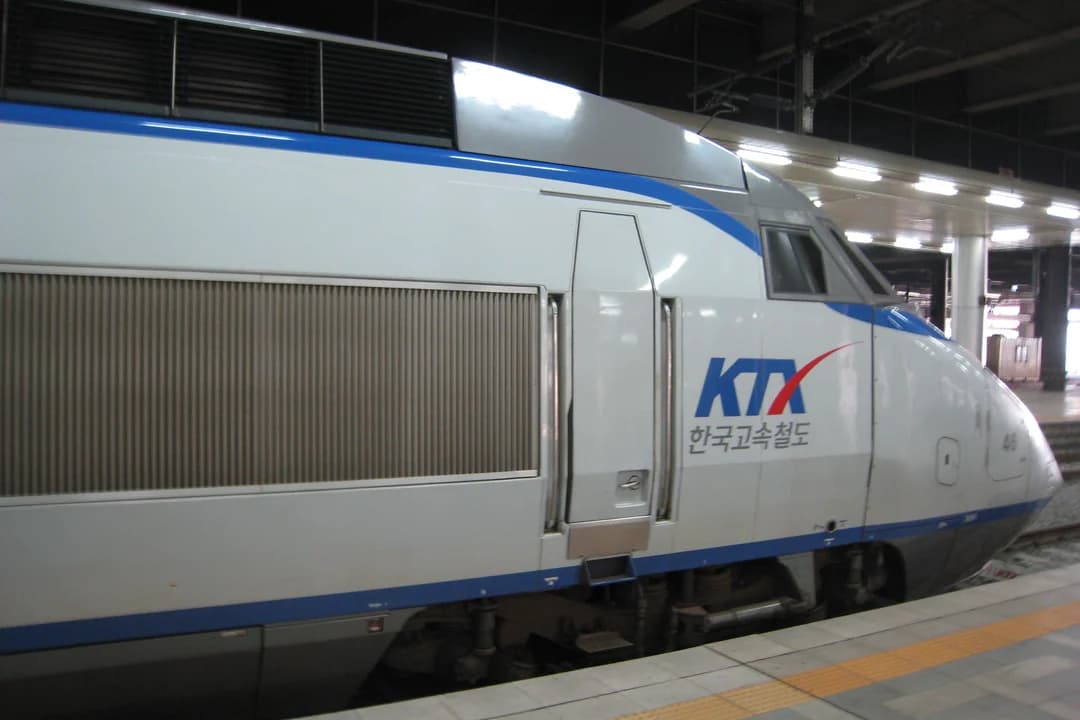
From Seoul, the KTX takes about 1 hour 40 minutes to Jeonju Station (as of 2026-10-11). Departures from Yongsan Station are more frequent than from Seoul Station, so look at Yongsan first. Standard cars have four seats per row and first-class cars three, with snacks and water included in first class. The SRT runs a direct train to Jeonju only twice a day; otherwise ride the SRT from Suseo to Iksan and change to a regular Mugunghwa or ITX train for the 15 to 20 minutes on to Jeonju. Sitting in the wrong seat or boarding without a reservation brings a penalty fare, and weekend and festival seats sell out early.
Express buses leave Seoul from the Central City Terminal (Seoul Honam) and the Dongseoul Terminal and arrive at the Jeonju Express Bus Terminal. Intercity buses from the Seoul Nambu Terminal arrive at the Jeonju Intercity Bus Terminal, a three-minute walk from the express terminal. From Incheon city, buses take about 2 hours 45 minutes and run roughly hourly. Direct airport buses leave Incheon Airport Terminal 1 (provincial bus zone, platforms 12 and 13 outside the first-floor arrival hall) and Terminal 2 (platform 8, in the basement transport center); a late-night limousine service also runs.
Allow 1.5 to 2 hours after landing before the airport bus, expect one rest-area stop of about 15 minutes, be in your seat 3 minutes before departure, and photograph the bus's license plate so you can find it again at the stop. Jeonju has four arrival points: Jeonju Station (Dongbu-daero, Deokjin-gu), the airport-bus Limousine Terminal in Wansan-gu, and the express and intercity terminals in Deokjin-gu. All are outside the old town, and airport-bus passengers can ask to get off at Honamjeilmun Gate for downtown. From the port of Gunsan, buses to Jeonju run every 15 to 20 minutes and take about 1 hour.
Getting around
The Hanok Village is open around the clock all year, and its lanes are best covered on foot. A free shuttle bus runs year-round between Public Parking Lot No. 4 and the Omokdae shuttle stop, a distance of about 2.5 km, from 10:00 until the last bus at 18:30 (as of 2026-10-11): one bus on weekdays and up to four on weekends and public holidays. Lot No. 4 has 636 spaces and is free. The other public lots near the village are open 24 hours and charge ₩1,200 for the first 30 minutes and ₩600 for each further 15 minutes, up to ₩14,400 a day.
Public bicycles can be rented in the village for ₩1,000 per use, with electric bikes costing a further ₩1,000 per hour (as of 2026-10-11). You verify your identity by mobile phone and can return the bike to any of 11 stations within the rental time. The service runs Tuesday to Sunday and is closed on Mondays, public holidays and the day before a holiday. Hours are 09:00 to 18:00 in April, May, September and October, 10:00 to 17:00 from November to March, and 09:00 to 19:00 from June to August.
On city buses, board at the front door and tap your card, then tap again at the rear door when you get off; if you tap out, the next Jeonju city bus within 30 minutes is free, up to two transfers, while skipping the tap loses the transfer and can add a charge on your next ride. A Tmoney travel card can be bought at the staffed bus-ticket counters at Incheon Airport or at convenience stores; the standard transport cards sold at CU, GS25, 7-Eleven and Emart24 cost about ₩3,000 to ₩5,000 and must be topped up in cash. Hail only taxis showing a red vacant light; green or orange reserved lights cannot be boarded. Taxi apps used by foreigners include k.ride and Uber, and a private tour taxi with an experienced driver can be booked.
Jeonju Hanok Village
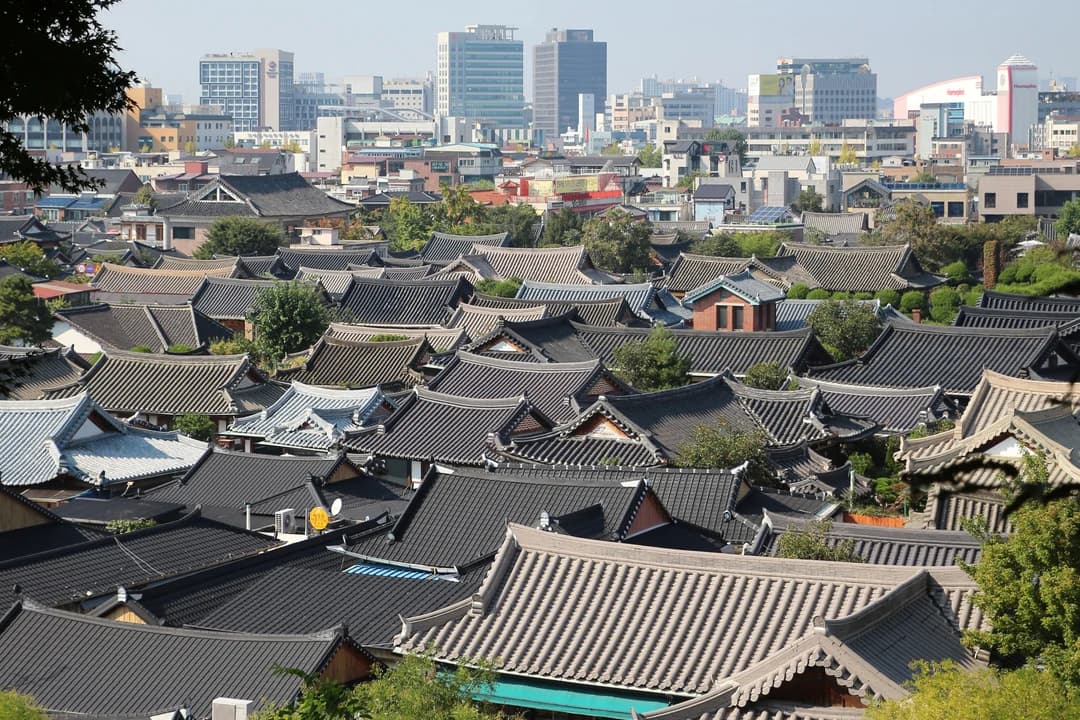
The Hanok Village covers the Pungnam-dong and Gyo-dong districts of Wansan-gu, an area of 298,260 square meters. According to the city's figures (as of 2026-10-11) it holds 947 buildings, of which 735 are hanok, and 575 businesses: 203 lodgings, 183 food and drink shops and 189 other shops and rental outlets. The area was designated a hanok preservation district in 1977, and people still live in the houses, so the tourist lanes and private homes sit side by side.
The city reports that annual visitors passed ten million from 2016 and that the village drew ten million for three years in a row up to 2019, with more than 130,000 foreign visitors a year. Hands-on activities include traditional crafts, calligraphy and drawing, etiquette lessons, traditional games, cooking, hanok stays and hanbok rental. Saturday performances and festival programs are listed in the festivals section below.
The city's list of ten classic views of the village is a handy walking route: the winding clay-walled alleys, mist rising from the stream below the Hanbyeokdang pavilion, the ginkgo trees along the main street, sunset from Omokdae, Cheongyeonru on Namcheon Bridge, the moon over Girin Peak, rain dripping from the eaves of the Hyanggyo, the evening bell of Namgosa temple, the Jaman village viewpoint, and snow at Gyeonggijeon. Late afternoon gives the softest light on the alleys, and early morning is the quietest time.
Gyeonggijeon Shrine
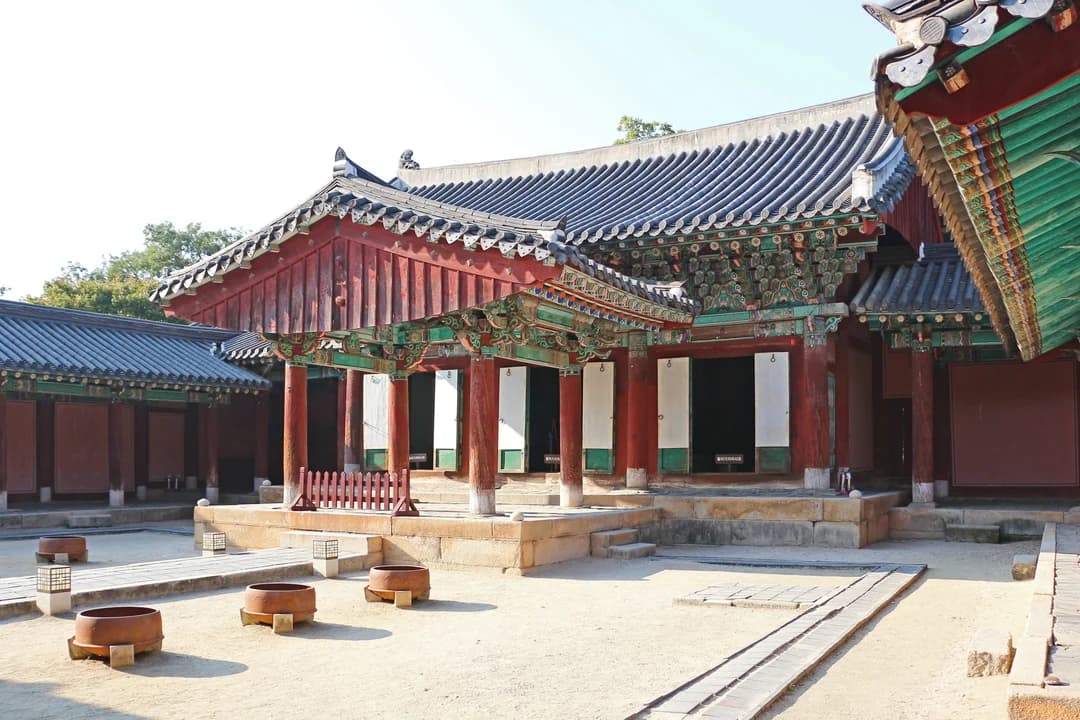
Gyeonggijeon was built in 1410 to enshrine the portrait of Taejo (Yi Seong-gye), the founder of the Joseon dynasty, and took its present name in 1442. The buildings were rebuilt in 1614 after the wars of the 1590s, and the compound is Historic Site No. 339. It stands in Jeonju because the city was the home of the founder's family, and it sits at the heart of the Hanok Village, a few steps from the cathedral.
The main hall (Jeongjeon, Treasure No. 1578) displays a copy of Taejo's portrait, while the original portrait, National Treasure No. 317, is kept in the Royal Portrait Museum inside the grounds. The compound is a popular filming location for dramas and films, and in 2026 it also hosts a Saturday program called A Walk with the King (June to October) and a Friday evening program, Starlight at Gyeonggijeon (September to November).
Gyeonggijeon hours and admission
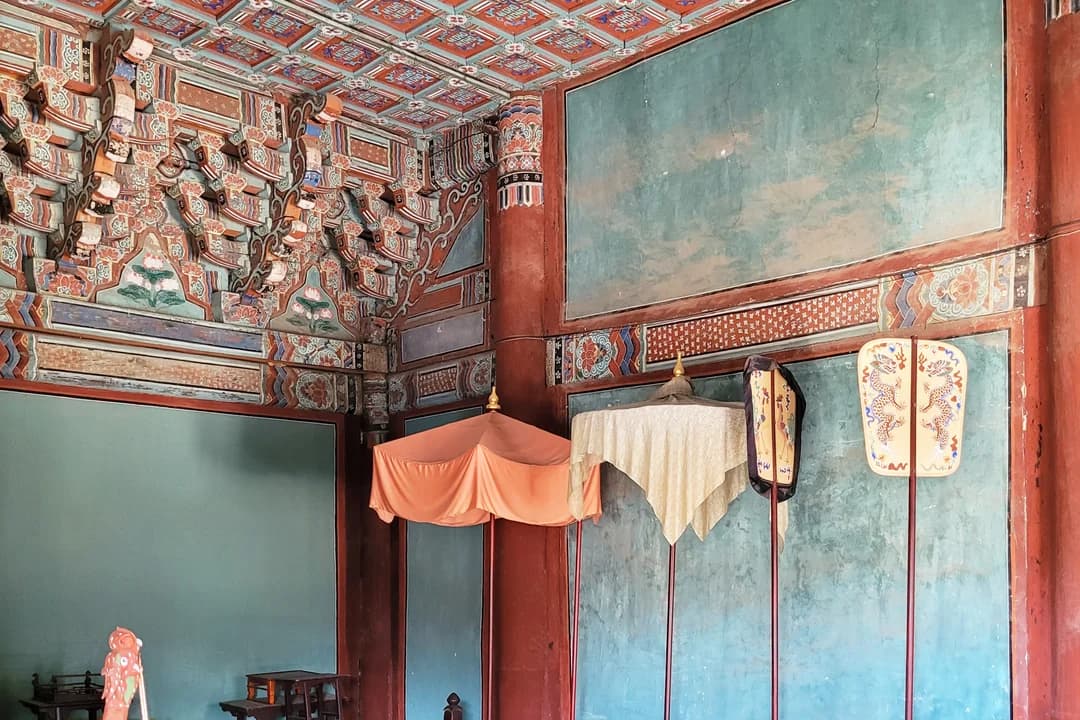
Gyeonggijeon is open 09:00 to 19:00 from March to May and September to October, 09:00 to 20:00 from June to August, and 09:00 to 18:00 from November to February (as of 2026-10-11). General admission is ₩3,000 for adults, ₩2,000 for teenagers and soldiers and ₩1,000 for children. Residents of Jeonju and Wanju County get a discounted ticket (₩1,000, ₩800 and ₩500), and admission is free on the last Wednesday of every month.
Plan about an hour for the grounds and the portrait museum. Arriving at opening time gives you the quiet courtyards before the tour groups, and the last-Wednesday free day is busy. A ticket is needed for the walled grounds, while the lanes outside are free to walk.
Cathedral, Omokdae, Hyanggyo and Pungnammun
Jeondong Cathedral was built between 1908 and 1914 in a Romanesque and Byzantine style and is Historic Site No. 288; it preserves a martyrdom site. It is open 09:00 to 17:00 outside Mass times and entry is free (as of 2026-10-11). The priests' residence next door dates from 1926 and mixes Renaissance and Romanesque styles.
Omokdae is the hill where, in the city's account, Yi Seong-gye held a victory banquet in 1380; it is a North Jeolla Provincial Monument (No. 16) with a stele inscribed by King Gojong, and it gives a sunset view across the hanok roofs. Jeonju Hyanggyo, the Confucian school, is Historic Site No. 379; its present buildings date from the reign of King Seonjo, and it is open 10:00 to 18:00 with free entry (as of 2026-10-11). The ginkgo trees in its yard make it one of the most photographed autumn corners of the old town.
Pungnammun, the south gate of the old city fortress, was first built in 1389 and is Treasure No. 308. It stands between the Hanok Village and Nambu Market, can be viewed at any hour all year, and is the only one of Jeonju's four gates still standing; a bell-ringing event is held there on the last night of the year. The Hanbyeokdang pavilion, set on a cliff above the stream, is a North Jeolla tangible heritage item (No. 15) and counts among Jeonju's eight classic views.
Food: Jeonju bibimbap and local dishes
Jeonju bibimbap combines more than 30 ingredients in five colors. The city lists its signatures as rice cooked in beef-bone broth, crunchy Jeonju bean sprouts, yellow mung-bean jelly made with spring water from Omokdae, gochujang and soy sauce fermented in the traditional way, and, in many versions, raw beef. The dish is said to have grown out of both royal cuisine and everyday food. A bowl at a traditional restaurant listed by the city costs about ₩10,000, while bibimbap-making classes at the Korea Traditional Culture Center cost ₩14,000 per person and at the Cheong-eul Traditional Culture Center ₩13,000 to ₩17,000 (as of 2026-10-11).
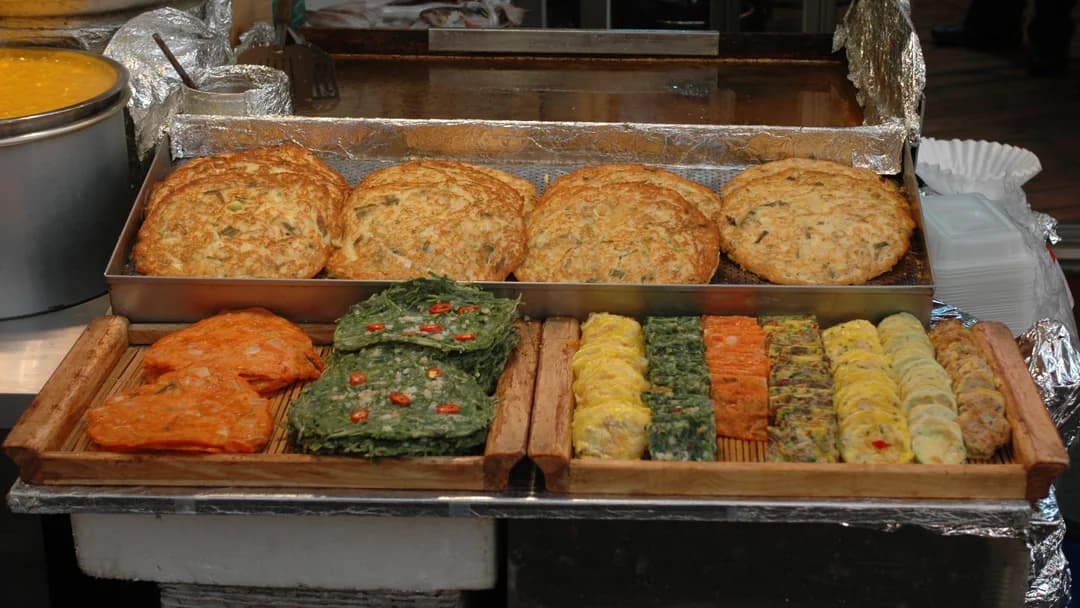
Beyond bibimbap, try kongnamul gukbap, bean-sprout soup with rice, which Nambu Market serves at breakfast with a poached egg, roasted laver and a cup of moju. Other Jeonju dishes the city highlights include grilled short-rib patties (tteok-galbi), lotus-leaf rice, bamboo rice, yukjeon (battered beef), sujebi, muk salad and seafood pancakes. Newer street snacks reinvent bibimbap as bibim bread, croquettes, waffles and rice balls, the last sold at the Nambu Market night market.
Many traditional restaurants have run for decades, some since the 1950s and 1960s and now in their third generation, and the tables arrive with many small side dishes. Raw beef is optional in most bibimbap, so say so when ordering if you prefer a cooked version. Breakfast of bean-sprout soup suits early risers, and the city's food streets cluster around the Hanok Village, the Gyeonggijeon area, the old town markets and the Jaman Mural Village.
Nambu Market and the night market
Nambu Market, on Pungnammun 1-gil, is described by the city as the representative market of North Jeolla; it grew from the market held outside the old fortress wall. A short-lived Dawn Goblin Market sets up beside the stream near Sajeondari Bridge from about 04:00 to 10:00 with wholesale food, farm produce and snacks such as fresh doughnuts and noodles (as of 2026-10-11). Breakfast stalls serve bean-sprout soup with rice, and the market is known for pisundae, a softer and thicker local sausage.
Since the 2000s the market has added a Youth Mall of small start-up shops and a night market, and a rooftop Sky Garden overlooks the stream. One night-market stall listed by the city is open Fridays and Saturdays from 17:00 to 23:00, which is a useful guide to when the evening scene is liveliest (as of 2026-10-11). The market is a short walk from Pungnammun and Hanok Village, so it fits neatly at the end of a day in the old town.
Makgeolli and moju
Makgeolli, a cloudy rice wine, is part of Jeonju's food identity. The city's makgeolli alleys, mainly in the Samcheon-dong and Hyoja-dong districts, have long been known for bringing a generous spread of side dishes with each kettle of wine. The Jeonju Makgeolli Festival, marking its third year in 2026, runs on 23 and 24 October at the main stadium of Jeonju Vision University: 19 vendors serve makgeolli brewed in the Jeonju tradition with food pairings, and there is acoustic busking. Admission is free and the food and drink booths are paid for on the spot.
Moju is a medicinal drink made from makgeolli and herbs, traditionally taken as a hangover remedy, and Nambu Market serves a cup of it alongside bean-sprout soup. Drinking in Korea is for those aged 19 and over, so carry photo ID, and note that makgeolli is quite strong relative to its soft flavor. Festival and alley venues are for adults, and children are better kept to the daytime sights.
Hanji and traditional crafts
Hanji is traditional handmade Korean paper made from the inner bark of the paper mulberry (dak). It was used to cover doors, floors and windows and for wallpaper and book covers, and Jeonju celebrates it every autumn: the 30th Jeonju Hanji Culture Festival ran from 8 to 10 October 2026 around the Korea Traditional Culture Center. The Hanok Village has a Hanji center where visitors can make paper and design its patterns, and many craft shops sell lanterns, boxes and stationery made from it.
Other craft stops in and around the village include the Fan Culture Center, which keeps hours of 10:00 to 18:00 during its event period, and the Wanpanbon Culture Center, open 10:00 to 20:00 in the same kind of listing, celebrating the woodblock-printed books of old Jeonju (as of 2026-10-11). The Jeonju Crafts Exhibition Hall and the National Intangible Heritage Center also lie within the city's list of cultural institutions, and the Korea Traditional Culture Center runs the bibimbap-making classes mentioned in the food section.
Festivals and seasonal highlights
The 2026 program in the Hanok Village includes the Traditional Yeonhui Parade of performers from Namcheongyo Bridge to Gyeonggijeon, held every Saturday at 15:00 for about an hour from 18 April to 31 October, and the open-air pansori theater Byeolhyangdanjeonira at the Hanbyeok Cultural Center, 23 May to 17 October (as of 2026-10-11). The Mini Jazz Festival, also 18 April to 31 October, centers on the Vine Hall jazz venue. Dates after October are announced each year and this guide is updated when they are confirmed.
Autumn 2026 festivals: the Jeonju Bibimbap Festival ran on 2 to 4 October around Deokjin Park, the 30th Hanji Culture Festival on 8 to 10 October, the 6th Jeonju Street Puppet Festival is on 10 and 11 October at the Hanok Village puppet theater beside Omokdae, and the Makgeolli Festival follows on 23 and 24 October. The Bibimbap Festival is held each autumn, with a giant bibimbap-mixing performance, a parade of Korean dishes and cooking classes. Each of these has finished or is ending now, so for a first trip plan around the festival you want and the date announced that year.
On Friday and Saturday nights from 22 May to 14 November, Deokjin Park hosts A Glass of Moonlight, a street-pub with night views and music, and the Yunseul Market, a night flea market of local artists; both are free. A night bus tour linking the park and the market costs ₩5,000, the outdoor cinema Delicious Jeonju Midnight Cinema (5 June to 28 November, Fridays and Saturdays, at the Hanok Village Tradi-Lounge) costs ₩13,000, and the Night Banquet, a pansori and folk-song performance with a chef's dinner at the Wanpanbon Culture Center, costs ₩15,000 (as of 2026-10-11). The Jeonju International Film Festival, begun in 2000, is the main spring event.
Day trips from Jeonju
Namwon, in the same province, is about an hour from Jeonju by intercity bus (as of 2026-10-11). Its Gwanghalluwon garden is tied to the folk tale of Chunhyang, the most famous of Korea's pansori love stories, and the town sits just outside Jirisan National Park. Gunsan, an old port opened to foreign trade in 1899, is about an hour from Jeonju by bus, with buses every 15 to 20 minutes; its streets keep colonial-era Japanese-style houses in Sinheung-dong, used as film locations, and a modern history museum, and ferries run from Gunsan to the Gogunsan islands via Seonyudo several times a day.
Gimje's Geumsansa temple stands on the slopes of Moaksan. It was founded around 599 or 600, its present buildings date from 1635 after earlier ones were destroyed in the Japanese invasions, and its Maitreya Hall (Mireukjeon), a three-story wooden hall holding a large Maitreya Buddha, is National Treasure No. 62. Jinan County's Maisan is a mountain with two rounded peaks, and below the female peak a cluster of stacked-stone pagodas stands on the cliff at Tapsa temple.
The Gochang Dolmen Site, inscribed by UNESCO in 2000 (extended in 2017 to include sites at Hwasun and Ganghwa), is the largest and most varied group of dolmens in Korea: 442 have been documented at Jungnim-ri, with capstones about 1 to 5.8 meters long and some weighing as much as 225 tonnes, dating mostly to around the seventh century BCE. The county of Wanju, which almost wraps around Jeonju, offers a cable car on Daedunsan with a ride of about five minutes. Use Jeonju as your base and pick one destination per day, since these places are in different directions.
Where to stay, families and accessibility
The Hanok Village has 203 lodging businesses (as of 2026-10-11), so a night in a traditional house is the signature choice; many rooms have floor bedding rather than raised beds, and weekends book out first. For a different base, look near Jeonju Station or the Honamjeilmun Gate area close to downtown, which the airport bus also serves, and remember that the station and bus terminals lie outside the old town.
For families, the shuttle bus, the bike stations and the flat main lanes make the Hanok Village easy with children, and hanbok rental and craft classes keep them busy. Check that your room has the bed arrangement you want, since many hanok rooms have no raised beds. Gyeonggijeon has reduced child tickets, and the lanes can be bumpy for strollers and wheelchairs, so use the shuttle and the flatter main street where possible.
Safety and etiquette
The Hanok Village is a living neighborhood. Keep your voice down, stay out of private courtyards, and do not photograph into houses. Take shoes off before stepping into a hanok room or onto a raised wooden floor. At Jeondong Cathedral and at Gyeonggijeon, dress modestly and follow posted rules; during Mass the cathedral is closed to sightseers.
Travel rules matter here: boarding a KTX without a ticket or in the wrong seat brings a penalty fare, and tapping out on city buses protects your free transfer. For emergencies call 112 for the police and 119 for fire or an ambulance, and the Korea Travel Hotline 1330 answers in English. Drink only at licensed venues and keep to the legal age of 19.
3-day itinerary
- Day 1, old-town core: take an early KTX from Yongsan (about 1 hour 40 minutes), drop bags at your hanok stay, then see Jeondong Cathedral (09:00 to 17:00) and Gyeonggijeon (opens 09:00), have a bibimbap lunch, walk the lanes and Jeonju Hyanggyo (10:00 to 18:00), and catch sunset from Omokdae; hours as of 2026-10-11. End with the Nambu Market night market on a Friday or Saturday.
- Day 2, markets and crafts: for an early start, have bean-sprout soup at the Dawn Goblin Market area by Nambu Market (about 04:00 to 10:00) or at a breakfast stall, then see Pungnammun, make hanji or join a craft class in the village, and hire a public bike (Tuesday to Sunday) or ride the free shuttle. In the evening, take a city bus or taxi to Deokjin Park for the Friday and Saturday night programs.
- Day 3, a day trip: take an intercity bus to Gunsan (about 1 hour, every 15 to 20 minutes) for the colonial-era streets and the modern history museum, or to Namwon (about 1 hour) for Gwanghalluwon garden. Return to Jeonju in the late afternoon, collect your bags, and take the KTX back to Seoul (about 1 hour 40 minutes), keeping weekend and festival seat sell-outs in mind.
5-day itinerary
- Day 1: arrive by KTX (about 1 hour 40 minutes from Yongsan), settle into a hanok, walk the Hanok Village lanes, Gyeonggijeon and Omokdae at sunset, and eat bibimbap.
- Day 2: Jeondong Cathedral and the Hyanggyo in the morning, Pungnammun and Nambu Market for lunch and snacks, a hanji or craft class in the afternoon, then the Friday or Saturday evening programs in Deokjin Park or the Nambu night market.
- Day 3: Gimje and Moaksan. Take a bus or taxi from Jeonju to Geumsansa temple to see the three-story Maitreya Hall, walk the temple grounds, and return to Jeonju for the evening.
- Day 4: Namwon. Take an intercity bus (about 1 hour), visit Gwanghalluwon garden and the Chunhyang sites, and return in the afternoon, or add the edge of Jirisan National Park if you want to hike.
- Day 5: Gochang dolmens or Gunsan. Pick the UNESCO dolmen site at Jungnim-ri for prehistory or Gunsan for harbor history (bus about 1 hour). Return to Jeonju to collect your bags and take the KTX to Seoul (about 1 hour 40 minutes).
Tips
- Book KTX seats early for weekends and festival days, and look at Yongsan Station before Seoul Station.
- Use NAVER Maps for walking and bus routes: it has English, Chinese and Japanese, and the Korea Travel Hotline 1330 answers in English.
- Keep your destination as Jeonju on every ticket, and note the four arrival points (station, limousine, express and intercity terminals) before you leave.
- Tap your card when leaving a city bus so the free transfer within 30 minutes works.
- Use the free Hanok Village shuttle from Parking Lot No. 4 and save the paid lots for when you must drive.
- Eat bibimbap or bean-sprout soup at the start of a day, and keep evenings for the Friday and Saturday night programs.
Sources and last update
Last updated: 11 October 2026. Figures are as of the date shown.
Source: Jeonju City tourism · Jeonju Hanok Village information · Wikipedia · Wikivoyage · Checked 11 Oct 2026
Written by HOLIDAY in its own words from official public information. This is not an official publication of the Korea Tourism Organization or any government body.
HOLIDAY refreshes this article regularly as fares, hours and event dates change.