Destination briefing
Why travelers stop here
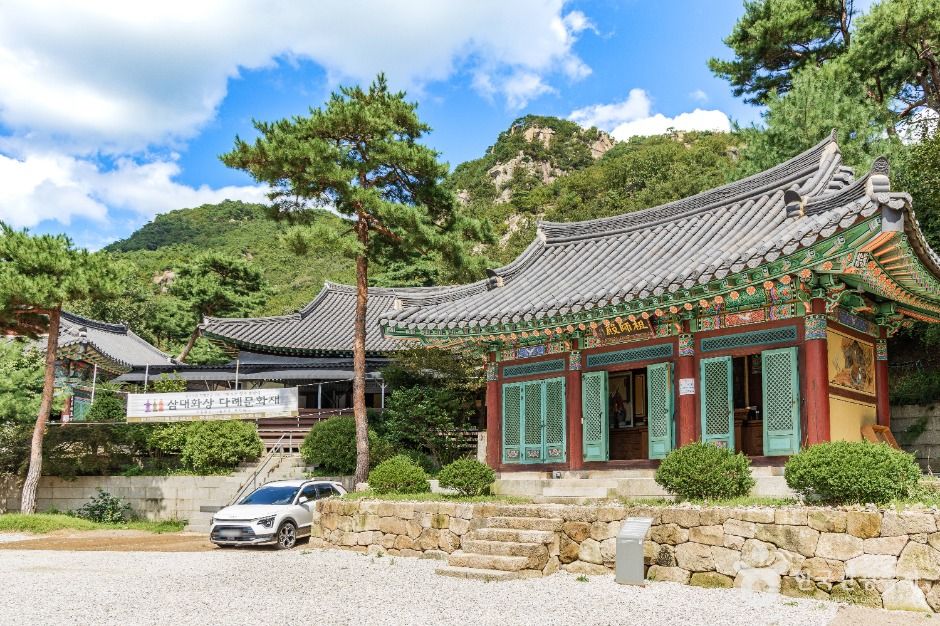
Located near Yangju Okjeong New Town, the Yangju Hoeamsa Temple Site is the largest royal temple and representative Seon (Zen) Buddhist temple site from the late Goryeo to early Joseon periods. Its construction is estimated through records to date back to the 12th century. In the late Goryeo period, following the words of the Indian monk Jigong, who stayed at Hoeamsa Temple and propagated the Dharma, the monk Naong reconstructed it in the 14th century. During the Joseon period, the great monk Muhak resided here, and King Taejo Yi Seong-gye frequently visited; after abdicating as king emeritus, he stayed at this site. Subsequently, figures such as Grand Prince Hyoryeong, Queen Jeonghui (consort of King Sejo), and Queen Munjeong (consort of King Jungjong) undertook large-scale Buddhist projects at Hoeamsa Temple, making it the foremost temple in the nation. Until the 17th century, it housed a royal shrine (eosil) for the spirit tablets of successive kings and queens, serving as the central axis of Joseon royal Buddhism. However, not long after Queen Munjeong's death, the temple was abandoned due to anti-Buddhist policies and a fire of unknown cause.
Excavations at the Yangju Hoeamsa Temple Site have revealed architectural elements of a palace, distinct from typical temples, and features of a Seon temple popular in 13th–14th century East Asia. A large quantity of valuable artifacts, including roof tiles and ceramics used exclusively by the royal family, have been unearthed, confirming its status and grandeur. The site houses the stupas and stele of the three eminent monks Jigong, Naong, and Muhak. Among them, the Yangju Hoeamsa Temple Site Muhak Great Monk Stupa and the Twin Lion Stone Lantern in front of the Muhak Great Monk Stupa, designated as Treasures, were preemptively made by King Taejo Yi Seong-gye for the great monk Muhak during his lifetime and are considered the finest masterpieces of early Joseon stupas. Additionally, the Seon'gak Wangsa Stele, erected in 1377 (the 3rd year of King U of Goryeo), is an important resource for understanding the level of clerical script (yeso) in Korea. It was damaged by a wildfire on Cheonbosan Mountain in 1997; the original is housed at the Jungang Buddhist Museum, and a replica stele on the original turtle pedestal can now be viewed on site. From the Hoeamsa Temple Site observatory, one can see over 10,000 pyeong (approx. 33,000 m²) of space with eight terraces containing over 70 temple sites, among which over 40 buildings have ondol (underfloor heating) facilities. At the entrance to the Hoeamsa Temple Site, the Yangju City Hoeamsa Temple Site Museum displays excavated artifacts.
OTA-ready stop
Built into inbound routes and day-tour planning.
Local context
경기도 양주시 회암동 18
Travel fit
Attraction · Gyeonggi-do


![[Early bird] Elysian Gangchon Ski Tour from Seoul (5 pick-up points)](/_next/image?url=https%3A%2F%2Fadmin.holidaykr.com%2Fapi%2Fadmin%2Fsystem%2Fbasic-settings%2Ffavicon%3Fpath%3D%252Fuploads%252Fproducts%252Fthumbs%252F750_1785201339504_file1.jpg&w=3840&q=75)