Destination briefing
Why travelers stop here
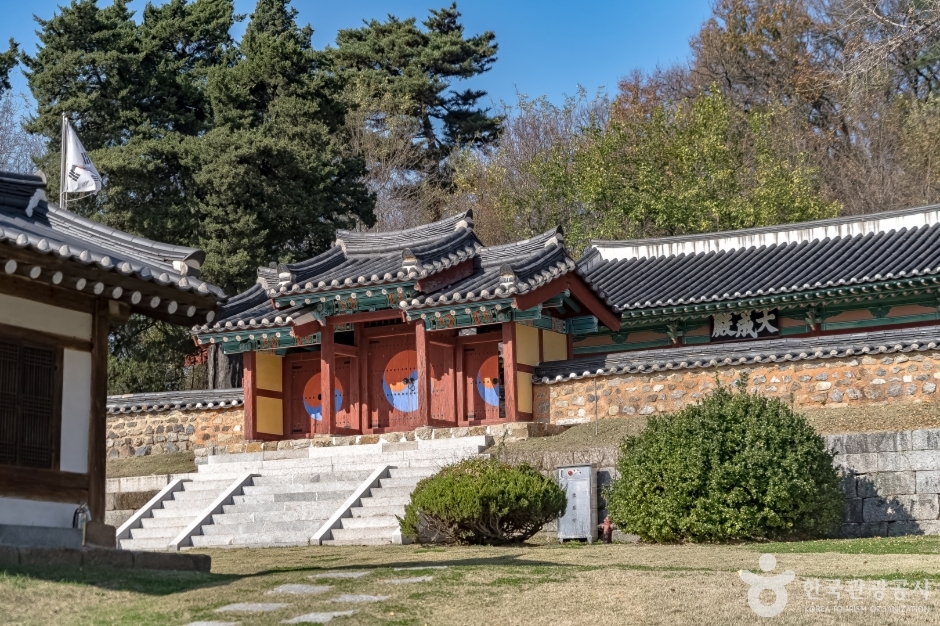
Ganghansa Shrine is a shrine built to commemorate the spirit of Song Si-yeol (1607-1689), a scholar and politician of the mid-Joseon period. Song Si-yeol served as Yeonguijeong (Chief State Councilor) and, whenever he stayed in Yeoju, Gyeonggi-do, he is said to have looked toward Yeongneung (the tomb of King Hyojong) and advocated for the cause of King Hyojong's northern expedition policy. Later, when King Jeongjo visited Yeongneung, he heard this story and ordered Kim Yang-haeng to build a shrine for Song Si-yeol, honoring him with the name 'Daero,' thus calling the shrine 'Daerosa.' Subsequently, in October 1873, King Gojong changed its name to 'Ganghansa,' and it is now referred to as either Daerosa or Ganghansa. The shrine was not damaged even during King Gojong's abolition of seowon (Confucian academies) in 1871, when only 47 seowon (including shrines) nationwide were preserved. Ganghansa consists largely of a shrine area and a lecture hall area. The shrine measures 3 kan (bays) in front and 2 kan on the sides, with a gable roof (matbae jibung). The lecture hall measures 5 kan in front and 3 kan on the sides, with a hip-and-gable roof (paljak jibung). Additionally, it includes the auxiliary building Chuyangjae, the Daerosa Stele Pavilion, and a red gate (hongsalmun). Uniquely, the shrine of Ganghansa faces west, which is said to be to face Yeongneung, symbolizing the loyalty between king and subject.
(Source: National Heritage Administration website)
OTA-ready stop
Built into inbound routes and day-tour planning.
Local context
경기도 여주시 청심로 113 (하동)
Travel fit
Attraction · Gyeonggi-do


![[Early bird] Elysian Gangchon Ski Tour from Seoul (5 pick-up points)](/_next/image?url=https%3A%2F%2Fadmin.holidaykr.com%2Fapi%2Fadmin%2Fsystem%2Fbasic-settings%2Ffavicon%3Fpath%3D%252Fuploads%252Fproducts%252Fthumbs%252F750_1785201339504_file1.jpg&w=3840&q=75)