Destination briefing
Why travelers stop here
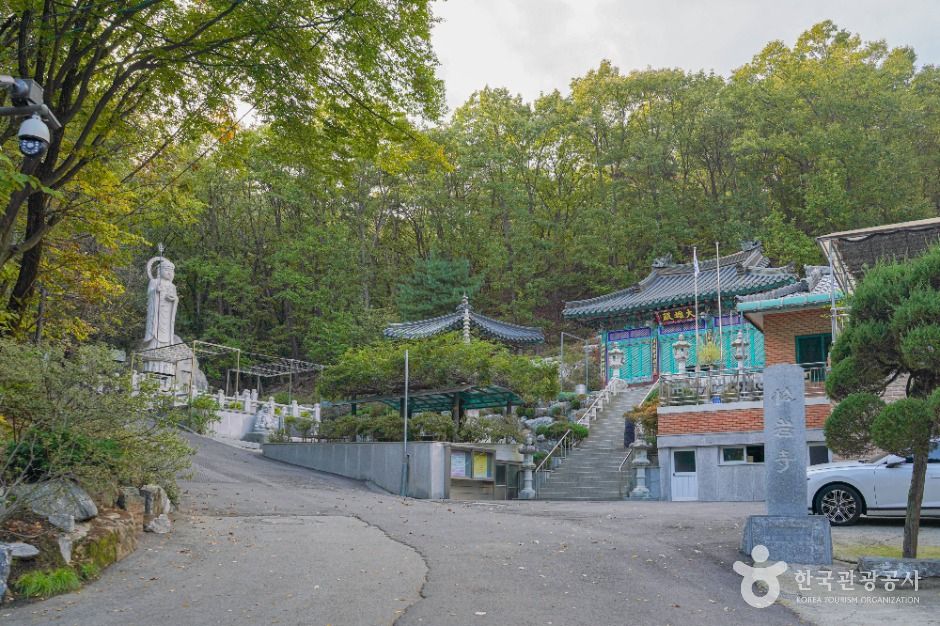
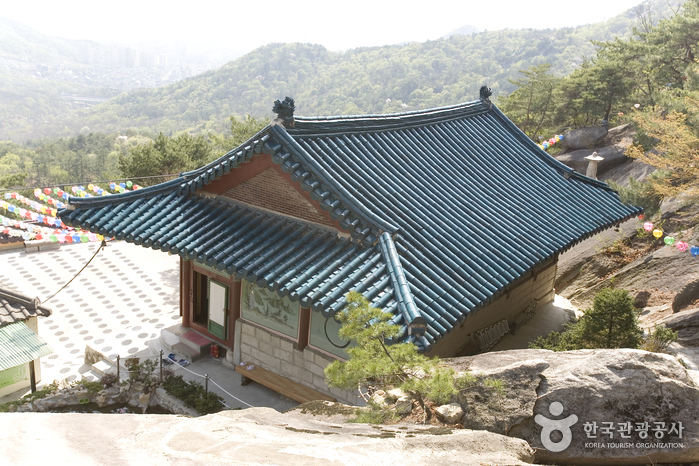
Namyangju Heungguksa Temple is a Buddhist temple founded by Won'gwang of the Silla period on Suraksan Mountain. It was originally called 'Suraksa Temple' when founded by Won'gwang, who created the secular five precepts of the Hwarangdo. Later, in 1568 (the first year of King Seonjo's reign), King Seonjo built a royal shrine at Suraksa Temple to pray for the repose of his biological father, Grand Prince Deokheung, and bestowed a plaque reading 'Heungdeoksa Temple'. It was destroyed during the Japanese invasions of Korea and rebuilt during the reign of the 16th king, Injo, when its name was changed to Heungguksa Temple. It is said that King Seonjo, while establishing the tomb of his father, Grand Prince Deokheung, near Heungguksa Temple, greatly renovated the temple with the wish for his father's rebirth in paradise. From then on, Heungguksa Temple served as a temple of the Joseon royal family. It is also called 'Deokjeol' because of the tomb of Grand Prince Deokheung, King Seonjo's father. Many cultural properties can be seen throughout Heungguksa Temple. The representative cultural property of Heungguksa Temple is the 'Daebang', a registered cultural property, and the plaque reading 'Heungguksa' on this Daebang was personally written by Heungseon Daewongun, the father of King Gojong of Joseon. The calligraphy of Heungseon Daewongun appears on every hall. Traces of Heungseon Daewongun remain on the plaque and couplets of Yeongsanjeon Hall and the couplets of Manwolbojeon Hall, indicating that the temple maintained its reputation as a royal temple until the reign of King Gojong. Daeungbojeon Hall, a Gyeonggi-do cultural property material, is the central building of Heungguksa Temple, which has reached the present day through processes of destruction and reconstruction due to several fires. Inside Daeungjeon Hall, there is a Gyeonggi-do tangible cultural property, the 'Wooden Seated Sakyamuni Triad'. Additionally, Yeongsanjeon Hall, a Gyeonggi-do tangible cultural property, houses the treasure 'Clay Seated Sakyamuni Triad and Sixteen Arhats' inside.
OTA-ready stop
Built into inbound routes and day-tour planning.
Local context
경기도 남양주시 덕릉로1071번길 58 (별내동)
Travel fit
Attraction · Gyeonggi-do


![[Early bird] Elysian Gangchon Ski Tour from Seoul (5 pick-up points)](/_next/image?url=https%3A%2F%2Fadmin.holidaykr.com%2Fapi%2Fadmin%2Fsystem%2Fbasic-settings%2Ffavicon%3Fpath%3D%252Fuploads%252Fproducts%252Fthumbs%252F750_1785201339504_file1.jpg&w=3840&q=75)