Destination briefing
Why travelers stop here
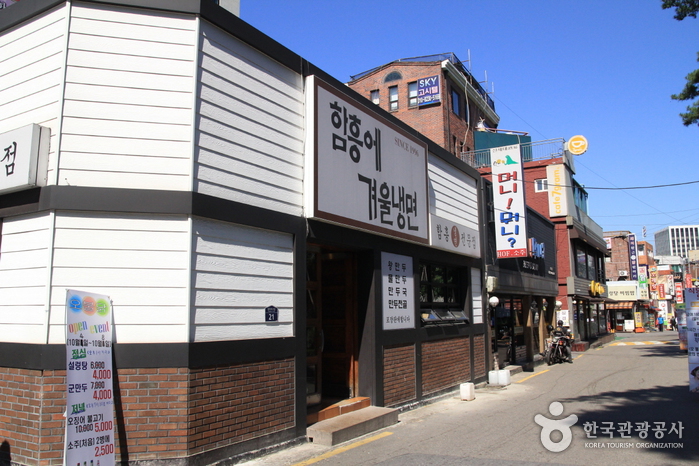
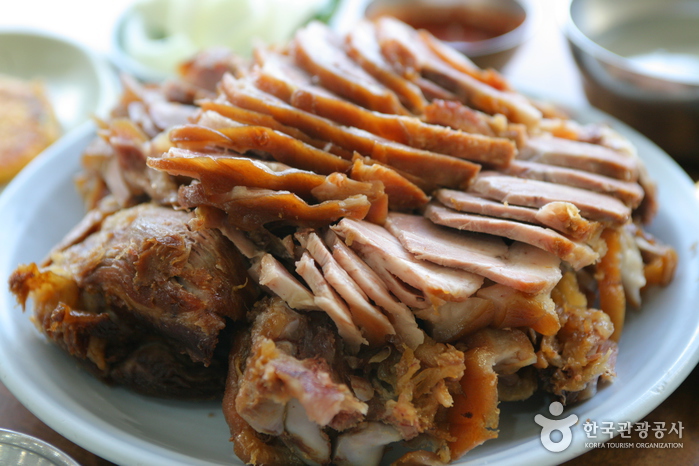
52 years ago, at a location slightly removed from the current Jangchungdong Jokbal Street, there was a building called Manjeong Building where two jokbal restaurants opened, marking the beginning of Jangchungdong jokbal history. Those two restaurants opened a year apart and have been operating on Jokbal Street ever since. The first restaurant to open did not initially feature jokbal on its menu. At that restaurant, which primarily served bindaetteok (mung bean pancakes) and mandu (dumplings) as main dishes along with meals and alcohol, customers wanted a hearty yet affordable drinking snack. The owner, recalling memories from her childhood, added jokbal to the snack menu. The owner's hometown was Gwaksan, North Pyongan Province, so the jokbal dish eaten in North Pyongan Province took root in Jangchungdong. The owner's mother would slaughter a whole pig in winter, hang it up, and prepare meat dishes, among which the chewy, dried jokbal dish left a lasting impression on the owner's taste and heart. Thus began Jangchungdong jokbal, which gained fame through the late 1970s and early 1980s, leading to a row of restaurants forming on what is now Jokbal Street. This is how Jangchungdong Jokbal Street came to be. Even today, about a dozen restaurants cluster together on the main road and narrow alleys, preserving the old flavors. The enduring love from people over the decades, maintaining the reputation of Jokbal Street, is likely due to the generous portions and delicious jokbal. According to the ajummas (middle-aged women) of this street, each restaurant that makes jokbal has a slight difference in taste. Along with jokbal on Jokbal Street, other accompanying dishes such as bindaetteok and pajeon (green onion pancakes) are also worth trying.
Address: 174 Jangchungdan-ro, Jung-gu, Seoul (Jangchungdong 1-ga)
OTA-ready stop
Built into inbound routes and day-tour planning.
Local context
서울특별시 중구 장충단로 174 (장충동1가)
Travel fit
Attraction · Seoul
![[Early bird] Elysian Gangchon Ski Tour from Seoul (5 pick-up points)](/_next/image?url=https%3A%2F%2Fadmin.holidaykr.com%2Fapi%2Fadmin%2Fsystem%2Fbasic-settings%2Ffavicon%3Fpath%3D%252Fuploads%252Fproducts%252Fthumbs%252F750_1785201339504_file1.jpg&w=3840&q=75)