Destination briefing
Why travelers stop here
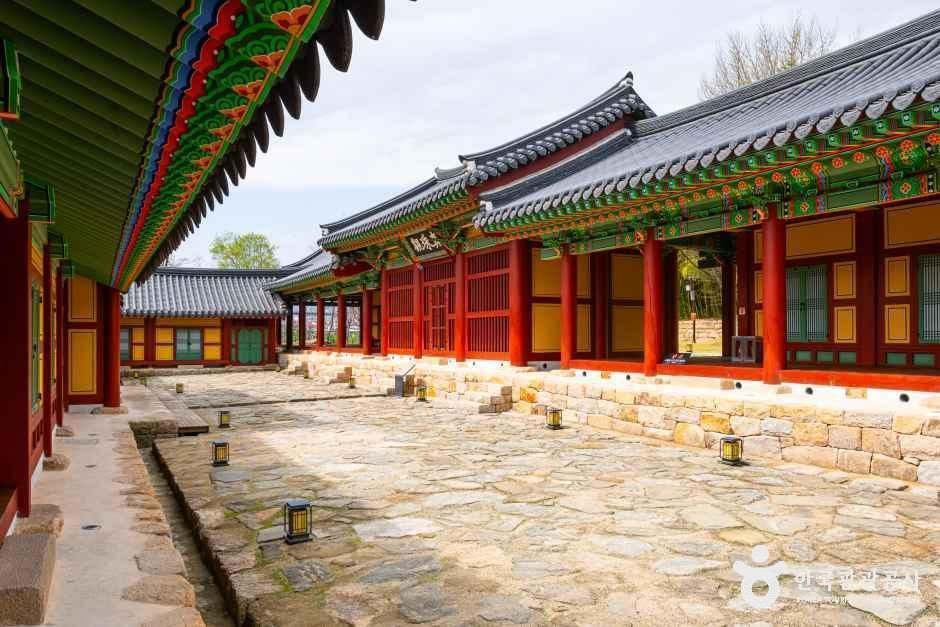
Samcheok Hyanggyo was founded in 1398 to enshrine the spirit tablets of Confucian sages and to provide education and moral guidance to local residents. In 1407, it was moved to Wolgyegok in Okseo-dong, and in 1468, it was relocated to its current site. The existing buildings include Daeseongjeon (a gable-roofed hall with 5 bays at the front and 2 bays at the sides), Myeongnyundang (a hall with 7 bays at the front and 1 bay at the side), as well as Dongjae, Seojae, Dongmu, Seomu, Sukcheongjae, Janggyeongsil, Sinsammun, Jikcheong, Dongseohyeopmun, and Jegigo. Outside the hyanggyo, there is a Hongsalmun (red arrow gate) and a group of stele. Daeseongjeon houses the spirit tablets of 18 Confucian sages of Korea. During the Joseon Dynasty, the state provided land, books, and slaves, and instructors taught students, but after the Gabo Reform, with the implementation of the new educational system, its educational function ceased. Seokjeon (a memorial rite) is held in spring and autumn, and incense is offered on the first and fifteenth days of each month. This hyanggyo is designated as Gangwon-do Tangible Cultural Property No. 102, and is currently managed by one Jeon-gyo (director) and two Jangui (assistants). Various programs are offered here, including educational humanities lectures, Confucian Academy courses, and folk painting classes.
OTA-ready stop
Built into inbound routes and day-tour planning.
Local context
강원특별자치도 삼척시 향교길 34 (교동)
Travel fit
Attraction · Gangwon-do


![[Early bird] Elysian Gangchon Ski Tour from Seoul (5 pick-up points)](/_next/image?url=https%3A%2F%2Fadmin.holidaykr.com%2Fapi%2Fadmin%2Fsystem%2Fbasic-settings%2Ffavicon%3Fpath%3D%252Fuploads%252Fproducts%252Fthumbs%252F750_1785201339504_file1.jpg&w=3840&q=75)