Korea's autumn festivals, October to November 2026: lanterns, mask dance, heritage, film, foliage and fireworks. Dates as of 2026-10-11.
Early October: lanterns, masks and heritage
Early October is Korea’s heritage-festival season. Lantern-lit rivers, mask-dance troupes, royal processions and night openings of old palaces cluster in the first half of the month. Most run for one to two weeks, many are free to enter, and the evening is usually the highlight. Several of the 2026 editions below had already finished or were ending as of 2026-10-11, so they double as planning notes for next year.
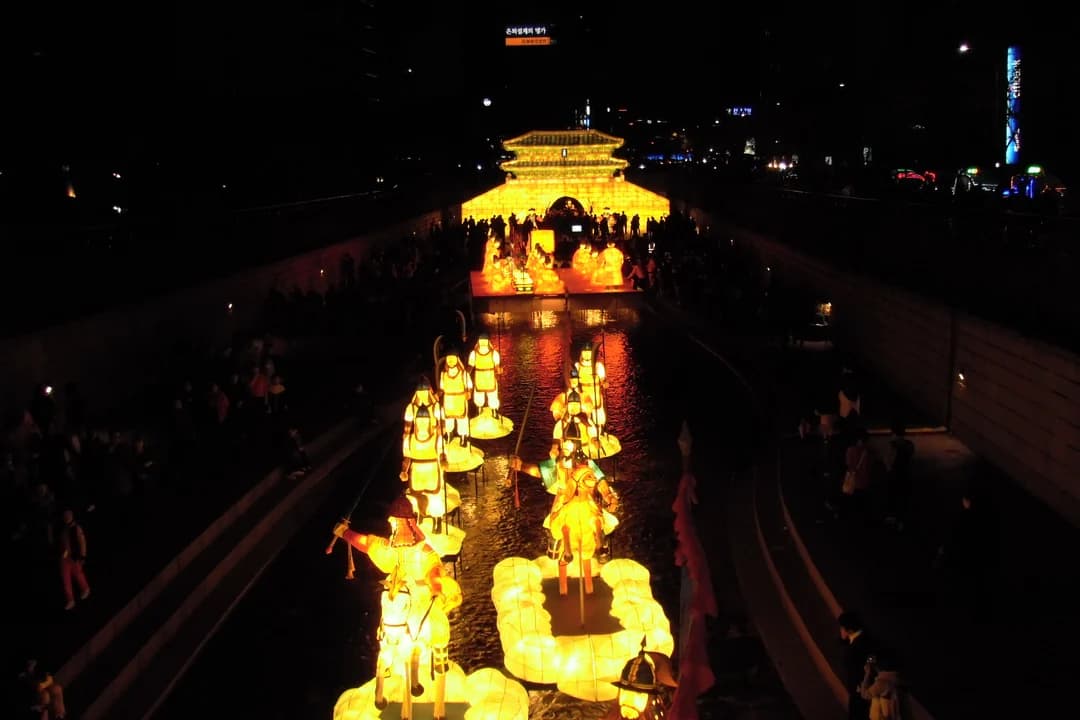
Jinju Namgang Yudeung Festival (진주남강유등축제) · Jinju, South Gyeongsang – Jinju Fortress and the Nam River
When: Usually the first half of October, about 16 days. The 2026 edition runs 3-18 Oct under the theme “The River of History Holds Peace” (as of 2026-10-11); the next edition’s dates are added once announced.
Highlights: Lanterns floating on the Nam River and glowing along the fortress; an evening drone light show followed by fireworks, with more than 950 drones planned for 2026 (as of 2026-10-11); a lantern honoring independence activists; a 3D video about the fortress shown at Jinju National Museum.
Best time & crowds: Go after dusk, when the lanterns are lit. The opening afternoon of the 2026 edition was already crowded (as of 2026-10-11), and weekends tend to be the heaviest.
Entry: Entering Jinju Fortress is free during the festival; some hands-on activities are paid.
From Seoul: Jinju is a long trip from Seoul: take an express bus or a train toward Jinju and plan an overnight stay.
Nearby: Jinju Fortress, Jinju National Museum, and the Gaecheon Art Festival, which shares the period (9-18 Oct 2026, as of 2026-10-11).
Tips: Dress warmly for the riverside after dark. Expect queues and arrive early; rest areas near the main stage were reported as limited. The city says it is adding multilingual services and foreign-visitor experiences this year.
Related guide: Plan the long journey with “Intercity trains & buses”.
Andong Mask Dance Festival (안동국제탈춤페스티벌) · Andong, North Gyeongsang – Andong Station 1942, Talchum Park, the old town and Hahoe Village
When: Usually late September to early October, about 11 days. The 2026 edition ran 24 Sep-4 Oct (as of 2026-10-11); the next edition’s dates are added once announced.
Highlights: A mask atelier where visitors make their own masks; a street parade and “Daedong Nanjang” finale; a world mask-play competition; and fireworks over Hahoe Village. The 2026 edition hosted troupes from 23 countries, with Malaysia as guest country (as of 2026-10-11).
Best time & crowds: Weekend parades and the closing days draw the biggest crowds; evenings suit the fireworks and street shows.
From Seoul: Andong Station 1942 is itself a festival venue, so a train to Andong puts you at the festival; express buses also serve the city. It is a long trip, so allow a full day each way or stay overnight.
Nearby: Hahoe Village, Talchum Park and the old-town markets.
Tips: Join the mask-making workshop for a keepsake. Wear layers, as the evenings are cool. Hahoe Village is a separate stop from the downtown venues, so allow travel time between them.
Related guide: The “Daegu & Andong region guide” covers the area around the festival.
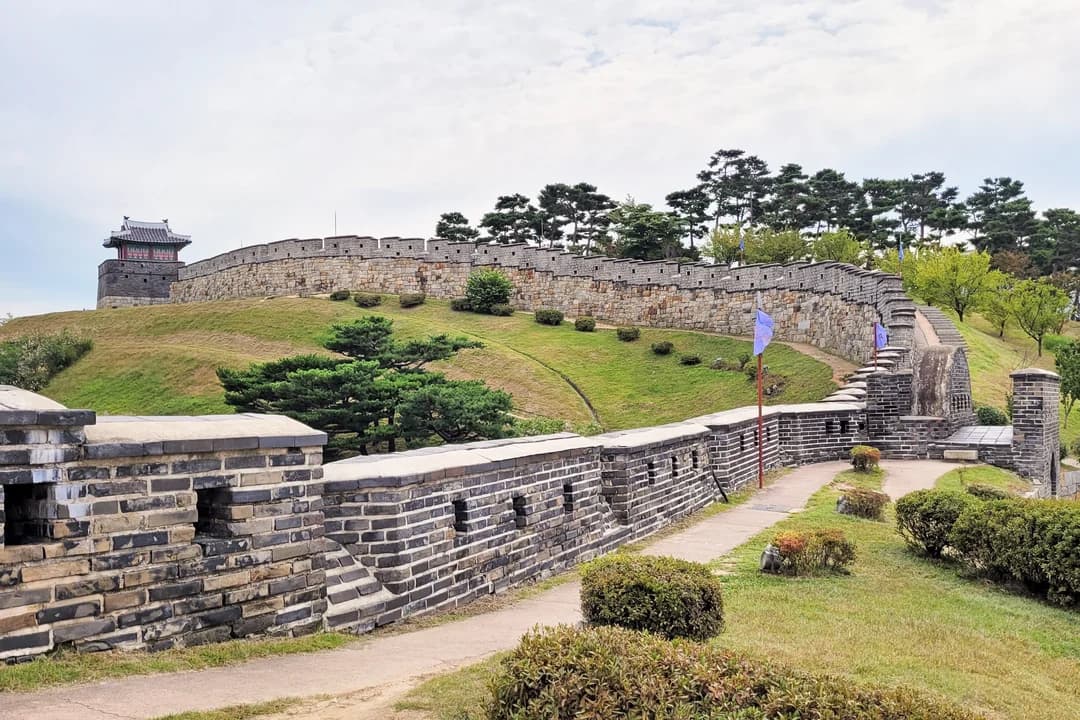
Suwon Hwaseong Cultural Festival (수원화성문화제) · Suwon, Gyeonggi – Haenggung Plaza and Hwaseong Fortress
When: Usually early October, about 8 days. The 63rd edition ran 4-11 Oct 2026 (as of 2026-10-11); the next edition’s dates are added once announced.
Highlights: A re-enactment of a royal procession around the opening day, and arts performances at the fortress walls and Yongyeon pond. Evening shows light up the fortress area (details of 2026 program titles vary by source, as of 2026-10-11).
Best time & crowds: Evening, when the fortress is lit and the shows start; opening-day processions and weekends tend to be busiest.
Entry: The grounds are free to enter; some performances and activities need reservations or a fee.
From Seoul: Suwon is south of Seoul in Gyeonggi Province: take the subway or a regional train to Suwon, then continue to the fortress by bus or taxi.
Nearby: Hwaseong Fortress walls, Hwaseong Haenggung Palace and Haenggung Plaza.
Tips: Wear comfortable shoes, since the fortress walls involve a lot of walking and some stairs. Evenings are cooler than daytime. The next edition’s dates are added once announced.
Related guide: The “Gyeonggi day-trip guide” covers Suwon and nearby destinations.
Gyeongju Silla Cultural Festival (경주 신라문화제) · Gyeongju, North Gyeongsang – Bonghwangdae tomb area and Woljeonggyo Bridge
When: Usually early to mid October, about 3 days. The 53rd edition ran 9-11 Oct 2026 (as of 2026-10-11); the next edition’s dates are added once announced.
Highlights: An evening “Hwabaekjejeon” pageant at Woljeonggyo Bridge on 9-10 Oct, a hip-hop night staged beside the ancient tombs, a night market called “Dalbit Nanjang” at Bonghwangdae, and busking and street-art zones (2026 program, as of 2026-10-11).
Best time & crowds: Evenings, when the night shows and market run; the festival is short, so the weekend days are the busiest.
Entry: Reported as free (as of 2026-10-11).
From Seoul: Take the KTX or an express bus to Gyeongju, then go to the festival area by local bus or taxi.
Nearby: Daereungwon tomb complex area and Woljeonggyo Bridge, which is a festival venue.
Tips: Roads around Bonghwangdae were closed to traffic during the festival days, so arrive on foot or by public transport. Bring a jacket for the evening.
Related guide: The “Gyeongju region guide” helps with sights and getting around town.
Baekje Cultural Festival (백제문화제) · Gongju and Buyeo, South Chungcheong
When: Usually early October, about 9 days. The 72nd edition ran 3-11 Oct 2026 (as of 2026-10-11); the next edition’s dates are added once announced.
Highlights: Events in both former Baekje capitals: Gongju venues include Geumgang Sinkwan Park, Mireum Island and Gongsanseong Fortress, while Buyeo venues center on the Jeongnimsa temple site and the Gwanbuk-ri ruins.
Entry: Reported as free (as of 2026-10-11).
From Seoul: Gongju and Buyeo are in South Chungcheong, a trip from Seoul by express bus or train plus a local transfer; choose one city as your base for the day.
Nearby: Gongsanseong Fortress in Gongju and the Jeongnimsa temple site in Buyeo.
Tips: The program is split between two cities, so look at the day’s venue before traveling between them. Wear walking shoes for the fortress and temple-site grounds.
Related guide: Use “Intercity trains & buses” for the long ride from Seoul.
Gimje Horizon Festival (김제지평선축제) · Gimje, North Jeolla – around the Byeokgolje reservoir
When: Usually early October, about 5 days. The 2026 edition ran 1-5 Oct and the 2025 edition ran 8-12 Oct (as of 2026-10-11); the next edition’s dates are added once announced.
Highlights: A farmers’ music (nongak) competition, a dragon play based on a legend of the Byeokgolje reservoir, a standing tug-of-war, rice cooking in a cauldron and kite flying. The 2025 edition added a night fireworks show over the embankment (as of 2026-10-11).
Entry: Free to enter, with some paid activities.
From Seoul: Take a train or express bus to Gimje, then a local bus or taxi to the reservoir area; Jeonju is a convenient nearby base.
Nearby: The Byeokgolje reservoir site itself; Jeonju is the nearest large city for food and lodging.
Tips: A rural, open site: wear sun protection by day and a jacket at night. Program details change between years, so treat this as a typical outline.
Related guide: The “Jeonju region guide” suits an overnight base nearby.
K-Royal Culture Festival and palace night viewings (궁중문화축전, 창덕궁 달빛기행, 경복궁 야간관람) · Seoul – Gyeongbokgung, Changdeokgung, Deoksugung, Changgyeonggung and Jongmyo
When: The festival is held in spring and again in early autumn. The autumn 2026 edition ran 7-11 Oct. The Changdeokgung Moonlight Tour runs 10 Sep-17 Oct (Thursday to Sunday) and the Gyeongbokgung night viewing ran 2 Sep-2 Oct (as of 2026-10-11); next dates are added once announced.
Highlights: A hanbok banquet staged across Gyeongbokgung’s night-viewing area on 9-10 Oct, media-art lighting around the Chundangji pond at Changgyeonggung, an English-language early-morning walk in Changdeokgung’s secret garden, and a stamp tour linking the four palaces and Jongmyo (2026 program, as of 2026-10-11).
Best time & crowds: Evening programs are the draw. Some sessions sold out early in 2026, and the Moonlight Tour is allocated by lottery, so apply early (as of 2026-10-11).
Entry: Mixed: advance reservations are needed for many programs; the Moonlight Tour takes 28 people per session; the Gyeongbokgung night viewing capped sales at 3,000 a day and was free for hanbok wearers, under-6s and over-65s (as of 2026-10-11). Prices were not stated.
From Seoul: All sites are in central Seoul and reachable by subway.
Nearby: Gwanghwamun Square, Bukchon Hanok Village and Insadong.
Tips: Foreign visitors could buy Gyeongbokgung night tickets on the day at the Gwanghwamun ticket booth, and English, Chinese and Japanese Moonlight Tour sessions ran on four dates in 2026 (as of 2026-10-11). Wearing hanbok earns free entry to the Gyeongbokgung night viewing. Dress warmly for evening walks.
Related guide: The “Subway” and “Seoul region guide” guides help you reach the palaces.
Incheon Open Port Heritage Night Walk (인천개항장 국가유산 야행) · Incheon – the Open Port area (Jemulpo district, near Chinatown)
When: Usually held in October. The 11th edition ran 9-11 Oct 2026 (as of 2026-10-11); the next edition’s dates are added once announced.
Highlights: A night-time opening of heritage sites in the old port district, a drone show, a flea market and AR/VR content (2026 program, as of 2026-10-11).
From Seoul: Incheon is west of Seoul: take the subway or a regional train to Incheon and continue to the old port area on foot or by a short local ride.
Nearby: Incheon Chinatown and the surrounding old port streets.
Tips: Evenings by the water are cool, so bring a layer. Details of events centred on Chinatown itself were not confirmed.
Related guide: The “Subway” guide shows how to ride from Seoul.
October: film, art, jazz and coffee
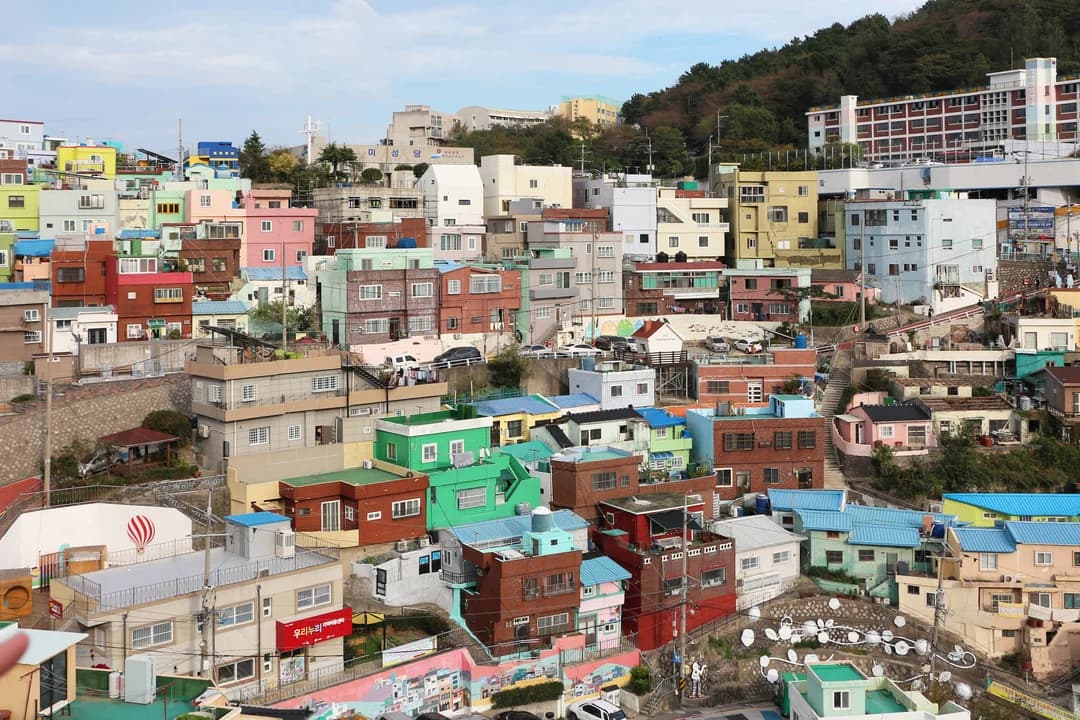
October is the month for Korea’s culture-led festivals. A film festival fills Busan, a biennial art exhibition runs in Gwangju, jazz takes over an island in Gapyeong and Gangneung turns its coastline into a coffee fair. Each is built around ticketed or timed programs, so a little advance planning goes a long way. The 2026 dates below are as of 2026-10-11.
Busan International Film Festival (부산국제영화제) · Busan – Busan Cinema Center and Centum City, Haeundae
When: Usually early to mid October, about 10 days. The 31st edition runs 6-15 Oct 2026, with the film market on 10-13 Oct (as of 2026-10-11); the next edition’s dates are added once announced.
Highlights: Screening sections such as Competition, Gala Presentation, Icons, A Window on Asian Cinema, Korean Cinema Today, World Cinema, Open Cinema and Midnight Passion, plus the Asian Contents & Film Market for industry visitors and talk events. Screens include Cinema 1, Cinema 2 and the Roof Theater at the Busan Cinema Center, and a hall at Shinsegae Centum City.
Best time & crowds: Popular screenings tend to sell out, and the opening weekend and award days are usually the busiest. Late-night and morning slots are easier to get.
Entry: Paid per screening; tickets for the main selection are sold online in advance. Prices were not stated.
From Seoul: Take the KTX or a flight to Busan, then continue by local transport to the Haeundae and Centum City area.
Nearby: Haeundae Beach, Centum City shopping district and Dongbaek Island.
Tips: Book early for sought-after titles. English subtitle availability varies by film, so choose screenings that list English subtitles. Allow travel time between venues if you plan to see back-to-back films.
Related guide: The “Busan region guide” covers getting around Busan.
Gwangju Biennale (광주비엔날레) · Gwangju – Gwangju Biennale Exhibition Hall in Buk-gu, plus satellite venues
When: Held every two years, usually from early autumn into November. The 16th edition, titled “You Must Change Your Life” under artistic director Ho Tzu Nyen, runs 5 Sep-15 Nov 2026 (as of 2026-10-11); the next edition’s dates are added once announced.
Highlights: The main exhibition at the Biennale Exhibition Hall, a “Biennale Pavilion” program at partner venues around the city, artist-visit events through October, and a closing program listed for 6-8 Nov (as of 2026-10-11).
Entry: Ticketed in past editions; this edition’s fees were not stated.
From Seoul: Take the KTX or an express bus to Gwangju, then continue to the exhibition hall in Buk-gu by city bus or taxi.
Tips: Allow several hours for the main hall and more if you want to see satellite venues. The Biennale is biennial, so a visit in an odd-numbered year will not coincide with it.
Related guide: Check connections with “Intercity trains & buses”.
Jarasum International Jazz Festival (자라섬국제재즈페스티벌) · Gapyeong, Gyeonggi – Jarasum Island and downtown Gapyeong
When: Usually a three-day weekend in mid-October. The 23rd edition ran 9-11 Oct 2026 (as of 2026-10-11); the next edition’s dates are added once announced.
Highlights: About 39 acts in 2026, with France as the focus country for 140 years of Korea-France relations, headliners such as drummer Nate Smith and pianist Tigran Hamasyan, a free party stage in downtown Gapyeong and late-night duo sets at the Midnight Jazz Cafe (as of 2026-10-11).
Best time & crowds: Evenings on the island are the main draw and can be cool and breezy; the free town-center stage is an easy way to sample it.
Entry: Mixed: main-stage performances are ticketed in advance, elementary-school children enter free and pets are allowed, while the downtown party stage is free (as of 2026-10-11).
From Seoul: Gapyeong lies east of Seoul in Gyeonggi Province: take a regional train or bus to Gapyeong, then a short local ride to the island.
Nearby: The Garden of Morning Calm and other sights in Gapyeong.
Tips: Bring layers and a seat cushion for outdoor listening, and plan your return trip in advance because late-night transport out of a small town is limited.
Related guide: The “Gyeonggi day-trip guide” lists nearby destinations.
Gangneung Coffee Festival (강릉커피축제) · Gangneung, Gangwon – Coffee Street and Anmok Beach
When: Usually in autumn. The 18th edition runs 21-25 Oct 2026, with coffee programs from 10:00 to 20:00 (as of 2026-10-11); the next edition’s dates are added once announced.
Highlights: Theme “Coffeeful Gangneung” with 23 programs in three categories (as of 2026-10-11), including a tasting event, a barista-hosted table program, a seaside coffee night under the stars and a talk program about Gangneung. The same weeks also host a noodle festival (15-18 Oct) and a bread fair (22-25 Oct).
Best time & crowds: Daytime for tastings along Coffee Street; the beach programs are best near evening, when it is calmer and cooler. Weekends tend to be crowded.
From Seoul: Gangneung is on the east coast of Gangwon: take the KTX or an express bus to Gangneung, then a city bus or taxi to Anmok Beach.
Nearby: The Anmok Beach coffee street and the Gangneung Daedohobu office complex, venue of the bread fair.
Tips: The coast is windy in late October, so bring a jacket. Admission terms were not stated, so be ready for some programs to be ticketed.
Related guide: See the “Gangwon region guide” for the east-coast area.
Autumn foliage: Seoraksan, Naejangsan, Hallasan
Korea’s autumn color is not one date but a wave. It starts on the high northern peaks in late September, sweeps down the Taebaek mountains in October, and reaches the southern mountains and Jeju’s Hallasan in November. Forecasts below are 2026 figures as of 2026-10-11 and differ by agency, because the forest service counts “peak” at about half the trees colored while the weather agency counts it at about 80 percent.
Seoraksan autumn foliage (설악산 단풍) · Gangwon (Sokcho and Inje area) – Seoraksan National Park
When: Color usually begins in late September and peaks in late October, earlier than anywhere else in the country. In 2026 first color appeared on 28 Sep, and the forest service forecast a peak around 20 Oct (other forecasts ranged from 16 to 25 Oct) (as of 2026-10-11).
Highlights: The Gongnyong (Dinosaur) Ridge and Cheonbulgok Valley for sweeping color, Biseondae’s cliffs and clear streams on a short valley trail, the view of Ulsanbawi from Sogongwon, the Sinseonbong lookout, and sunrise from Daecheongbong summit.
Best time & crowds: Go on a weekday and start early; the peak week tends to be the most crowded of the whole autumn. Forecast dates can shift by several days, so keep your plans flexible.
From Seoul: Take an express bus toward Sokcho on the east coast and continue to the park by local bus or taxi; it is a long trip, so an overnight stay is wise.
Nearby: The East Sea coast around Sokcho and Gangwon’s other mountain and coastal areas.
Tips: Mountain temperatures can be far lower than at the base, so bring a windproof layer, gloves and a hat for the ridges. Carry water and snacks, and start descending in good daylight.
Related guide: The “Gangwon region guide” and “Korea weather” help with planning.
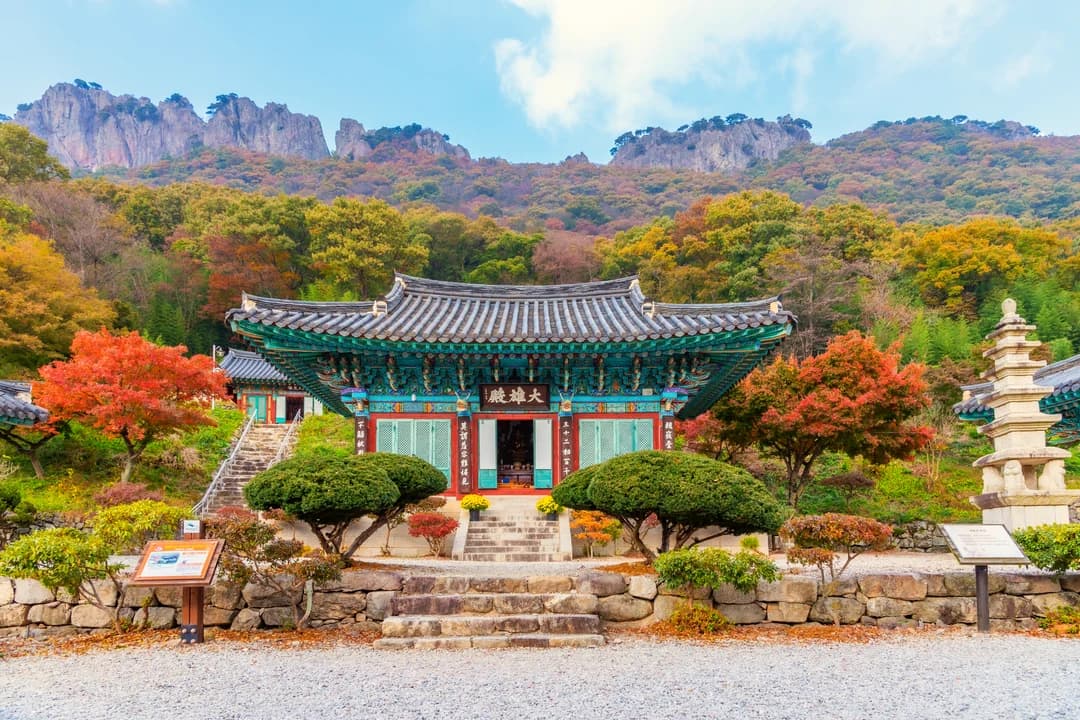
Naejangsan autumn foliage (내장산 단풍) · Jeongeup, North Jeolla – Naejangsan National Park
When: Usually early November. For 2026 the forest service forecast a peak around 4 Nov, and a private forecaster expected first color about a week later than normal, with the southern region peaking between 1 and 11 Nov (as of 2026-10-11).
Highlights: Maple color along the valley trails inside the national park, and the Naejangsa temple courtyard framed by rock peaks and autumn leaves.
Best time & crowds: Because the southern forecast falls in the first half of November, this is a good follow-on to the northern peaks; weekdays and early mornings are calmer, and the peak weekend tends to be the busiest.
From Seoul: Take the KTX or an express bus to Jeongeup, then a local bus or taxi to the park entrance.
Nearby: Jeongeup city and, as a larger base for food and lodging, Jeonju.
Tips: Forecasts for the south differ between agencies, so keep a flexible window of several days. Wear sturdy shoes, as the trails include stairs and uneven stone.
Related guide: The “Jeonju region guide” suits a base in the area.
Hallasan autumn foliage (한라산 단풍) · Jeju – Hallasan National Park (Eoseungsaengak, Yeongsil, Eorimok and Seongpanak trails)
When: Color arrives later than on the mainland, usually in late October and peaking in early to mid November. For 2026 the forest service forecast a peak around 6 Nov, while a private forecaster pointed to 13 Nov; first color came on 29 Oct in 2024 and 31 Oct in 2025 (as of 2026-10-11).
Highlights: Eoseungsaengak is the easiest walk at 1.3 km one way, about 30 minutes. Yeongsil leads 3.7 km to Witsoerum in about 1.5 hours and Eorimok 4.7 km in about 2 hours, with a viewpoint near 1,606 m (as of 2026-10-11). Drive-by color is available along the forest tunnel of the 5.16 road and at the 1100 Highland wetland.
Best time & crowds: Start early: in October and November the Yeongsil and Eorimok trails stop accepting entries around noon (as of 2026-10-11). The peak weekend tends to be busiest, and the color moves down the mountain over about two weeks.
Entry: No entrance fee; parking is charged, around 1,000 won for the first hour with a daily cap of 13,000 won (as of 2026-10-11).
From Seoul: Fly to Jeju, then reach the trailheads by bus, taxi or rental car; some bus runs are reduced from November.
Nearby: The forest tunnel on the 5.16 road and the 1100 Highland wetland.
Tips: Summit access to Baengnokdam needs a reservation, while Yeongsil, Eorimok and Eoseungsaengak do not. High trails can be several degrees below freezing in the morning, so bring windproof layers and spare clothes; the summit-area shop has closed, so carry water and snacks.
Related guide: The “Jeju region guide” and “Korea weather” help with trailhead transport and conditions.
Planning tip: start in Seoraksan if you arrive in mid to late October, then move south for Naejangsan in early November and, if you are on Jeju, Hallasan after that. Color also descends each mountain over roughly two weeks, so a high trail can be past its best while the valley below is still glowing. Because agencies define “peak” differently, treat every forecast as a window of a few days rather than a single date.
Fireworks and sea nights: Busan, Seoul, Yeosu, Pohang
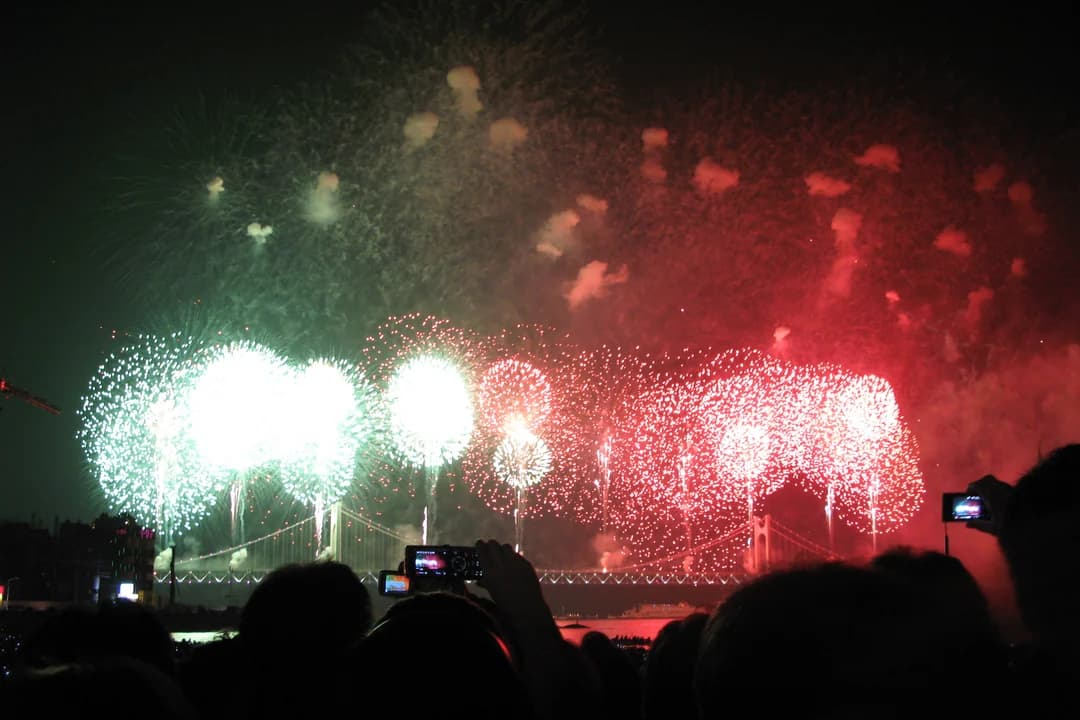
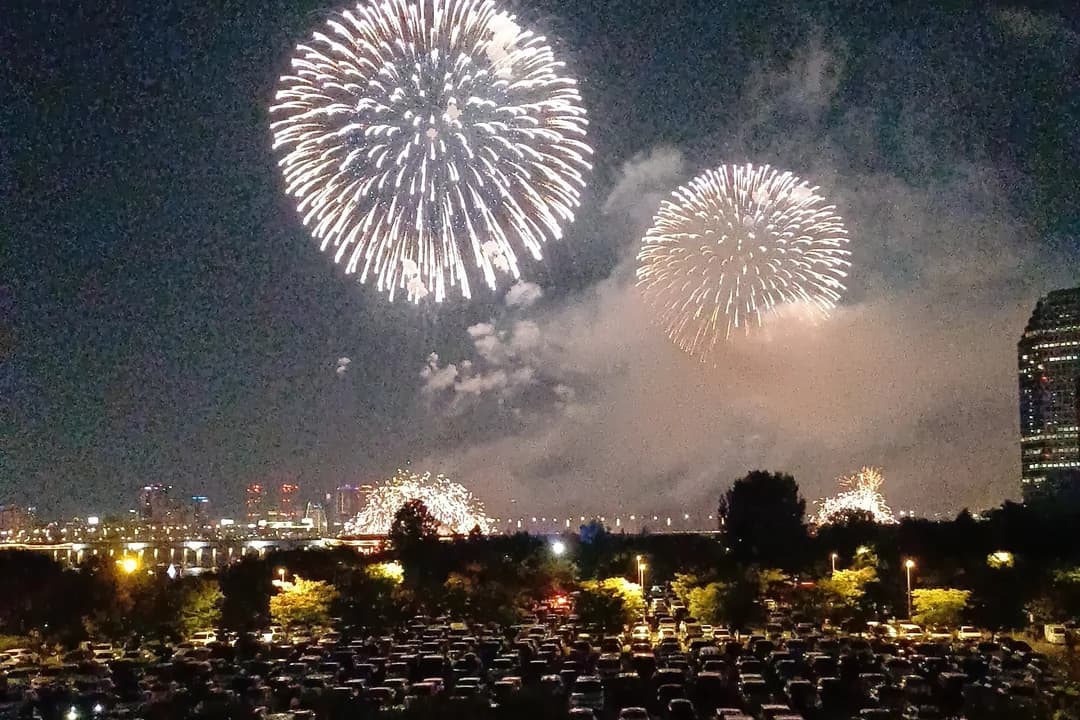
Korea’s big fireworks nights are staged by the sea or the river, and the well-known ones fall between September and November. They are single-night events, so dates matter more than anything else. As of 2026-10-11, Seoul’s show has already taken place, Yeosu is on 31 Oct, Busan is on 7 Nov and Pohang is reported for later in November.
Busan Fireworks Festival (부산불꽃축제) · Busan – Gwangalli Beach, Igidae and the Dongbaek Island area
When: Usually one Saturday night in early to mid November. This year’s 21st edition is on Sat 7 Nov 2026, with the show running roughly 19:00-20:00 including a break of about 10 minutes (as of 2026-10-11); the next edition’s dates are added once announced.
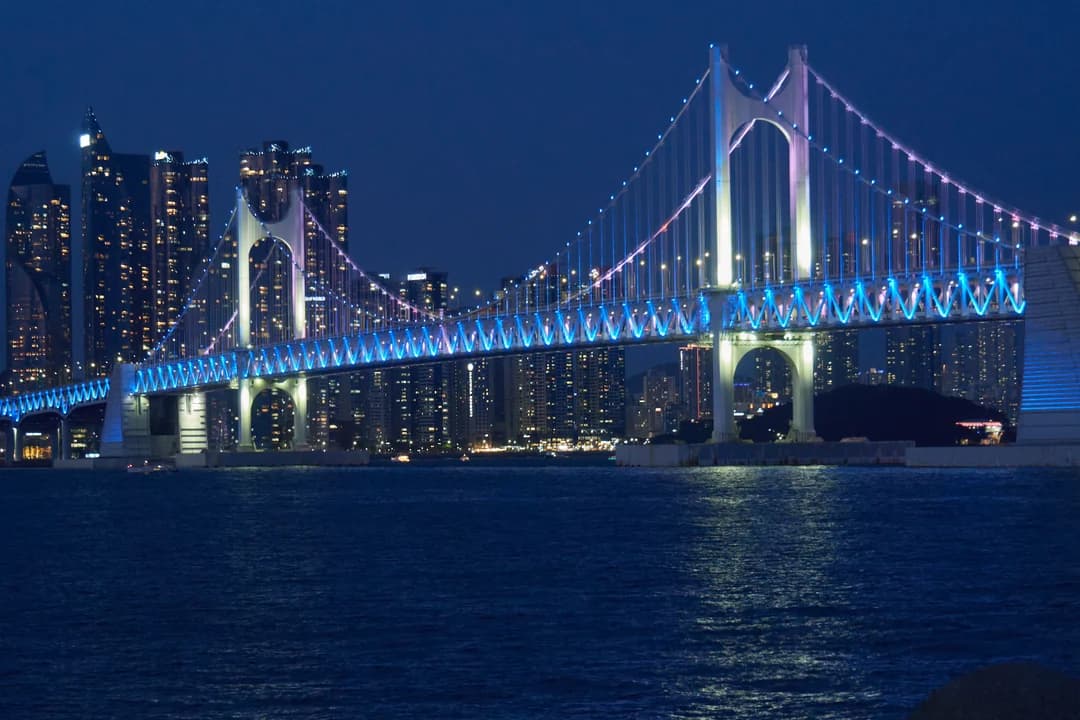
Highlights: A roughly 60-minute fireworks show (as of 2026-10-11) over the bay seen from Gwangalli Beach, with the Gwangan Bridge lit in the background, plus pre-festival events earlier in the day. Seats, if booked, give a clear view; the surrounding coastline gives a wider but more crowded view.
Best time & crowds: Arrive hours early. Seat gates open at 15:00 and ticket holders who are not seated by 18:00 are refused entry without a refund (as of 2026-10-11). The streets and subway are crowded for a long time after the show.
Entry: Mixed: paid reserved seats were R-seats (table and chair) at 100,000 won and S-seats (chair only) at 70,000 won, with a discount for Busan residents; ticket sales ran 4 Sep to 6 Nov (as of 2026-10-11). Watching from the beach and coast outside the seating areas is usually free. Wheelchair seats are booked by phone only.
From Seoul: Take the KTX or a flight to Busan, then the Busan subway or a taxi to the Gwangalli area.
Nearby: Gwangan Bridge, the Gwangalli café street, the Igidae coastal path and Haeundae.
Tips: November sea breezes are cold, so bring a warm coat and a blanket. Ticket resale outside the official sales is warned against. Plan how you will leave before the show ends, or wait in a café until the crowds thin.
Related guide: The “Busan region guide” helps with subway and neighborhood planning.
Seoul World Fireworks Festival (서울세계불꽃축제, now called the Seoul International Fireworks Festival) · Seoul – Yeouido Hangang Park and Nodeul Island
When: Held once a year by Hanwha, usually in late September; in 2026 it moved earlier and took place on Sat 5 Sep, with daytime programs from 13:00 to 22:00 and the main show from 20:00 (as of 2026-10-11). The next edition’s dates are added once announced.
Highlights: Guest teams from Britain (Pyrotex Fireworx) and the United States (Ace Pyro) opened the night, followed by Hanwha’s 30-minute finale, “The Starry Night – Puzzles of Light”, at 20:40 (2026 edition, as of 2026-10-11). Daytime booths were set up at the Yeouido Hangang Park event plaza and Nodeul Island.
Best time & crowds: Extremely crowded; the riverside fills up many hours before the show, and organizers reported roughly one million visitors in 2026 (as of 2026-10-11). Arrive early or pick a lookout farther along the river.
Entry: Free general viewing is usual for this event; ticket details were not stated for the 2026 edition (as of 2026-10-11).
From Seoul: The park is in central Seoul’s Yeouido district and reachable by subway.
Nearby: Yeouido Hangang Park, Nodeul Island and the Yeouido riverside area.
Tips: Because the 2026 show has passed, treat this as a plan for next September. Subway stations near the park get very crowded afterwards, so consider walking to a farther station. Bring a ground sheet and a jacket for the river breeze (as of 2026-10-11).
Related guide: The “Subway” guide helps you plan the ride and the walk out.
Yeosu Night Sea Fireworks Festival (여수밤바다 불꽃축제) · Yeosu, South Jeolla – the Yeosu World Expo grounds
When: Usually one night in late October or early November (8 Nov in 2025). This year’s edition is on Sat 31 Oct 2026, 19:00-21:10, held in the final week of the 2026 Yeosu World Island Expo (as of 2026-10-11); the next edition’s dates are added once announced.
Highlights: A fireworks show on the theme of Yeosu’s islands and sea, designed by an invited overseas team, with performances before and after the fireworks and an island-food festival at the nearby Expo Digital Gallery.
Best time & crowds: Evening only; the city said it would add safety staff to manage the crowds, so expect queues on the way in and out.
Entry: Free admission (as of 2026-10-11).
From Seoul: KTX trains and express buses serve Yeosu from Seoul; it is a long trip, so an overnight stay is wise.
Nearby: The Yeosu Expo area and the nearby waterfront.
Tips: Dress for sea wind in the evening and book accommodation early, since the Expo draws extra visitors in its final week. Plan your last train or bus home before the show ends.
Related guide: Check train and bus options with “Intercity trains & buses”.
Pohang International Fireworks Festival (포항국제불빛축제) · Pohang, North Gyeongsang – Yeongildae Beach
When: Usually November. Dates are reported for 19-21 Nov 2026, 14:00-22:00, but the program was still being finalized as of 2026-10-11; the final dates are added once announced.
Highlights: Fireworks over the sea at Yeongildae Beach, with an afternoon-to-evening program on the beach (details were not yet finalized, as of 2026-10-11).
Entry: Listed as free (as of 2026-10-11).
From Seoul: Take the KTX to Pohang or an express bus, then a city bus or taxi to Yeongildae Beach; the trip is long, so an overnight stay is wise.
Nearby: Yeongildae Beach and, in the same season, the venues of the Pohang Steel Art Festival.
Tips: Because the final program was not yet fixed, treat the dates as provisional and avoid non-refundable bookings until they are confirmed. Bring a warm coat for the November sea wind.
Related guide: Plan the long ride with “Intercity trains & buses”.
Late autumn food and art: kimchi, steel and reeds
Late October into November is when Korea turns to kimchi-making, steel art on the east coast and reed-lined wetlands in the south. These events are free or low-key compared with the big fireworks nights, and they suit travelers who prefer hands-on experiences. The 2026 details below are as of 2026-10-11, and some program lines were still being updated at that time.
Gwangju Kimchi Festival (광주김치축제) · Gwangju – around the plaza of the city government office
When: Usually late October to early November, about 3 days. This year’s edition is on 23-25 Oct 2026, 10:00-20:00; last year’s ran 31 Oct-2 Nov 2025. The venue was reported as the city-office plaza, though one source named Sangmu Citizens Park (as of 2026-10-11).
Highlights: Communal kimchi-making, an exhibition and tasting of prize-winning kimchi, cooking demonstrations and master classes, a kimchi market, a kids’ kimchi playground, a salt-experience hall and an urban farmers’ market.
Best time & crowds: Daytime, when the demonstrations and market run; weekend afternoons draw the most people. The 2025 edition drew about 57,000 visitors (as of 2026-10-11).
Entry: Mixed: admission is free, while the kimchi experience school is paid. Fees were not stated.
From Seoul: Take the KTX or an express bus to Gwangju, then a city bus or taxi to the city-office area.
Tips: Kimchi has a strong smell and can leak, so ask the seller for vacuum-sealed packs if you buy some to take home. Wear clothes you do not mind getting spotted when you join the kimchi-making. Food details for this year were still being updated.
Related guide: The “K-food guide” explains kimchi and Korean dishes.
Pohang Steel Art Festival (포항스틸아트페스티벌) · Pohang, North Gyeongsang – Dongbin Culture Warehouse 1969, Songdo Beach and Art436
When: Usually autumn, from late October into November (25 Oct-9 Nov in 2025). This year’s edition runs 24 Oct-15 Nov 2026 (as of 2026-10-11); the next edition’s dates are added once announced.
Highlights: Steel-based art, exhibitions and outdoor works in a former warehouse district and along the beach, spread across several venues; the exact program depends on the venue.
Entry: Free admission (as of 2026-10-11).
From Seoul: Take the KTX or an express bus to Pohang, then a city bus or taxi between the venues; the trip is long, so an overnight stay is wise.
Nearby: Songdo Beach and Yeongildae Beach, home to the Pohang fireworks festival in November.
Tips: The venues are spread out, so group them by area and leave travel time. Evenings by the sea are cool, so bring a layer.
Related guide: The “Intercity trains & buses” guide covers the ride to Pohang.
Suncheon Bay Reed Festival (순천만 갈대축제) · Suncheon, South Jeolla – Suncheon Bay Wetland
When: Usually in November, as the reeds turn gold. The 26th edition ran 1-9 Nov 2025; this year’s dates have not been announced (as of 2026-10-11) and are added once announced.
Highlights: Last year’s program (2025, as of 2026-10-11) was resident-led, with no opening ceremony: village walking tours, white-naped crane observation, sound meditation, a dawn boat tour, a starlight trip, wish-writing on a reed fence and a rice-harvest experience.
Best time & crowds: Dawn and sunset are when the reeds and the light look their most striking, and mornings are quieter; weekends tend to draw more visitors.
From Seoul: Take the KTX or an express bus to Suncheon, then a local bus or taxi to the wetland; it is a long trip, so an overnight stay is wise.
Nearby: Suncheon Bay Wetland and its surrounding reed fields.
Tips: Wear layers, as the wetland is open and windy, and bring binoculars if you want to watch the birds. Because the dates are not yet announced, avoid fixing non-refundable plans around this festival.
Related guide: Use “Intercity trains & buses” to plan the journey south.
Shopping seasons: K-Sale Festa and Korea Grand Sale
Korea runs two nationwide shopping seasons that travelers can plan around. K-Sale Festa is a government-backed domestic sale in late autumn, and the Korea Grand Sale is aimed at foreign visitors and now runs through winter. Both are periods when many shops, hotels and airlines promote offers, so they are worth knowing even if you only shop casually. Dates below are as of 2026-10-11.
K-Sale Festa (K-세일페스타, formerly Korea Sale FESTA 코리아세일페스타) · Nationwide, in shops and online
When: A late-autumn sale. This year’s edition runs 29 Oct-15 Nov 2026, 18 days, in shops and online (as of 2026-10-11). The 2024 edition ran 9-30 Nov, so the timing moves between years; the next edition’s dates are added once announced.
Highlights: It is the core event of a government-led consumer festival called the Korea Grand Festival, replacing the Korea Sale FESTA name, with participating companies offering their own promotions across retail, online marketplaces and services. In 2024 (as of 2026-10-11) the categories covered daily goods, big-ticket items such as cars and appliances, and leisure such as hotels and theme parks.
Best time & crowds: Weekends and the opening days tend to be the busiest in shops, while online promotions are easier to browse on weekdays. Popular items can sell out before the end of the period.
Entry: No admission fee; it is a shopping season, and each company sets its own discount terms.
Nearby: Department stores, shopping districts and duty-free outlets in whichever city you are visiting.
Tips: Compare prices before buying, since each company decides its own offers. Ask whether an item qualifies for tourist tax refund, and keep your receipts and passport with you. Large appliances are bulky and heavy to carry, so consider whether you can take them home.
Related guide: The “Tax refund guide” explains how refunds work, and the “Currency exchange guide” helps you budget.
Korea Grand Sale (코리아그랜드세일) · Nationwide, aimed at foreign visitors
When: Run by the culture ministry with the Visit Korea Committee since 2011. It has moved to the winter off-season: the latest edition ran 17 Dec 2025-22 Feb 2026, 68 days (as of 2026-10-11). The next edition’s dates are added once announced.
Highlights: In the latest edition, about 1,750 companies took part in sectors such as airlines, hotels, retail, food, transport and beauty (as of 2026-10-11). Airlines offered inbound fares, hotels offered experience packages, and shops gave coupons and membership upgrades; each company set its own terms.
Best time & crowds: Winter is the off-season, so promotions on flights and hotels are more common than at peak travel times, though cold weather and shorter days apply. Popular shopping areas are busiest on weekends and on tax-refund-heavy days.
Entry: No admission fee; it is a shopping season. Each company sets its own discount terms.
From Seoul: It is nationwide, with a Welcome Center in Myeong-dong, Seoul, and day tours by train from Seoul to destinations such as Jeonju and the east coast in the latest edition (as of 2026-10-11).
Nearby: Myeong-dong shopping district in Seoul and the shopping streets of any city you visit.
Tips: Because the season is long, compare offers rather than buying on day one. Keep receipts, your passport and any coupons together, and check which items qualify for tax refund before you pay. Book flights and hotels early, as discounted seats and rooms are limited.
Related guide: The “Tax refund guide” and “Currency exchange guide” pair well with shopping trips, and the “Korea stay guide” helps with hotels.
How sale seasons interact with tax refunds and crowds: discounts and tourist tax refund are separate things, so a sale price can still qualify for a refund if the shop and the item are eligible; keep the receipt and your passport and ask at the till before you pay. Sale periods bring heavier weekend crowds in department stores and popular shopping streets, and the refund counters and airport queues can be longer, so allow extra time before a flight. Spreading purchases over several days, or shopping on weekday mornings, is usually calmer.
Sources and last update
Last updated: 11 October 2026. Figures are as of the date shown.
Source: Korea Tourism Organization · Korea Astronomy and Space Science Institute / Korea Aerospace Administration · Seoul Metropolitan Government · Busan Metropolitan City · Korea Heritage Service · Checked 11 Oct 2026
Written by HOLIDAY in its own words from official public information. This is not an official publication of the Korea Tourism Organization or any government body.
HOLIDAY refreshes this article regularly as fares, hours and event dates change.

![[Spring] Taean Tulip Festival and Flower Park Day Tour](/_next/image?url=https%3A%2F%2Fadmin.holidaykr.com%2Fapi%2Fadmin%2Fsystem%2Fbasic-settings%2Ffavicon%3Fpath%3D%252Fuploads%252Fproducts%252Fthumbs%252F750_1731309018_file1.jpg&w=3840&q=75)