Month-by-month Korea festival calendar, October 2026 to October 2027: public holidays, tickets, crowds and planning tips. Dates as of 2026-10-11.
How the Korean festival year works
Korea runs festivals almost every weekend of the year, and what you can do follows the four seasons. Spring (about March to May) is for blossoms, flower fields and the first outdoor shows. Summer (June to August) is hot and humid, with beaches, water and mud events and open-air music. Autumn (September to November) has the most comfortable weather, the foliage and the biggest evening shows. Winter (December to February) is cold and dry, with ice fishing, snow sculptures, light displays and the Lunar New Year.
Festival timing works in three different ways, and it helps to know which one you are dealing with. Fixed-pattern events return in the same month every year, such as the Busan Fireworks Festival on a Saturday in early November. Weather-linked events follow nature: cherry blossoms, plum and cornelian cherry flowers, foliage and ice festivals can move by a week or more, and ice festivals can even be canceled if the river does not freeze. Lunar-calendar events, including Seollal, Buddha’s Birthday, Dano, Daeboreum and Chuseok, move around the solar calendar from year to year.
How dates are written in this guide: a date that comes with “as of 2026-10-11” has been confirmed for that edition on that day. Many of this year’s editions have already finished, so their entries show what the 2026 edition did and when to come back; where the next edition has not been announced, the entry says when it is usually held and that the new dates are added once announced. Nothing here is a guess dressed up as a date, and festival organizers may still change programs at short notice.
Each festival entry uses the same short lines: When, Highlights, Best time and crowds, Entry, From Seoul, Nearby and Tips, plus a “Related guide” line when another HOLIDAY guide helps. Read the When and Entry lines first, because they tell you whether you can still go this season, whether you need a ticket and how far ahead to book.
Month by month, October 2026 to October 2027
The list starts with this month, October 2026 (as of 2026-10-11), and runs through October 2027. Each row names the events that usually fall in that month; the sections that follow give the full entry for each one. Because many festivals shift with blossoms, foliage, ice or the lunar calendar, treat each month as a window rather than an exact date.
October: Busan International Film Festival, Jinju Namgang Lantern Festival, Gwangju Biennale (even years), Andong Mask Dance Festival (late September into early October), Suwon Hwaseong Cultural Festival, Gyeongju Silla Cultural Festival, Baekje Cultural Festival, Gimje Horizon Festival, Jarasum Jazz Festival, Gangneung Coffee Festival, the autumn Royal Culture Festival, Seoul International Performing Arts Festival and the Seoraksan foliage peak.
November: Busan Fireworks Festival (a Saturday in early November), Yeosu Night Sea Fireworks (around the end of October or early November), Gwangju Kimchi Festival, Pohang Steel Art Festival, Pohang International Fireworks Festival, Suncheon Bay Reed Festival, Naejangsan and Hallasan foliage, the end of Seoul Autumn Festa and the K-Sale Festa shopping season, plus the first Christmas markets.
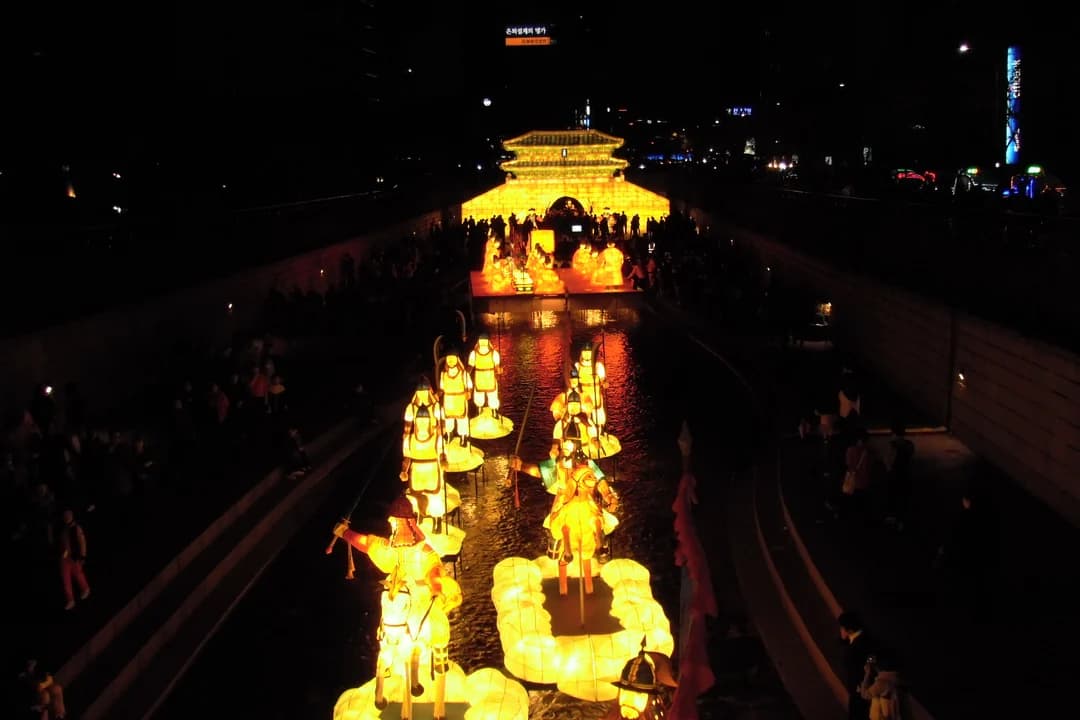
December: Seoul Lantern Festival (it has recently run from mid-December into mid-January), the Garden of Morning Calm and Herb Island light displays, Christmas lights and markets in Seoul, and the start of the Korea Grand Sale winter shopping season. Seoul Light Gwanghwamun is listed for 11 Dec 2026 to 3 Jan 2027 (as of 2026-10-11).
January: Hwacheon Sancheoneo Ice Festival (from mid-January), Pyeongchang Trout Festival, Cheorwon ice trekking, Haeundae Polar Bear Festival, Taebaek Snow Festival (late January into February) and the winter lights that run until mid-March. February: Daegwallyeong Snow Flower Festival, Seoul Fashion Week, and the Lunar New Year. Seollal 2027 falls on Sun 7 Feb 2027 and Jeongwol Daeboreum on Sun 21 Feb 2027 (as of 2026-10-11).
March: Gwangyang plum blossom, Gurye cornelian cherry, Nonsan Strawberry Festival, Jeju Fire Festival, the Seoul Marathon (a Sunday in mid-March) and the first cherry blossoms in the far south. April: Jinhae Gunhangje (late March into early April), Yeouido Spring Flower Festival, Jeju Canola Flower Festival, Jindo Sea Parting Festival, tulips in Taean and Sinan, Cheongsando Slow Walking and the Yeongwol Danjong Festival.
May: Hampyeong Butterfly Festival, Boseong Green Tea Festival and Hadong Wild Tea Festival (all around 1 to 5 May), Damyang Bamboo Festival, Icheon Ceramics Festival, Namwon Chunhyang Festival, Jeonju International Film Festival, Goyang Flower Festival, the Lotus Lantern Festival and Jongmyo Daeje in Seoul, Seoul Jazz Festival, Seoul Rose Festival, Haeundae Sand Festival and Chuncheon Mime Festival (late May). Children’s Day is Wed 5 May 2027 and Buddha’s Birthday Thu 13 May 2027 (as of 2026-10-11).
June: Gangneung Danoje (around the lunar Dano day, which is Wed 9 Jun 2027 as of 2026-10-11), Gwangalli Eobang Festival, Daegu International Musical Festival (mid-June into early July), World DJ Festival, Muan Lotus Festival, the Seoul Hangang swimming pools and the first beach openings. July: Boryeong Mud Festival, Daegu Chimaek Festival, Waterbomb, Pentaport Rock Festival (late July into early August), Jangheung Water Festival and the Gyeongpo summer festival, all inside the rainy season and typhoon months.
August: Busan Sea Festival, Tongyeong Hansan Naval Festival, Pentaport and the end of the Boryeong Mud Festival. September: Frieze Seoul and Kiaf Seoul, Seoul Fashion Week, Muju Firefly Festival, Pyeongchang Hyoseok Buckwheat Festival, the start of Seoul Autumn Festa, and Chuseok, which in 2027 is Wed 15 Sep with a holiday block of 14 to 16 Sep 2027 (as of 2026-10-11). October 2027 then repeats the autumn cycle from the top of this list.
Public holidays, October 2026 to December 2027
Public holidays decide when trains fill up, which shops close and which festivals draw the biggest crowds. The dates below follow the 2027 calendar guidelines released by the Korea Aerospace Administration on 29 June 2026 and the Korea Astronomy and Space Science Institute’s calendar data, and are correct as of 2026-10-11. The rest of 2026 is short: Hangul Day was Fri 9 Oct 2026 and Christmas falls on Fri 25 Dec 2026 (as of 2026-10-11).
Winter and spring 2027 (as of 2026-10-11): New Year’s Day, Fri 1 Jan 2027. Seollal holiday, Sat 6 to Mon 8 Feb 2027, with Seollal itself on Sun 7 Feb and a substitute holiday on Tue 9 Feb, so the break runs Sat 6 to Tue 9 Feb. Independence Movement Day, Mon 1 Mar 2027, making a long weekend from Sat 27 Feb. Labor Day, Sat 1 May 2027, with a substitute holiday on Mon 3 May. Children’s Day, Wed 5 May 2027. Buddha’s Birthday, Thu 13 May 2027, with no substitute day.
Summer and autumn 2027 (as of 2026-10-11): Memorial Day, Sun 6 Jun 2027. Constitution Day, Sat 17 Jul 2027, with a substitute holiday on Mon 19 Jul. Liberation Day, Sun 15 Aug 2027, with a substitute holiday on Mon 16 Aug. Chuseok, Tue 14 to Thu 16 Sep 2027, with Chuseok day on Wed 15 Sep and no substitute day. National Foundation Day, Sun 3 Oct 2027, with a substitute holiday on Mon 4 Oct. Hangul Day, Sat 9 Oct 2027, with a substitute holiday on Mon 11 Oct. Christmas, Sat 25 Dec 2027, with a substitute holiday on Mon 27 Dec.
Traditional days that are not public holidays but still shape festivals, as listed in the 2027 calendar guidelines (as of 2026-10-11): Jeongwol Daeboreum (first full moon), Sun 21 Feb 2027; Hansik, Tue 6 Apr 2027; Dano, Wed 9 Jun 2027; Chilseok, Sun 8 Aug 2027. In 2026 the pattern was Seollal on 16 to 18 Feb, Buddha’s Birthday on Sun 24 May with a substitute day on 25 May, and Chuseok on 24 to 26 Sep (as of 2026-10-11).
How holidays change festival travel
Seollal and Chuseok are the two big family holidays. Many Koreans travel to their home towns, so intercity trains and express buses fill up early, roads are slow, and a lot of restaurants, shops and some museums close for part of the break. The big palaces in Seoul have offered free entry and folk programs during these breaks, and in 2026 the palaces were free from Thu 24 to Sun 27 Sep (as of 2026-10-11). Plan to sleep in the city you visit rather than counting on a late train.
Shorter holidays behave differently. A long weekend such as Children’s Day on 5 May or Buddha’s Birthday brings domestic day trips, so flower, tea and butterfly festivals in the south are at their busiest, while Seoul itself can feel quieter on holiday mornings. Labor Day, Constitution Day, Liberation Day, National Foundation Day and Hangul Day mostly produce one extra long weekend each, and in 2027 several of them fall on a weekend and add a Monday substitute holiday (as of 2026-10-11).
Public holidays also change what is open. Banks and government offices close on every public holiday, so exchange money and sort out paperwork before a long weekend; the Currency exchange guide and the Tax refund guide explain the practical steps. Convenience stores, cinemas and many tourist attractions usually stay open, while department stores, family-run restaurants and local markets near the festival may close on the Seollal and Chuseok days themselves.
Plan around festivals: tickets and booking windows
Most Korean festivals are free to enter, but the experiences that make them special are often limited and booked ahead. Ask three questions for every event: is entry free, is there a free viewing area, and which parts are ticketed or lottery-based? The biggest shows usually open sales one to two months before the date, and the best seats, night tours and hands-on programs sell out first.
Real examples from 2026 (as of 2026-10-11): paid seats for the Busan Fireworks Festival on Sat 7 Nov 2026 went on sale on 4 Sep and ran until 6 Nov, with R seats at 100,000 won and S seats at 70,000 won, while free viewing along the coast needs no ticket. Reservations for the autumn Royal Culture Festival in Seoul opened on 4 Sep for programs in early October, and some sold out. The Daegu Chimaek Festival’s paid main-venue seats sold out in about 11 minutes in 2026.
Palace night visits work by lottery or daily caps. The Changdeokgung Moonlight Tour in autumn 2026 took 28 people per session by lottery, with foreign-language sessions on four set Sundays, and the Gyeongbokgung Night Viewing was capped at 3,000 visitors a day, with foreign visitors buying tickets on site at the Gwanghwamun booth (as of 2026-10-11). The pattern repeats each year, so plan to apply in the first days a window opens and have a second option ready.
For winter markets and night tours, the first batch of tickets can disappear very fast. The Lotte Christmas Market in Seoul sold its first batch in about ten minutes in November 2025 (as of 2026-10-11). Film festivals work the same way: popular screenings at the Busan International Film Festival and the Jeonju International Film Festival fill quickly, so pick a few films and buy as soon as sales open.
Plan around festivals: crowds and the best time
Crowds are driven by weekends, holidays and evenings. As a rule, weekday mornings are calm, weekend afternoons are busy, and opening nights and the last weekend are the heaviest. For ice, snow and flower festivals the scale is large: the Hwacheon Sancheoneo Ice Festival drew about 1.86 million visitors in 2025, including about 122,000 foreigners, and the Seoul Lantern Festival counted about 2.77 million visitors in its first 20 days in 2025-26 (as of 2026-10-11).
Some organizers cap attendance on the busiest night. On opening night of the Busan Sea Festival (Fri 7 Aug 2026), the beach was limited to about 35,000 people, and lanes and car parks near the beach were closed from 16:00 (as of 2026-10-11). If you want the show without the crush, choose the second or third night, arrive about two hours early for the main event, and go to a quieter viewing spot a little away from the stage.
A simple timing guide: for flower festivals go early in the morning, before the tour buses; for lantern, light and fireworks events go at dusk and stay an hour after the main show so that you leave when the stations have emptied; for ice and snow festivals go on a weekday, because the activities are queue-based; for film, jazz and music festivals choose the one or two days that have your must-see acts and skip the rest.
Plan around festivals: transport and closures
Big festivals close roads, move bus stops and add shuttles, so the subway or train is almost always the best way to arrive. In 2026 (as of 2026-10-11) the Lotus Lantern Festival closed roads around Jongno from 13:00 on Sat 16 May to 03:00 on Sun 17 May, Yeouido’s cherry-blossom road was under traffic control from the afternoon of 1 Apr to the afternoon of 8 Apr, and the Gyeongju Silla Cultural Festival controlled traffic around Bonghwangdae from midday on 8 Oct to midday on 12 Oct.
Outside the cities, check the shape of the trip before you commit. Several rural festivals run shuttles from the nearest station: in 2026 Muju ran a free shuttle about every 20 minutes on weekends, Pyeongchang’s Hyoseok festival ran a free shuttle from Pyeongchang Station, and KTX trains stopped at Hampyeong Station on the busiest days of the butterfly festival (as of 2026-10-11). Remote places such as Boseong and Jindo are long trips from Seoul, so an overnight stay is usually the better plan; the Intercity trains & buses guide covers the options.
Plan the way home before you arrive. After a big night show, nearby stations stay crowded for a long time; either walk to a station two stops away, wait an hour, or book a room close to the venue. In Seoul, the Subway guide explains how to pay and transfer, and the Airport transfers to the regions guide helps if your festival is far from Incheon or Gimpo.
Plan around festivals: weather and safety
Korea’s weather shapes the festival calendar. The rainy season usually falls between late June and late July, and typhoons can arrive between June and October (Korea Tourism Organization climate information, as of 2026-10-11). Outdoor shows can be shortened or canceled in heavy rain or wind, and water or mud events usually carry on in light rain, so carry a light rain jacket rather than an umbrella in crowds. The Korea weather guide has the seasonal picture.
Nature can change the plan in other ways. Ice festivals depend on a frozen river: the Inje Icefish Festival was canceled in 2024, 2025 and 2026 because the river did not freeze or the dam level was too high, and the 2026 edition was canceled on 28 Dec 2025 (as of 2026-10-11). Blossom and foliage events move with the weather, and the Muan Lotus Festival was shortened to three days in 2026 to avoid the worst heat. Always keep a flexible day in your itinerary around a weather-dependent event.
Basic safety habits help at every festival. Stay with your group in crowds, keep your phone charged and your wallet in a front pocket, and follow staff directions at crowded exits. In summer, drink water often and rest in shaded zones. Waterbomb in 2026 admitted only people aged 19 and over and required physical ID (as of 2026-10-11), so bring your passport or a card ID for age-limited events. For an emergency, the Emergency & SOS guide lists the numbers and what to do.
What to wear and pack by season
Spring and autumn: dress in layers, because mornings and evenings are cool and afternoons are warm. Bring a light jacket, comfortable walking shoes and a small bag, since blossom and foliage festivals involve a lot of walking on paths and slopes. A portable battery is useful when you take photos all day and use a translator at night.
Summer: wear light, quick-drying clothes, sunscreen, a hat and sandals you can walk in. For mud, water and beach festivals, bring a full change of clothes, water shoes, a towel and a waterproof phone pouch, and keep your passport and cards in the hotel safe. For open-air concerts, add earplugs and a poncho that is easy to put on.
Winter: wear thermal layers, a windproof outer coat, gloves, a scarf, a hat and shoes with good grip on snow and ice, and add disposable heat packs for evenings outdoors. At ice festivals the wind off the frozen river feels much colder than the forecast, and hot food stalls and warm indoor tents are worth planning your breaks around.
Night shows: fireworks, lanterns and getting home
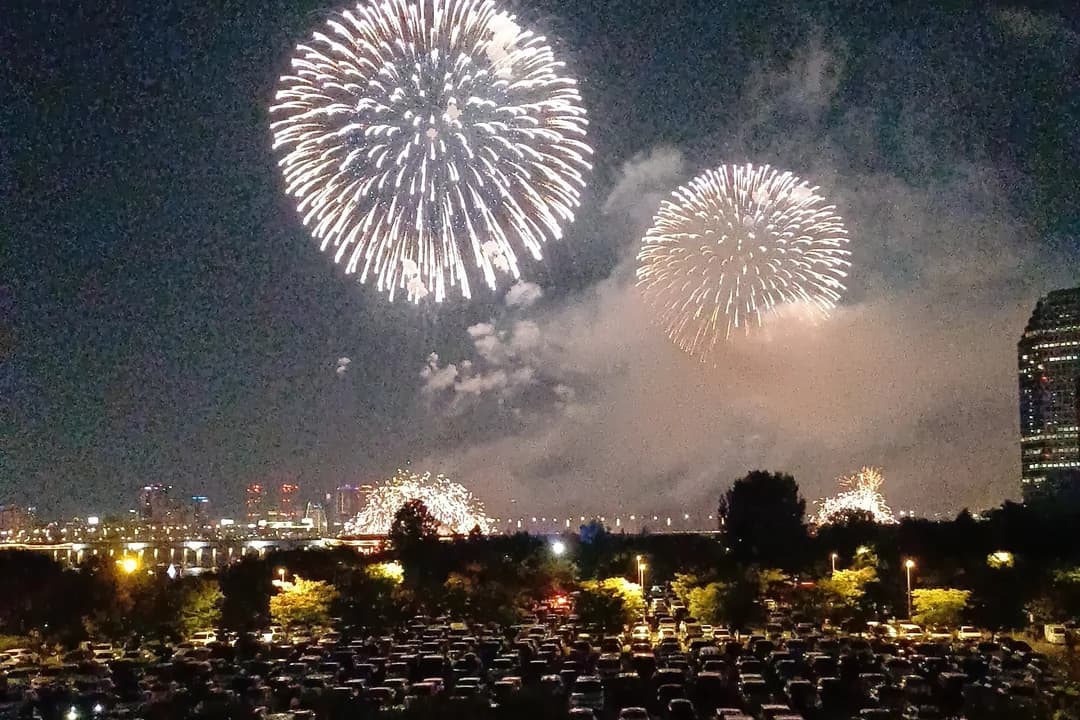
Large night events draw very big crowds. If you plan to watch fireworks or a lantern show, arrive early, find out where the paid and free viewing areas are, and plan how you will get home, since stations nearby can be crowded for a long time after the show. Fireworks look best from a spot with a clear view of the sky over water and without trees or lamp posts in the way; the free area farther from the stage often gives a good view and much more room.
A simple routine works for every big night: eat before you go, because food lines near the venue are long; wear shoes you can stand in for hours; carry a small plastic sheet or a cushion if you plan to sit on the ground; keep a group meeting point in case phones cannot connect in the crowd; and leave a few minutes before the finale if you want to skip the first rush, or stay an hour after it to walk out in peace.
Before you go: a short planning checklist
- Pick a window, not a date. Choose the month from this guide, then use the When line of each entry to see whether the edition is fixed, weather-linked or lunar-calendar based, and keep one spare day in case a blossom, foliage or ice event moves.
- Decide the ticket model. Read the Entry line: free, free with a ticketed zone, or fully paid. Put the booking day in your phone calendar for anything that sells out, such as paid fireworks seats, palace night tours, film screenings and winter markets.
- Book transport and a room early for holiday weekends and for remote places. Use the From Seoul line, then the Intercity trains & buses guide and the Korea stay guide. For island and mountain festivals, stay at least one night so that you are not racing the last bus.
- Check the weather the night before and dress for the evening, not the afternoon. Pack a rain jacket, a battery, a small bag of cash for food stalls and a change of clothes for water events; the Korea weather guide has the seasonal picture.
- Plan the exit. Know where the nearest station and a quieter second station are, agree a meeting point with your group, and leave either before the finale or an hour after it. If you want to see what else is on during your trip, the festival calendar and the seasonal festival guides in this series list the main events month by month.
Sources and last update
Last updated: 11 October 2026. Figures are as of the date shown.
Source: Korea Tourism Organization · Korea Astronomy and Space Science Institute / Korea Aerospace Administration · Seoul Metropolitan Government · Busan Metropolitan City · Korea Heritage Service · Checked 11 Oct 2026
Written by HOLIDAY in its own words from official public information. This is not an official publication of the Korea Tourism Organization or any government body.
HOLIDAY refreshes this article regularly as fares, hours and event dates change.
![[Spring] Taean Tulip Festival and Flower Park Day Tour](/_next/image?url=https%3A%2F%2Fadmin.holidaykr.com%2Fapi%2Fadmin%2Fsystem%2Fbasic-settings%2Ffavicon%3Fpath%3D%252Fuploads%252Fproducts%252Fthumbs%252F750_1731309018_file1.jpg&w=3840&q=75)