Every kind of stay from hotels to hanok, temple stays and jjimjilbang: how each works, check-in and ID, ondol rooms, cancellation norms, busy dates and a quick-answer list.
Types of stays and who they suit
Tourist hotels and business hotels run from five-star towers to compact business hotels beside subway stations. Central Seoul, Busan and Jeju hotels usually have a front desk that handles English, luggage storage and laundry service.
Motels and yeogwan (motel / 모텔, 여관) are low-priced rooms, often near stations and bus terminals. Quality is very mixed, so look at recent photos and guest comments before booking; many are clean and well equipped, some are dated.
Guesthouses and hostels offer dorm beds or small private rooms, a shared kitchen and a lounge, and are good for meeting other travelers. Minbak (민박) is a room in a family home; the kitchen is usually shared.
Pensions (펜션) are holiday cottages on the coast, in the countryside and near ski areas. They are usually booked as a whole room or house, often with a kitchen and a spot for a barbecue. Serviced residences and officetels suit stays of a week or more, with a kitchen and washing machine.
How Korean law groups stays
Under the Tourism Promotion Act (as of 2026-10-11), hotel businesses include the tourist hotel, the floating tourist hotel, the Korean traditional hotel (traditional buildings furnished for lodging) and the family hotel (units with cooking utensils for family groups).
Other registered categories include the tourist pension (accommodation for nature and cultural experiences), the hanok experience business (stays in qualifying hanok), and the urban guesthouse for foreign tourists, a homestay-style category created in 2012 (as of 2026-10-11).
Tourist hotels carry a star grade (up to five stars), which tells you the facilities level, not the room size. Motels and yeogwan fall under the general lodging business of the public hygiene law, a separate track from tourism hotels.
Why it matters: a registered business has to follow safety, hygiene and consumer rules. A private flat rented by the night without registration can be a risk for guests, so look for a business registration or a recognized listing on the booking page.
Hanok stays
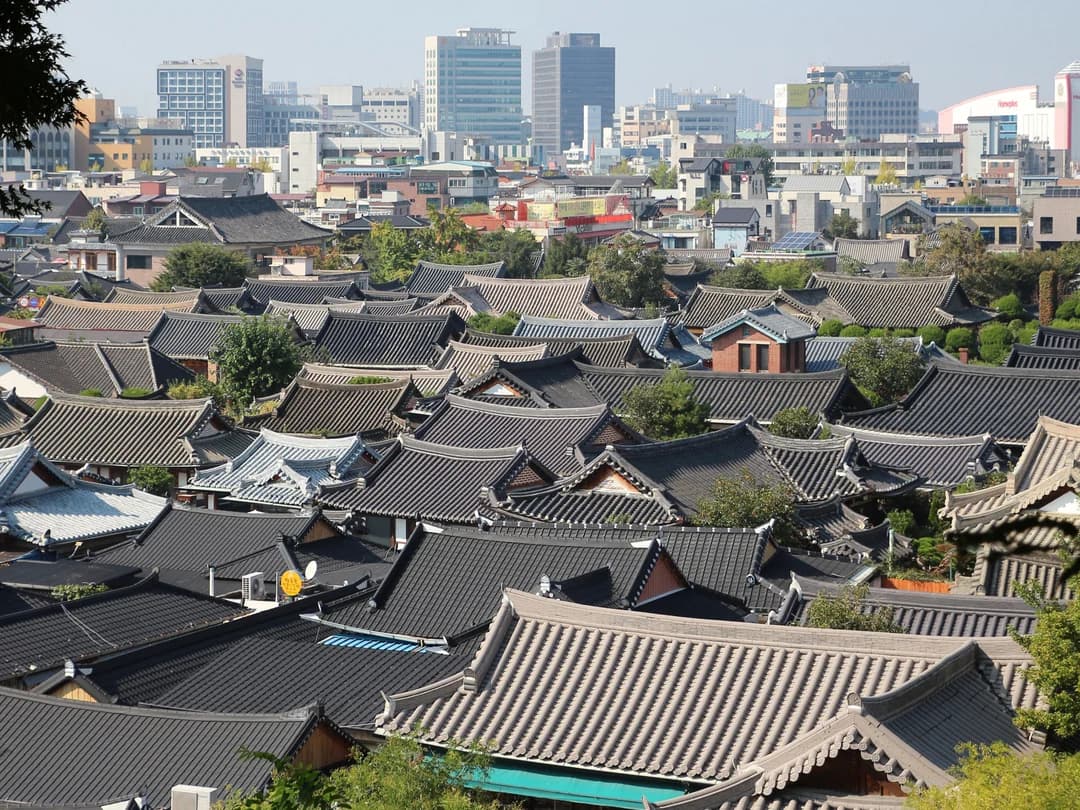
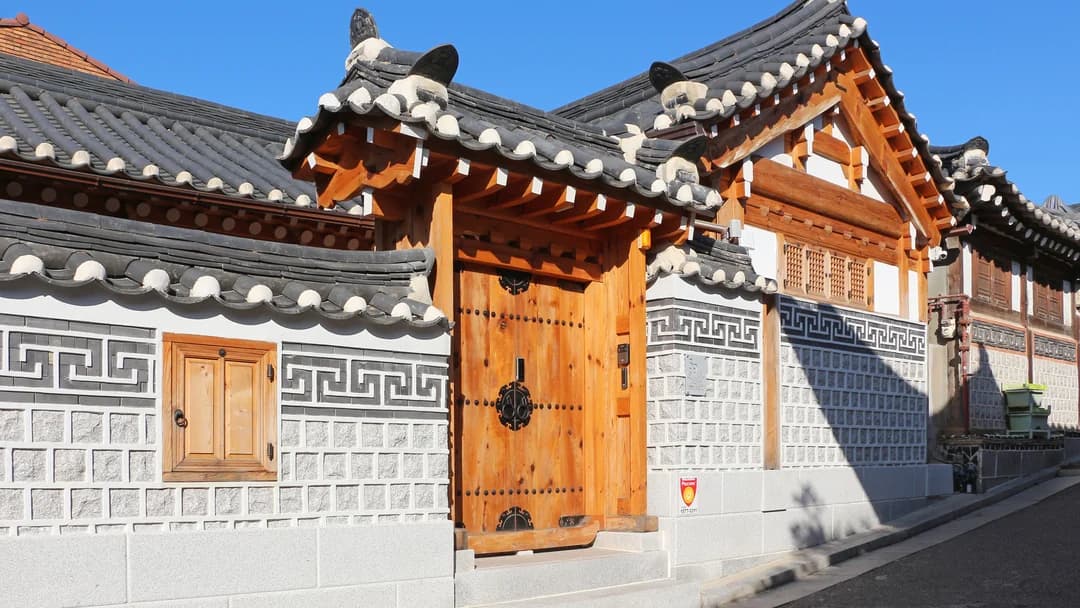
A hanok (한옥) is a traditional Korean house with a wooden frame and tiled roof. Well-known stay areas are Bukchon in Seoul and Jeonju Hanok Village, which has over 800 hanok (as of 2026-10-11); Gyeongju and Andong also have hanok lodging.
You normally sleep on a thin floor mattress (yo) with a quilt, on an ondol floor that is heated from below. You take your shoes off at the door and move around in socks or slippers.
Expect thin wooden doors and walls, so sound carries between rooms and from the courtyard at night. Thresholds are high and ceilings low, and the bathroom can be a modern add-on a few steps away from the sleeping room, which is worth knowing if you travel with small children or have mobility needs.
Bukchon Hanok Village rules
Bukchon is a living neighborhood. Since 1 March 2025, tourists may enter the busiest zone around Bukchon-ro 11-gil (about 34,000 square meters) only between 10:00 and 17:00; entering for sightseeing outside those hours can bring a fine of 100,000 won (as of 2026-10-11).
Enforcement starts with a warning, and you are fined only if you do not leave. Residents and relatives, visitors to local businesses and people just passing through are exempt. Guests of guesthouses in the area are reported to be allowed in; keep your booking on your phone in case you are asked (as of 2026-10-11).
Seoul also asks visitors to keep voices low, not to litter, to respect the privacy of homes and not to photograph through gates or windows, and to travel in small groups of fewer than 10 people (as of 2026-10-11). Chartered tour buses are restricted from the village streets at all hours.
Temple stays: types and how to apply
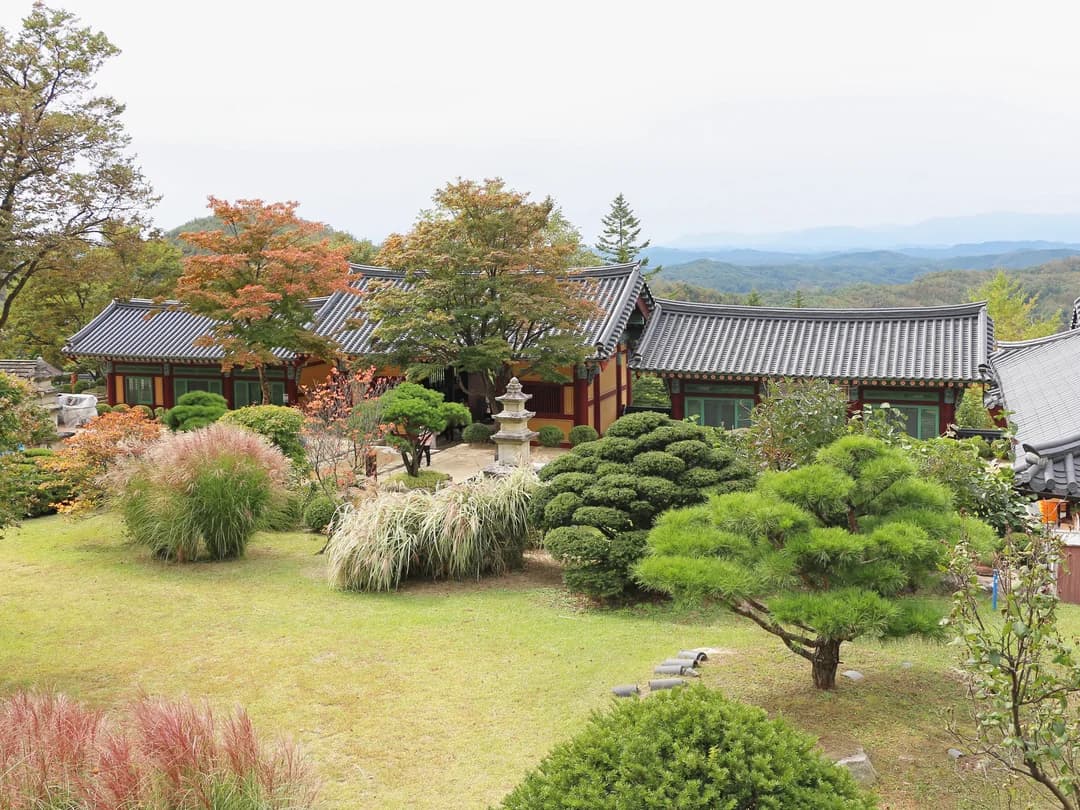
The national Templestay program (run by the Cultural Corps of Korean Buddhism) groups stays into four types: day program, experience-oriented, rest-oriented and group. A day program normally takes about two to three hours: a temple tour, meditation and tea (as of 2026-10-11).
Experience-oriented stays are usually one night on a weekend with a set timetable: dawn chanting, 108 prostrations, the shared monastic meal and meditation, sometimes lotus-lantern or prayer-bead making. Rest-oriented stays keep only the ceremonies and meals fixed and leave the rest of the time free.
How to apply: choose a temple, program type and date on the national Templestay booking platform, which works in English; sign in or continue as a non-member; and pay by card up front. You do not need to print a confirmation, because each temple keeps its own reservation list (as of 2026-10-11).
Fees are set by each temple and change with program and season. A one-night program with meals commonly falls between about 50,000 and 150,000 won per person (as of 2026-10-11). Popular temples near Seoul fill up weeks ahead, especially at weekends and around Buddha’s Birthday.
A temple-stay day and its rules
A sample overnight timetable from one Seoul temple: check-in at 14:00, temple tour, tea, a silent dinner, evening chanting and meditation, lights out at 21:00; next day a wake-up bell at 03:30, dawn chanting, 108 prostrations, breakfast, temple chores, and departure after a late-morning lunch. Every temple sets its own times (as of 2026-10-11).
Meals are vegetarian and eaten in near silence (balwoo gongyang): take only what you can finish and leave nothing in the bowl. Rooms are often shared by gender; some temples offer a private room for two to four people for an extra per-person fee.
Rules you will be asked to follow: speak quietly, do not run, shout, sing or play music; no alcohol, smoking or meat; no public displays of affection; switch off and store your phone during ceremonies; photograph only where allowed and never in the main hall, during meditation or during meals.
Bring a towel, toiletries, socks and a change of clothes; most temples supply only soap, toothpaste and a uniform (vest and trousers). In winter bring a warm jacket, since halls can be cold. If you feel unwell, you may rest in your room; tell the staff which items you will skip.
Cancellation is set per temple. One common pattern is a full refund three days before, a partial refund one to two days before and none on the day, with a full refund if severe weather stops the program (as of 2026-10-11).
Before you book
- Confirm the place operates legally: a business registration, a star grade for tourist hotels or a recognized listing on the booking page. Be careful with nightly rentals that show none of these.
- Read the cancellation rule, the check-in and check-out times, the deposit, any cleaning fee and the charge for an extra guest. Note whether breakfast is included and what bed type you get (double, twin, or floor mattress).
- Look at the map: the distance to the nearest subway exit, steep hills, stairs and whether the building has a lift. In older hanok areas and guesthouse alleys, a suitcase can be hard to pull.
- Save the exact address in Korean (Hangul) and the front-desk or host phone number on your phone, so a taxi driver can find it and the host can guide you in.
Check-in, ID, deposits and luggage
Typical times are check-in from mid-afternoon (often 14:00 to 16:00) and check-out between 10:00 and 12:00, but each booking states its own times (as of 2026-10-11). Small guesthouses may staff the desk only until the evening and use a key box or self check-in later.
Foreign guests are normally asked to show a passport at check-in, and the property may scan or copy it. Have your passport and booking confirmation ready; a photo on your phone may not be accepted instead of the passport itself.
Some places take a deposit or a card imprint for incidentals and release it at check-out. Take photos of the room on arrival and departure, and keep the receipt until your card statement shows the final amount.
Arriving after dark: tell the property your arrival time in advance, especially for guesthouses, pensions and hanok where nobody may be at the desk. Arriving early or leaving late: most front desks keep bags for free; if not, many subway and rail stations have coin lockers.
Inside the room: ondol, beds, shoes, noise
Ondol (온돌) is underfloor heating, today usually hot-water pipes or electric. It heats the whole floor evenly but is slow to warm up and slow to cool down, so set it early in the evening, and if it feels too hot at night, turn it down rather than sleeping on a very hot spot.
Western-style rooms offer a double bed or twin beds; ask for the bed type you want when booking, because a room described only as “double” can be twin. Floor-bed (ondol) rooms are good for families, with bedding stored in a closet.
Take your shoes off at the door of hanok, guesthouses with floor rooms and many pensions. Rooms in Seoul hotels are often compact, so choose a bigger room type if you have large suitcases.
Bathrooms often have no separate shower tray, so the whole floor gets wet; use the slippers provided. Some older buildings ask you to put used toilet paper in the bin, so follow the sign. Quiet hours usually start around 22:00 and walls can be thin, so keep voices and TV low in hallways and at night (as of 2026-10-11).
Most guest rooms are non-smoking; smoking in them can lead to a cleaning charge or a fine. Hotels offer paid laundry service, while guesthouses, pensions and serviced residences often have coin or self-service washing machines. Breakfast depends on the plan on your booking; tipping is not expected.
Jjimjilbang (bathhouse stays)
A jjimjilbang (찜질방) is a large public bathhouse with saunas, heated rooms and sleeping areas. Most run 24 hours (as of 2026-10-11), and larger ones let you stay overnight on a floor mat, which makes them a cheap option for one night.
Bathing areas are separated by gender and you shower first; you then put on the T-shirt and shorts you are given and use the mixed-gender heat rooms and halls in them. Sleeping areas are often separated by gender as well.
Keep your locker key on your wrist, leave valuables and passports at the front desk or in a locker, and keep your phone with you; smartphone theft is reported. Rules about tattoos and phone use in bathing areas differ by venue.
Cancellation norms and your rights
Your booking states its own cancellation terms, and those are what apply first. Korea’s Fair Trade Commission also publishes consumer dispute standards for lodging, which dispute bodies use as a reference when the two sides disagree (as of 2026-10-11).
If the lodging cancels on you in peak season on a weekday, the standard gives your deposit back when notice comes 10 days before; later notice adds compensation of 10% of the total at 7 days, 30% at 5 days and 50% at 3 days, and a loss claim for notice on the day before or the day itself (as of 2026-10-11).
For this standard, peak season is 15 July to 24 August and 20 December to 20 February; weekend peak-season amounts are higher (20%, 40% and 60% at 7, 5 and 3 days). Off-season, a refund is due up to two days before (as of 2026-10-11).
Some booking platforms use their own terms, which can be less generous than this standard, so read the cancellation line before paying, screenshot it, and keep your messages and receipt in case of a dispute. Rules change; this guide is refreshed regularly.
Seasons and busy dates
Lunar New Year (Seollal) is a three-day national holiday: 17 February 2026 and 7 February 2027. Chuseok is also three days: 24 to 26 September 2026 (just ended) and 14 to 16 September 2027. Roads, trains and hotels get crowded, many shops close, and flights often sell out about three months ahead (as of 2026-10-11).
Buddha’s Birthday falls on 24 May 2026 and 13 May 2027 (as of 2026-10-11); temples and the central Seoul lantern events are busy, and temple-stay places go early. Summer school holidays and the winter ski season (December to February) are the other peaks for beach and mountain lodging.
Cherry-blossom weekends (late March to early April) and autumn-foliage weekends (October to early November) are busy in Seoul, Jinhae, Gyeongju, Jeonju and mountain areas. The summer rainy season can disrupt coast and mountain plans. Book early for these dates and read the cancellation line.
Do
- Do keep noise down at night and in hallways; many buildings are close together and walls are thin.
- Do separate garbage and recycling as the property explains; waste is usually sorted, and some towns require designated bags.
- Do tell the property your arrival time, dietary needs and any mobility needs before you travel.
- Do carry your passport at check-in and keep a screenshot of the booking and the cancellation terms.
Please avoid
- Do not smoke in rooms marked non-smoking; cleaning fees or fines can follow.
- Do not leave passports, cash and electronics out in a shared dorm, on a hanok porch or in a jjimjilbang; use the locker or take them with you.
- Do not enter Bukchon’s restricted streets outside 10:00 to 17:00 unless you are a resident, a customer or a guesthouse guest, and do not photograph into private homes.
- Do not book a nightly rental that shows no registration or recognized listing, and do not pay outside the booking platform if a host asks you to.
Quick answers
Is breakfast included? It depends on the plan on your booking. Is tipping needed? No, it is not expected.
Can I use a hair dryer, kettle or adapter? Most hotels provide a dryer and a kettle. Korean sockets are the round two-pin type and mains power is 220 volts, so bring a plug adapter if your devices use a different plug.
Do I need to be Buddhist for a temple stay? No. People of any faith or none join; you are asked to follow the temple rules and dress modestly.
Is a jjimjilbang safe for a night? Many travelers do it; choose a large, busy one, keep valuables in the locker or at the desk, and expect lights and snoring. Is a hanok comfortable in winter? Yes, the ondol floor is warm, but entrances and bathrooms can be cold.
Rules, fees, holiday dates and the Bukchon visiting window can change; this guide is refreshed regularly and every figure above carries its as-of date.
Sources and last update
Last updated: 11 October 2026. Figures are as of the date shown.
Source: Korea Tourism Organization · Templestay · Checked 11 Oct 2026
Written by HOLIDAY in its own words from official public information. This is not an official publication of the Korea Tourism Organization or any government body.
HOLIDAY refreshes this article regularly as fares, hours and event dates change.