Destination briefing
Why travelers stop here
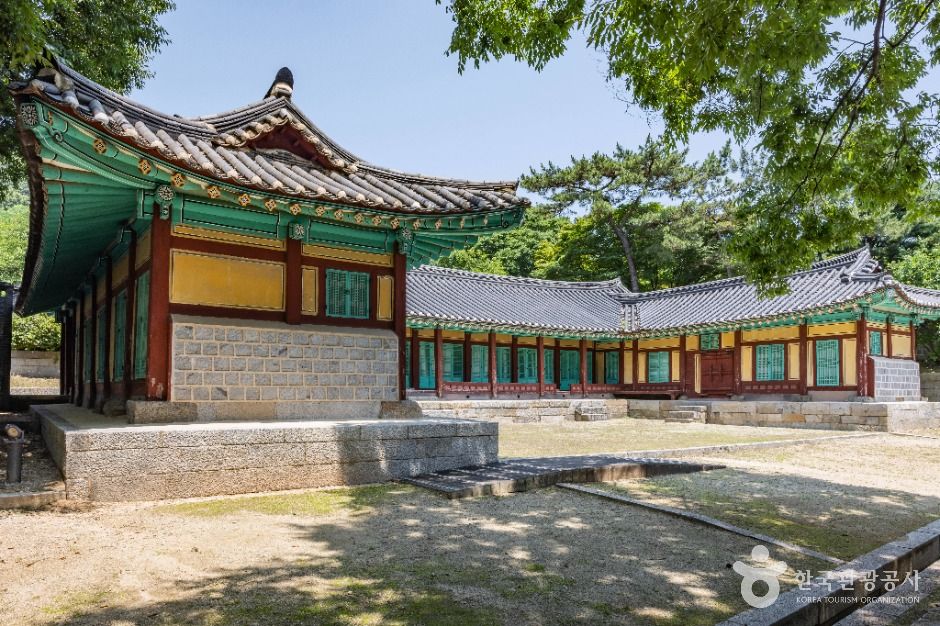
This is a mountain fortress from the Goryeo Dynasty that surrounds Ganghwa-eup. When the people and the country suffered from the Mongol invasions, the de facto ruler at the time, Choe U, moved the capital to Ganghwa Island in 1232. Full-scale construction of the royal palace, fortress, and government offices began in 1234. At this time, it was built similarly to the palaces of Gaegyeong, and the mountain was also named Songak. The fortress was built with earth and consisted of an inner fortress, a middle fortress, and an outer fortress. The inner fortress has a circumference of about 1,200m and is the current Ganghwaseong Fortress. The middle fortress was built to protect the inner fortress, and the outer fortress was built along the eastern coast of Ganghwa in 1233. This outer fortress was the most important defensive facility preventing the Mongol army from crossing the sea to attack, and it was also where the government received supplies from the mainland for 39 years. When the capital was moved back to Gaegyeong in the 11th year of King Wonjong of Goryeo (1270), all fortresses were dismantled as a condition of the peace treaty with the Mongols. In the early Joseon Dynasty, the inner fortress, Ganghwaseong, was reduced and rebuilt. It was destroyed again by the Qing army during the Manchu invasion of 1637 (Byeongja Horan). In the 3rd year of King Sukjong (1677), the fortress was repaired, rebuilt entirely with stone, and expanded. It has the south gate Anparu, the north gate Jinsongnu, the west gate Cheomhwaru, and the east gate Manghanru, along with four secret passages (ammun) and two water gates. It was also equipped with defensive facilities such as command posts (jangdae) for observation from high places and parapets (yeojang) for concealment on the fortress walls, but all the parapets have collapsed. Currently, the eastern part of the fortress is gone, but the northern and southern mountain slopes have been restored and maintained. This is a historic site of numerous foreign invasions, including the French Campaign (Byeonginyangyo) and the United States Expedition to Korea (Sinmiyangyo) in the late Joseon Dynasty, as well as the Ganghwa Treaty signed during the Japanese aggression.
(Source: National Heritage Administration)
OTA-ready stop
Built into inbound routes and day-tour planning.
Local context
인천광역시 강화군 강화읍 국화리 산3번지 국화리, 신문리, 관청리, 남산리
Travel fit
Attraction · Incheon


![[Early bird] Elysian Gangchon Ski Tour from Seoul (5 pick-up points)](/_next/image?url=https%3A%2F%2Fadmin.holidaykr.com%2Fapi%2Fadmin%2Fsystem%2Fbasic-settings%2Ffavicon%3Fpath%3D%252Fuploads%252Fproducts%252Fthumbs%252F750_1785201339504_file1.jpg&w=3840&q=75)