Destination briefing
Why travelers stop here
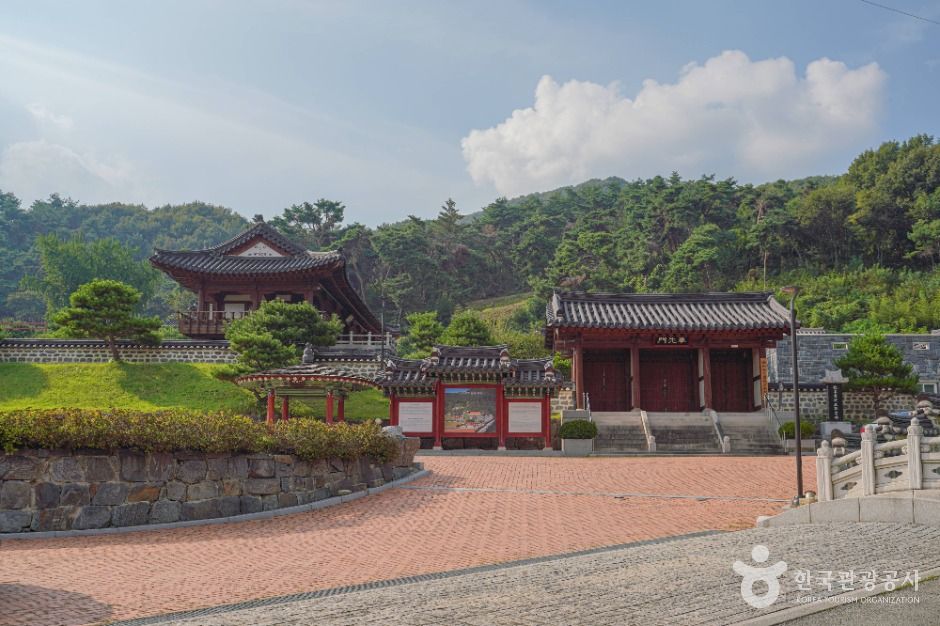
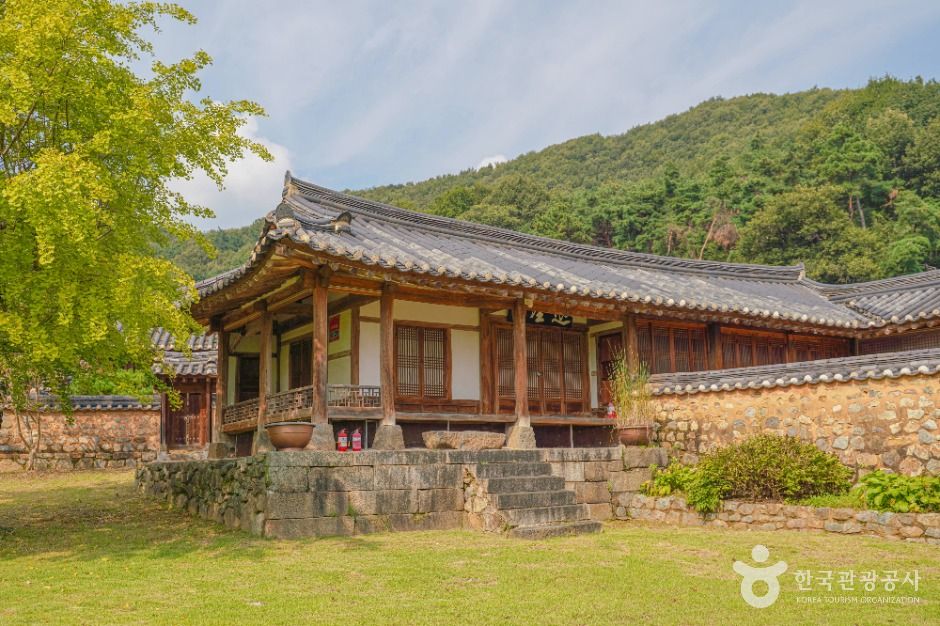
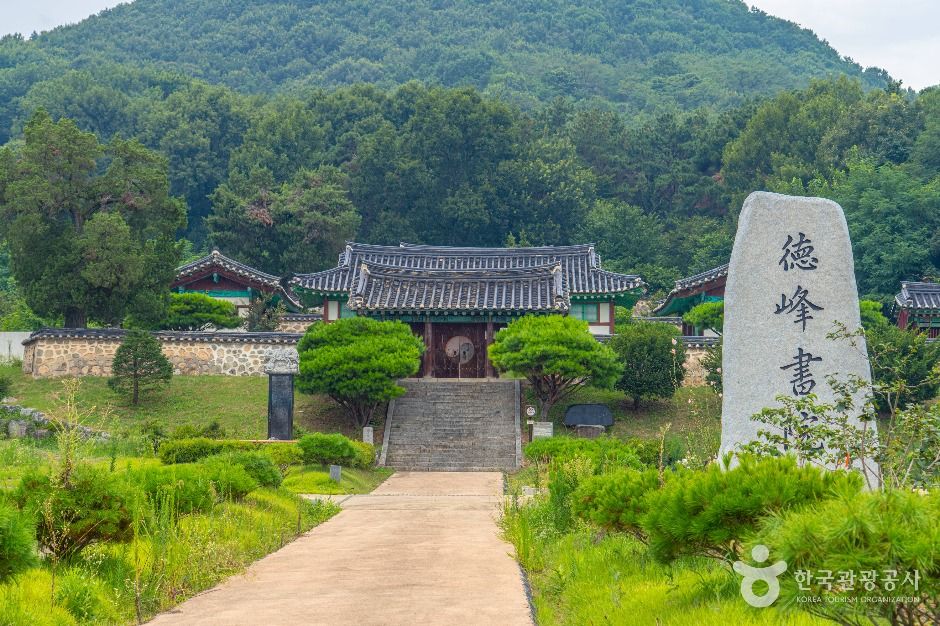
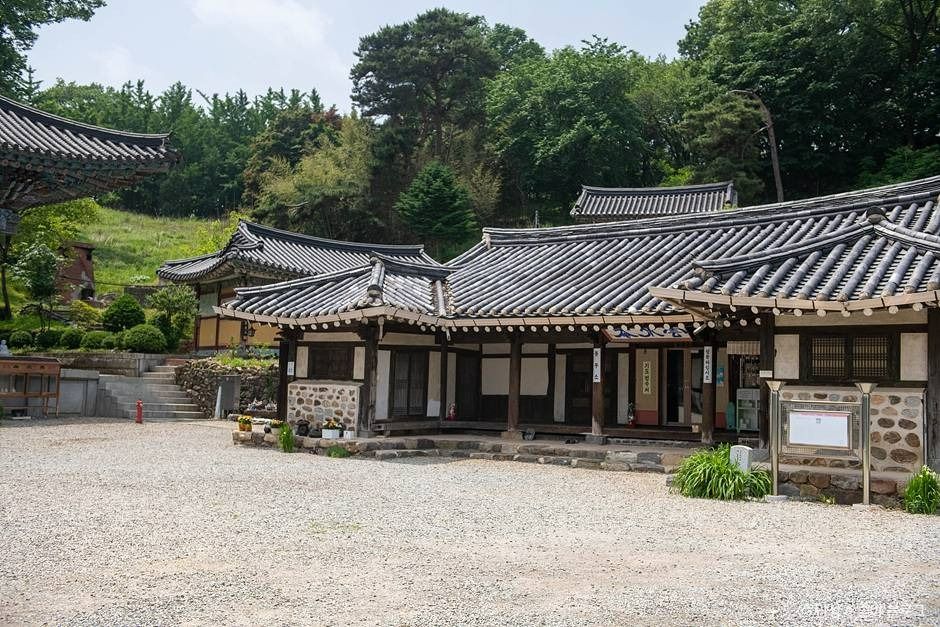
Gyeongangsa is a shrine where the disciples of Master O Jin-yeong enshrined mortuary tablets and hold ancestral rites to honor the scholarly virtue and integrity of Noju O Hui-sang, a representative Neo-Confucian scholar of the late Joseon Dynasty, as well as Ganje Jeon U and Seongnong O Jin-yeong. The rites are held annually on the 10th day of the third lunar month. The building covers a total area of 26㎡ (8 pyeong) and is a traditional Korean house with a double-eaved gable roof. It features a red gate (hongsalmun), a triple gate (sammun), and the shrine itself arranged in sequence. Notably, the calligraphy on the plaque is said to have been written by Wolheon Lee Bo-rim, a disciple of Seongnong. Here, 'Gyeongang' signifies 'the mountain makes people look up, and the road is traveled by many, so it is respected by all under heaven.' Master O Hui-sang devoted himself to scholarship from an early age, achieving mastery in Neo-Confucianism. In the 24th year of King Jeongjo's reign (1800), he became Sema of the Crown Prince's Office, served several official posts, then resigned and retreated to Jingaksan Mountain in Gwangju to focus on Neo-Confucian studies. After his death, he was posthumously appointed as Ijo Panseo (Minister of Personnel) in the 7th year of King Heonjong's reign (1841). Master Jeon U was deeply learned in the Confucian classics and was regarded as the foremost scholar of his time. During the Eulsa Treaty (1905), he submitted a petition demanding the execution of the Five Eulsa Traitors, but when it was not delivered, he resolved to wait for a better time and devoted himself to educating future generations. This was a period of fierce anti-Japanese movements such as the Righteous Army and the March 1st Movement, and some criticized him, but he remained undeterred, teaching numerous disciples on Gyehwado Island and leaving behind over 60 volumes of writings. Master O Jin-yeong was a disciple of Jeon U. Outraged by the Eulsa Treaty, he sent letters to foreign legations and governments denouncing its injustice. He also drafted an official document to be sent to the Paris Peace Conference with Lee Su-hong, but it failed to be delivered. In 1938, he opposed the demolition of Mandongmyo Shrine in Hwayang-dong and published and distributed the Chudam Byeoljip. He steadfastly maintained his anti-Japanese stance, wearing white clothes and a black gat (traditional hat) until the end, and dedicated himself to academic research and nurturing disciples.
OTA-ready stop
Built into inbound routes and day-tour planning.
Local context
경기도 안성시 양성면 덕봉리
Travel fit
Attraction · Gyeonggi-do


![[Early bird] Elysian Gangchon Ski Tour from Seoul (5 pick-up points)](/_next/image?url=https%3A%2F%2Fadmin.holidaykr.com%2Fapi%2Fadmin%2Fsystem%2Fbasic-settings%2Ffavicon%3Fpath%3D%252Fuploads%252Fproducts%252Fthumbs%252F750_1785201339504_file1.jpg&w=3840&q=75)